Tag: Investment

  • Government NOT Making It EIISy For Startups?

    Government NOT Making It EIISy For Startups?

    In the investment world of benchmarks and relative performance, portfolio managers will tell you every year is a tough year. World going thrillingly gang-busters? Gotta keep pace. Risk, slowdown and volatility? Don’t blow up, survive. Arguably, for startup businesses and founders dependent on external funding support there is a similar dynamic in play.

    In the giddy years, if your investment story isn’t ‘shiny’ enough you can be starved of capital which is diverted to other sectors. Then, in tougher more cautious funding environments like the last 12 months, you’re possibly juggling slower sales cycles and slower funding rounds and decisions. Worse still, no decisions. Uncertainty is a decision and business killer. And, we have no shortage of uncertainties fuelled by inflation, rocketing interest rates and geopolitical powder kegs in Ukraine and the Middle East. Now, smaller businesses and investors must deal with a fresh uncertainty coming from perhaps a surprising source, our own government.

    The last US President to close out a global geopolitical proxy war was Ronald Reagan but he’s also famous for his disdain of government over-reach. In a 1986 press conference he said, “The nine most terrifying words in the English language are ‘I’m from the government and I’m here to help.’” Arguably, these words might resonate with businesses and investors currently wrangling with the latest Finance Bill and its changes to EIIS rules for equity investors and investee companies. Firstly, an easy-to-understand flat rate of 40% income tax rebates for Irish resident investors in qualifying Irish startup businesses has been chopped up into 5 different bands. The different bands, to come into effect on January 1st 2024, are as follows:


    • 50% for businesses that ‘have not operated in any market’;
    • 35% for a business in its first EIIS fundraise within 7 years of its first sale;
    • 20% for a business in its second or subsequent EIIS fundraise;
    • 20% for a business expanding into new markets or regions; and
    • 30% for investments via a ‘Qualifying Investment Fund’, of which there is only one in Ireland.


    Quite apart from introducing potential confusion, the ‘core’ or standard EIIS rebate of an equity investment will now be reduced from 40% to 35%. Clearly, this reduces the incentive to invest rather than increases the incentive with what could be considered particularly poor timing. We would highlight three key pre-existing factors as challenges for businesses seeking investment capital:


    • Higher interest rates: Remember our reference to capital chasing the “shiny” things? Well, interest rates rocketing to 5% are forcing all asset classes to increase their attractiveness by offering better returns. Think deposit rates, mortgage bonds, corporate bonds and other lower risk options to earn returns. They are all upping incentives/yields while the government is seeking to make startup investment less “shiny” or easy.


    • Financial Conditions: The Goldman Sachs research team tracks the broader financial climate and looks at lending patterns, terms, spreads, credit trading etc Its view on euro-area financial conditions is that they haven’t been this tight since the Great Financial Crisis (GFC) in 2008-2009. This means businesses must search harder for investment, endure tougher terms and possibly find new banking channels unless your choice is….


    • Irish Banks: A senior Dublin legal eagle only recently told me that the banks are effectively ‘not open’ for any additional risk on their books before year end. True or not, the banking choices for SMEs are extremely limited as Nat West(Ulster) and KBC have pulled up sticks in Ireland and followed Rabobank and Danske Bank into retreat to their higher margin core markets.


    The recent memories of Covid-19 and the pitiful take-up of the government’s Credit Guarantee Scheme (just 12% of funds used by April 2021) hint at a limited banking system which isn’t massively interested in the SME sector. As a reminder, the government was guaranteeing 80% of the €2 billion in loans under this Credit Guarantee Scheme but it seems even a 20% share of the risk was too much for the Irish banks. But, also be mindful that 99% of active enterprises in the state are SMEs and account for 70% of employment. Of course, there are other institutional sources of capital.

    In the US 70% of venture capital comes from pension funds and educational endowments. In Europe, you’d be lucky if that number even reached 20%. So, despite the fabulous efforts of Ireland’s state funding agency, Enterprise Ireland, the role of private investors is critical in supporting early stage businesses. It is true that European government agencies and EU institutions(eg Horizon 2020, EIC) play a significant part and these latest EIIS changes in the Finance Bill are part of a broader harmonization of state aid. However, harmony works both ways.

    Due to limited competition and regulatory constraints, smaller Irish businesses are experiencing a much more difficult banking and funding environment than their European peers. In those circumstances, one would hope that European and Irish policy makers were encouraging private capital to fill the institutional and bank funding holes. Complicating simple tax treatments is not a good start and, to add to decision paralysis, there is a critical question outstanding in the new EIIS rules.

    The 50% rate applied to investments made in companies “not operating in any market” is leaving many people, both founders and investors, in the startup world scratching their heads. For us, we need to clarify the “not operating” phrase. Does this mean companies not generating revenues yet or is this demarcation geared towards companies in earlier risk stages like R&D, pre-API-type development phases? These are the questions which, left unanswered, will delay business funding and investment. Fatally, in some cases.

    Now, to finish on a more upbeat note. This writer, as a long-time analyst of investments and their returns, has always been wary of treating tax rebates as a means of re-setting your starting point. In other words, if EIIS of 40% is applied, your €1,000 investment cost only €600 post your tax rebate. In my world of valuations and RETURNS the more critical point was that your investment value remained €1,000. So, in a 35% EIIS rebate world the return of your €1,000 in subsequent exit value would amount to just shy of a 54% return. If that €1,000 becomes €2,000 that’s a greater than 3x return, irrespective of whether you started with a €600 or €650 cost. That broad quantum of outcome should still keep investors very interested in startup investing. However, as we hit GFC levels of funding tightness, the government may not be able to magic up more banks but it could certainly incentivise more private investors to support the 99%. Kinda like what governments used to say they do.


  • Father Ted, Perspective And Portfolio Positives

    Father Ted, Perspective And Portfolio Positives

    “Ok. One last time, Dougal” says Father Ted to his TV side-kick Father Dougal. In a small caravan on Craggy Island, Ted is holding some miniature plastic cows while pointing through the window to the real much larger versions grazing in the adjacent fields . “These are SMALL. But the other ones out there are FAR AWAY….. small…. far away” repeated Ted in yet another failed attempt to teach perspective to a confused Dougal. “Ah, forget it!!” says a defeated Ted. Great comedy, but in real life that sort of capitulation can be both dangerous and costly. The confusing aftermath of the horrific carnage at the Al-Ahli Hospital in Gaza was a reminder of the increasing dangers of deep-fake imagery, misinformation campaigns and client-journalism in fighting to establish ‘a truth’. We just can’t give up on The Truth. Perspective and reflection does help. So, in a world dominated by ugly headlines and woeful weather let’s visit a few big investment themes growing real legs. Where better to start than security…far away

    The heads of cybersecurity from the UK, Australia, the US, Canada and New Zealand, known collectively as the “Five Eyes” security alliance, have seen “a sharp rise in aggressive attempts by other states to steal competitive advantage”. In particular, they urged smaller companies and startups to be more vigilant in protecting their IP and critical business information. Having recently raised funds for Binarii Labs, we are very much aware of the increasing demand to protect data rooms for corporate finance deals, cloud storage architecture, legal files and personal ID information from being breached. The good news for Binarii shareholders is that the cybersecurity theme continues to attract VC funding. In New York fraud prevention play, Prove Identity, secured $40m from MassMutual Ventures and Capital One Ventures. Also, despite its name, Fingerprint, has built a big reputation in detecting fraudulent devices rather than human beings. The Chicago-based company has attracted $77m of investment since its 2010 inception and completed a $33 million Series C funding round this week with Nexus Venture Partners as lead. Cybersecurity feels like a portfolio “keeper”. But, as always we advise diversification of risk in a portfolio for the health of your wealth. And, for health too…

    Well, for those who have invested in AuriGen Medical then you know we like healthcare technology on lots of levels. The good news is that we have a few more medical and biotech investment opportunities to add to your startup portfolio before the end of the year. Even Bloomberg is picking up on the super medtech ecosystem which has emerged in the west of Ireland. The recent arrival and $327 million investment by medtech Dexcom in Athenry might have been the prompt for the Bloomberg article and some great data featured. However, this has been a steady build in the shadow of the higher profile Big Tech “Silicon Docks” cluster in Dublin. Now, medtech and biopharma are experiencing that virtuous circle of investment, deep-tech expertise, spin- off activity, entrepreneurship and innovation. The inspiration for this flow of healthcare startups is a multinational backbone of 14 of the world’s 15 leading medtech companies and 10 of the leading global biopharma companies. Clearly, your wealth could also be your health…..or your pet’s health.

    I have always listened carefully to the UK’s best performing fund manager of the past decade, Terry Smith. Having worked for him, and embraced his investment philosophy of observing the cash flow returns on all of the capital in a business(debt, leases/commitments and equity), I know he likes high frequency consumer product businesses – think Coca Cola, Nestle, Unilever etc. Then know that he LOVES pet food and pet health producers! He would often quote some bonkers survey that consumers would sooner feed their pets than their children. The key point is that the spend on pets is enormous and consistent. In the UK alone £10 billion is spent annually on dogs. Dubliner-founded Butternut Box recently announced a £280 million funding round with venture giant, General Atlantic, as lead. That business is valued at over $500 million now, but at the other end of the pet healthcare spectrum, Spark is raising money for a vet-designed and managed platform to match reputable breeders with properly vetted owners. Pet healthcare is the mission and Pet Bond is currently offering equity at a significant discount. It’s also eligible for a further 40% valuation discount via its EIIS tax rebate eligibility for private investors. So, that’s a lot of health covered but what about the planet’s health

    We have written plenty on the cleantech theme but it’s highly likely there will a few portfolio investment opportunities coming Spark investors’ way very soon. To whet your appetite and apply perspective, know the following:


    • European VC market sentiment is at a record low. However, the drive to save the planet doesn’t do sentiment. It’s all about action. So check out the Q3 European VC funding activity. A whopping $4.5 billion, or 25% of total tech investment, went to green technologies in Q3.


    • Aira, the latest startup from Northvolt and H2 Green Steel founder, Harold Mix, has just raised €87 million for its heat pump business.


    Of course, early stage investment is higher risk but we do need to keep an eye on those themes which are enjoying healthy investment flows. Then again, there is no such thing as a sure thing. Or…. risk free. As a final reflection, for the sceptical and the risk averse out there, who would like to guess the fall from peak value for Bitcoin compared to that of ‘risk free’ US Treasury bonds guaranteed by the mighty US Government? Who got close to a 51% dive for Bitcoin? Probably a lot of you. But did you get anywhere near US Treasuries cratering by 47% from their all-time highs!!! Probably not. It’s all about perspective really. And, keep watching those healthy portfolios.


    • For details on the Spark EIIS Private Portfolio product DM direct or call your Spark relationship manager.
  • A Big Jack Needed For Punctured Economics

    A Big Jack Needed For Punctured Economics

    Jack Charlton saved my Dad’s business. The economic text books won’t make the specific connection but my Dad remains convinced. Back in the early ’80s Ireland was crippled with terrorism, perma-recession, huge government deficits, whopping interest rates, rampant inflation, political chaos and misguided currency policies. The Emerald Isle was not exactly an investment capital paradise. Every day my Dad dropped me to school on his way to a small food factory on Distillery Road in the shadow of Croke Park, and one day I was particularly troubled in the car.

    The Irish Times headlines and sport were the daily balance of conversational fare but no sporting story could offset that day’s assault of gloomy economic and political news. The concerned eleven year old asked, “How will Ireland get better Dad?” The response took a while and was initially downbeat, “The country has gone sour”. There was a further pause, and then a more upbeat prediction, “There is great talent here but the country needs to see and feel what success looks like. Confidence is everything for countries and economies. Ireland will find it.” Confidence. So true. So powerful.

    Fast forward 10 years and Jackie’s Army had visited Germany in ’88 and surprised all in Italia ’90. Dreams literally happened. My Dad’s business survived the 80’s and Ireland cranked up the international investment welcome message with an army of goodwill ambassadors following a Geordie’s football team. A strange combination, impossible to predict a decade earlier. Even Irish food factories attacted US multi-national attention by 1990. Confidence is everything. Fast forward to today.

    Jack Charlton’s funeral is this week and the global economy is gripped by a pandemic, huge human death tolls, massive job losses, soaring debt and increasing geopolitical tensions. Plenty of sour. However, this is not the ‘80s. Cynicism and pessimism are, of course, to be found. But….. confidence remains. The data does not lie. Here are a few things which caught my eye in recent days.

    • China: Yes, China faces a more challenging trade environment as tensions develop with the other economic and technology superpower, the US. But check out the most exposed major export economy to China. The DAX share index in Germany has just turned positive for the year. Clearly, markets are discounting a less chaotic future for China than headlines would suggest.

    • Europe: The agreement by EU nations on a pandemic economic recovery deal was tortuous but remarkable in one respect. For the first time ever EU governments have agreed to share the credit risks of the rescue funds required for countries with weaker balance sheets. This sends an important signal of confidence in those challenged economies of Spain, Italy etc.

    • Investment: Typically, investment capital is scarce in recessionary times and provided only by the very large institutions. Not so right now. An army of retail investors is driving share prices of hot stocks like Tesla and the mega-technology names to new highs on an almost daily basis. Yes, there is cyncism that this will end badly. In one trading session this week the combined value of Facebook, Apple, Alphabet, Netflix, Tesla, Amazon and Microsoft increased by $291 billion. News did not drive this. Confidence in the future did. One can only hope the FAANTAM confidence continues and does not become the ‘FAANTAM Menace’ for private investors’ trading accounts.

    • Valuation: Valuations of companies can be calculated using lots of different multiples of profits, cash flows and sales but all are doing the same thing; discounting the future. Currently, there are 500 companies in the US with valuations even higher than the FAANTAM club. The median multiple of sales in this group of 500 is 13x and on average net income is currently negative. Now that’s confidence; investor belief that current losses will turn into profits.

    So despite, a challenging global economic environment it is clear there remains encouraging levels of confidence out there. That is a much better starting point than early ‘80s Ireland but one suspects there will be tough days ahead. Inspirational leadership will help. The Tangerine Tyrant in Washington will not. As we say good-bye to Jack we should remember the transformative powers of confidence. One image always stays with me of how confidence can just grow.

    My Dad didn’t live to see Ireland play the mighty Italy in the Giants Stadium in 1994 but 80% of the crowd that day were Irish. It was magical and unexpected. They must have been confident. They were right. So was my Dad. Thanks Jack.

  • An All Cash Strategy Is A Very Big Bet

    Winter League tennis is hardly in the glamour league of January sporting events but it still can deliver learning lessons. As my doubles partner whispered to me at the weekend that his back was crocked, we had a rueful giggle recalling the Mike Tyson quote that “Everyone has a plan until they get punched in the mouth”. Indeed, investors might be feeling the same this week as markets take fright at the potential economic impact of a Chinese Coronavirus. The excellent financial commentator, Bill Blain, at The Morning Porridge calls the unexpected punches “no-see-ums”. Of course, regular readers will be less surprised at developments given our words of caution last week in “Charting A Dose of Flu”.

    We’d rather move on and tackle another area of concern. It is striking to us that total Irish household deposits (cash) in the banking system now exceeds €110 billion. That number increased by circa €7 billion alone through 2019 despite every asset class on the planet posting significant gains thanks to the global central banks’ QE methadone clinic. Of course, it is wise to have a healthy skepticism when the crowd gets giddy. Keeping some cash on hand is always prudent. But €110 billion? Over the years when I have been in wealth advisory mode I have often heard individuals claim an agnostic attitude to financial markets and a preference for cash safety by avoiding “any bets”. Sadly, that is a dangerously inaccurate perception of one’s own safety strategy. The truth is holding too much cash is an extremely strong “bet” in its own right. We can think of two “punches” which could throw that safety plan into disarray.

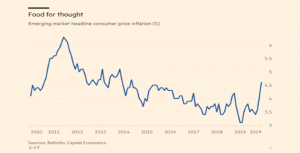
    Firstly, in a low inflation world, holding cash is less punitive because the purchasing power of savers is largely unaffected. One might quibble with that “low inflation” view when you look at health, housing education and insurance costs but let’s just focus on traditional inflation reports. It is true to say at this moment inflation is very subdued in developed markets but inflation is one of those things that can suddenly appear without much advance notice. Hence, our curiosity was tweaked to see an FT report on consumer price inflation in emerging markets hitting a six-year high in recent weeks. Here’s the chart of a significant inflation spike:

    This spike is driven mainly by food inflation which we warned of earlier in 2019 as African Swine Fever decimated the Chinese hog population. However, Coronaviruses and climate change are examples of other potential disruptions to the food supply for a rapidly growing Asian middle class.

    Perhaps inflation spikes will be just a temporary thing, but the meeting of a low-interest rate world and a digital world is also worth thinking about as a second threat to cash savers. Bluntly, banks are losing money by holding deposits for private depositors. Corporates are already being charged for the safe custody of cash in Europe as negative interest rates wreak havoc with traditional deposit/lending banking models. Furthermore, the use of physical cash in payment transactions is more costly than digital equivalents.

    Be prepared for cash payments to incur additional charges and look no further than Sweden for a glimpse of the future. Barely 1% of the value of all payments in Sweden are made using coins or notes. In fact, Sweden is forecast to become an entirely cashless society by 2030. It seems inevitable that banks and governments will encourage/incentivize the use of cash deposits through taxes and fees. Suddenly that “cash safety plan” feels like a very big bet that things are just going to carry on as before. While it is difficult to forecast the future it is safe to say the future and the value of cash are less certain.  As we always say, a strategy allocated to just one asset class, even cash, is a very risky one.

    A balanced investment strategy across residences, property, pensions, cash, alternative assets, wine, fine art and even funding exciting start-ups has its merits. For those interested in looking for cash alternatives it might be worth looking at our recent piece “Good Portfolio Habits Pay Off” to prompt some thought! So, ship those Boris Brexit souvenir 50p’s in. They could be both financial and comedy collectors’ memorabilia items over time. Embrace change. It is happening and we must remember another boxing legend’s words…

    “A man who views the world the same at 50 as he did at 20 has wasted 30 years of his life”  – Muhammad Ali

  • Good Portfolio Habits Pay Off

    Nobody ever told me the Great South Wall was that long! As the muscles screamed and the expletives flowed on my not-so-little run yesterday there was a fleeting moment when I almost quit. I wouldn’t have been alone on January 19thResearch conducted by Strava based on 800 million user-logged activities predicts this date as the day most people are likely to give up on their New Year’s resolutions. In fact, approximately 80% of resolutions are abandoned by the second week of February. Thankfully, the sun was shining and the brain cajoled me into accepting that this run was just one of a series of good habits to deliver a very productive 2020. Of course, the outcome is not a certainty but good habits vastly increase my chances. The same goes for investment goals.

    Investment can be made to sound very complex. The professionals love complexity as it’s a perfect environment to sell expensive products and services to the least sophisticated clients.  Whoodathunk there are more investment funds (75,000  at last count) to choose from than individual stocks globally? Yes, financial markets are complex but simple good financial habits can greatly increase investors’ chances of meeting their goals over time. We have previously written about the advantages of a portfolio approach versus the “lucky dip” dreamer derby so a portfolio of multiple investments is a sensible start.  But what’s your goal?

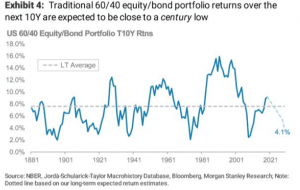
    The answer to this is entirely dependent on your age and your tolerance/capacity to suffer loss (even permanently). We shall assume for the purposes of this article the time horizon is 10 years and that the capital in this portfolio can incur some losses along the way and won’t be needed to fund living expenses over the period. No doubt readers are aware financial markets have had a good run over the past decade. It is entirely sensible to take the view that we must rein in our expectations for the next decade. Wall Street giant, Morgan Stanley, has already tried to manage expectations with its strategists suggesting a standard mix of bonds and equities in a portfolio would earn just 4.1% each year over the next ten years. Low-interest rates, low growth and commensurate low inflation are the familiar returns killers.  Here’s the chart to anchor our goal expectations:

    Now, let’s shift our attention away from the expensive large listed companies and all those bonds yielding zero or even less. In a previous thought piece, we wondered if smaller companies have some performance catch up to do on their much bigger listed peers. Holding that thought, we reckoned it might be helpful to illustrate the relative possibilities of assembling a portfolio of crowdfunding start-up opportunities over a four year period. So, here’s a suggested approach with plenty of good habits:

    1. Invest €100 in an equity crowdfunding campaign every month for 48 months (4 years). This good monthly habit avoids trying to “time” your entry into markets which will fluctuate over a long period.
    2. The portfolio goal is to own 48 equity opportunities in equal amounts of €100 by the end of year 4. This good habit of multiple holdings diversifies the portfolio across industries and geographies.
    3. A portfolio with multiple holdings also allows an investor to collect financial data across those companies and monitor various key metrics like sales, growth, cash flow/burn, margins, debt etc. Like all resolutions/habits – they are only sustainable if measured. This habit of measuring will ensure discipline and selection of opportunities which are consistent with the metrics/averages being observed. More on that again.

    Good habits now in place, will the portfolio deliver? There are no guarantees in finance but here are a few suggestions as to outcomes and the understanding that the professionals think 4% per annum might be the best on offer over the next 10 years. We are suggesting a €4,800 investment of capital. We will assume that all target investments (48) benefit from a 40% tax refund under the EIIS investment scheme.  After refunds of €1,920, investors’ are risking €2,880 in real terms. So that’s the capital at risk. We need to look at where the returns come from.

    Readers will recall our previous references to the famous Arizona University research showing just 4% of all the listed stocks in US history have delivered the entire returns of the S&P 500 since 1926. In theory, and the sample size is small, it is possible as few as 2 holdings in a 48 constituent portfolio will account for the majority of returns. Now, remember Morgan Stanley is telling us a 4 year period might deliver a return on our capital of just over 16%.  Here’s a table to suggest potential outcomes. We are going to assume the rest of the portfolio loses the equivalent of the tax refund(40%) ie 46 of the companies which received €4,600 in capital will lose €1,920 between them. Admittedly, this is probably too harsh an outcome but it will help illustrate what is required by just a few successes to beat a 16% portfolio return forecast on Wall Street. The following table lists a few scenarios and the impact of two companies achieving significant valuation growth:

    Please note in the “2 Winners”  column we are using €200 (€100 in each company) as the initial invested capital. Therefore a gain of €500 in the Match Wall Street scenario requires both companies to increase their value by just 1.5x. This is not a significant hurdle in the world of smaller companies and start-ups. The Run Wall Street scenario might sound fanciful equating to a 20x gain (or 2,000%) on the initial capital invested in the two companies. However, this is very possible in the world of private equity and startups. Yes, there is the risk of losing all your capital when betting on single winners but portfolio diversification is a very good strategy in a high-risk asset class.

    Returns are inextricably linked with risk. That’s a fact and don’t ever buy any product which claims no risk involved. In the worked example above your total capital at risk was €2,880. For perspective, that equates to €15 per week of spend where the loss of capital is permanent – think almond cappuccinos, cars/taxis and mobile data usage on a weekly basis. Maybe take a walk with a bottle of H2O? What productivity goals wouldn’t prosper by ditching the screens, exercising and hydration…..

    Finally, in the spirit of fresher thinking, it is worth noting the most unlikely companies can be the big winners so keep an open mind and spread the risk when building an investment portfolio. As an illustration and a little quiz, what’s the best performing listed stock in the US over the last 20 years? The clues would be that it features in a previous article and it delivers energy, but not the carbon-based kind!  A real Monster which has delivered 87,000% returns over two decades. Wowzers!  Good habits can really energize……

  • Warren Buffett Not Feeling The Love

    It is amazing how a new series of Love Island can prompt such profound existential questions. Were Conor’s teeth stolen from the Fleabag make-up department? Will apprentice Lord, Ollie Williams, confess to predatory trophy hunting of wild animals before the Gale twins entertain his drooling advances? Profound questions indeed but these still couldn’t better contestant Callum Jones’ query as to whether the twins were both 20 years old. Yep, the twins bit was the clue Callum. While we pine for the return of the Teletubbies for intellectual stimulation let’s move on to another more serious question bothering us last night.

    The world’s most famous investor, Warren Buffett, is currently sitting on $128 billion of cash and we are wondering why he isn’t listening to President Trump. The White House is telling us the US economy is in the best shape of its life. Thankfully this observation stands up to data scrutiny better than the medical opinion of the doctors looking after the Orange Toddler. Consumer confidence is high as the US enjoys full employment, record Wall Street highs, low-interest rates, tax tailwinds and energy independence. What’s not to like about that?

    Well, Warren has been doing this investing thing for a very long time and he doesn’t need the instant gratification or performance required of more youthful investment houses. However, we were struck by the fact that Buffett’s last big deal was in 2016. Back then during a ‘socialist’ Obama administration, he splashed out $32 billion on industrial player, Precision Castparts. It must irk Trump that the Sage of Omaha has failed to endorse his presidency with a big deal. An unusual experience as this may be for regular readers, we are reluctant to pin Trump with the blame on this occasion.

    In this particular instance it would seem that very large companies are pretty expensive at the moment. And Buffett needs to do big deals to really move the performance dial. In his most recent annual letter to shareholders the Berkshire Hathaway chairman admitted that “prices are sky high for businesses possessing decent long-term prospects”. A few other things also probably bother Warren.

    Over the years he has been very fond of monitoring the relationship between the total value of the US equities markets and the US economy (GDP). The current measure of that relationship indicates a market valued at 157% of the GDP of the US, according to Wilshere index data. That is high by historical standards and compares to a 137% figure just before the credit crisis in 2007. Buffett is typically uneasy when the market goes over the 100% mark. So, that certainly must be weighing on his mind.

    He will also be noting that the global equivalent stock market value of $88 trillion (record high) amounts to 100% of global GDP. Furthermore, Buffett understands the role of credit/debt. Ultra-low global interest rates are rocket fuel in the short-term but excessive leverage can come back to bite investors very badly. Current IMF estimates of global debt are closer to $260 trillion. A debt pile almost three times the size of equity funding the global economy can certainly be described as ‘leverage’.

    Before we spook the horses it is important to point out that Buffett, due to Berkshire’s size, is nowadays forced to do very large deals. There is a school of thought that excessive valuations are concentrated in the very large market capitalization stocks. As an illustration, just 5 stocks (Apple, Microsoft, Facebook, Google and Amazon) accounted for a quarter of the S&P 500’s 26% gain in 2019! On top of those elevated valuations Buffett would also have to pay a premium to execute a buy-out. Now consider the estimated $2.5 trillion of private equity money sitting on the sidelines competing with Buffett to do deals. Low-interest rates and great tax deals are fueling great exuberance at private equity houses. However, it is worth considering one of Buffett’s more famous pieces of advice, “ Be fearful when others are greedy, and greedy when others are fearful”.  Just recently Buffett was outbid by private equity house, Apollo,  in a relatively small $6 billion deal for Tech Data Corp (TDC).

    Perhaps readers should take encouragement from Buffett’s attempts to take smaller ‘bites’ like TDC. In fact, it is interesting that the US index which tracks smaller companies, the Russell 2000, is at exactly the same levels as it was trading at two years ago. There appears to be more worry and fear in the smaller companies’ world. Now hold that thought and think about Buffett’s patience and requirement for ‘value’ as a margin for error. How heartwarming it would be, as Love Island envelops our consciences and sanity, that smaller companies could begin to feel ‘the love’ of investors in 2020.


    If you enjoyed this blog post, then you should check out our other great content by clicking here!

  • Pick A Winner Or A Portfolio?

    I met a very glum Italian fund manager at a Dublin bus stop the other day. A former client, he’s usually a cheerful chap and my initial fear was that after 18 years living in Ireland the excruciating “1-minute due” display at urban bus stops had finally broken him. I was wrong. Something else was broken.

    Irrespective of our professional relationship, both of us over the years would have shared a passion for financial markets and the events that shape them. On this particular morning, my fund manager friend was less talkative and declared he was past caring about the specific drivers of markets as it just didn’t matter anymore. For a brief moment, I thought he had lost his job but he quickly reassured me he was still working in the equities market. He then explained that the reason for the dip in his professional enthusiasm was a sense that markets were “broken”.

    After further discussion, it was clear that central banks’ ultra low-interest rates and consequent turbocharging of prices across all asset classes were not his only professional frustration. Yes, as an “active” fund manager this combination of almost free money and frothy asset inflation made it difficult for his firm to beat or even match the performance of overall market replicating index funds and exchange-traded funds (ETFs). But there was also a whiff of resignation that the higher fees charged by an “active” manager who picks individual stock winners could no longer be justified. Bluntly, the active fund manager business model was in danger of breaking too.

    Not so in the world of super cheap index funds and ETFs. These funds don’t pick winners or actively trade. They just mimic at very low cost the exact constituents of major indices like the S&P 500, Nasdaq, Dax and FTSE 100. The past decade has only seen one negative performance year for global equities and passive fund costs to investors continue to go lower, in some cases to almost zero. No surprise then to see that index funds and ETFs have quadrupled in size since 2010 to just over $10 trillion according to Robin Wigglesworth at the FT.

    The investor flight to cheap index portfolios is killing the traditional active manager who charges his/her clients an annual management fee based on their expertise in researching and selecting winning stocks. The ugly truth is that such “expertise” fails to reveal itself consistently and only a very few active managers produce long-run market-beating performance. Time is possibly the active manager’s greatest weapon – think Warren Buffett. However, long-run historic data would suggest there really are only a few meaningful winning bets.

    We have previously referenced a famous 2017 research paper from Arizona State University’s Hendrik Bessembinder. The findings are stunning. The best-performing 4% of all listed companies account for the entire gains of the US market since 1926. As practitioners in the world of start-up investments, this has given us pause for thought as to the best investment strategy for investors on equity crowdfunding platforms like Spark CrowdFunding.  The good news for crowdfunding investors is that a critical component of performance/success in the larger public markets is low costs.

    The no-fee model for investors on crowdfunding platforms is a great start. It gets even better if one takes into account a further 40% discount on your initial capital stake when the investee start-up company carries an EIIS badge.  So far so good. The next suggestion leverages the experience of active and passive managers over the years and the historical truths in Bessembinder’s research. It is incredibly difficult to pick winners, particularly at an early stage in a company’s journey. The information gaps are huge. However, by employing a portfolio/index type strategy an investor can not only build his own low cost (free) exposure to an entire asset class of start-up private equity but can also avail of a steady stream of opportunities on crowdfunding platforms over 3-4 years.

    A simple monthly budget of even €100 to be invested in a company every month for 4 years would give a patient investor exposure to almost 50 companies with exciting prospects. Some companies might not survive but those that thrive can deliver very nice returns for the overall portfolio. Don’t forget you have a 40% tax cushion to start with so your approximate €5,000 budget over 4 years is really only €3,000. Then remember that 4% figure from Arizona.  My fund manager friend is beginning to realise his time would have been better spent building portfolios for specific asset classes (like private equity) rather than trying to find the very few “winners” in the broader market indices.

    Crowdfunding investors can benefit from the 2020 hindsight of battered active fund managers over the coming years with a sensible portfolio strategy. We will be writing much more on this in the coming weeks as we get a sense of our monthly pipeline of campaign opportunities. Unlike Dublin Bus, we will avoid the “1-minute” hype and do our best to provide a steady flow of campaigns through 2020.


    Enjoyed this blog? Then why not check out our other great content by clicking here!

  • Oiling our Fears

    Oiling our Fears

    Crude oil prices are now trading at the same levels as they were on the Friday before the bombing attacks on the Saudi Arabian oil fields. That seems odd. Five decades of Middle East strife has taught market traders that significant cuts to oiling due to war leads to prolonged spikes in prices.

    This is not just a 1970s phenomenon. As recently as 2003 and the second US-Iraqi conflict, the global economy experienced an oil shock of mid-$20 per barrel pricing motoring up to $140 per barrel by 2008.

    Sure, the recent Saudi outage is not quite a war scenario but the precision (too precise?) attack has taken out 5 million barrels or almost 5% of global oil supply. That’s not far off the impact of the 2003 Iraq war, and the initial 20% spike in oil prices on news of the attack did reflect a major event in energy markets. Of course, the Saudis and an election-frazzled Trump administration were quick to reassure markets about adequate reserves, quick restoration of supply etc. However, almost two weeks after the attack there is a growing acceptance by Saudi Arabia’s wannabe IPO, state oil company Aramco, that production facilities will be out of action for many months, possibly a year. That’s before we even mention a ramping up of tensions with alleged attack sponsor, Iran. Bluntly, where has all the fear gone?

    Perhaps it has been replaced by a greater fear.  Donald Trump was so scared of a 16 year old at the UN meeting in New York he chose to skip the Climate Action Summit and instead made a speech at a Religious Freedom meeting. Always important to keep those avangelicals happy. As for the one million Uighur Muslims incarcerated in China, there wasn’t even a mention. Happily, Greta Thunberg’s fear-filled speech garnered far more attention than the Dear Orange Leader’s.

    The teenage wake up call to the world was quickly followed by a rather scary report from Goldman Sachs(hardly a leftie liberal socialist champion) highlighting the significant impact of climate change on urban populations living less than 10 meters above sea level. The numbers are staggering and sadly it might be too late to prevent the consequences of an already warmer world. The warning from this Wall Street leader was stark, “ It might be prudent for some cities to start investing in adaptation now.”

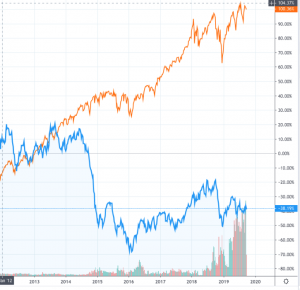
    Clearly, there is a growing consensus that carbon/greenhouse emissions are affecting climate. We have written previously on some leading hedge funds who now factor climate change into ALL their investment decisions. Arguably, the smart money has been selling out of oil for years. Here are a few data points which tell that story. The first is a chart showing how the S&P 500(orange) has diverged dramatically from the downward trajectory of oil prices(blue) since the middle of 2014.  It has been a period of healthy economic growth so that is quite striking.

    It is not just the commodity price which has lagged the market. Exxon Mobile is about to drop out of the S&P 500’s top 10 stocks for the first time in 90 years. Furthermore, the energy sector now accounts for just 4% of the overall US market. One can’t help feeling that actions of economic leaders are being watched very closely. Take, for example, the decision by Amazon to place an order for 100,000 electric delivery vans(yes, that is the correct number of zeros) from a company, Rivian, of which you probably have never even heard.

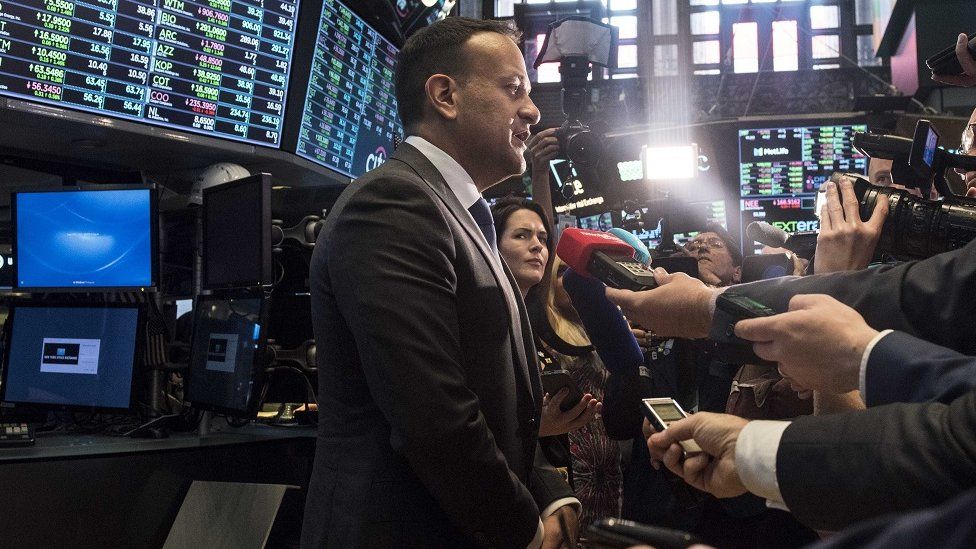
    Oil services stocks which support the major oil companies on infrastructure, logistics etc have seen their share prices fall more than 50% in 2019. That’s in a year when markets are actually up more than 20%. We have seen commentary on Wall Street puzzling over this wealth evaporation and wailing, “The oil service stocks are trading at prices that imply the entire fossil fuel industry will disappear”. That is an extreme outcome but there is a growing sense that climate change is an extreme challenge. Even Taoiseach Leo Varadkar has decided we will never be called Oiland(or Oirland) as he has told the UN Climate Summit that oil exploration in our waters will end.

    Returning to our own confusion about the lack of fear over the Saudi attacks we must consider that the temporary spike in oil prices was yet another opportunity for professional investors to lower their exposure(sell) to an industry in the cross hairs of a fearful planet and motivated leaders. In a week when the WeWork IPO has revealed itself as a “greater fool” proposition we would note that the Saudis whose entire economy depends on fossil fuels is also trying to IPO/sell you Aramco.

    WeWork didn’t work, its CEO is now out of work and the franchise itself might not see out 2020. In this warming world oil now generates a new set of fears and it doesn’t help the pricing of the product. The greater planetary health fear will win out over old-fashioned energy supply fears and that perennial investor behavioural companion, the fear of missing out. Steer clear of your old fears; the teenagers are the brave ones and will sadly be proven correct.


    Enjoyed this blog? Then why not check out our other great content by clicking here!

  • Brexit – The Great British Bake Off or Break Off?

    Brexit – The Great British Bake Off or Break Off?

    Staff at the Spark Crowdfunding office had a little bake-off competition this week.

    The competition was keen, voting was controversial and rankings were debated long into the day. However, the true ‘reveal’ emerged over the next day as ‘tasting’ morphed into multiple appetising return visits to the competing creations. The empty serving plates and expanded waistlines revealed the true leaders but the barely touched dishes also put to bed any ranking disputes or inflated expectations…

    On further reflection, this revelatory process did bring to mind the wise words of one of the greatest ever investment thinkers, Benjamin Graham.

    As we ponder the potential outcomes of Brexit we could do worse than heed Graham’s explanation of financial markets, “In the short run the market is a voting machine, but in the long run it is a weighing machine.”

    In the context of the Brexit crisis (it is one now) there are no shortage of opinions, political machinations and financial media commentaries but such verbals are close to worthless. The most credible views are those expressed with real money.

    The currency markets have become the ultimate near term “voting process” on Brexit outcomes.

    So, the strongest voting on the gravity of the situation is now being expressed on a daily basis via the fluctuations of the value of the Great British Pound (GBP).

    Leaving aside the reflex reaction plummet of the GBP at the time of the Brexit referendum result in June 2016, arguably the currency is now at 34-year lows versus the global reserve currency, the US dollar. Clearly, currency traders and corporate treasury departments are taking evasive action in preparation for an ugly British break off from the EU. However, this is just a near term view reflecting understandable fearful emotions.

    The counter-intuitive longer-term view is possibly more interesting and is expressed via much larger individual bets.

    The “weighing machine” for the long run could arguably be reflected in the strategic mergers and acquisitions (M&A) activity of corporates.

    In this respect it might surprise readers to know that in 2018 M&A activity involving UK companies reached a three year high of £360 billion, beating 2017’s total by a whopping 28%. Admittedly activity in Q1 2019 slumped by 55% compared to the same period in 2018 but despite this apparent drop in deal-making confidence a survey published by EY in April revealed the UK as the most likely target for foreign companies seeking acquisitions pushing the US into second spot.

    History would suggest a fall in the value of a target currency and a relatively more expensive US market typically prompts opportunistic thinking from executives looking at long term corporate strategies.

    So, it was interesting to see last week a couple of huge deals announced which ran counter to the narrative generated by the GBP hitting multi-year lows on a daily basis.

    The announced combination of the London Stock Exchange and Refinitiv (formerly the Reuters data business) in a £27 billion deal is noteworthy given the US owners of Refinitiv are one of the sharpest private equity players on the planet, Blackstone Partners.

    There is also another deal to chew on this week. Food delivery giant Just Eat is merging with the Dutch outfit Takeaway.com in a €9 billion deal. Thus speaks the weighing machine.

    Worried Brexit watchers should reflect on Benjamin Graham’s words and consider the likelihood that the near term voting process in currency markets is more akin to a popularity contest with a truly awful collection of UK political representatives.

    Further Graham consideration would suggest the weighing machine of long term corporate dealmaking decisions reveals where there is real substance and value.

    For Irish corporates there may well be opportunities but it’s worth recalling our little bake-off and how the good stuff gets eaten quite quickly…

  • Other People’s Money

    Other People’s Money

    My former boss, Terry Smith, has established himself as probably the most successful UK fund manager of his generation. The eponymous Fundsmith now manages a massive $25 billion of investor capital which is invested in a relatively small portfolio of good companies purchased at reasonable prices.

    His refusal to chop and change this portfolio is often referenced as a key to his fund’s outstanding performance. However, in light of recent market events and trade war storm clouds gathering I am reminded of another lesser known performance driver Terry imparted to me in the early days of the fund’s marketing campaign.

    When selecting investment opportunities Terry steers clear of companies which have a business model dependent on “other people’s money”.  It might sound odd as an investment business to seek out companies which “actually don’t need our money”. In essence, the fund seeks out companies which generate cash to fund their own expansion and have a multi-year track record of doing so. In contrast the fund avoids companies and managements who have a serial track record of issuing new shares or raising debt capital to fund their activities. One can add to this cohort of capital sink holes another group of companies whose day to day activities rely on daily provision of funding. In the case of capital sink holes we are thinking of the likes of heavy industries (chemicals and autos) utilities, telecoms and energy stocks. Business models based on daily funding dependent on the kindness of strangers would include banks and insurance companies.

    Note this investment principle does not apply to young growth companies and start-ups. Rather Terry takes a rather jaundiced view of long established companies and sectors which invariably run into trouble when market crises and recessions occur.

    Bluntly, these companies struggle for survival when markets take fright and all providers of capital suddenly decide they’d rather hold onto their liquid funds until volatility recedes. The financial crisis was an example where even banks refused to deposit funds with each other. For serial capital gobblers the problems are usually associated with an inability to extend/roll over debt arrangements at exactly the same time as profits and cash generation are challenged like in recessionary periods.

    Only last week another former boss of mine, Conor O’Kelly, who heads up the NTMA warned of a 100% certainty of another recession in Ireland. Crucially, there was no time horizon mentioned but the purpose of the warning was to remind us that Ireland is still quite dependent on other people’s money, namely a very large debt burden which the NTMA is carefully staggering in terms of payment deadlines. The positive for corporate Ireland is that business models which survived catastrophic growth shocks in 2008-2009 are well placed to weather potential threats from Brexit and trade wars orchestrated by the racist-in-chief tweeting in Washington. This may not be true elsewhere as emergency central bank liquidity provided over recent years has kept many ‘zombie” companies and banks afloat. Be very aware that Deutsche Bank will not be the only European bank to experience close-to-extinction events in the coming years. Liquidity in crisis is critical but recent UK headlines might confuse the liquidity lesson.

    Regulators in the UK are currently trying to jam the oversight barn doors closed long after another financial Shergar has bolted. The unfortunate victims this time were investors in Woodford Investments, managed by the man who used to hold Terry Smith’s crown as the UK’s super star fund guru. In the case of Neil Woodford the investment funds he managed were frozen for ‘liquidity’ reasons. This was not a cash crisis in the more traditional sense. In this case the Woodford funds mixed its investments between private investments, small companies and large companies. After a period of significant under-performance this $10 billion fund received a large number of client requests for their money/capital back. The problem was that only the large quoted companies could be sold easily.

    The private and small companies would require a lot more time or fire-sale prices where there was no liquidity (buyers) causing further permanent capital loss. The blunt truth is that the fund at almost $10 billion of assets was way too big to be mixing its investment strategy between liquid and illiquid investments. Now we await the usual regulatory sledgehammer restricting fund managers’ flexibility to invest in smaller companies. For smaller nimbler funds this will potentially affect managers’ ability to generate performance, possibly unfairly. However, for private investors there could be opportunities as institutional funds withdraw from investment in the smaller companies and private equity arena.

    There is always a place in a private portfolio for long term less liquid investments – think investment properties. With the appropriate weighting in liquid, easy to cash, assets investors with a recommended long term investment horizon should seek out more illiquid opportunities in the smaller parts of the market.

    Equity crowdfunding is a very cost effective way of building an interesting portfolio of opportunities in start-ups and would be a great starting point in diversifying one’s wealth creation strategy. These young companies need your money for the right reasons, to grow. Leave the large company investing to the professionals (via funds) and hopefully they avoid, like Terry Smith, those older businesses which need other people’s money (yours) for the wrong reasons!!!