Category: General Financial

  • Land Of The Rising Sums

    Land Of The Rising Sums

    Japan still blows me away. After almost three weeks in the Land of the Rising Sun, it’s not just the cultural kaleidoscope of ancient ways and tech adoption which wows. Being a data lover, I just thought I’d share some numbers and sums as a final reflection, and possible inspiration. I’m going to start at the end – Dublin Airport, our little island of zero rail connectivity. We hope for Rugby World Cups, UEFA and FIFA group matches but we don’t do transport. In contrast, when Japan were awarded the 1964 Olympics they decided to build a high speed rail solution to connect their big cities. The design, execution and project delivery before those Olympics was the Shinkansen, or “Bullet” train. Yes, I know – more than  60-years old but still capable of whizzing me and my tour-inspiring partner around Japan at 320km per hour. But here’s the best bit…

    One of the days on tour we were in danger of missing a Bullet connection to Hiroshima. It’s not actually a big deal, you just hop on the next one without a reserved seat. But, you do have to wait…..  6 minutes. Yip these 300 km/hour country-crossing marvels run at a faster frequency than our peak-time Darts! As we worry about the decline of city centre vibrancy, you can’t help but notice the role trains play in Japan’s urban centres. Train stations often house vast underground shopping malls, restaurants and towering hotels above ground. And, great transport creates great footfall. My second stunner stat is that the station nearest our Tokyo hotel, Shinjuku, and a former home district of mine plays host to 3.5 million passengers….every day. But, before this number overwhelms you with angst about over-crowded streets and lack of personal space, let’s take a look at Japan’s urban planning.

    By historic accident and design, the classic Japanese urban scenes portrayed in media hide a massive secret. The multi-floor buildings housing restaurants, retail, nightclubs, gaming cafes, hair salons etc tend to be clustered around the train stations and are lit up with the famous neon signs flashing the services available on each floor of the building. Of course, these emporia of consumption end up in Blade Runner futuristic urban shots but the Zakkyo, as they are known, serve another purpose. These vibrant urban areas thrive because of high commercial density. They are also enjoyable – thousands of small businesses in close proximity makes it fascinating for the curious. And, walkable. We walked everywhere, and that reveals the hidden magic of urban Japan. Shibuya is possibly Japan’s most famous shopping area with its famous “Scramble Crossing” and statue of a patient dog, Hachiko, who waited every day for his owner who had sadly passed away. However, Hachiko had plenty of company. The famed “Scramble Crossing” sees up to 3,000 pedestrians cross at each light change during busy periods, but two streets and 250 metres away it’s a different universe. You can hear a pin drop; total quiet, no cars, green areas and low-rise buildings housing both residents and businesses. The excellent financial writer and former Tokyo resident, Noah Smith, explains:


    “A lot of older Japanese buildings are made of wood, even if they have external facades that make them look like stone or concrete. This is a giant fire hazard, especially in a city like Tokyo where buildings are crammed so closely together. So in order to contain the possible spread of fires, Tokyo created a bunch of large streets fronted by giant concrete buildings, to act as natural firebreaks. This had a very interesting effect on the urban landscape. It created …..“pocket” neighbourhoods, where a dense maze of small streets and low-rise buildings are shielded by what are basically giant walls…. What this means is that if you’re inside the pocket, you don’t run into a lot of cars. Cars still can go inside, into the maze of small streets, but they typically don’t, because it’s almost always easier to just stick to the big streets outside the pocket. So the pocket neighborhoods become very quiet and peaceful…”


    So, the Zakkyo high-rise buildings are really a gateway into the true strength of Japan’s cities. Big block, mall economics which has obliterated town centres in many advanced economies has not happened in Japan. Critical to that success has been mixed-use zoning. People in residential areas might have small living spaces but they really LIVE in the neighbourhood where hair salons, Pachinko parlours, multiple tiny restaurants, bars, bike shops, cafes and vintage clothing stores are pretty much next door. I’d say 50% of our meals in Japan were in restaurants with seating for less than 15 people. How does small business survive in advanced economies in thrall to scale economics? Well, the Japanese government supports small businesses with miniscule rate charges, low taxes, low-interest loans and a Large Store Law which protects smaller businesses from mall creep. For example, our relatively small new office in Dublin will pay rates of €2,500 per annum but in Japan it might not even be €200. And, don’t get me started on comparable SME banking or tax regimes. No point whining, just see the results and hope one day our leaders do too. Here’s one sum to whet the appetite….

    Paris has 13,000 restaurants. London has 15,000 and New York has 25,000. But…. sum them all up and you still don’t get Tokyo.  Stunningly, Zakkyo fire-breakers, pocket neighbourhoods, train connectivity and walkable streets have created an environment where 160,000 restaurants are in business in the country’s capital. Oh, and Tokyo manages change too. Many of the buildings I last saw in 2002 don’t exist today. Note to Dublin urban planners, cities work when buildings are actually USED… for a variety of activities and not strangled by zoning tyranny. The average lifespan of buildings in Tokyo is 26 years. In the US it’s 55 years and the UK (and us probably) drags out progress by 77 years. We have lots to learn. Hopefully, my final data point will inspire given our hospitality industry is struggling and recent tourist figures are causing concern.

    As a resident of Japan in the 1990s I was one of barely 1 million non-nationals living in Japan out of a total population of 126 million. The year I left (1994)2.7 million tourists visited this amazing country. This year the tourist number will probably hit 40 million. And, the Shinjuku district of Tokyo with its mind-boggling train station of 3.5 million passengers and 200 exits (seriously intimidating) hosts a non-national residential population close to 15% of total. Clearly, a strong government commitment to infrastructure and urban planning is good for business of all sizes. And the tourists tell their friends too…..


     

  • A World Losing Control Of Truth….

    A World Losing Control Of Truth….

    You know that feeling. No control, just watching helplessly. On a personal level, I observed the devastating wildfires in Los Angeles from afar via Google Maps and X(itter) but was updated on the ground by my son dangerously close to events on the UCLA campus. Evacuation to San Diego was his fortunate escape while the estimates of fatalities and rebuild costs continue to climb. Sadly, the losses are not just in the physical world of lives and properties. Truth has also been scorched by the partisan politics of the US. Incoming President Trump and his oligarch allies have been quick to blame political incompetence for the fires and deflect from the urgency of the climate crisis. A cursory look at Xitter and other online channels reveals waves of misinformation on lack of water and firefighting resources, saving smelt fish(yep), DEI /woke policies (open season it seems) and even funding Ukraine as the ultimate source of blame. Now, for a few stubborn facts:

    No rain in Los Angeles (LA) since May 2024

    Highest summer temperatures in LA ever

    Land/vegetation is the second driest on record – UCLA research suggests 25% drier than average

    Strongest seasonal Santa Ana winds in 14 years (up to 150 kph)

    That lethal combination of extreme heat, bone-dry fuel and tornado-like winds are climate change driven. Fires are nothing new for California, but the change in wind/heat patterns has dramatically increased the intensity of the fires and the speed-of-spread when they occur. However, the extent of climate denial deflection at the highest US political leadership levels is amply demonstrated by the words of the incoming Trump nominee for Energy Secretary, Chris Wright, at his Senate confirmation hearing just this week: “I stand by my past comments…..the hype over wildfires is just hype”. Not for the first time, the world of finance will have its say too. In particular, the exit of insurance companies and house protection coverage for residents of LA, West Virginia, Florida and Texas is probably more instructive than the internet warriors in their underpants shrieking about political mismanagement, conspiracy theories or super-powered immigrant arsonists.  Credibility and truth are inextricably linked and the biggest bully of them all is flexing its truth-seeking muscles….

    We have written in recent days about debt markets constraining the actions of autocrats in the geopolitical world. However, in the financial world there are increasing words of worry from some very credible players about a credibility gap emerging. So, without bamboozling with jargon, let’s flag two financial facts.

    *Interest rates around the world are either falling or stabilising at lower levels than 18 months ago.

    *Bond yields which usually track interests rates are not falling, or even stabilising. Longer term yields in the UK, Japan and US have broken free of their relationship with interest rates and are rocketing higher.

    This divergence of trajectories for interest rates and bonds is HIGHLY unusual. So, what’s happening? Well, debt and bond markets do track interest rates set by the central banks….normally. But, in this instance, credibility or credit has come into play on two fronts. First, central banks like the Fed and Bank of England are facing increased scrutiny in their battle to tame inflation. Second, government bonds track the credibility of sovereign governments – their ability to confront or tell the truth. And that’s a problem now. Nobody believes current UK government policies are able to deliver growth and not many believe Trump’s tax cuts and tariffs menu will tame inflation. Bluntly, there are increasing fears in financial circles that the Fed has lost control of the most important financial market in the world: the US Treasury market. Again, truth and credibility (not denial) are critical to attract risk capital, insurance, investment etc.

    Finally, we should note the warning in President Joe Biden’s farewell address to the nation this week. Critics might argue his presidency wasn’t bold enough, even cruel enough, but his departing words might resonate with those who read President Dwight D. Eisenhower’s farewell speech warnings in 1961 about the dangers of the “military-industrial complex”. Biden points to an oligarchy of “extreme, power, wealth and influence” in a “tech-industrial complex” which wields a very modern weapon to serve their own interests. The tacky million dollar Trump inauguration donations and spineless abandonment of content moderation by the tech oligarchs could be mistaken as the source of bitterness for an ousted president but I’ve a feeling the following statement will be revisited by historians as a prescient warning:


    “Americans are being buried under an avalanche of misinformation and disinformation, enabling the abuse of power. The free press is crumbling [or] disappearing. Social media is giving up on fact checking. The truth is smothered by lies told for power and for profit…. Meanwhile, artificial intelligence is the most consequential technology of our time, perhaps of all time.”


    I’ve got some bad news. That “avalanche of misinformation” is just the start, and the reference to AI is key. It feels like every funding round at the moment is attached to “AI-agents”, bots who will carry out the mundane content generating tasks of human workers. In fact, one in every two dollars of VC funding in the US right now is going to AI. The number globally is 37% (Source: CB Insights). However, let’s think about that ‘army’ of bots to be unleashed on the future of work and communications. First, know that an estimated 50% of all online traffic right now is bot generated. Yep, that’s bot created content, bot engagement, bot dissemination….. the whole false fly-wheel effect. Now, imagine a vicious circle of billions of bots, content pieces and false engagement. Then think false content.

    You will hear more about “Dead Internet Theory” in 2025. It started out as a peripheral online conspiracy theory claiming the internet has been taken over by artificial intelligence(AI). Viral posts, engagement rankings, traffic stats etc all have a whiff of AI-bot promotion these days but there’s worse to come. The sheer volume of misinformation coming our way via AI-agency bots could kill online platforms’ utility value. Even this week, using Xitter was an exercise in dodging the underpants brigade + bots and finding real true information on the LA fires. And, now the chat is Elon Musk will be buying Tik Tok. A change of commercial control perhaps, but the reality at a higher communications level is more existential. We could lose control of not just the internet, but truth itself.


    “You can’t handle the truth!!”  – Colonel Jessup, A Few Good Men.


  • Trump Words Scare But Bonds Are The Real Bully Boys

    Trump Words Scare But Bonds Are The Real Bully Boys

    The flashbacks are coming on strong. Who thought myself and Donald Trump would be ratified for new office in the same week? Not me. Anyway, enough about me… said the Donald never. Seriously, do we really have another four years of these whining streams of consciousness, aka press conferences. As Los Angeles burns and Gaza starves, the world is still digesting The Accused’s quasi-declaration of war on Panama, Mexico, Canada and…… Denmark. Clearly, the Orange Toddler is emboldened, as Putin’s number one fan boy, to threaten the invasion of both Panama and Greenland for “national security” reasons. One could be dismissive of these attention-seeking words of intimidation but this feels different, and probably Putin derived. Hamlet this is not, but Act I of this tragedy was Ukraine. Who knows what Act II could be in a new world order of misinformation, security over-reach and sovereign destruction?  Taiwan would top most risk lists. However, Estonia or Finland might disagree, as the Baltic plays host to “infra-destructure” warfare. I might disagree too. There’s a bigger bully boy out there and possibly a reason for hope.

    We have written many times before about the perils of depending on “other people’s money”. In most cases, the most catastrophic financial implosions have involved high levels of debt or leverage. However, in certain cases catastrophe has been avoided. The phrase “my word is my bond” speaks to credibility but I’m thinking of a more threatening type of bond today. Recall the famous words of Clinton White House strategist, James Carville….


    “I used to think that if there was reincarnation, I wanted to come back as the President or the Pope or as a .400 baseball hitter. But now I would want to come back as the bond market. You can intimidate everybody.”


    Liz Truss might attest to that intimidatory power. Her lettuce-life UK premiership was ended by the UK government debt markets (Gilts) going into freefall after her mini-budget ignored all rational advance warnings and almost blew up the UK pension fund system. The Bank of England saved pension funds with a swift monetary/funding intervention but there was no saving Chancellor Kwasi Kwarteng or his delusional prime minister. Fast forward to 2025, and bond markets for me are the big start-of-year story. And, it’s not looking good for the UK….again. In fact, things have deteriorated since the Truss budget debacle. It appears that an election pitch along the lines of “the other lot are awful, vote for us” is failing to convince the all-powerful debt markets that the new government of Sir Keir Starmer has any credible grip on the economy. Try these bond market data points for starters…


    UK government long-term borrowing costs – priced in the 30-year Gilt/bond markets) – are at their highest levels since…. 1998.


    UK government medium-term borrowing costs – priced in the 10-year Gilt markets – are at their highest since 2008.


    In real terms, this means that the UK government is going to spend more on interest costs than on national education this year. Meanwhile, the politics of the country is consumed by “grooming gang” criminality which has been widely known about since at least 2015 (Jay Report). Oh, and UK Treasury Minister, Darren Jones, has just soothed House of Commons members’ fears saying “it is normal for the price of gilts to fluctuate”. Fluctuate? I can think of other “F” words being used on City financial trading floors right now. However, the ‘reality bite’ of bond markets might not be confined to the UK.

    The US government has been racking up monster debts too – just the $34 trillion at the last count. So, for those believing Trump is either going to buy Greenland for trillions of dollars or spend similar amounts on military invasions of US allies (I know, genius stuff), there’s a tiny bond detail which merits some attention. At this week’s US government monthly auction of 10-year bonds/debt instruments traders pushed the yields/costs to be paid by the US government to an 18-year high of 4.68%. It might not look like a particularly big cost but this is the foundation of all pricing in the US house mortgage and car finance markets. So, if the bond markets are threatening mortgage or car financing costs to rise to levels not seen in almost two decades, then be assured that the bond bully boy will trump the fantasy words of Agent Orange. This is an example of debt markets warning about spending inflation and unsustainable government budget deficits. But, there’s another type of warning which the bond markets can deliver.

    Ultra-low interest rates(bond yields) can also point to multi-year stagnation caused by a national (including government) debt crisis. Japan is the classic multi-decade example of minimal GDP growth or inflation and super-low interest rates. But, there’s a new contender for zombie debt stagnation: China. The Middle Kingdom’s $11 trillion government debt market is sending some very strong signals. The gap in costs/yields between the US and Chinese government bond markets is the highest in history. Chinese 10-year bonds are yielding just 1.6%, but the bigger story is in the long-term 30-year bond markets. Japanese 30-year bond yields are now higher than China’s which starkly signals a “Japanification” of the Chinese economy. The credibility of China’s economy is at stake but critically that of President Xi too. Interestingly, Xi’s new nickname on the Chinese internet is “the elementary school student”. Of course, an invasion of Taiwan could distract the Chinese population but there’s also a real possibility bond markets could signal Xi being toppled from power.

    As a final thought and one recently raised by David McWilliams in an excellent podcast there could also be a reality check around the tariff threats of the incoming Trump administration. Maybe it’s not quite as bad as invading your allies, but imposing tariffs on your biggest trading partners could prompt a painful bond bite-back. McWilliams makes the very good point that the Chinese and Japanese own/hold trillions of US government bonds. If these trading counterparties sell them as part of a bigger trade tariff war then US government interest costs and US consumer finance costs will painfully spike. US government interest costs already exceed $1 trillion annually which, if it were a standalone government department, would actually outspend the US Defense Department’s annual budget. My money is on financial pragmatism watering down most of the actual tariff outcomes. In fact, another part of the financial world is hinting at Trump threats not quite happening in a different market. Despite the threats to roll back cleantech and renewable initiatives of the Biden administration, it would seem the markets are not quite convinced. Indeed the latest data from Wall Street might surprise; apparently the share price performances of clean energy stocks and fossil fuel  stocks are in a statistical dead heat since Election Day (Source: Callaway Climate Insights).

    Perhaps there’s a new lesson soon to be learned in geopolitics….

    Your words are only as strong as your bonds.


  • Looking For US Election Clues In The Data….

    Looking For US Election Clues In The Data….

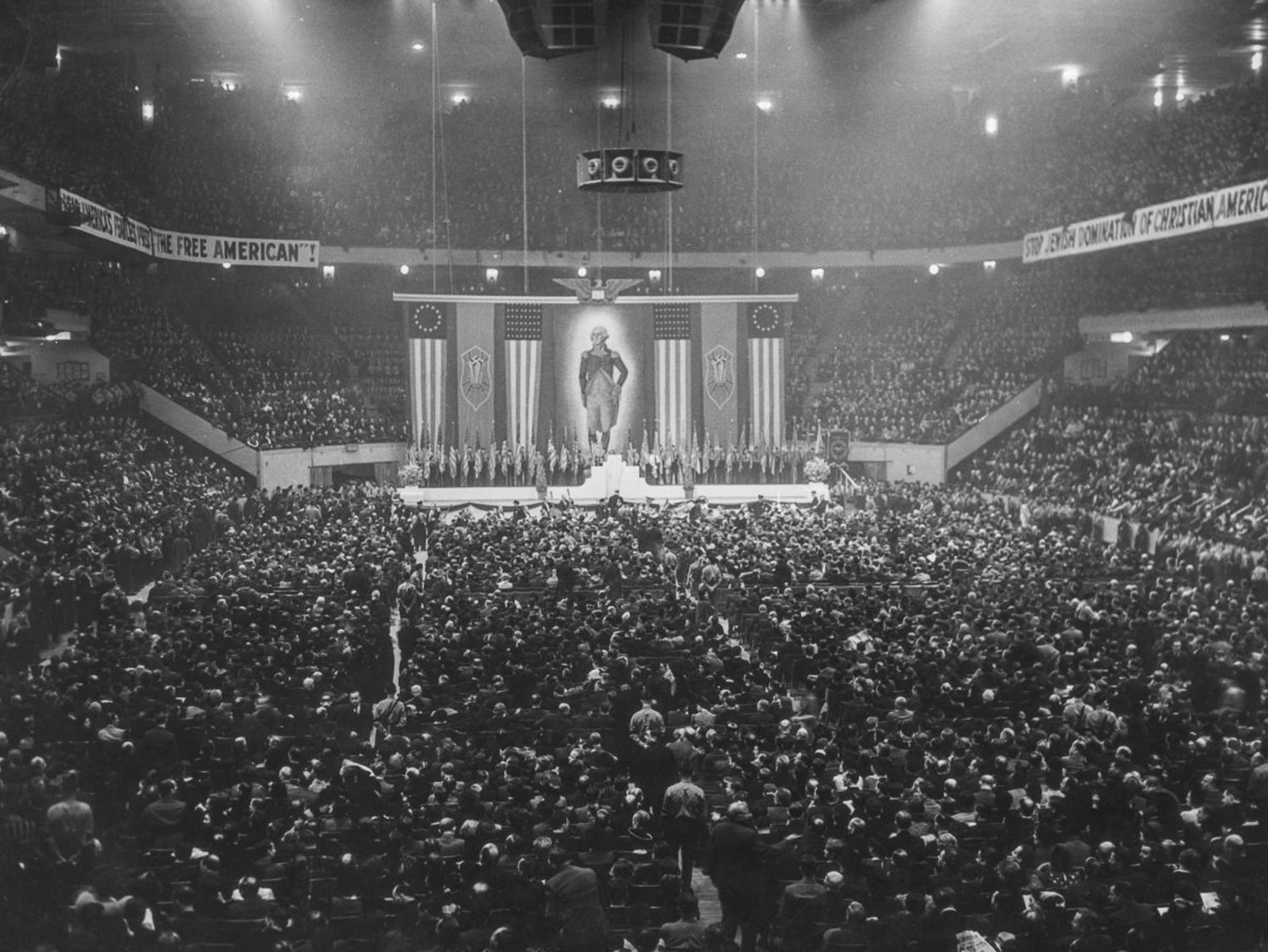
    Despite the lead photo in this article, I’m going to steer clear of politics. And, hopefully in 8 days’ time we can steer clear of 1939. For now, there is possibly one area where there is no debate. The 2024 US Presidential election is too close to call. That hasn’t stopped some big bets, and even bigger statements. But, they are just bets. For posterity, I took a screenshot of the latest betting probabilities yesterday. You might think “game over” with a 94.5% probability of a win for Donald Trump. I think not. Furthermore, the data doesn’t ‘think’, but instead provides robust guidance.


    First, not a single vote in the election has been counted yet. However, early voting has already started and is a mix of ballots mailed/returned in advance and early in-person voting at designated early voting stations in certain states. So, the data so far gives us an idea of WHO has voted. In turn, we can compare the profiles/mix of who has voted so far with the early voting patterns in the elections of 2016(Presidential), 2020(Presidential) and 2022(Mid-terms), and try to identify significant CHANGE. To add to the complexity of analysis this time are the unusual characteristics of earlier elections which make it difficult to make apples-to-apples type comparison. Here are the two most significant factors:

    Covid 19: Due to the ongoing pandemic health measures in 2020, early voting accounted for 101 million votes out of 158 million votes cast. Democrat voters overwhelmingly chose to avoid in-person voting and used postal ballot papers.

    GOP Election Strategy:The Republican share of that early voting was depressed by the party’s strong messaging on the potential for fraud, and encouragement to vote in-person on the day. That messaging has been reversed for the 2024 election.

    So, in the states where early voting registers record party affiliation we would expect to see reduced health fears lowering the share of Democrat early voting. At the same time, the share of Republicans voting early would be expected to increase. This is, in fact, what has happened. However, there are some interesting data points which might surprise when you look a bit closer. In the critical “swing states” where registration details are available there are ‘outlier’ representations (not votes) along ethnic, age generation, education, gender and party affiliation lines. Given we have 8 days and 8 articles to write, I don’t propose to go through each line today. However, given the 94% win probability flagged above, I’d start with a few ‘biggies’.

    The betting markets are not votes. However, one of the factors cited by the analysts is the very tight margins in the polls/surveys conducted with likely voters. As current polling sees it, the seven swing states (Wisconsin, Pennsylvania, Michigan, Georgia, Nevada, Arizona and North Carolina) are +/- a few percentage points for Kamala Harris or Donald Trump. In real terms these swing state pulse checks are “within the margin of error” which the experts think is 4-5%. Now, what gives the betting markets and various experts more fuel is the historic tendency of polls to miss the “hidden” Republican voters who turn out on election day. The consensus thinking is that the polls are probably not picking up this hidden Republican vote again. So, there’s a school of thought out there that thinks Trump is probably going to do 4-5% better than even the current polls are showing. Hmmm. That thinking presumes professional pollsters have decided to NOT model that factor again. That is unlikely given professional pollsters have had their credibility battered by big misses in 2016 and 2020. So, as a data person, I’m wondering if there’s now a possibility of  a 5% over-count of prospective Trump votes? Two factors are worth considering.

    Turnout:I said they’d be “biggies”. So, the biggest number of the lot is overall turnout. If it’s very high, or at record levels, then traditional analysis would suggest that favours a Democrat presidential win. Early voting levels at 50% of 2020 numbers at this point (41 million votes returned) indicates a strong turnout. But the next data ‘biggie’ is intriguing.

    Female Vote: The female vote has been bigger than the men vote in every US general election since 1964. In 2020 63% of eligible females voted vs 59.5% of men. Now, add the fuel of abortion/healthcare freedoms to female voting fire and consider the current female polling gap of 12% points in favour of Harris (55-43). In the other column, men break about 9% points for Trump (54-45). The maths of the female vote holding those levels is that a smaller male voting cohort won’t close the losing gap of 2020 even if Trump wins the men’s vote by 10%. Of course, the swing states will have their own cultural characteristics but arguably the ‘hidden vote’ this year could be female Republican voters switching to Harris. Recall current thinking is up to 10% of Republicans might switch (or stay home?). A further gender point is that Republican strategy is to get new male voters to vote. According to election strategists, that is notoriously difficult to deliver. Current early voting numbers are not showing any real male surge. On the contrary, the 248% increase in black female voters in Georgia is eye-catching. Also, in Michigan, the gender gap in the early voting is actually bigger than 2020 or 2022 (56.6% female, 43.4% male).

    For me, the female vote is the critical data point to watch. There have been millions of words written on shifts within the Hispanic vote, younger Gen Z voters and Black males but the big momma of this election is women. We will dig deeper in later articles. In particular, 2022 mid-term elections might be the more powerful guide to this one. It feels like not enough weight has been given to the massive 2022 swings seen in recent red states like Kansas, Ohio and Kentucky. As said, not a single vote counted yet, but here’s a bet which might be attractively priced right now…

    Just a bet but….. Kamal Harris to win the national vote by 5%, and wins 5 of 7 swing states easier than the polls show. Oh, and gets to within 1% of taking a huge red scalp in Texas or Florida. More tomorrow.

  • Torn In The USA: A European View

    Torn In The USA: A European View

    I know, I know. Who wants views, just get this bloody vote over with. Well, we hope the bloody bit doesn’t come true but, if you want Hitler’s generals and your chief cheerleader is a just-revealed Putin (pay)pal, then you never know. Anyway, forget the politics. Let’s pause and reflect where the US economy is today, not where it will be in 11 days. Also, note that financial markets, for the first time in 2024, through emerging market equities and inflation-measuring instruments (bonds, gold) are beginning to think about a different USA to come. However, in this article I’d like to highlight ten things which the average European would envy about our US ally today.


    1. The US stock market now accounts for 50% of the global total, but is home to less than 5% of the world’s population.


    1. The IMF this week (Financial Times) has provided some explanation for this dominance by highlighting stagnant European productivity growth since 2005. In the same two decade period US productivity has rocketed by 40%.


    1. Technology you say. You’d be right. Just 5 US technology companies – Apple, Amazon, Google, Microsoft and Meta/Facebook – have a collective market value of $12.2 trillion which is more than the value of any other stock market in the world. Indeed, the new AI chip star, Nvidia, is worth more than the entire stock markets of five of the G7 countries.


    1. The old stuff is going well too. US domestic oil production hit 13.4 million barrels a day in August. That’s the highest production number for ANY country(even OPEC) in history. The US is a NET exporter of oil while Europe watches its eastern gas pipelines anxiously. But, you won’t hear that on Fox News. Drill baby, drill…just not the facts.


    1. Not surprisingly, US banks with the biggest corporate customers in the world are doing quite well. US banking giant, JP Morgan, has a market value of $540 billion which exceeds the combined value of Europe’s top 10 banks.


    1. Maybe Europe will disrupt US economic hegemony and bounce back with AI? Ehhhh…that’s not looking like a great bet right now. The sheer cost of talent and large-language-models (LLM) used to train and build AI applications are turning the AI race into Big Tech 2.0. Recent newsflow would suggest it’s only Microsoft/OpenAI, Amazon, Meta and Google who have the deep pockets to win the race. And, Asia will be watching anxiously too. The Asian dominance of hardware/semiconductor chip production is in “transition” as Taiwan’s TSMC just told the markets that the production yields in its new Arizona plant are 4% higher than in its home base Taiwan.


    1. Speaking of home bases…US home owners are sitting on $32 trillion of value attached to their home equity. That’s a quadrupling of property wealth from the $8 trillion low recorded as recently as 2012. How did that happen?


    1. Jobs, and lots of them. The US economy is at full employment, the highest seen in 100 years. Oh, and average hourly earnings are up 26% since 2020. In fact, US real (adjusted for inflation) wage growth is up 26% since 2000. More companies too…


    1. Back in 2015, 2.8 million new companies were formed in that year. The number in 2023 was 5.5 million. That’s a near doubling of start-up activity in less than 10 years. And…. money doesn’t just talk.


    1. Risk earns rewards. High risk venture capital (VC) is the oxygen of innovation and explains much of the US tech dominance. The US capital markets are the source of 50% of ALL venture capital funding globally. Asia is 40%. And Europe…… ahem…… 5%.


    That’s enough. But, I could mention military dominance too as Russia impales itself on imperial delusion in Ukraine and is now resorting to throwing North Korean troops into meat-grinder combat action on its own soil in Kursk. Of course, the US is not in a perfect place, leaving aside its toxic partisan politics. Its health and hate crises seem to be impossible to address by looking overseas for solutions or perspective. Indeed, the sheer presence of 350 million guns in the most prosperous land on the planet are a startling reflection of fear in the midst of so much opportunity. We can only watch over the next few days, as US citizens cast their votes. The list of ‘wins’ above looks like a fabulous starting point. The polls suggest voters are not so sure.

    As Europeans, we can attest to similar ‘win’ lists for Germany and the UK ten years ago. Not so today, and their voters painfully know they played their part in believing not-so-great-again political calculations in new energy and trade policies. Tick tock…..


  • Raining Catfights And Dogs On The Trump Victory Trade

    Raining Catfights And Dogs On The Trump Victory Trade

    You could smell the global fear on Monday. By Friday, that fear mostly wafted around Donald Trump’s Mar-a-Lago compound. Forty five years ago Colonel Kilgore in Apocalypse Now first memorably stated, “I love the smell of napalm in the morning. It smells like victory”.  Arguably, the Republican party scribes will recount in time how the smell of ketchup-spattered walls in Florida this week marked the beginning of the end for a once-likely victory for Donald Trump. Tuesday’s Presidential debate watched by an audience of 67 million people was a disaster for Trump, and hailed as a triumph for “dumb as a rock” Kamala Harris. As eminent Bush Republican strategist, Karl Rove, cheekily asked, “What does that make Trump?”. A loser, but possibly there’s a bigger loser out there. It is interesting to note that Colonel Kilgore and Francis Ford Coppola’s Vietnam epic is today viewed as possibly the most powerful  “anti-lie” rather than “anti-war” movie of all time. Fast forward to today, and here are a few big lies under pressure in the real world, real money arena of financial markets….

    On the debate night, Trump flounced into the post-debate spin room declaring victory and quoting nonsensical Twitter and Fox viewer polls. However, as we always say… opinion is cheap, but investment decisions risk real money. So, it was striking to see the following morning that Trump’s publicly listed vehicle for his Truth Social platform, $DJT,  puked 16% of its value and now trades 80% lower than 6 short months ago. It should also be noted that the climate denial Don’s awful performance prompted heavy buying of clean/green energy stocks too; First Solar was up 14%, Enphase Energy up 5% and Sunrun up 10%…in one day. Let’s just say traders had a very different take on Trump’s bloviating spin-room review.

    We should also review some of the markets we highlighted in our article back in March “How To Trade A Trump Win”. In brief, we stated that there were three key ‘canaries’ which tracked the major Trump policies:

    Tariffs: Trump wants a 10% across -the-board tariff on all imported goods. Tariffs on imports are agreed by all credible economists as inflationary costs borne by the consumer. But…current inflation expectations in the market tracked by bonds, loans and money markets suggest those tariffs ain’t happening. Moreover, the current inflation rate of 2.5% is at a 3-year low. In fact, if one were to step out of the partisan bubble of US politics, one would know that the US is the global superstar in the post-Covid inflation battle.

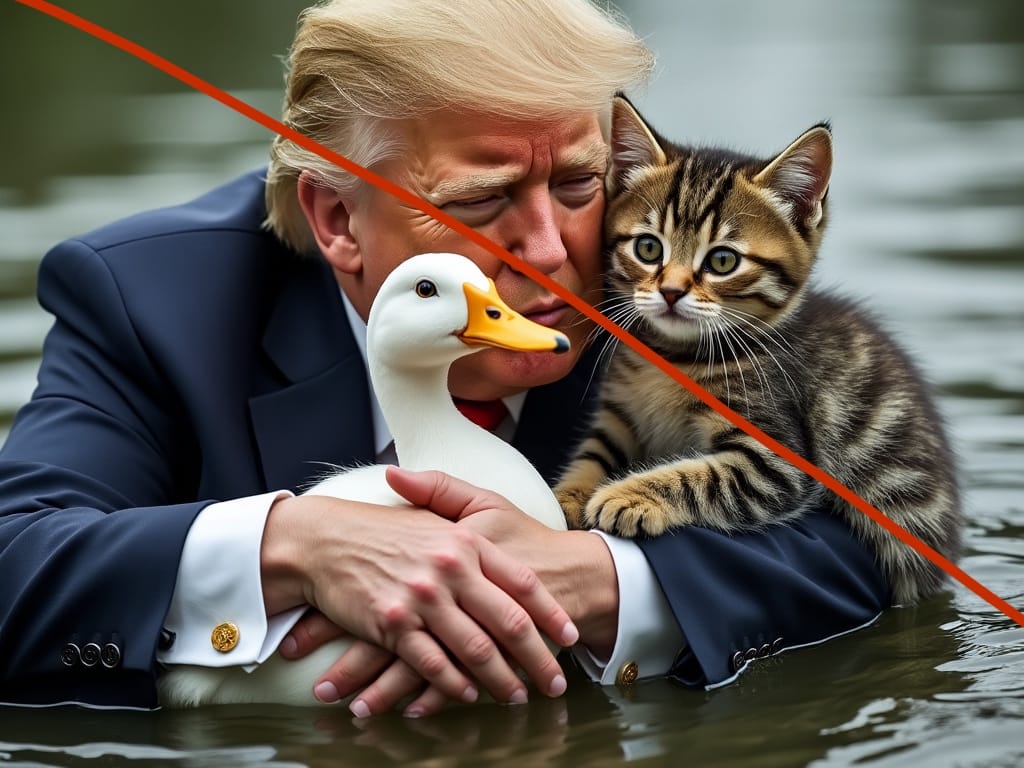
    Oil: The Donald likes to tell voters he’s the fossil fuel industry’s best friend while promising consumers he will cut energy bills by 50%. This is almost as ridiculous as promising to protect cats, dogs and geese in Springfield Ohio, and becoming quite embarrassing for the Trump team on both fronts. Even Homer Simpson could tell you US oil and gas production is at all time highs of 14m barrels per day (vs Saudi Arabia 8m!). Meanwhile, oil costs measured by benchmark Brent Crude prices are back to the same levels seen before Russia’s full invasion of Ukraine in February 2022. Go figure!

    Ukraine: Finally, on the subject of foreign policy, and Ukraine in particular, the chances of a Trump victory also look flaky. We flagged the extreme risk of placating Russia – with ceasefire negotiations forced by Trump’s ending of Ukraine military support – and the threat this capitulation posed to eastern European countries like Poland. Well, check out Poland’s stock market; in the last 12 months it has roared upwards by 40% compared to the giddy S&P 500 ‘only’ rising 26%. Smell that Trump capitulation fear? No, me neither.

    The financial markets are struggling to believe Trump, and his chances of victory. With less than 60 days left before voting, expect an increasingly panicked Trump campaign team. The meltdown of Trump immigration/racist-in-chief, Stephen Miller, when being caught out on a Venezuela crime statistic lie is one for the ages. And, for pure popcorn moments, keep an eye on the social media spats between rabid Trump surrogate, Laura Loomer, and the more restrained Marjorie Taylor Greene(no really!) and Senator Lindsay Graham. You just couldn’t make it up. Well, Donald could.

  • D-Day Lesson For These Roaring ’20s?

    D-Day Lesson For These Roaring ’20s?

    The events of D-Day 80 years ago this week usually feature in the closing chapters of World War II history texts. My own current curiosity lies elsewhere, more focused on change and beginnings. Not the Reichstag fire, not Sudetenland, not Kristallnacht, not Lebensraum, not Poland. These were all events in the 1930s which historians agree shaped the outbreak of a global war. However, that decade of economic distress and social anger, whipped up by populism and propaganda, was probably inevitable. Indeed, it’s possible the seeds of war were sown much earlier. The previous decade known as the “Roaring Twenties” introduced huge economic, cultural and technology advances, but the 1929 crash and Great Depression which followed were the key catalysts for the global horror ahead. That lesson from history should not be forgotten. In fact, we should be on our guard. Welcome to the new Roaring ‘20s….

    It’s not just Reddit influencer, Keith “Roaring Kitty” Gill, reportedly banking hundred million dollar profits trading ‘meme-stocks’ like GameStop in recent days. There’s more than just a sense of giddiness about. Recall the 1920’s witnessed the arrival of mass-production and mass-consumerism as automobiles, electricity, cinema, radio and aviation made technology affordable to the middle class. And, then it wasn’t. Financial collapse and the implosion of banking leverage has been a feature of global economic cycles ever since 1929. It wasn’t a once-off in 1929. The global credit crisis in 2008-2009 proved that point, and then some. The critical factors in these financial earthquakes are excessive confidence and over-estimation of demand. First let’s illustrate confidence….


    • The S&P 500 benchmark index for global stock markets has not experienced a daily decline of 2% or more in 325 days (Source: Reuters).
    • The market capitalisation of a media company whose key ‘product’ and biggest shareholder is a convicted felon with presidential ambitions is currently over $8 billion (Source: Truth Social – just kidding!).
    • The private credit (lending) market has grown from $250 billion in 2010 to a whopping $1.7 trillion today (Source: Prequin).
    • This week AI chip maker, Nvidia, became the second most valuable private company in the world with a $3 trillion market capitalisation (Source: Bloomberg)


    Regular readers will know my views fall mainly on the optimistic side of AI. However, the odd sanity-check does no harm. Nvidia is a semiconductor manufacturer. In 2023 revenues generated by the entire semiconductor manufacturing sector globally reached $526 billion. So, for context, Nvidia’s market value is now six times the entire industry’s global revenue. I know analysts will talk about future AI spend, cash rich Big Tech customers and real demand, but there’s one other aspect to this growth story which is a little bit different with historical lessons.

    Legendary tech investor, Marc Andreessen, penned his “Why software is eating the world” essay in the Wall Street Journal in 2011 and there is no doubt software has embedded itself in every phone and corporation on the planet. The lovely thing about software is that it is embedded in an activity, generates recurring (frequent and relatively small) revenues and user stickiness/dependency is high. At a basic level software is code. It’s digital, not physical. Sure enough, coding platform giants Microsoft, Google, Amazon, Meta, Baidu, Alibaba etc. have dominated the league tables of most valuable companies in the world since the Andreessen prophecy. But, there has been a subtle recent shift in the value hierarchy.

    Consider that two of the three largest capitalised companies in the world are now HARDWARE manufacturers (Nvidia and Apple). Hardware is physical and brings an entirely different business model and a myriad of challenges including supply chain risks, materials, energy, sustainability, customer credit, consumer fashion, inventory management and capex investment. We don’t have a crystal ball in forecasting ultimate demand for AI but the semiconductor industry used to be known for its vicious cyclicality. With my risk history hat on, I’d venture there’s every chance this manufacturing sector will experience mismatches between supply and demand.  Of course, the automobiles and radios of the 1920’s might not resonate with today’s AI and technology enthusiasts. However, I’d highlight three other numbers which perhaps add to the “Roaring ‘20s” feel right now:

    Sport: The breakthrough of sports like boxing and athletics on a global scale was a feature of the 1920s but fans mostly followed events by radio. Now, it’s TV (or streaming). So, when basketball’s NBA is about to treble its broadcasting deal from $25 billion to $76 billion you do wonder about excess, and the projections of Amazon, NBC and ESPN? Maybe it’s the constant circling of private equity (PE) around US sport….? Latest data from Pitchbook research shows 63 US professional sports franchises have a PE ownership connection where PE involvement is allowed (NBA, MLS, NHL and MLB). Funnily enough, basketball (NBA) leads the way with two thirds of all teams in the league connected to PE.

    Securities: The 1920s saw the banks and their celebrity brokers on Wall Street begin to sell stock and bond securities to main street for the first time. Then came the ‘shoe shine’ moment in 1929.  Fast forward to today’s celebrities of the private equity universe and a recent FT report on that exclusive world. The headline-grabbing data point(and possibly harsh) suggests that, in the period 2010-2023, private equity funds raised $820 billion more than they actually returned to investors (Source: Prequin).

    Prohibition: Alcohol and gambling was the government target in the 1920s. So, remember when Bitcoin and its cryptocurrency ecosystem was dismissed by the ‘puritanical’ zeal of high street banks, regulators and law enforcement? Today, Bitcoin is trading above $71,000 and the total value of the crypto universe is $2.8 trillion. In fact, there are now billions of dollars invested in funds owning cryptocurrencies (ETFs) which trade daily on highly regulated public exchanges. Now, that’s a morality tale with a twist.

    Of course, the reference to Prohibition conjures up images of organised crime, judicial corruption, entire city governments ‘on the take’, high profile mob trials and flagrant violations of the rule of law. Couldn’t possibly happen again, could it?  Take that question with just a pinch of orange. On a more serious note, the erosion of the US rule of law is possibly a bigger threat in our immediate future than cyclical excess. Hopefully, the remembrance of D-Day sacrifice will remind those in power of their duty to call out faux (or Fox) ‘patriotism’. And, perhaps a read of the final speech in Charlie Chaplin’s The Great Dictator would help. Ironically, Chaplin’s own patriotism was questioned during a later shameful period (with my surname!) in US Congressional history. The Little Tramp’s words seem timely once again…

    Let us fight to free the world – to do away with national barriers – to do away with greed, with hate and intolerance. Let us fight for a world of reason, a world where science and progress will lead to all men’s happiness. Soldiers! in the name of democracy, let us all unite!    –  The Great Dictator (1940)

  • Another Heroic Age Begins…..

    Another Heroic Age Begins…..

    I’m nervous. My trip to the Park Hotel Kenmare this week isn’t quite in the league of those heroic voyages chronicled in ancient Greek mythology, but the dress code request on the invite pumped the pulse rate for a moment. Just a moment. The invitation to recreate the year of the hotel’s opening in 1897 in a gathering of mostly creative types (after momentary panic) seemed like an opportune way to ditch my far-from-hip personal wardrobe and embrace Victorian disguise. Party on, but still I’m nervous. I have this nagging feeling that the years 1897 and 2024 might have more in common than we’d like to imagine. Indeed, Mark Twain would say the years and risks are rhyming.

    The Thirty Days War of 1897 between Greece and the Ottoman Empire (Turkey) was hardly a century, or even decade, defining event whereas the current war in Ukraine is generationally significant for Europe. Furthermore, the first border-to-border direct attack by Iran on Israel in the past week could, left to escalate unchecked, threaten the planet with warfare of global dimensions. Neither of the current conflicts will necessarily snowball into multi-country warfare, but 1897 starkly demonstrated how military alliances fracturing under pressure in local skirmishes can lead to tragic global outcomes.

    Just before the Greco-Turkish War broke out on the mainland in 1897, there was an intervention made by The International Squadron, a naval flotilla formed by the ‘Great Powers’ of Europe (UK, France, Italy, Russia, Austro-Hungary, Germany) to address a rebellion by native Greeks on the island of Crete against rule by the Ottoman Empire. Apart from being a precursor to war on the mainland, the Cretan intervention ultimately led to strategic disagreement followed by Germany and the Austro-Hungarian Empire withdrawing from the International Squadron. Only seventeen years later the same Balkan region erupted, and those two nations formed the Central Powers alliance with Bulgaria and the Ottoman Empire to fight the Allied Powers in World War I. So, fast forward to today and it’s not difficult to spot the strains in geopolitical alliances as they confront the following crises:


    Ukraine-Russia: European members of NATO bordering Russia are terrified by Ukrainian funding (frozen) being used as a partisan political chess piece in an increasingly dysfunctional US Congress. How long before Poland asks for, or sources, its own nuclear deterrent against Russian aggression….?

    Israel-Iran: Clearly, hundreds of missiles launched directly against Israel by Iran is a worrying first-time development in the traumatic history of the Middle-East. However, the co-ordinated defence of Israeli and neighbouring airspace by a coalition of US, UK, Jordanian, UAE, Saudi and Israeli forces could be considered a relatively surprising show of unity between Allied and Arab nations. Less encouraging is the horror of Gaza, and European countries (and the UN) looking for the US to pressure Israel’s leadership into a more humane approach.

    China-Taiwan: The potential collapse of munitions-starved Ukraine is not just terrifying eastern European nations. The perception of ‘abandonment’ of Ukraine by the US has massive European and NATO implications, but will also reverberate through Asia-Pacific island nations watching China’s moves on Taiwan. It is no surprise to see high profile visits from the leaders of Japan and the Philippines to Washington in recent weeks. However, the fate of Ukraine will be the true indicator of the strength of this trilateral alliance. And, China will be watching closely.


    Arguably, the timing-fuse for the potential explosion of any of the above crises is going to be a lot shorter than 1897’s seventeen year WW I burn. So, do we panic or seek inspiration? Geopolitical leadership, frankly, is lacking courage or heroes right now. However, dig deeper into the history of 1897 and that year’s other claim to historical significance was its status as the beginning of the last “Heroic Age” and lasted until 1922. This 25-year period saw 17 pioneering Antarctic expeditions launched from 10 different countries, but the Antarctic was not the only study subject enhanced by these expeditions.

    The methods of expedition commanders like Robert Scott, Roald Amundsen and Ernest Shackleton have been the subject of many academic studies and have provided a uniquely pure window into different leadership approaches to life or death decisions under extreme conditions while cut off from the outside world. Geopolitical anxiety aside, I am increasingly optimistic that the stars are aligning for another Heroic Age. So, who are today’s heroes and where is the 2024 unexplored equivalent of the Antarctic? More importantly, can these exploits alter the geopolitical direction of travel?  I have three pioneering hopes.

    Space Exploration: The brilliant George Mason University economist, Tyler Cowen, asserted more than 10 years ago that the US economy had been in a long productivity stall since the early 1970s. He referred to it as The Great Stagnation and this appears to have coincided with the suspension of genuine space exploration in the form of manned lunar landings since 1972. Undoubtedly, the space race of the 1960s accelerated many technological developments so I’m wondering will the renewal of manned space voyages to the moon (Artemis II) and Mars trigger global progress in remote services and activities. Consultancy group, McKinsey, have estimated the space economy will be worth $1.8 trillion by 2035. So, that’s almost like finding another Brazil with lots of new investment capital driving innovation. Think tele-health, agriculture, communications etc. Space exploration also remains a beacon of hope for collaborative endeavour – see the International Space Station (ISS) as a continuing example of cooperation between Japan , USA, Russia, Canada and the European Space Agency.

    Artificial Intelligence (AI): We have written many times about the urgent need to defend The Truth in a digital world overwhelmed by misinformation and bad actors at a corporate and sovereign level. So, it might seem strange that Artificial Intelligence (AI) could be part of the solution. A quick glance at any media headlines would suggest AI will be in the vanguard of misinformation rather than authenticity. However, I am struck in my day-to-day investment role by the number of recent AI applications which focus on one area and also could be a very profound instrument in the discovery of truth. The latest AI focus is video. We know Gen AI tools like Chat GPT or Gemini can be used to deliver super-quick summaries of large volumes of text from market analyst research to autobiographies to business plans. But, now hours of video can be analysed and checked in minutes, even seconds. So, imagine a future screen broadcast which is actually two screens, and the second screen is not a betting or chat platform. The broadcast could be Liz Truss, Donald Trump or Vladimir Putin in full delusion mode and the second AI screen could fact check (or just show previous contradictory video footage of same speaker) and alert viewers to misinformation. My hope is that real time credibility checks could be incredibly powerful in exposing populist charlatans and assisting truth discovery.

    Healthcare: Every week we read about new therapeutic discoveries using gene editing (CRSPRS), cell therapies (CAR-T), mRNA vaccine platforms, neural implants(Neuralink) or even drug manufacturing in space using micro-gravity(Varda). Healthcare remains a challenge for all governments and the recent memory of the Covid-19 pandemic should be an inspiration for further research co-operation. Recent news headlines on WHO worries about H5N1 bird flu mutations will likely focus minds and provide a potent reminder that viruses don’t stop at disputed historical borders. Indeed, a government closer to home looks like it will lose power despite delivering best-on-planet economic performance. Why? Ireland’s government coalition didn’t do enough on the health (hospitals) and safety (homes) of its citizens. You would have thought focus groups and polling research might have picked up on that genetic human instinct……to live. Politics, eh.

    So, maybe nothing much has changed since those courageous expeditions trudged across an unforgiving continent all those years ago. As a species, we are probably still driven by the same three things: discovery of new worlds, the truth, and survival. Clearly, success in these pursuits can be shared and, in turn, bring humanity closer together. So, I’m not sure this vision of our future requires heroic optimism, but we could definitely do with some leadership. And…. I’m sure the ghost of Tom Crean would have some wise Kerry thoughts this weekend on where it can all go wrong.

    P.S. The dressing up worked out, the creative crew were fantastic company, and the hotel is wow….!


  • Five Numbers Say Don’t Give Up….

    Five Numbers Say Don’t Give Up….

    Perhaps it’s the prospect of beginning a 100 day no-alcohol stint which is causing, on my part, a sudden obsession with numbers. Then again, it could be just a time thing. I mean, who knew one of the World Darts finalists would be younger than the iPhone? Or, that just 9% of UK voters believe Brexit is going to plan? Well, probably the rest of the world knew that a policy to sanction your own economy more heavily than Russia was going to end in tears. However, the rest of the world should drop the sermons-in-smug and pay attention to the first of five key numbers we are watching in 2024….

    Climate Crisis: The temporary visit on November 17th of global temperatures more than 2 degrees above pre-industrial averages is a five-alarm-bell ringing of an existential crisis for the planet. Given we have been in perpetual storm mode since late November, and the storm-naming cycle is already past “H” with Storm Henk, there is a personal sense that bad news could be good news. In particular, catastrophe losses in the insurance and capital markets could focus political leaders’ minds on the sheer cost of loose non-urgent language in the recent Cop 28 commitments.

    Bond Markets: We regularly remind readers that the cost of money (interest rates) is the critical driver of ALL asset prices. The number which caught the eye this week was that bond prices (which fall when interest rates/yields rise) have been in negative territory for 41 consecutive months – the longest ever draw down in history. And, forgive the repetition, but again bad news might actually be good news for bond prices. In other words, a slower economic environment and some employment weakness could be the trigger for global central banks to ease interest rates and allow bond prices recover.

    Venture Capital: In the Spark world of start-ups we are always watching the private markets as well as the more liquid (and better performing) public equity markets. The S&P 500 might have sucked in AI-excited investment and delivered 25% gains in 2023, but for younger companies access to capital was far more difficult. The VC data research team at PitchBook reckons global VC funding fell to $345 billion in 2023, down from $531 billion the previous year. In private equity, deployment of capital dropped by 29% and exit activity was down by 26%. That’s the worst combined performance since 2016. However, the silver lining in these numbers is that funding activity has shifted away from more mature private opportunities to early-stage, seed-type investments. In fact, two in every three deals done were in early-stage companies.

    Cleantech: While Tesla is overtaken by Chinese rival, BYD, as the top electric vehicle(EV) producer globally, there is strong evidence that Europe is ramping up its capabilities in the EV ecosystem. Buck Consultants have published research forecasting the installation of 250 EV battery gigafactories in Europe by 2033. This won’t be a huge surprise to those who have seen McKinsey estimates of annual cleantech spend until 2050 exceeding $6 trillion. Imagine investing more than the entire GDP of Japan every year…..for decades.

    Democracy: Of course, investment in our survival and a phasing out of fossil fuels can only happen with strategic political leadership. The shift to right-wing populism has been a striking feature of the global political landscape in recent years but 2024 is truly the “Year of The Vote”. The US and UK are high profile elections on the horizon but the global stakes are much much higher than that. Seven of the ten most populous countries in the world, with a combined 4 billion voters, go to the polls in 2024. That’s 46% of the world’s population, or 54% of global GDP, deciding where we go next. Oh, and don’t forget European/MEP elections this year too.

    So, we can perhaps understand why financial markets are opening up 2024 in a jittery manner. However, as Sergeant Kenneth “Hutch” Hutchinson departs in his iconic red Gran Torino for his celestial precinct in the sky, I’m hopeful that young companies and young voters can put the five numbers above on the right trajectory. In particular, we must hope that younger voters reject the fear fraudsters and focus on the sustainability of their own future. Dare we suggest that the temperatures of both hate and climate are the key dial-down numbers to their survival, and engagement? Or, as David Soul might sing, “Don’t Give Up On Us Baby…”

  • Joe Biden’s Letter To Santa

    Joe Biden’s Letter To Santa

    If Joe Biden were to ask for just ONE thing this Christmas it would have to be a new writer or storyteller. I was reading various geopolitical scribes this week describe the poorly-polling Biden’s problem. According to the middle-ground commentariat, the Biden administration is describing an America with fantastic headline achievements on the economy but which the average American is not feeling on Main Street. Well, go ask the rest of the world. In fact, if Biden’s team were to follow through on their belief that “America is an idea, not a geography” then the solution to their messaging woes is staring right at them. Simply put, The USA has never been in a stronger economic or geopolitical relative position in its entire history. So here goes the report card….

    The latest GDP print for the US shows an economy roaring along at 5% growth rates. That’s the first time in decades the US growth rate has overtaken China and there’s more relative superiority to report. Other large economies at a European or Asian regional level are not seeing that growth and you will only find US-envy among German or UK voters currently enduring stagflation.

    US voters may not know it but international investors have already spotted US relative dominance. US stock markets clocked a stunning 8% monthly gain in a very rocky geopolitical November. The broader S&P 500 index is up almost 20% year-to-date and the tech-heavy Nasdaq indices have rocketed just shy of 50% this year.

    We always write about how the cost of money drives asset prices everywhere. A lower cost of money is good news and the US bond market has indicated a 0.75% drop in interest rates in the last few months. In real life terms that’s the equivalent of the central banks cutting rates by 0.25% three times in 6 weeks. It is US businesses and mortgage holders reaping that benefit, not any Europeans.

    Oil prices are back below $74 per barrel despite a Middle-East war. Of course, you won’t hear any Trump-cult Republican blowhard talk about the fact that US oil production is currently roaring along at 13.2 million barrels per day. Yep, that’s more than any country has ever produced in history. Not great for the climate, but a historic mark for US energy independence. Hold that climate thought….

    On climate and cleantech the US is leading the way in transforming the industrial base of America. The Biden IRA Act is pumping more capex investment into the US economy in this presidential term than in any of the last 3 decades. The nation is at full employment, but to paraphrase Jeff Daniels’ famous monologue in the TV series Newsroom, the average American and all Fox News viewers have “become fearful”. The daily dose of fear on US media is staggering – “deep state”, Qanon conspiracies, baby-snatchers, immigrant hordes storming the borders, lawless cities, race replacement theory, and on and on it goes. No wonder there are more guns owned (350 million) than the number of people living in this fear frenzied nation.

    It is clear that Biden’s story must feature the rest of the world. These are challenging times for the whole world, but somebody needs to tell the average American they are doing better than pretty much everyone else. The US is not perfect but it is definitely leading the planet on multiple opportunity metrics. Even better, the “America as an idea” vision is truly happening; eight of the US’s largest corporations including Microsoft, Adobe, IBM and Google have Indian-born CEOs. Incredibly, of the 700 US ‘unicorn’ start-ups with valuations above $1 billion, 100 of those companies have Indian founders. And, the beauty of nation power without borders is that it can drive activity globally.

    We already have supra-sovereign corporations with billions of customers from Google to Microsoft to Facebook. Others will want to follow from outside the US. We are now reading about China retailer Shein readying for a potential $80 billion IPO. Elsewhere, in the venture capital world Q3 funding activity globally was up 11% at almost $65 billion(Source: CB Insights). And, for those of us in the start-up universe, we are always watching exit activity. So, check out Q3 M&A activity in acquisitions which were valued at more than $100m each; deals in that $100m + category were up 38%. Also, it was interesting to see VC Q3 activity in retail fintech increasing at a 53% clip.

    Back in the US, inflation has been tamed and month-on-month price increases reduced to ZERO %. That will help Biden along with a crippled Russian military, a non-escalation by Iran or Hezbollah over Gaza, and a critical uptick in US consumer confidence. We don’t need Gen AI to write this story, albeit the US controls the 3 largest AI models globally through Microsoft(OpenA)I, Google (Bard) and Amazon (Claude/Anthropic). So, we will put that down as another Biden win too.

    In the interim, I will just wait for that call……or write to Santa myself.