Category: General Financial

  • Watch For Rogues In Retreat

    Watch For Rogues In Retreat

    What a time to be alive. I see TV news about a former US president now requires bracketed warning notices saying “not a typo” running alongside chyron headlines. Not a typo. Yep, it certainly has its role in the media these days. But, while we’re at it, let’s consider the rather innocuous percentage of 15% of Americans in a recent poll who agree with a Qanon conspiracy theory that their government and other public entities are controlled by Satan-worshipping pedophiles running a child sex trafficking ring. That equates approximately to half the US voting population who identify as Republicans. So, it is possible.

    However, if I turn that into an absolute number I’m compelled to attach a “not a typo” notice to the fact that potentially 50 million Americans are weapons-grade batsh*t crazy. Now, we are talking about a vulnerable audience which is within shouting distance of the populations of Spain, South Korea or Italy. Then, throw into the mix that 12% of Americans(40 million, not a typo) recently polled do not have a single close friend and I’m beginning to understand how bad news seems to win eyeballs. Moreover, the media moguls know it too. As a species, fear and bad stuff engages us more strongly on an emotional level, and what the consumer wants, the consumer gets. So let’s start with an example of the fear stuff this week.

    Regular readers will know I’m slightly bemused by the negativity attached to “Jobs Biden” and the industrial revolution taking place in the US. Only today I see that, according to the Department of Energy, 95% of counties in the US have seen the number of jobs in energy increase(not a typo) between 2021 and 2022. What say the fossil fuel climate deniers to that awkward truth? And yet, the commentariat still manage to come up with a new fear. How about the spiritual home of oil, the Middle East?

    Just last week I spotted a headline stating “America has lost the Middle East. Now it’s the turn of Russia and China to move in.” Cue, a cornflake choke in Gravitas Towers and a wipe of the eyes. Then, I double-checked the recent newsflow about China and Russia to reassure myself that all was not imagined. Sure enough, I picked up a distinct vibe that both China and Russia were moving, but not in a good way. Let’s go to the Middle Kingdom first which has managed to catch the eye of every financial trader on the planet in recent days, bar possibly the author of the headline referenced above. Here’s how China has been moving in recent weeks…


    • China central bank unexpectedly cuts rates to support sputtering economyReuters
    • China stocks hit after developer Country Garden suspends some bond tradingFinancial Times
    • China suspends youth unemployment data after record highBBC
    • China Property Investment Drop Deepens As Beijing Vows HelpBloomberg


    The uncomfortable truth for any autocracy is that the ‘party line’ can only work up to a point. Then, the money talks. Clearly, the $80 trillion Chinese property market and associated debt mountains are experiencing the Wile E Coyote moment familiar to Japan market veterans and survivors of the Troika Tricolour work-out period closer to home. Increasingly, we read of the potential “Japanification” of China – a multi-year unwind of huge debt mountains. We shall see, but what might be more difficult to imagine is China deploying investment capital overseas while it is shoring up balance sheets throughout its own economy. Of course, President Xi is not the only autocrat receiving a sharp lesson in international capital flows. The multi-year award winning war criminal, Vladimir Putin, has not only incinerated his best military assets on the mud flats of Ukraine, but has broken the Russian economy too. So, before he ‘moves in’ on the Middle East the following possibly needs his urgent attention:


    • Russian Ruble At Weakest Level Since Early Days Of Ukraine WarWall Street Journal
    • Russia Sharply Raises Interest Rates As Wartime Financial Problems Pile UpThe Times of India
    • Russia’s inflation spike sets Kremlin and central bank on collision courseCNBC
    • Russia could reintroduce compulsory sale of FX revenues “at any moment”Reuters


    For me, the rogues are clearly in geopolitical retreat driven back by the realities of international financial markets. Of course, there will be those who will caution us to be careful what we wish for. Indeed, a Chinese economy in serious bother would not be a good thing but Japan-like subdued growth could help on the inflation fighting front. Also, did I mention another country with 1.4 billion citizens trucking along at 7% GDP growth rates? It might just be perfect timing for India to pick up the Asian growth baton and re-balance western economic dependencies and supply chains. Simply put, in today’s global economy there is more to Asia than China. Anyone spot a Vietnamese company doing an IPO in New York this week? For a brief moment the valuation of electric vehicle (EV) manufacturer, Vinfast, exceeded that of Ford and GM…..combined.

    Anyway, I’m in the optimistic camp and firmly believe the more realistic fear is domestic implosion for either Russia or China rather than overseas ‘moves’. I’m also hopeful that the younger generation might become more savvy consumers of media. The median age of a Fox News viewer is 65, and he/she has binged on a Murdochian fear-fest of threatening imagery for years. … remember those Fox News ‘War on Terror’ chyrons blazing across our screens while gun manufacturing and Sackler opioid sales machines sold the real deal; domestic terror on a scale greater than total US losses in the Vietnam War, every bloody year.

    So, scrutiny of words rather than emotional images might be a start. And, my favourite data point of the week is that, per YouGov, up to 60% of US under-30s prefer to watch TV with subtitles on, even in a language they speak. Hopefully, one day words and truth will regain primacy and the media rogues will fall into retreat too.


  • Don’t Bank On No Change

    Don’t Bank On No Change

    Speaking English can dramatically slow infrastructure projects. The results are in, and Spain and Italy do big infrastructure better than the UK, US, New Zealand, Canada, Ireland or Hong Kong. That’s according to a Transit Costs Project(TCP) report cited by Sean Keyes in an excellent piece in The Currency this week. The comparison is possible because TCP looked at 900 metro projects across the world and well, a tunnel is a tunnel. The staggering 10x variation in the cost of building 1km of metro is for another day’s discussion or a read of The Currency. However, our focus in this piece is banking. We know banks have two operational levers; a deposit rate paid to savers and lending rates charged to borrowers. But, did we know language might again separate national banking delivery for citizens?

    Check out the news this week. The Italian government shocked the markets this week by announcing a ‘windfall’ tax on supra-normal Italian banking profits generated by much higher lending rates which were not shared with savers via deposit rates. The Spanish had already moved to do the same because its banks had only passed on 8% of rate gains to depositors. In Italy that proportion of gains was a measly 11%. However, in Ireland that number is just 7% versus the euro average of 20% ( Source: Financial Times and S&P Global Ratings). Dearie me. Looks like Europe’s banks have been keeping more than just the change. You might even say “plus ca change” but, as always, there is other CHANGE coming down the tracks. Perhaps the bigger news this week was in a monetary world which has been under even more fire than the dinosaur banks.

    Cryptocurrencies as Trumpolini might say are “going through some things” but I’m in the camp that believes digital currencies entering mainstream usage is inevitable. Particularly, if the currency is “backed” by everyday financial assets. A cryptocurrency whose value is fixed, or pegged, to the value of a major currency like the dollar is known as a “stablecoin”. And, this week PayPal launched its very own stablecoin (PYUSD) fully backed by the US dollar. Now, think about PayPal’s 430 million users and the network effects of these digital currency flows. However, it doesn’t feel like it’s just the traditional banks who might be missing a significant shift. We actually should be paying attention to another under-pressure asset class.

    The VC world has been as miserable as a Trump legal team this year but two things caught my eye this week. First, the latest VC report from CB Insights was highlighting an uptick in one part of the market for the first time in two years. Global corporate venture capital (CVC) funding of $14.6 billion in Q2 was the highest level of activity seen since Q3 2021. More intriguing, was evidence of a recovery in CVC fintech deals and funding activity with $2.1 billion across 143 deals delivering 5% and 8% growth respectively, and arresting a six quarter slide. I was thinking about the fact that it is companies not funds starting to make moves and also why fintech was reversing trend rather than deal teams sticking with the the hotter cleantech or health tech sectors? Then I read something which resonated with a previous piece we had written about London’s fintech scene and the massive activity databases owned by traditional banks.

    The always thought-provoking Angular Ventures newsletter suggested “AI may not be that disruptive after all”. In this instance they are referencing the huge volumes of proprietary AI training data available to Big Tech incumbents like Microsoft, Amazon, Google and others. They are also suggesting the owners of large datasets have a very significant head start on wannabe smaller disruptors.When you consider the S&P 500 performance this year is being driven by a small number of Big Tech stocks you do wonder is the market already seeing an incumbent sustainable “edge” versus smaller disruptor competitors? Indeed, it is amazing to see just 10 stocks account for 30% of the value of the entire S&P 500 and this possibly underpins that thesis.

    We shall see, but if there is one sector where the incumbent databases might be in the wrong hands, then perhaps it is the banking sector. And, that might be why corporate deal teams are revisiting the fintech space. Also, we should consider the fintech payment networks(PayPal, Stripe, MasterCard etc) and wannabe networks (X or Twitter!!) as those best placed to win the trust from bank customers who have clearly not seen their fair share of interest rate and savings returns. After all, change is almost guaranteed and trust is the universal banking language.


  • Six Degrees Of Change

    Six Degrees Of Change

    It’s not just the Joycean waters of The Forty Foot reminding us of a very changed world. The much higher June water temperatures make for alarming headlines but a smaller news item did catch the eye. The private equity founder of EV battery giant, Northvolt, and hydrogen steel producer, H2 Green Steel, is now getting into heat pumps. Harald Mix is launching Aira to sell air-to-air heat pumps on a monthly fee basis directly to consumers who are loving the energy efficiencies of a heater/AC combination. The technology is not new but has massively improved as a highly effective way to relocate heat, outside-to-in or inside-to-out. Not surprisingly, in a Russian gas decoupling world, the attractions of a safer, smaller and electrical option has been a big hit with European consumers. Check out these numbers….


    • Three million heat pumps were sold in Europe in 2022 which was a 38% increase on 2021’s total.


    • In 2022 Germany experienced 53% growth in heat pump adoption; Poland’s growth rate was closer to 100% and Finland leads in units sold per household.


    • The International Energy Agency (IEA) has published a good report showing heat pumps are already cheaper than gas heating + traditional AC in every country except for the UK(!).


    This might surprise readers but heat pumps are a rare example of a green technology installation where Europe or the US is actually leading the world. In most cases, China leads the world. As an illustration, the Chinese will install 154 GW of solar capacity this year alone. That’s more than the TOTAL installed capacity of the US. In fact, Beijing’s combined wind and solar ambitions for 2023 are bigger than what the entire world built in 2020. But, perhaps the next statistic will be the one that causes European heads to wobble. For those just getting used to the recent blast of radio ads for Chinese manufactured cars, be aware Europe’s auto industry relationship with China is about to flip. By the end of this year, China will become a net exporter of autos and auto parts to the EU. In fact, China has overtaken Japan as the largest exporter of electric vehicles (EVs) globally. Before we worry for Europe’s established auto manufacturers, let’s consider another surprising data point to emerge this week.

    A report in the FT this week points out that back in 2008 the EU economy with a GDP of $16 trillion was ahead of the US’s $14.7 trillion. Fast forward to 2022 and the US economy has grown to $25 trillion while Europe(including UK) crawled to just under $20 trillion. That’s a serious divergence in fortunes and perhaps reflects three key drivers moving in favour of the US; more aggressive use of debt in a 60% heavier debt/GDP expansion, a tech sector 10x bigger and a workforce expanding by 10% vs a sclerotic 1.5%. Equity valuations are more or less telling a similar story with a price/earnings valuation multiple of 13x in Europe at a significant discount to the US universe sitting on 19x.

    Goldman Sachs reckon this size of discount is the biggest they’ve seen in more than a decade and arguably the discount has gone too far. Some investors seem to agree. Germany’s DAX index is up 16% year-to-date while the US benchmark Dow Jones Index is up less than 4%. In fact, the benchmark Stoxx50 European index hit a 22 year high in April and one has to consider a European catch-up is long overdue. Unless….you’re a crack team of French AI gurus.

    Perhaps the most startling number of the past week was the $115 million raised by French AI startup, Mistral. The founder team of four have a fantastic track record in AI large-language-model building but this is the largest seed funding round in European history. And, it was raised a mere 4 weeks after incorporation with just a deck presentation. No product, no customers, no revenues…..no problem. Yes, AI is the new shiny bright thing but Warren Buffett has seen it all before and…… he’s buying old elsewhere.

    Japan is where Buffett is buying as news broke this week that he has added to his holdings in five Japanese trading companies which have been around since the 1860s. Japan’s Nikkei index of larger public companies has been on a tear and is up almost 30% this year. However, it is the older smaller companies which have tweaked my interest. Yes, Japan has been considered ‘cheap’ for years but if Buffett is buying, and international investors are interested in non-China options to pursue the Asian middle-class explosion then the next two numbers, from Merryn Somerset Webb writing in Bloomberg, are very interesting:


    • 50% of Japan’s publicly quoted companies are valued at below their book value. In other words you can buy the company for less than the value of its assets in the shape of property, equipment, technology, investments and CASH on their balance sheets. In the US, the median company trades at 3.9x book value.


    • 25% of Japan’s publicly quoted companies trade on a price/earnings multiple of between 5 and 10x. And we thought Europe on 13x looked interesting!


    Of course, Japan’s markets are more than 40 years into a property crash ‘recovery’ which is a stark reminder of how mad economics can have multi-decade consequences. Mad economics, eh? But faster than you can say ‘lettuce’, I would quickly say the UK will not suffer a similar fate. TrussT me. However, I am concerned, and my final number of the week comes from Chris Johns’ in a recent substack article, ‘Brexit’s Unwanted Birthday Present’. Persistent inflation pressures are forcing bond markets to ‘price in’ an additional FIVE interest rate hikes by the Bank of England (BOE) before the end of the year. And that spells mortgage market trouble, but not yet.

    According to an excellent Resolution Foundation report, around half of households have previously fixed their mortgage rates and have yet to see their mortgage payments impacted by BOE action. But, in the next couple of years millions of households will see fixed mortgage arrangements expire and the potential hit to incomes in the poorer and younger cohorts will be a very significant 3-4% annually; now, think of that as a tax hike. Clearly, this mortgage “bomb” could really hurt the housing market and an already fragile UK democracy economy. So, when I look to the UK’s crop of current leaders for economic reassurance, I must confess to Blackadder flashbacks on the 40th anniversary of its first appearance on our TV screens, and a famously withering assessment…..

    “The eyes are open, the mouth moves, but Mr Brain has long since departed, hasn’t he Percy?”


  • London And Finance Back In Favour?

    London And Finance Back In Favour?

    Boris says he’ll be back. He won’t. But, what about London and the banking sector who wanted a modern Sir Lancelot and ended up platforming Mayor Lies-A-Lot for Downing Street disgrace? London and its banks have had little to cheer since that dreadful error of judgement. However, that could be about to change. First, we should take a look at the financial world which is not quite throwing a Nadine Dorries pity party but will be acutely aware of the party times in technology. The top 100 names in US tech are up 35% year-to-date and Apple after a 42% rocket ride is about to hit the $3 trillion valuation mark again. Recession talk, interest rate rises, tighter lending conditions and a consumer cost of living crisis are not ideal financial conditions but if AI has a future why can’t finance? In other words, is there evidence of investors and financial leaders looking through the current conditions(nobody knows!) and seeing future opportunities? Let’s consider the following:


    • The mighty US stock exchange for technology, the Nasdaq, has just bought a financial risk management software company, Adenza, for $10.5 billion. This is REAL executive action, not words, which signal confidence. As for the valuation, the future must be very interesting. That $10.5 billion price tag equates to a whopping revenue multiple of 18x.


    • Closer to home, another fintech software deal got over the line this week. Terry Clune has sold his Immedis payroll software company to US tech multinational, UKG, for $600 million. The Irish State through its ISIF fund is also a related beneficiary of that sale but it’s not just Ireland feeling the love for its fintech support strategy.


    • Its London Tech Week and we should all remind ourselves that, despite Brexit, London actually attracts more fintech start-up investments than any other global hub. In 2022 its $10.1 billion haul beat off competition from the Californian Bay Area and New York. There is no denying the City’s powerful positioning with 45% of all London VC investment going to fintech. So, it is not hugely surprising to read this week that global VC titan, Andreessen Horowitz(a16z), is putting its first international office in London.


    If the above feels more tech than traditional financial services, then consider the US Regional Banking index which has been battered by SVB and First Republic Bank failures. The index has bounced 20% from its year lows but it’s not the only battered part of the financial sector seeing an interesting return to favour. London’s stockbrokers have been starved of juicy fees in the IPO market wasteland but that didn’t stop Deutsche Bank in April buying Numis Corp for just over $500 million. And, there’s more…


    • This week Evelyn Partners(ex- Smith & Williamson) have announced the purchase of City boutique wealth manager Dart Capital.


    • If you’re looking for even braver moves, how about the proposed management/leveraged buy-out of Canaccord Genuity (ex-Collins Stewart) for more than $800 million.


    • Smaller brokers have also been busy with Cenkos and finnCap announcing a merger in March.


    Some of these moves will be perceived as defensive or survival strategies in challenging conditions but the underlying vibrancy of the fintech and start-up arena does prompt a more opportunistic thought. It also requires an understanding of London’s traditional positioning as the most important financial hub in the world, uniquely straddling time zones in Asia and the US. This concentration of enormous capital flows and financial experience is a perfect building platform for…….. AI-powered solutions. Note, the recurring ‘must have’ in every AI strategic discussion or advisory note is DATA. It’s difficult to think of any financial hub other than London with a richer concentration of long-run data, transaction activity and a workforce knowledgeable enough to harness such “digital oil”. The reference to data as the oil of the digital economy could be considered apt. Indeed, the sector blessed with the richest data might need more than a golf deal to ‘greenwash’ its reputation. Yep, banks don’t get much customer love but you can see why bank executives are keen to embrace generative AI.

    Think about every bank customer having its own AI ‘Alexa’ as a financial assistant. Personalisation, lower costs, speed of service, compliance, security, fraud prevention and investment/saving mentorship are hugely exciting upgrade opportunities for both banks and their customers. And remember, the banks already have incredibly valuable data about all those customers. As for London… Boris and his notorious “IT lessons” in Shoreditch may leave an unintended legacy. Technology and AI could be the City’s saviour….


  • Is Compounding Technology The New Investment Miracle?

    Is Compounding Technology The New Investment Miracle?

    Einstein is credited with describing compound interest as the “most powerful force in the universe” and “the eighth wonder of the world”. That’s punchy stuff from a guy who changed physics forever by mathematically proving and visualising the power of atomic energy. Compound interest is indeed an investment and wealth mathematics phenomenon but what about the exponential possibilities of multiple technologies converging together at the same time? Diamandis and Kotler wrote about a faster future because of this fusion of technologies but we might need to adjust our time horizons. Like now. Einstein’s theories paved the way for nuclear energy and Microsoft has been the dominant force in bringing computing power to humanity, but now Microsoft is going nuclear… no, really.

    This week Microsoft signed a stunning agreement to purchase electricity from Helion Energy’s nuclear fusion generator as soon as 2028. Yes, you read that correctly – fusion not fission. Helion believes it can mimic the stars in fusing hydrogen nuclei to create heat and light, at a commercially viable price and without harmful radioactive waste. Nuclear physicists have dreamt of this for decades but now it could be a reality in just a few years. For Microsoft, this is a bet. However, it gives us a clue as to the company’s thinking on the potential explosion of Artificial Intelligence (AI) adoption, and the energy-intensive demands of AI chips, known as GPUs. However, some GPUs started their commercial lives in a different world. I’d almost say the metaverse but let’s just say the foundations are still being dug, or mined.

    The mining of crypto currencies is notoriously energy-intensive – huge computer processing power used to solve mathematical puzzles and verify the network/blockchain. The favoured comparison metric for intensity was the consumption levels of a small country like Iceland but things have moved on. Even though crypto may not be the “hot” asset these days, Bitcoin alone accounts for the equivalent of 80% of the Netherlands’ annual energy consumption. Of course, the hot tech today is AI and the crypto bros have spotted an opportunity. Massive investment in crypto-mining infrastructure was in danger of sitting idle but these huge ‘GPU farms’ have been repurposed to process AI workloads rather than verify and secure blockchain networks. So, expect other players to follow cryptominers, Hut 8 and Hive Blockchain, into AI ‘pivot’ mode. In the grand scheme of things these are small players, and I’m wondering are we missing more subtle compounding of tech capabilities by the incumbent giants?

    The current AI headlines might suggest an existential threat to the tech world order but I’m considering another possibility. It’s a big call, with a smartphone prompt. The phones of today are perhaps the greatest current example of tech compounding as wireless infrastructure combined with powerful IoS/Android software and cloud services/app support to deliver the ultimate mobile super-tool. So, should we be paying more attention to Apple and Google moves in recent weeks? Let’s start with Apple.

    Apple has about 1.2 billion iPhone users and has recently teamed up with Goldman Sachs to offer a savings account with a 4.15% interest rate. Within 4 days, a billion dollars of deposits had moved to Apple and it’s not just savings accounts they are thinking about in Cupertino. They have already launched Apple Pay, Apple Cash, Apple Buy-Now-Pay-Later(BNPL), Apple Card and Tap to Pay. And it’s not even a bank! However, it is arguably a fintech with a services division already doing almost $80 billion of revenues annually. For context, Goldmans does less than $50 billion. Given the uncertainties of how the AI future will pan out there is real power in Apple’s combination of hardware and software ecosystems platforming additional services. Fintech banking today, personal AI assistant tomorrow? However, if 1.2 billion users looks like a powerful starting position for tech compounding strategies how about Google’s 3.6 billion users of its Android mobile operating system?

    Yes, the Bard AI chatbot launch hasn’t exactly been a dream start for Google in the AI race. Nevertheless, Google’s annual I/O Keynote presentation last week highlighted how much AI is already in the Google suite of products and how additional AI upgrades to email, search, maps and docs will play very well with billions of its users. No wonder the value of Google’s stock jumped by $50 billion on the day. Valuation volatility tells you levels of strategic uncertainty are high. And, there has been a lot of press coverage of an alleged leaked memo from a Google executive warning of the threat of open-source(free to access ) AI to Google’s competitive ‘moat’. For sure, AI innovation will accelerate with open-source chatbot code available to all but it feels like the enormous user platforms at Apple and Google contain huge ‘option value’ for compounding tech innovation, even AI collaborations. We often write opinion is cheap, money talks. So, we should be seeing the compounding of tech and the option value attached to that future attract some interesting capital and valuations. Well, here’s a flavour of recent days’ headlines:


    Hugging Face reaches valuation of $2 billion to build the GitHub of machine learning  – TechCrunch

    Generative AI Start-Up Cohere Valued at About $2 billion in Funding Round – The New York Times

    Character.AI, with no revenue, raises $150 mln led by Andreessen HorowitzReuters

    AI StartUp Rewind Gets 170 Offers- and $350m valuation in Unusual FundraisingDealmaker

    AI chip startup Cerebras Systems raises $250 million in funding – Reuters

    Generative AI Startup Runway Raised $100 million at $1.5 Billion ValuationBusiness Insider


    It does make you think. But…soon you might not even need to write or speak those thoughts. Scientists at University of Texas, Austin, have combined MRI technology and AI to ‘translate’ people’s brain activity into actual speech. It would appear the predictive element in AI is able to monitor blood-flow patterns picked up in the MRI scan and read thoughts with surprising accuracy. And, there we were thinking GDPR compliance would be the privacy check on tech. You could feel a bit uneasy about the pace of change, even disruption, ahead but an individual struggling for speech today through disability will have a very different perspective. In fact, let’s step out of our entitled developed world economy and think for a moment about the greatest wealth generator of them all. Education.

    Sal Khan founder of the Khan Academy, thinks AI could spark the greatest positive transformation education has ever seen. His upbeat vision is truly exciting – “AI can be the super tutor students need AND the assistant every teacher wants”.

    Now, that would be the ultimate wealth compounder……for our world.

  • Whose Number Is Up?

    Whose Number Is Up?

    Goldman Sachs have just published a research piece suggesting that up to two-thirds of all jobs in Europe and the US are exposed to some degree of AI automation. Sounds like I should be nervous. And yet, I’m not. The reason is a powerful one which at first glance might sound a bit mad. I don’t know. No, seriously, my and others’ ability to say or admit “I don’t know” could be our kryptonite against the AI bots. At the moment, a major flaw in generative AI is the tendency of chatbots to emphatically give an answer with impressive references and confident language. The small problem being the answer could be utter nonsense. Now, before you whisper Minister Donnelly, Lord Frost or Leader McCarthy it is true that current political discourse is plagued with spoofery, dogmatic drivel and occasional outright misinformation. Such is modern or 1930s politics, eh. But what about the commercial world of risk and opportunity where hard numbers should win over spin? Well, I don’t know. And, here are a few illustrations….

    Confidence:

    The US Conference Board measure of Consumer Confidence in current conditions compared to expectations just registered a negative spread of 83 points. That’s the most negative reading since March 2001. Go sell everything, right? Not so fast. Unemployment is at a 50 year low; US average disposable income is double the OECD average; record new construction jobs have been created and just the $200 billion has been invested back into US manufacturing during the Biden administration. Even the Wall Street Journal is perking up with an “America Is Back In the Factory Business” headline. So, maybe consumers are just hearing a different story?

    I don’t know.

    Communication:

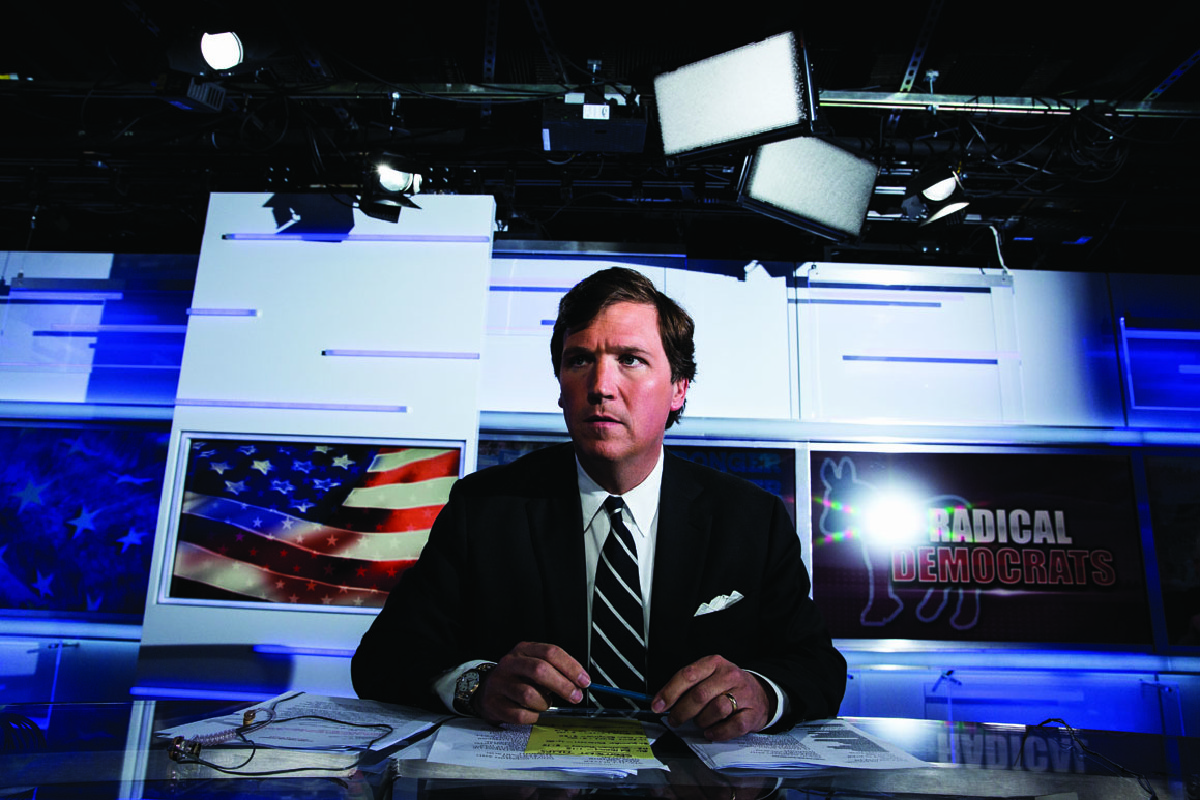
    The regulator of the public airwaves in the US is the Federal Communications Commission(FCC). However, the FCC is relatively toothless in policing responsible media behaviour on private cable networks. For those hurt or damaged by private media operators the only real available remedy has been incredibly expensive and risky legal proceedings. So, last week looked like a potential seismic media moment as Rupert Murdoch’s Fox Corp faced a personal and corporate stint in the witness box as Dominion Voting Systems sued for defamation damages on the 2020 Election “Big Lie”. The Murdochs balked and settled out of court for almost $800 million. Some commentary suggested the plaintiffs, Dominion Voting Systems, let democracy down by taking the money – just the 7 years’ worth of Dominion’s annual revenues. Yes, Fox’s lying to its own viewers didn’t get the court room airing the pre-trial legal discovery process had already revealed. But then days after settlement, its biggest star, Tucker Carlson, was fired with 10 minutes notice and the Fox Corp share price dropped another $600 million. Oh, Lordy there are 90 tapes too. As we cruise towards a $1.5 billion hit for Fox, you do wonder what exactly the cost needed to be for the Murdochs to actually try to prove their corporate innocence?

    I don’t know.

    Credit:

    If one thought confidence in the truth was the foundation of news media, what is the average person to think of banking? As First Republic Bank teeters on the brink of failure after the flight of $100 billion in depositor monies, we are reminded that the strength of a bank’s credit status is critical to its survival. However, credit is really a banking jargon word for confidence. And, for banks, confidence has just become a lot more complicated. Check out mighty Credit Suisse which was recently rescued from bankruptcy by the Swiss authorities and a nervous rival, UBS. The takeover is not officially complete so Credit Suisse was able to report its Q1 results. Now, the bots, Wall Street research analysts and probability/trading algorithms would have anticipated Q1 carnage for the wobbling Credit Suisse. But, no. Credit Suisse just reported its best ever quarterly profits, nearly $13 billion. However, that’s an accounting profit thanks to a profitable write-down of a particular bond liability. In the real world, $65 billion of client funds was running out the door through the Q1 period. So, we are faced with a remarkable numerical situation where the assets of Credit Suisse are actually ‘valued’ about $56 billion higher than its liabilities, the bank is profitable and the regulators are happy that it is sufficiently capitalised. But, as a business, the bank is bust. In simple terms, accountancy principles allow assets to be valued on the basis that the sale of those assets will be done over time. The business reality is that in times of uncertainty, creditors will make a judgment on the value which can be realised on an instant sale. No banking model can actually survive that so should we just skip the financial reports(and the auditors) and agree on a bank confidence metric?

    I don’t know.

    Comparisons

    If the bank sectors’ accounting metrics mean different things for different stakeholders, surely food companies can provide easier comparatives? Well, chew on the following. Subway, the submarine sandwich franchise, operates circa 37,000 restaurants in 100 countries and, as recently as 2015, was the fastest growing franchise in the world. Today, Subway generates $16 billion of annual revenues and it’s for sale. Reports would suggest that the private equity arms of Goldman Sachs, TPG and Roark Capital might acquire it for a price in the region of $10 billion. That looks like a sales multiple of 0.63x, and even if the bid surprises, the upper limit looks to be sub 1x sales. That feels like an ex-growth multiple but the company this week actually reported same-store sales growth of 12%. Now, check out a Big Mac valuation. McDonalds is also growing same store sales at a similar clip(13%) and does about 50% more sales every year($23 billion) but the Golden Arches’ valuation is a whopper swallow. Food.. check; franchised.. check; convenience.. check; global footprint.. check; growth.. check. Subway and McDonalds seem to be doing similar business things. But, if you’re a SaaS start-up founder look away now; McDonalds as a publicly quoted company is currently valued at over $200 billion or almost 10x annual sales. Maybe it’s the Big Mac sauce, or the culture, or the breakfasts, or the better margins but actually it is many things that are not so easy to quantify. Arguably, at a ten times valuation divergence, either Subway or McDonalds are trading at the wrong price. Or, they are not.

    I don’t know.

    We have warned on these pages previously that ‘certainty’ can be a disastrous wealth destroyer. From the illustrations above you can see the snap interpretation of numbers might not necessarily be helpful. However, experience, context, judgment and behavioural IQ can be helpful in understanding those numbers. At the very least, those qualities can support a very human answer, but also avoid a very damaging dash to destruction.

    I do know that.


  • Should We Look East With Buffett?

    Should We Look East With Buffett?

    In 1853 Commodore Matthew Perry led four warships into Tokyo Bay and politely asked could Japan be “Friends” with the US. This was no ordinary trading request. The Japanese had done their own Brexit hara-kiri way back in 1639 and had cut themselves off from the rest of the world over the following two centuries. Foreign visitors faced the death penalty, as did cooperative locals, for any defiance of the powerful Shoguns’ wishes so the island nation was relatively friendless by the time Perry arrived. However, the Commodore displayed strong diplomatic skills, kept his head (literally) and benefitted from a Japanese leadership realisation that Rwanda wasn’t really an option to stop the boats and that they had fallen too far behind the rest of the world. As a prescient show of outside progress, Perry’s ships anchored off Yokosuka boasted an arsenal of new Paixhan guns. These French inventions were the first naval guns to fire explosive shells and were an acute reminder of Japan’s need to catch up industrially and militarily. And… quickly. Only a few years later, after accepting American trading overtures, Japan returned to centralised government; restored its Meiji emperor and rapidly industrialised the country. The shoguns and samurai were gone. The railways, factories and armies were built and there was a new economic “Shogun” leading the global trading charge.

    The new “Shoguns” were family-controlled business conglomerates like Mitsubishi, Mitsui and Sumitomo and were known as zaibatsu. More importantly, for current discussion, these zaibatsu set up trading companies to source commodities, manage transportation and arrange financing across potentially hundreds of companies within a family business group. These trading houses with 150-year histories are a bit older than Warren Buffett but in many ways the Sage of Omaha’s investment vehicle, Berkshire Hathaway, shares common ground with these firms which became known as sogo shosha after World War II. So, we shouldn’t be so surprised Buffett has been in the news recently having boosted his stakes in five Japanese trading firms; Mitsubish Corp, Sumitomo, Marubeni, Itochu and Mitsui. In fact, their shared skill-sets, prompted Buffett to hint that his interest in these firms goes beyond just holding them as portfolio stocks. Ok, so there’s a degree of strategic sense in Buffett’s look eastward but why now? Well, Buffett doesn’t exactly hide his investment thinking or processes. His annual letter to Berkshire Hathaway shareholders is a must-read for any investor with lots of common-sense analyses and current investment market examples. However, the underlying principles in the stories never change. Japan’s trading houses are merely the badges, so let’s consider the investment principles.

    Valuation: Warren’s famous steer that “It’s far better to buy a wonderful company at a fair price, than a fair company at a wonderful price” still holds true. The check list for Buffett’s fab five Japanese trading firms looks pretty good when we consider their inflation-hedge characteristics (commodities), market access and connections (China/India) plus seriously strong cash flow. Traditional valuation metrics support “fair price” or even better with a forward P/E less than 7x, expected dividend yields above 5% and current earnings yields of 14% to support that expectation. Yep, a good price but as the Sage would say “Price is what you pay, value is what you get”. The intrinsic value and strength of an investment is driven by the quality of a business and that needs to be checked too.

    Quality: My favourite Buffettism is “When a management with a reputation for brilliance tackles a business with a reputation for bad economics, it is the reputation of the business that remains..” That won’t cheer up Chelsea supporters but the cash flows, market intelligence, connectivity and longevity of the sogo shosha are instructive as to Warren’s managerial ambition. My other thought is that the modern business world has witnessed the explosive global power and wealth creation of ‘platform businesses’. From stock exchanges, to Google, to Bloomberg, to Meta, to Amazon, to Microsoft or to SaaS the “value” is derived from the connectivity of the platform, the network effect. One suspects a 150 year trading history in Asia gives these firms serious ‘platform’ characteristics and……. opportunities.

    Growth: One of Buffett’s huge success factors is that he avoids “value traps”. In other words, businesses can be bought for cheap prices, but for a very good reason. Often, that reason will be a sclerotic road to obsolescence. Think Nokia, Blackberry, Tupperware or Blockbuster. Cash generation and sales alone won’t stop franchise attrition. A good or growth company must have opportunities to deploy capital and compound returns. So, I was struck by Buffett’s comment that “These five companies are a cross-section of not only Japan, but of the world”. Then, I thought of these three data points:

    1. Two thirds of the world’s middle class will live in Asia by 2030.
    2. The US has overtaken China as India’s top trading partner; activity now valued at $122 billion annually.
    3. This US-Indian trading relationship in American sporting parlance might be “still in the early innings”. Check out Apple who have just opened their very FIRST retail store in India this week; not just any week, but the week the UN announced that India’s population had surpassed that of China at 1.4826 billion citizen consumers.


    The connections of sogo shosha firms are going to become very valuable. As long-term financiers in the region they must be shown nearly every deal going. And if, we are valuing market intelligence, how about…. data? 

    Economic Moat: Buffett says, “In business, I look for economic castles protected by unbreachable moats”. The trading houses’ network of relationships, size and funding liquidity would be traditional sources of competitive advantage but there’s more. In these frantic weeks of generative AI and the scary march of the chatbots one would be forgiven for thinking all economic models are facing extinction-level disruption. Well, maybe not. In fact, the nimble quick disruptors of the past five digital decades might face a very different moat. Big established businesses already have huge data to train their AI internally. Think about Bloomberg who have just announced their own AI chatbot, but with a difference. This bot is trained with the best financial data/intelligence in the world, and Bloomberg’s enormous moat just got bigger. Now think about huge platform businesses like the ones Buffett just bought in Japan.

    Whatever about Buffett’s assertion that his new portfolio holdings “are a cross-section…of the world”, it feels to this writer that the ‘cross-section’ of Asia’s middle-class consumer and AI is going to be a very big deal, involving seismic shifts in power. Indeed, barely fifty years after Commodore Perry’s landing at Yokosuka, the modernised military forces of Japan embarrassed the super-power of the time, Russia, in Manchuria. However, the consequences of the Russo-Japanese War were global, not Asian. The shock of Russia’s defeat forced a re-calibration of geo-politics in both Europe and Asia, but still failed to stop the Bolshevik revolution in October 1917. Buffett is watching Asia carefully again. We should too.


  • The Best Currency To Build Wealth

    The Best Currency To Build Wealth

    What a week! The richest genius, in his own orange-tinted head, was arrested and fingerprinted in a dingy 15th floor Manhattan courthouse. On the streets outside, his tiny MAGA support cult railed against leftist conspiracies, socialism and woke liberalism. Oh, the irony of it all. Their cult leader isn’t very rich, even in a New York context, but the most delicious bit is the revelation this week of who is the richest of them all. Straight from a Disney mirror Queens scene,  American ‘freedom’ vanity has had to confront the stunning reality that the home to both the richest man and woman in the world is that over-taxed liberal socialist hellhole……France.

    Yep, Bernard Arnault the owner of LVMH and its 75 luxury brands is now worth over $200 billion, and the richest woman, Francoise Bettencourt-Meyers, as heiress to another luxury brand, L’Oreal, is sitting on an $81 billion fortune. You’d almost believe France and luxury are the real places to be. The country view is up for debate and cultural subjectivity but this writer believes the superiority of luxury as a wealth builder is on far stronger ground. I’ve been giving some thought to the wealth creation characteristics of the luxury goods sector and can’t help feeling we’ve missed out on one of the great currencies of the last 30 years.

    In the early ‘90s, as the Communist ‘Iron Curtain’ collapsed and opened up to global consumer markets, I used to watch with fascination Japanese housewives strolling around the glitzy streets of Ginza in Tokyo with their Harrods shopping bags. The concept of Tokyo ‘luxury’ in those days ranged from hundred dollar watermelons to million-dollar golf memberships but they didn’t survive the multi-decade decline of the Nikkei and real asset values. Interestingly, the Japanese currency, the Yen, did hold its value surprisingly well against all foreign currencies. However, as aging Japanese households moved into ‘savings’ mode, there was one other currency which retained its value – the Harrods bag. Well, not exactly. However, the luxury items bought on the streets of Ginza and carried with London-badged pride back to tiny homes reflected two key features of a currency. First, these luxury items were a store of value and also had exchange value as our previous article on Pachinko parlours demonstrated. And, secondly, there was an aspiration and a confidence/credibility embedded in these goods. Or should we say “tokens”?

    The crypto bros might disagree but currencies from Bitcoin to Dogecoin to digital assets like NFTs are dependent on their store of value, confidence and exchange value in secondary markets. It could also be argued that there is a youthful aspiration to decentralize finance away from central banks and the implosion-prone banks they are supposed to regulate. Furthermore, it is striking to me that the most developed initiatives in the world of NFTs and digital assets tend to reside within fashion and luxury houses like Nike and Gucci. We can speculate as to how digital and physical luxury goods evolve and interact over the coming years but the structural foundations of luxury businesses are instructive. Here are a few of the standout features….

    Brand: Luxury brands take decades to build and are protected fiercely. The confidence built on quality control, finite supply, image and limited access is critical to the premium pricing achieved by brand power.

    Growth: Our anecdote plucked from Asia in the early ‘90s is not accidental. The opening up of former communist consumer markets of the last three decades has added billions of potential new customers. A standout statistic for me is that two thirds of the world’s middle class will be in Asia by 2030.

    Asset-Lite: Given, the vast majority of the value of a company like LVMH, Rolex or Hermes is tied up in non-tangible assets like goodwill, brand etc the real asset bases of these companies are small. This can be helpful as brands in a portfolio like LVMH’s can drift in and out of fashion. In an asset-heavy business this cyclical shift can cause permanent exits from the market and the sunk costs of abandoned property, equipment, staff redundancies. Luxury brands can stay in the game for decades; think Balenciaga and YSL comebacks.

    Returns: In the wonky world of finance we would know that returns(on capital) are a far better driver of share prices than earnings or profits. I won’t apologise for my evangelism of returns measures as the best way to manage a business and create wealth – it’s in my quantsy DNA and Quest for alpha. The metric to use is the ROIC(return on invested capital), not earnings growth, not sales growth or balance sheet growth(debt usually). Luxury goods businesses, thanks to small asset bases, deliver fantastic ROIC way above market averages in the FTSE, Nadsdaq or S&P 500 equity indices. As illustration, LVMH delivers ROIC levels around 15% year in, year out compared to the S&P average in 2022 of 10%.

    Cost of Money: That 15% return on capital becomes very important in a rising interest rate environment like now. That extra buffer of returns for luxury goods companies means they are beating their cost of capital every year, not just the low interest rate years. That cost of capital “beat” translates into the miracle of compounding and wealth creation. For those wondering why some valuations fall further than others in times of turmoil, remember If you don’t beat your cost of capital you are actually destroying wealth. As a further aside, in an inflationary world there will be some savers who will escape the loss of purchasing power of their domestic currency and buy luxury goods to store their wealth. Just ask Turkey’s citizens suffering kamikaze Erdogan economics – just seven years ago 55,000 Turkish Lira would buy you a car, today you’d get a phone if you’re lucky.

    That last point on valuation is worth considering in funding land these days. LVMH’s annual revenues are over $80 billion and that supports a franchise valuation 4.5x higher at $440 billion. In 2019 LVMH revenues were $53 billion which approximates tech-like 50% growth BUT with returns on capital (ROIC) maintained each year at 15% on that journey. That returns piece is important and should be instructive to SaaS and tech cheerleaders wondering why valuations at 4.5x revenues are no longer on the table with investors.

    Returns are not a luxury. They are ultimately a business’s currency and an owner’s wealth compounder. Ask Bernard, not The Accused.


  • Should We Fear Transition?

    Should We Fear Transition?

    Lily Savage might laugh, I think. Paul O’Grady and his drag alter-ego, Lily, sadly went on a kinder dog-friendly celestial odyssey this week but his final week on earth probably won’t go down as humanity’s finest. So why laugh? Well, the House of Commons did when Deputy PM, Dominic Raab, mistakenly paid tribute to “Paul Grayson” while claiming him bizarrely as an “anti-woke” comic. What is it with parliamentary houses these days? Scotland has just found itself a new first minister, Humza Yousaf, after a transgender row brought down the incumbent, Nicola Sturgeon. But, it’s not just a UK house thing. Ireland is in a full blown housing crisis which not even 10% GDP growth can hide or solve. However, if you were relying on voter pressure on the governing parties, think again. New housing eviction laws are grabbing the Irish headlines but latest reports suggest the prime ministerial party, Fine Gael, is receiving more emails on transgender issues than on the new eviction legislation.

    What say Lily or even, Governor Bill Lee? Yes, the unfortunate Governor of Tennessee was gloating only a few weeks ago about being the first state to legislate and ban drag shows from public properties as a “child protection” measure. Fast forward to this week, the leading killer of children in the US struck again tragically in Nashville, Tennessee. No, neither pantomime nor Maureen Potter was the killer; just your every day 2nd Amendment-protected assault rifle. Humanity eh. And yet, the other big fear this week was the threat of artificial intelligence(AI) and the rapid advance of chatbot technology in the guise of generative AI’s latest offering, GPT-4. I have to say I’m with the bots this week. But many are not.

    Elon Musk and other tech leaders including Apple co-founder, Steve Wozniak, signed an open letter calling on developers to “pause giant AI experiments.” The petition, which more than 1,000 AI experts have signed, warns that artificial intelligence poses “profound risks to society and humanity” and asks AI researchers to put their projects on ice for at least six months. There is no doubt generative AI technology is evolving at warp speed. Only this week, the creator company OpenAI which brought us GPT-4 announced that it had partnered with 11 chosen “plug ins”. Think of plug ins as everyday services which have embedded OpenAI’s chatbot capabilities. Early partners/plug ins include OpenTable, Expedia, Shopify and Instacart. In simple terms, a human being can now not only ask/generate information from the chatbot but the bot can actually interact with live web data and take ACTION. In other words, the consumer/user can prompt the chatbot to find a nearby Mexican restaurant(search information) plus make the booking, or buy the skirt, or book the flight.

    Information generating automated action is a scary and imminent prospect. Clearly, control is an issue. But there has been another very dramatic shift in terms of control. Arguably, OpenAI and other AI plug-in platforms of the future have become overnight consumer services companies. Think back to the early analyses of ChatGPT in its race to 100 million users in its first 2 months of existence. The vast majority of commentary was looking at how knowledge workers(marketers, paralegals, recruiters etc) would use or be replaced by AI. Similarly, we speculated about which sectors and industries would have to move first or die. Now the questions and possibilities are far far bigger. Consumers are on the cusp of driving the evolution of AI as a demand-driven service. That’s a massive shift, but how do we feel about humans these days? Maybe Elon and the 1,000 signatories have a point; but it is early days and can really only be considered informed opinion. As always, we look to the data for firmer views and where those views are actually supported by significant capital. So, irrespective of the uncertainties ahead, financial markets are recognizing something BIG on the horizon. Check out the following developments:

    • The technology-heavy Nasdaq equity index has risen 20% from its lows in December, just when ChatGPT was first launched.
    • The famous Silicon Valley start-up incubator, Y Combinator, has recently updated investors on its first batch of 2023 hatchlings. A significant 51 of their total of 183 young growth companies are AI start-ups.
    • Nvidia may not be a household tech hardware name like Intel, Apple or Samsung. However, it is a critical designer/manufacturer of graphics processing units(GPUs) which are the core building blocks in AI development, language learning models etc. Nvidia’s share price is up just the 79% year-to-date and its market cap of $650 billion is bigger than tech sector darlings, Tesla or Facebook/Meta.
    • Goldman Sachs may just be an expensive source of opinion but their recently published AI research note had some very big numbers. Generative AI alone could boost annual global GDP by 7% over the next 10 years. Oh, and 25% of work tasks in the EU and US could be automated by AI.


    So, that’s where the big money is going. As for humanity, there will be plenty of mistakes along the way and almost zero visibility on how exactly businesses and sectors will look at the end of the decade. The only certainty is transition. And, not necessarily a fearful one. This writer’s suspicion is that it will be a good one for individual empowerment, productivity, reduced income inequality, work/life balance and healthcare. You know, the things humans used to care about…… before being dragged into distraction. Farewell Lily.


  • Game On for Robinhood and Revolut

    Game On for Robinhood and Revolut

    So, the Irish stockbroking version of Game of Thrones concluded this week with J&E Davy shareholders ceding power to its former master, Bank of Ireland. No blood, but there were some interesting twists in the tale. It is not that long ago Bank of Ireland sold Davy to its management team for €300 million. At least half that MBO purchase price was debt so the latest €600 million break up of Davy looks like at least a four-bagger for the leaders of the 2006 coup. Well played.

    Some might find the game-type language a wee bit distasteful given recent governance issues on Dawson Street but there is method in my badness. Awkward and costly change of strategy or not, Bank of Ireland desperately needed to get back in the game to add some new revenue channels. Recent newsflow on Robinhood and Revolut would suggest ‘new revenue’ can generate serious valuation boosts.

    First, consider Revolut which derives 12% of its revenues in Ireland. The UK-based financial “superapp” has just raised $800 million from Softbank and Tiger at a valuation of $33 billion, or slightly more than the value of Nat West! For those waxing on about winners and losers in the Davy deal think about that theoretical $4 billion valuation attached to the Irish portion of Revolut’s business. And that’s not even the eye-catching number.

    Revolut’s 16 million customers generated revenues of £222 million in 2020 but for each pound of revenues there was an almost equal loss of a pound(£207 million). It is early days yet but the business model is possibly still in search of its mission as bank product/service or wealth/trading platform. Or both, as Bank of Ireland are trying now. Clearly, the pandemic hit Revolut’s original winner, its slick foreign exchange service, but it was striking to see that almost one third of revenues came from its trading platform used to buy stocks and….. cryptocurrencies. More games than banking maybe, but don’t knock it. Ask Robinhood.

    Robinhood, the US-based trading platform, has just filed for an IPO in New York. Remarkably, the indicative valuation of the Robinhood IPO is the exact same as Revolut’s latest $33 billion mark. However, revenues of the former are almost triple that of Revolut, just shy of $1 billion in 2020, and it is not losing money. Net income was only $7 million in 2020 but here’s the interesting bit – it doesn’t charge its customers fees or commissions. How does that work? Well, arguably its product, like all free functions these days, is its customers. More specifically, the order flow of its 18 million accounts in 2020 generated PFOF(payment for order flow) from Wall Street market makers like Susquehanna and Citadel who value the “insight” provided by the early view of retail trading direction and activity. This might not sound in the best interests of the customers and the SEC are watching closely but there’s more to this in this writer’s view.

    The unique conflation of pandemic, free trading, crypto currencies and social media championing of meme stocks like Gamestop and Tesla has created huge communities of new traders who enjoy the shared experience of taking on Wall Street. US financial writer, Matt Taibbi, describes it well :

    “If and when IPO money comes, Robinhood will be on its way to becoming a finance version of Facebook: a free platform that keeps a sea of customers engaged with a hyper-stimulating user experience, while making money selling intelligence about those customers’ behaviors to expert wealth extractors on the other end. … Instead of stealing from the rich and giving to the poor, the American version takes in the young and sells them to computer-powered hedge funds; this Robin Hood is the house that always wins.”

    That poor-to-rich summation is not quite the theme in Robinhood of Sherwood Forest. However, if customers, in the main, are playing for fun and not risking financial distress then the shareholders of Paddy Power/Flutter and Draftkings Inc can tell you these franchises are sustainable profit machines. We shall see, but we should also reflect on the enormous power of providing a community shared experience with money or pride at stake and the huge attraction of that buzz. Community recognition of skill is the motivation in nearly every game in history. Dreams sometimes come true and a staggering 47% of Robinhood trading activity is in the all-or-nothing world of options trading. Believe it or not, people are happy to pay to have fun. Fun also has warp speed growth potential.

    I had never heard of Axie Infinity until last week. Then Packy McCormick in www.notboring.co mentioned this Pokemon-like game which has its own little meta-world, crypto-tokens, competitive skills, and cash for crypto exchange all built on blockchain technology. Oh, and fun.

    Viral fun which has required zero marketing spend. How’s it going? Well, in April Axie did $670,000 in revenues. In May, it did $3 million. June was $12 million and the first 18 days of July did $79 million. Revenue growth of 200x in just three months….Unreal!!!! Fantasy game but real revenues generated by more than 600,000 players around the world. So, when this writer sees Bank of Ireland pulling off a back-to-the-future strategic deal I do wonder whether financial services need to start thinking about communities rather than traditional products, revenue channels and functionality.

    We have written before that finance will be embedded like a Stripe code in every business or service. Think Amazon and free delivery; finance is the new free delivery. Also, think fun and its virality. Not convinced? I will leave you with two final snippets, with thanks to the Morning Brew newsletter for flagging.

    1. Start up, Virtually Human Studio(VHS), has just raised $20 million from some seriously heavyweight investors like Andreessen Horowitz and TCG Capital. VHS has developed a NFT platform called Zed Run which should tweak the noses of hobbyists in the equine community. Yep, this platform has a community of 14,000 “stable owners”, called #ZEDheads, who buy, sell, race and breed virtual horses. Each of ther horses has its unique blockchain verified token(NFT) which can cost up to $45,000 each. So far, $30 million (Yes!) of virtual horses have been bought and sold. Zed Run gets a fee every time there’s a race, trade or birth.

    2. If that’s just a little bit too far for some of you then pay attention to some more traditional “hobbies” with serious wealth outcomes. How about the art market? The art market’s $1.7 trillion of assets beats the entire crypto universe and also delivers. Art prices in the 1995-2020 period have trounced S&P 500 returns by a whopping 174%.

    We have no hope of forecasting the future accurately for Revolut, Robinhood or Bank of Ireland but a rapidly growing creator economy seeking community, shared experience and fun feels like a wealth creation ‘banker’ for those that can service it well. Game On.