Tag: Banks

  • Watch Out For The New Stable Empire Build

    Watch Out For The New Stable Empire Build

    Stability wouldn’t be the word of the week. Middle East war, Indian air crash tragedy, horrific school shooting in Graz, the US Marine Corp deployed in Los Angeles and the death of America’s Mozart, Brian Wilson. But… the ground-breaking Beach Boy might also SMILE**. Tortured by mental health challenges for most of his life, his genius is rightly being recognised at a rather weird moment. Thousands of miles away from the Californian beaches which inspired a true genius, a delusional “stable genius” is marking his birthday with a military parade in Washington. The irony indeed of a wannabe emperor, without clothes or genius. However, the sharper minds out there have been busy building another type of empire….Here’s a few timely illustrations.

    Stripe kicked off the week with the $1 billion acquisition of Privy. This is Stripe’s second billion dollar acquisition in less than six months (Bridge $1.1 billion in February) in the area of stablecoins. As a quick refresher, stablecoins are digital currencies (crypto) built on blockchain technology whose value are fixed to the value of a recognized liquid security or currency. In the vast majority of cases the “stable” part of a stablecoin is the world’s chosen reserve currency, the US dollar. This means that these stablecoins can be instantly exchanged for US dollars, in most cases, at a 1:1 ratio (FX rate). However, I only use the “FX rate” terminology to assist understanding because stablecoins operate differently, and have one massive potential advantage over typical foreign exchange (FX) rates. They cut out all the intermediaries’ costs and “toll takers” that drive us all to distraction at airports when it feels like a robbery rather than a financial service has taken place. This digital capacity to cut out costs and deliver ‘frictionless’ currency services has been identified by Stripe as an enormous opportunity to “grow the GDP of the internet”, namely e-commerce. Two deals in 6 months demonstrate that strategic appetite.

    Stripe, as a global leader payments platform, bought Bridge specifically as a platform for payments in stablecoins. Bridge provides the payments infrastructure for financial services companies to issue stablecoin-linked Visa cards. So, that covers the payments bit but Stripe has moved further into stablecoin infrastructure with its Privy acquisition. As Stripe CEO, Patrick Collison put it, “Money has to reside somewhere, and Privy builds the world’s best programmable vaults. Alongside our other stablecoin work, we’re looking forward to enabling a new generation of global, internet-native financial services.” In relatively simple terms, Stripe has acquired the ability to handle stablecoin payments AND the digital wallets (vaults) needed to store those digital currencies. Note, this is not some futuristic ‘bet’. This is a very current service. Indeed, Mastercard reckon one third of Latin American consumers have already used stablecoins for purchases. And, it’s not just “Main Street” embracing stablecoins. Wall Street is buzzing this week.

    The IPO of Circle on the NYSE was 25x over-subscribed before it even began trading last week. Circle is the issuer of probably the safest and most transparent stablecoins, USDC, which is pegged 1:1 with the US dollar. By the end of its first week of trading, Circle’s share price had rocketed 378% above the IPO price to reach a valuation of $32 billion. Clearly, Wall Street’s frenzied embrace of digital currencies, wallets, payments etc could spell trouble for the traditional custodians of currency storage and movement, the banks. They are moving too.

    French banking giant, Societe Generale, announced this week plans to launch a publicly tradable dollar-backed stablecoin. Societe Generale is the first major bank to enter the stablecoin market and has named its new digital currency “USD CoinVertible”. Meanwhile, in the US, Congress is poised to pass legislation to create a regulatory framework for stablecoins. Bank of America could launch a stablecoin, its CEO said earlier this year, and some other large banks are also considering issuing a joint stablecoin. The banks won’t be alone.

    The world’s two biggest retailers, Amazon and Walmart, are looking into issuing their own stablecoins for US customers to use at checkout instead of credit or debit cards, the Wall Street Journal reported yesterday. The WSJ article suggested other big companies, including Expedia and some airlines, are also considering the move. The motive is simple and relates to my earlier explainer. Costs. Stablecoins are hugely attractive digital innovations to process payments quickly and potentially save corporations billions of dollars in swipe fees that they pay every year to credit card companies, banks, and fintech startups like Toast and Square. Businesses forked out over $172 billion in US transaction fees in 2023, a near 50% increase from before the pandemic, as more customers went contactless. Even Washington is taking notice, and is moving legislation with, again, a teeny weeny bit of irony….

    The US Congress is due to vote on a bill known as the GENIUS Act (the other crypto legislation due is the STABLE Act, I kid you not)  which would give private companies a blueprint for issuing their own stablecoins. That vote could be as soon as Monday, and rely on a body politic flushed with the narcissistic joy of watching a military parade on the streets of Washington DC – an exercise once the autocratic preserve of the Kremlin, Beijing or Pyongyang. It’s a strange new world, but there is still real genius and opportunity out there.  Watch that stablecoin empire build….


    **Brian Wilson and the Beach Boys began recording their album, Smile, in 1966. Brian was convinced it would be his masterpiece. Struggles with mental health intervened, and delayed the release of the album until almost 40 years later. TIME magazine described its ultimate arrival as “rapturously received” and ranked it as one of the ten best comeback albums of all time.



  • Big Beautiful Bull Breaks Bonds…

    Big Beautiful Bull Breaks Bonds…

    Here we go again. Toddler throws tariff tantrum again, and then some. I’d say “Happy Friday” but our screens have just puked up a headline about 50% tariffs hitting Europe within the next week. Clearly, the crypto-corruption-fest dinner last night in Virginia didn’t lighten Agent Orange’s mood. Indeed, in the past few hours we have also seen Harvard’s entire international student programme blown up by a planned White House denial of education visas and Apple have been threatened with 25% tariffs on foreign manufactured iPhones. Only a few weeks ago commentators were flagging that trade policy had already changed more than 50 times since Trump 2.0 entered office, rather than a prison cell. One could despair, or even ignore the headlines, but in the bowels of the financial system something is stirring. At first, you’ll be alarmed but there might be an optimistic twist to follow. First, let’s look at the finance stuff.

    The global tail wagging the dog (or DOGE) is the bond market. Specifically, investors in US bonds (Treasuries) are worried about a now centrally-controlled economy run by a fella who almost uniquely bankrupted a casino. There were two events this week which signalled increased investor nerves about US debt and Washington’s ability to rein in its budget deficit. The catalyst was the passing of Trump’s “Big Beautiful Bill” by one vote in the House of Representatives which was a mix of spending cuts for poorer Americans and tax cuts for the rich. Economist, Robert Reich, estimates the have-nots will lose $700-$1000 of benefits (including Medicaid) while the have-yachts in the top 0.1% of US society will pocket an extra $390,000 per year. Sounds ugly, but the bond market is clearly not buying the thesis that making oligarchs richer will benefit the nation overall. Nope, investors in US Treasuries expressed their concern in two ways:


    1. US Bonds of longer maturities (20-year and 30-year Treasuries) were sold by foreign investors which resulted in the yields(rates) on those bonds rising. In simple terms, when a bond falls in price, its yield or rate of interest rises to hopefully attract new buyers.
    2. A regular auction of 20-year bonds conducted by the US Treasury was received poorly and forced the Treasury to offer higher yields to attract sufficient investor interest.


    The blunt impact of these events is that US bonds are becoming less attractive for investors and so they are demanding higher yields (interest rates) to compensate for the risk of policy lunacy in Washington. Think Liz Truss and lettuce economics and then put on your helmet. The undermining of the credibility of the US bond market is a far bigger deal than turbulence in the British bond markets. The critical point about US bonds is that they are the source of the primary building block in every debt or investment calculation around the world. You will see it referenced as the “risk-free rate” of interest which makes the presumption that the US would never default on its debt obligations. Did anyone say bull…..??? Well, the whole world is beginning to wonder is the next toddler tantrum going to be the stiffing of a sovereign counterparty on a debt repayment. And the casino cracker guy has form. However, it will be US citizens who suffer monetarily first.

    The price of mortgages, auto financing, insurance, credit cards, BNPL rates will all rise as ‘risk-free’ interest rates rise. The scary thing is that the concept of “risk-free” returns on dollar denominated debt being trashed will impact the entire financial system and the calculations of everything from M&A deals to commodity prices.  Hopefully, this might spook the right people in Washington, including the 100 Senators who must vote on the “Big Beautiful Bill” too. There are potentially a few other things that might catch their eye.

    Firstly, credit default swaps (CDS) which this country became familiar with prior to Troika/IMF intervention can measure a sovereign state’s risk of default. Right now, the financial markets (through these CDS instruments) are pricing US default risk higher than…. Greece. Second, somebody might spot a little flaw in the MAGA make- everything-in-America dogma. Sure, the US has trade deficits on goods. But, what about services surpluses? More importantly, and a critical input into all GDP calculations, is foreign investment in US assets. We have written recently on Japan’s position as the world’s biggest creditor/investor in foreign assets. But, do you know the country which has the world’s worst, or most negative, net international investment position…? According to research by Deutsche Bank, that would be the good ol’ USA in the chart at the end of this article.

    Finally, as institutional vandalism is in full swing in Washington, the rest of the world is hoping the independence of the Federal Reserve (the Fed), and its Chairman Jay Powell, can be preserved. Again, there is breaking news and it’s not so good. The US Supreme Court overnight has decided that it is comfortable with the idea of independent government agencies (like the FTC, FCC, EPA etc) being abandoned. Instead, the right-wing constructed court has embraced the idea of a “unitary executive” which means Trump gains control over these agencies. However, the majority decision of the court stated that the Fed was not covered by this judgment.  For now. There is perhaps a wider perspective than Fed independence. If US rule of law is under threat, that will ultimately feed into US bond market weakness. Bonds are, in effect, a legal contract between the USA and investors. And, I’m quietly hopeful international bond market investors are going to be bullying quite a few US Senators before they vote…..and understand the impact of the chart below.

  • Japan’s Secret Private Power….

    Japan’s Secret Private Power….

    Thirty three years ago I was slightly ahead of George Soros in battering Sterling (GBP) out of the European exchange rate mechanism (ERM). In time terms only. I left the trading bit to the Japanese banks who I witnessed on the Tokyo trading floor of broker, Meitan Tradition, wield financial power like the world had never seen. Sound a bit Trumpy?  Yes, but unlike the Orange trade toddler, this was all attached to financial reality. In fact, nine of the ten biggest banks in the world at the time (September 1992) were Japanese. And, that night those banks tried to buy every German Deutschmark (DEM) on the planet, sharing the view of Soros that the British government would give up defending Sterling (against the DEM link) and pull their currency from the ERM. They were right.

    Soros and the hedge funds got the headlines but traders in every global trading centre knew who really moved the markets and broke Sterling. Fast forward to today, another financial sage, the greatest of them all, Warren Buffett is retiring and rightfully grabbing the headlines. However, one of Buffett’s final significant trades was to build 10% stakes in five of Japan’s biggest trading conglomerates. We referenced this in the first of our Japan series of articles and promised more on the investment environment and why the smart money is quietly returning to Tokyo trading floors.  So let’s start with the public markets.

    Japan’s stock market has suffered infamous ‘lost decades’, and it was only last year that the benchmark Nikkei index recovered to previous peaks and marked a new all-time-high. It took 34 years. However, the recovery of Japan’s stock markets has been accelerating in recent years and Buffett first started building equity positions in 2019. Change in corporate behaviour has been slow, but the following initiatives have been considered the key catalysts:


    *Japan Corporate Governance Code: Introduced in 2015 by the Tokyo Stock Exchange (TSE) as a set of principles to improve long-run value creation and encourage engagement with shareholders. Previously, Japan Inc had a notorious reputation for rejecting any strategic/governance or ownership challenges through “poison pill” defensive tactics.


    *TSE “name and shame” pressure: In early 2023 the TSE asked companies with poor ratings (valuations with a price-to-book ratio (PBR) of below 1x) to disclose initiatives they were making to improve ratings. In main street terms, a PBR of less than 1x is effectively the investment market saying the company is destroying value and therefore the book value is in decline, rather than creating wealth. In financial terms, returns running below the cost of capital destroys wealth. 


    So, did it work? Yes, slowly but surely, Japanese companies started to address return on capital, shareholder dividends and non-core holdings dragging performance. For example, Toyota started to offload cross-shareholdings in companies like Denso and KDDI. Then Obayashi, one of the biggest construction companies increased its dividend. Finally, share buybacks, which were extremely rare in Japan’s corporate world, have exploded. In 2024 more than $100 billion of buybacks (from existing shareholders) were committed to by companies publicly listed in Tokyo. That’s a 75% increase in this shareholder-friendly activity on 2023. And, there’s lots more to come. Consider the following:


    *The price-to-book (PBR) of Japan’s entire stock market is barely 1.3x. That compares to the US market on 3.9x.


    *There are at least six sectors in Japan where average PBR is below 1x:  banking, insurance, utilities, basic materials, autos, and auto parts.


    Please note these companies can remain cheap forever if investors believe there is no possibility of improved returns and strategies. So, there needs to be confidence in the ability to influence change. Of course, the ultimate barometer of change appetite is the willingness to accept new owners of a business. And, that’s where private equity activity and the buying out of publicly listed (cheap) companies is the pulse check on CHANGE actually happening. Let’s just say things are quite giddy. Activity really picked up with the 2023 buyout of the iconic blue chip firm, Toshiba, by local private equity house, Japan Industrial Partners(JIP) for $14 billion. That set the tone for M&A activity in Japan to grow by 44% to $230 billion in 2024(Source: Nikkei Asia), and the involvement of private equity houses has been striking.

    In previous times Japanese corporates would have considered it “a loss of face” to be seen meeting and exploring investment from “the barbarians at the gate”. Now, it’s very much game on and Japan Inc is increasingly open to private equity investment.  The big buyout battles have featured the usual global giants like Blackstone, Bain, Carlyle, Elliott etc but the acquisition targets in recent months have been a fascinating mix of $60 billion convenience stores (7-Eleven), $4 billion software (Fuji Soft), $8.5 billion cybersecurity (Trend Micro) and $42 billion auto parts (Toyota Industries). The last deal does not actually involve private equity but is in fact a potential acquisition by Toyota Motor Corp. It’s the sheer size of this deal which caught the eye and also a reminder of the cash firepower in Japanese listed companies. Two things to consider:


    *Cash held on Japanese corporate balance sheets is estimated to be more than $2 trillion, or almost 50% of Japan’s GDP.


    *Despite market reforms and 80% compliance with TSE “name and shame” pressures, almost 50% of Japanese listed companies (TOPIX) are trading at PBR valuations of less than 1x.


    This mix of cheap underperforming companies and enormous “dry powder” of cash on balance sheets is incredible fuel for both corporate and private equity buyout activity. The US since 1996 has seen the number of publicly listed companies decline from 7,300 listings to just 4,300. In Japan, the opposite has happened with 3,900 companies now listed and adding about 100 companies per year. I could see that trend reverse as private equity and corporates increase acquisition activity (and take public companies private) but there’s also another potentially massive driver of public assets moving into private hands. We have written about demographics before, but we haven’t considered the seismic and more rapid financial transfer going on in Japan right now.

    According to a Japan Times article written back in 2020, the country was about to embark on a wealth transfer never experienced by any other country in history. Between the years of 2020 and 2030 it was forecast that $5 trillion would transfer to Japan’s “Millennial” generation via inheritance. That’s $500 billion per annum or more than 10% of GDP every year for ten years. We have previously written about the $14 trillion of savings by Japan’s households (50% of it in passive cash) but this active $5 trillion wealth transfer is highly likely to lead to changed financial behaviours and riskier investment targets. The local millennial generation watching private equity activity take off must be tempted to get involved. Indeed , local capital (JIP) has shown what’s possible with the Toshiba take-out. Europe might be tempted to get involved too. Not necessarily with a Japan focus. But, recall Mario Draghi’s EU Competitiveness Report last year and its recommended financial policy changes for the following:


    • Infrastructure project funding
    • Innovation investment of €884 billion, mostly from venture capital.
    • Strengthening the Capital Markets Union (CMU) across the 27 jurisdictions
    • Revitalizing the securitization market to improve the financing capacity of the banking sector.


    Bluntly, Europe has been poor at putting risk capital to work. However, the experience of Japan and financial market reform has been extremely positive in driving domestic and foreign investment capital into its corporate assets. So, there is recent precedent. But, is there the money? Well, try this for starters – a 2021 report from X-Wealth forecasts a wealth inheritance transfer of $3.6 trillion across all of Europe by 2030. Maybe the demographic  “Japanification” of Europe won’t be as scary as some think. In fact, the future is looking increasingly private.


  • Tech Up And Smell The Coffee

    Tech Up And Smell The Coffee

    Japan is the number one coffee-to-go consumer in the world. It wasn’t always so. For 12 centuries the Japanese were a tea-drinking nation while a stigma attached to coffee and its miniscule 1% market penetration. Early commercial attempts to expand coffee consumption in the 1970s were a disaster. Contrast that with today where Japan’s best-in-world urban centres are served by a massive coffee culture. In fact, 48% of all coffee consumption is coffee to-go beating the likes of the US (45%), Australia (23%) and UK(17%) to global top spot. What happened? Well, Nestle spent a fortune in the 1970s and failed. Then, they hired a child psychologist. Nestle knew the existing tea culture (ceremonies, 90% domestic presence etc) was in the national DNA so they ignored the adult consumer and focused on youth tastes. Literally taste. They didn’t sell coffee.

    Nestle sold coffee flavoured candy, then snacks, then ice-cream. Of course, kids grew to love the flavour. By the 1980s vending machines and canned coffee were everywhere. In the ‘90s, when I was living in Tokyo, the marketing push had entered “genki drink” territory  associating nostalgic childhood flavour with increased productivity and professional success. Fast forward to today and the 30-year re-wiring of Japan’s taste buds has created a coffee market worth $12 billion consuming 7 billion cups annually (Source: Statista). So, as my Bullet train races away from Hiroshima, I can’t help thinking about generational shifts and how advanced technology (A-bomb) was part of a nation’s destruction but was adopted by subsequent generations to lead its future. Japan might be considered conservative but there is a boldness attached to their use of technology. World-leading in fact.

    Japan might be considered a strange leader-location for cryptocurrency payment/usage given its reputation as a cash-preferring economy. Wrong. Most of my trip payments here have been done on my phone but there’s more to report. In a number of retailers I have seen iris-scanning orbs supporting the Worldcoin crypto ecosystem set up by Sam Altman (OpenAI founder). For me, the big evolution to come in crypto/blockchain is payments ie the ‘currency’ actually being used. To date, the emphasis has been on cryptocurrencies and stablecoins as stores of value or investment instruments. Interestingly, there is a strong piece of Japanese DNA which lends itself to the use of tokens instead of cash. Ever heard of Pachinko? Here’s what we wrote about it back in 2023…


    “Ever heard of Pachinko? If not, this game’s annual revenues might surprise. Estimated annual revenues of $200 billion are more than ten times those of the NFL! Pachinko is a ball game too but it’s a vertical pinball game played in Japanese gaming arcades. Players twist wheels to steer descending small steel balls into cups which trigger a prize-winning payout of more balls which, in turn, can be exchanged for cash or small prizes. Gambling for cash is illegal in Japan but this low-stakes, low-strategy game exploits a legal loophole and is 30 times bigger than the annual gambling revenue of Las Vegas, as well as twice the size of Japan’s export car industry.”


    The key point is that entire Japanese generations have grown up exchanging prizes/tokens for cash. Not surprisingly, I note that Japan’s three biggest banks – Mitsubishi UFJ, Mizuho and Sumitomo Mitsui – plan to integrate stablecoins, blockchain and digital ID into their use of the SWIFT cross-border payment platform. My suspicion is that Japan is going to lead on payments which is the ultimate route to crypto commercial penetration. And, they culturally ‘get’ tokenisation, as well as providing Bitcoin with its pseudonymous founder name, Satoshi Nakamoto. So, if you smell Japanese opportunity, it might not just be you. It could be a robot. Seriously.

    Yep, our digital world has been built on two digits: 0 and 1. So, how can a robot smell? Japanese robotics company, Ainos, has installed its AI Nose in a humanoid robot built by another Japanese robotics player, Ugo. The collaboration introduces a new class of robots that can perceive the world not just through sight and sound, but also through smell, enabling them to make more intuitive and intelligent decisions that will transform industries, public health, and everyday life. The new robot combines a high-precision gas sensor array, real-time signal processing, and advanced AI algorithms to identify and digitize a wide range of scents, turning them into unique “Smell IDs.” Clearly, this is big news for life sciences precision manufacturing, elder care, gas safety etc. Again, it should not be a surprise that Japan is leading in robotics.

    Japan dominates the global robotics market with a 40% share of global exports. No fear of AI here. Of course, given the demographics of a shrinking workforce, it has become a social necessity as Japan turns to robots to care for its elderly population. Like crypto and blockchain payments (vs investment), robots are the natural next step for AI adoption. Nvidia’s CEO, Jensen Huang, is on record as saying that the “ChatGPT moment for robotics is coming…. I can’t imagine a better country to lead robotics AI revolution than Japan. This country loves robots”. Japan also has buckets of engineering talent. Almost 50% of global industrial robots are made by 3 Japanese giants – Fanuc, Yaskawa and Nachi-Fujikoshi. But….Nvidia knows these AI powered robots will need advanced semiconductor chips. Japan might have the latest manufacturing answer in a world where tariffs, supply chains, China decoupling and Taiwan are an increasing source of business worry. So, Japan is going technology “bold” and fearless again.

    Build it and they will come is a tried and failed tech commercialisation strategy. However, Japan is making a $67 billion bet on its semiconductor chip industry without securing any customers yet. Specifically, the Japanese government has passed legislation to allow it to invest in chip manufacturing start-up, Rapidus. The homegrown chip maker is due to produce the smallest chips in history (2 nanometer size for improved performance, density and efficiency) in its Hokkaido-based facility, backed by $27 billion of investment from heavyweight Japanese corporates like Sony and Toyota plus a design collaboration with IBM. In fact, IBM has made very clear that Japan as a next-generation chip manufacturer is “good for the world” given the global economy’s dependence on Taiwan and China for chips. The first chips are due to be produced from the Hokkaido plant in July (rumoured to be for Broadcom) and the latest reports suggest Apple and Google are in talks with Rapidus too. Watch carefully as this would be a massive chip comeback for Japan. On a broader level, Japan Inc can look forward to a re-assessment by global business as a stable supply chain partner with a healthy respect for international trade agreements. Who knew healthy democracy would be a business winner in 2025….? But, we do know health is big.

    Japan is already a leader in the $6 trillion wellness industry with its outsized presence in the personal care/beauty, healthy food/nutrition, wellness tourism and spa infrastructure sectors. However, one senses demographics, AI and robotics will combine to significantly increase Japan’s investment focus in the medtech sector. Typically, European and Irish medtechs have looked to the US for product market entry and venture funding. That will continue, but watch out for an increasing Japanese investment profile. We are often asked by Spark medtech investors “where will the exit come from?”. Well, Japan might need to be added to the list. Indeed, Digital Gait Labs (currently raising funds through Spark) tick those AI, wellness and elder-care boxes very nicely. As for Japan’s investment power, there are a few things you need to know.

    Japan is effectively the biggest creditor or banker to the world. There’s a reason why the Japanese can actually buy more coffee to-go than America and…. intimidate its President. Japan is hugely wealthy. The Japanese population holds a whopping $14 trillion in financial assets, or almost 5x the GDP of France. More strikingly, half of these assets are in cash or deposit accounts. That’s almost 50% of the EU GDP waiting to be used…… possibly by the next less-conservative generation. For me, this is the generational “coffee” wealth moment to start showing opportunities to Mrs Watanabe and her children. And, there’s an early leader.

    We recently wrote about ChatGPT/AI company, OpenAI’s funding round being the biggest public(IPO) or private raise in history. What we didn’t mention was that the lead investor was Japan’s Softbank who have committed $30 billion to the AI trailblazer. Softbank is an investment holding company led by Masayoshi Son whose career has been chronicled by ex-FT editor, Lionel Barber. The book is a fascinating read and the title, Gambling Man, hints at the highs of Alibaba, DoorDash, Uber and Slack as winners but also the losers like WeWork. However, the tagline of the book title tells us more –  “the world’s greatest disruptor.” I strongly believe Son has planted the “risk seed” in this generation of Japanese investors like Nestle did in the ‘70s with coffee. Japan has got “the taste” of private early-stage equity. Now, the rest of us need to show them candy with the same “unicorn” taste as Son has pursued. No psychologist is needed this time, just on the ground observation. Then action. We need to tech up, and show up.


  • Still Some Golden Theme Tickets Left…

    Still Some Golden Theme Tickets Left…

    I’m going to save you some time. Forget about calendar-driven commentariat reviews and 2025 forecasts for investment or geopolitical risk. Sorry to be the “Grinch of Guru”, but calendars and structural investment themes have zero correlation. Opinion is cheap and even the betting markets are displaying their patchy predictive powers in recent weeks. Yip, just a 6% chance of the Ba’athist beast, President Assad, being toppled in Syria. About as much chance as a Chinese spy in Buckingham Palace… oh wait. Sadly, Prince Andrew is a multi-year clown car journey in particularly poor company but there’s a lesson there too. Almost all significant investment themes – risks and opportunities – are multi-year stories whose plots twist and turn but keep a very clear direction of travel. So, let’s take a look at some of the major themes we have previously visited and a few more developing ones; all with interesting plot twists.

    Europe Crisis or Opportunity: Nothing good in the headlines…..German government falls, UK in second month of GDP contraction, France on its 4th premiership in a year. But, but here’s a few twists on the negatives. The lists of where Europe lags the US is a long one, from labour productivity, to AI and innovation, to stock market performance. And yet, if you strip out the performance of AI hardware star, Nvidia, from the S&P 500 then Europe’s stock market (MSCI EMU) has actually earned better returns for investors than the US benchmark since the most recent bull market started in October 2022. That suggests there are lots of European companies doing very well despite ‘core’ European economies struggling. Check out also in recent days Spotify becoming only the second European tech company since SAP to crack the $100 billion market cap mark. The headlines do not lie but the narrative on Europe is more nuanced than you think.

    Healthcare: Another structural theme from previous years’ writings, healthcare has actually been a winning area for Europe thanks to the miracle weight-loss drugs, Ozempic and Wegovy. Their Danish owner, Novo Nordisk, became Europe’s most valuable company in 2024. However, we might be about to enter an accelerated era of therapy/drug discovery for all types of medical illness. The clue is in the Nobel Prizes awarded in both Physics and Chemistry in 2024 to pioneers of AI usage in research. Now, for those already struggling with how AI large language models (LLM) work and the warp-speed calculations of the almost-monthly iterations of these technologies, get ready for the ultimate head wrecker. Google has just developed a quantum computing chip, “Willow”, which performed a computation in less than 5 minutes that would have taken today’s fastest computers 10 septillion years to complete. Yeah, that’s 25 zeros which exceeds known timescales in physics and vastly exceeds the age of the universe. Think about that. This chip created by quantum physics “used” time which theoretically can’t exist unless…… there are other parallel universes. Google Quantum AI founder, Hartman Neven, calmly wrote that the stunning performance of this chip indicates that “we live in a multiverse”.  Maybe Willy Wonka wasn’t so wrong to say “Come with me and you’ll be, In a world of pure imagination”.

    Artificial Intelligence (AI): Arguably, the world of AI has moved in a completely different direction. The shift of investment capital away from bits (software) to atoms (hardware) has been spectacular. Another company nobody ever heard of until recently, Broadcom, has become the latest technology hardware company to join the trillion dollar market capitalisation club. The US chip maker is now one of FOUR tech hardware companies in the list of the 10 most valuable companies on the planet. Clearly, investors see AI infrastructure as the early ‘win’ in the AI arms race. However, do NOT ignore software. Interestingly, the Clouded Judgment software newsletter has flagged a 20% expansion in median software valuation multiples since mid-November (from 5.6x to 6.7x revenues). Also, Nvidia has dropped in value by 11% in recent weeks. Yes, rotation from hardware to software and back again will be a feature of the multi-year AI revolution but the venture capital data from CB Insights confirms the direction of AI travel. Global venture capital (VC) deals in AI jumped 24% in Q3 to the highest levels seen since the Q1 2022 peak. In fact, one in every three dollars of VC investments went to AI start-ups.

    Banking and Fintechs: Closer to home, Revolut has just confirmed it has more than 3 million customers in Ireland. A staggering 75% of all Ireland-based adults now use the UK fintech platform for banking and payments. Meanwhile, the US bank sector has rocketed 30% higher this year, Europe is seeing Italian banking M&A deals and the largest asset manager in the world, Blackrock, has embarked on a private asset acquisition frenzy. We have written before that the future is private and I’m wondering are big corporates thinking the same? Sticking with the fintech sector, it was striking in the past week to see the shipping/logistics giant AP Moller lead an €80m investment round for UK fintech, Zopa Bank. In the same week, we note another globally significant name, Walmart, was the lead investor in a $300m round for fintech platform, One. Hmmm….Private banking/fintech, private opportunity.

    Climate & Electrical Vehicles (EV): Apparently, 11 out of 16 EV battery manufacturing projects in Europe have been canned or delayed. Of course, the $15 billion investment in Northvolt was the highest profile casualty in 2024 but there will be other twists and turns in the electrification journey. And, possibly a lesson in long-term planning. China 20 years ago had almost zero car production capacity. Now, it is on track to manufacturing 30 million cars a year and has surpassed Japan as the biggest exporter in the world with 5.17m units sent overseas. In fact, Chinese built EVs now account for 76% of the global EV market. So, if one were to be thinking 20 years ahead again what is most likely to drive investment returns in the transport world? Well, how about not driving. More specifically, self-driving. So, I’m quietly stunned that Google’s Waymo self-driving cars are clocking up 175,000 rides per week compared to 50,000 rides 6 months ago. That’s actually more than 1 million miles of autonomous transport delivered with an almost flawless safety record. I sense 2025 could see self-driving transport go mainstream and, as I write, Waymo have announced they are about to trial robo-taxis in their first non-US city, Tokyo, next year.

    The list of themes above is not exhaustive but they are structural themes measured in decades rather than calendar years. These are the most likely golden tickets to deliver standout returns like Nvidia’s 27,000 % return over the last 10 years. But, as always, we should keep an eye out for reversals of long standing narratives too. Argentina might be the prompt for contrarian thought while on track to deliver the best stock market returns of 2024. Who knew! So here’s two thoughts to chew over for the festive season: i) A European refugee reversal as Syrian and Ukrainian citizens potentially return home in 2025 and ii) A renewed embrace of nuclear power/investment to drive the electrification of the global economy.

    “Oh you should never, never doubt what nobody is sure about”         –   Willy Wonka


  • Banking On A Deal Frenzy

    Banking On A Deal Frenzy

    This hurts a bit. It kills me to potentially reward poor behaviour, but hey, I’m not nominated to be the Attorney General of the United States of America. The financial giants of Wall Street kept their heads down in the lead up to the US election. We didn’t hear too much commentary on the rule of law, inflationary tariffs or accelerating budget deficits. I mean…who needs property rights (law) or a functioning national balance sheet? Possibly, the infamous Leona Hemsley’s “little people” because they pay taxes, aka the price, in time. But, for now, there’s a very clear short-term calculation being made by Wall Street. A Trump administration determined to slash regulation and speed up commercial transactions is a godsend for bankers. Of course, Elon Musk, Tesla and Bitcoin are perceived as the early big ‘winners’ of a transactional incoming President. However, at a broader level the clear winner in the week since election is the enormous financial sector.

    US Financials are the best performing sector in the markets over the last week (+1.5%) while tech, telecoms, healthcare and materials all have actually booked negative returns for investors(Source: Finviz). That big picture split is interesting and highlights the very essence of what financials are about. It’s all about deals. More deals, more commissions, more fees, more revenues, more bonuses. What deals you ask? Let’s start with the biggies like massive M&A deals. In recent years, the broligarchs have been frustrated by FTC Commissioner, Lina Khan, who has blocked more than 30 corporate mergers/acquisitions on grounds of reduced competition. High-profile deals attracting government(FTC) scrutiny included Microsoft/Activision and Kroger/Albertsons. Only this week, the parent companies of luxury brands Coach and Michael Kors abandoned their merger due to FTC competition-based objections. No deal, no fees. Hence, a more lenient transaction-friendly FTC under Trump is expected to increase deal flow. And, not just in M&A.

    How do I put this delicately? Well, if the incoming Attorney General is already under investigation by his House of Representatives colleagues for sex trafficking, let’s just say the whole area of compliance could be significantly relaxed. We can expect more financial products to be launched and faster in a more relaxed regulatory environment. One area already due to increase activity levels is the IPO sector. Interestingly, Sweden’s Klarna has just announced its plans to list publicly (IPO). However, despite its Swedish home, Klarna is going to list in the US, not Europe. Oh, and Klarna is a financial company. It’s also a great comeback story – the buy-now-pay-later (BNPL) platform and its 85 million customers is heading for a $20 billion valuation. That’s a tripling of value since the fintech ‘winter’ of 2022. Note fintech is not the only survivor of the investor ‘winter’ of 2022…

    The cryptocurrency universe has already been perceived as a Trump regulatory relaxation winner. Bitcoin has rocketed to all-time-highs of $93,000 with an individual asset value of $1.7 trillion exceeding that of Facebook/Meta. The wider cryptocurrency ecosystem has achieved a market value of $3.2 trillion but the bigger story is possibly stablecoins (cryptocurrencies backed by liquid financial assets ). Again, I’d highlight ‘transactions’ as the opportunity for financial services platforms. Stablecoins were used in $8.5 trillion of transactions in the second quarter of this year. That’s more than double Visa’s transaction volume of $3.9 trillion. It also provides a pretty good clue as to why Stripe acquired stablecoin platform, Bridge, for $1.1 billion.

    For the avoidance of doubt, more transactions and deals is an overall positive. More exits, more funding, more deals… the circle of start-up life. At Spark we know more deals, exits and IPOs eventually feeds into the smaller regions of financial markets. We also know there’s a hefty €150 billion sitting in Irish bank accounts earning almost zero returns. It’s not just an Irish phenomenon. There is currently a record $7 trillion of cash sitting in US money-market funds. That’s not a huge surprise when one can earn 4-5% interest in these US deposit accounts for relatively minimal risk. However, watch out for lower US interest rates and increased mega deal headlines in the coming months. Then watch that cash move. And, not just in the USA.

    The EU economy is 99% driven by 26 million private small and medium sized businesses (SME) who account for €5.4 trillion of economic activity. The headlines will almost exclusively focus on the impact of a Trump regime on US multinationals, corporation tax, homeshoring etc. Rather like the trading evidence in markets of the past week, probably not much will really change for the “broligarchs” and the big tech multinationals. However, the markets are telling you financial services will enjoy greater deal activity which will feed through the global funding ecosystem. Indeed, right now there’s an all-time-high number of investment campaigns on the Spark platform (8) with interesting additional private asset/deal opportunities in the 2025 pipeline. We’ve written it before; the future is private.

    So, it seems like a good time to launch Spark Private, the personalised service to grow your private asset portfolio. More details on that next week, after you’ve finished gasping at AG Gaetz.

  • M&A Deals Showing Us New Opportunities

    M&A Deals Showing Us New Opportunities

    Global leadership is on my mind. Not the extreme stuff. If you can’t avoid the headlines on the excruciating UK Conservative party leadership battle between “Honest Bob” Jenrick and “Jimmy Dimly” Cleverly, I can assure you it’s well worth the effort. Instead, I’m just back from the IMI National Leadership conference and one of the key speaker messages in our uncertain geopolitical world was to watch ‘personalities’ closely. And, believe them. So, rather than jump into geopolitics, this advice can also be applied to business and financial markets too. The return of large merger and acquisition activity (M&A) is a reliable ‘tell’ of executive confidence. These big deals are the real “believe them” leadership actions, not the quarterly analyst conference call types where management commentary is invariably upbeat, and the analysis even worse. So, with excellent timing a number of M&A developments are catching the eye….


    Banking: We mentioned in recent weeks an interesting standoff between Unicredito and the German establishment after the Italian bank swooped in to take a 9% stake in Commerzbank. Let’s just say the biggest Commerzbank shareholder, the German government, were not happy. So, imagine the scenes in Berlin’s political corridors last week when Unicredito used derivative instruments to up their beneficial interest in Commerzbank to 21% and overtake the government’s 12% stake as the biggest shareholder in Commerzbank. This is highly unusual cross-border aggressive M&A tactics and suggests high levels of Italian banking confidence. Indeed, another Italian bank, Intesa, in recent days briefly became the most valuable bank in the eurozone. Not long ago the Italian banking system was in a mess as the world’s oldest bank, Monte dei Paschi di Siena, entered near-collapse restructuring in 2022.


    Software: All the tech glory has been in hardware in 2024, and software has been feeling the pain. Valuations in SaaS have slipped, pipelines have sputtered and AI has become a deflationary impetus in the coding ecosystem. Uncertainty has bred deal paralysis. So, the sector would have been hugely relieved to see a big private equity buy-out of Smartsheet by Blackstone and Vista for a chunky $8.4 billion, and a 41% premium to its recent share price average. We will return to the significance of private equity doing buy-outs of large public listed companies, but for now let’s focus on high-risk sector consolidation where management teams are already under pressure…


    Hardware: Yes, AI has been a winner for chip manufacturing superstars like Nvidia and Broadcom. However, as with all sudden technology shifts, there can be disruption to established players. Intel is a good example of model disruption. The share price is off 50% and the company has adopted a split company strategy across manufacturing(foundry) and chip design(product). As the sole US player with sufficient process/manufacturing technology, Intel has a future but possibly with a partner…..or predator. Apollo Global have been mentioned in the media as private equity financing partners, but recent reports suggest California’s Qualcomm have approached Intel in pursuit of a friendly takeover. That combination would be a $300 billion (+) chip monster supported by US government policy (US Chips & Science Act) and would cause a seismic shake up in the semiconductor manufacturing ecosystem.


    Mining: The software sector might feel unloved over the past 18 months, but spare a thought for the mining sector. And, I’m not talking crypto. No, the basic materials critical to our decarbonised electrified future are supplied by a global mining industry which has been starved of investment capital for….. 15 years. That is about to change. Supra-sovereign legislation like the Critical Raw Materials Act (EU) are a siren sound to the frightening mis-match between our cleantech future and the metals needed to meet climate crisis targets. So, watch the ‘leader signals’ as gold and silver prices hit all time highs, and then check out the deal activity. AngloGold is buying Centamin for $2.5 billion while BHP and Lundin are jointly closing a $4 billion purchase of Canadian copper play, Filo. Also, there’s an interesting $2.8 billion green equipment partnership deal between Australian giant, Fortescue, and Swiss construction player, Liebherr. We’d better start believing……in our planetary survival.


    UK: Our final M&A development is not a sector specific observation but highlights another unloved area of the investment world. The UK has been in the international investment ‘naughty corner’ thanks to its own historic lack of investment in domestic assets….and a world-first voluntary trade-reduction deal which nobody wants to talk about anymore. So, it was intriguing to read a recent piece of research from stockbroker, Peel Hunt, on UK deal activity. Apparently, there are currently a remarkable 19 ongoing bids for UK companies in the FTSE 350 index. Not all will happen, as Rightmove, Currys and Anglo American have demonstrated. But, the imminent take private deals for the Royal Mail and Hargreaves Lansdowne are a serious ‘tell’. Britain is in play.


    The deal environment is definitely picking up. Early private equity research data from Pitchbook shows deal count in Q3 was up 8% and deal value up 20% compared to last year. Also, helpfully, the story on the exit side of things is progressing too – global private equity exits are up 13% in value and 3% in deal count. Now, consider that private equity houses have circa $4 trillion of unspent investment capital (“dry powder”) to deploy and things could get rather interesting in unloved parts of the market. Finally, keep an eye on the Middle East for more than conflagration reasons. Oil prices might be falling but investment in the region is rocketing. The recent FT Mining Summit 2024 featured a whopper statistic that 20% of the world’s cranes are located in just one country…. Saudi Arabia. Oh, and Abu Dhabi’s national oil company just bought Bayer’s plastics spin-off for $16 billion. Yep, plastics. If market personalities are telling you they are beginning to love the unloved, believe them.


  • Themes Checklist For The Beach

    Themes Checklist For The Beach

    The weather forecast isn’t great.  I’d usually suggest some couch thinking time but that phrasing has now become a politically-charged innuendo in the US which tops off possibly the most bizarre presidential campaign month ever. Don’t ask about couches or dolphins, or JD Vance. And, he thought having no children was the problem…..! Anyway, given the amount of delusion in the air, I’m going to suggest a beach plan. That might be the wrong plan, but thematically we might be on the right track in the world of finance. So, for those enjoying some time off, one can review and reflect on the following:


    Old economy: Our suggestion “Investors Need The Old Economy Too” in May started subtle, then went full hammer. This move hasn’t just been a tech shift from software to more traditional hardware manufacturing. Say hello to the ‘great rotation’. The old economy stocks roared in July. The top performing sectors in the US were industrials, financials, utilities, basic materials and real estate. As an illustration of the scale of rotation, note technology stocks actually had a negative month (-2%) while US regional banks and housebuilders rocketed 19% and 17% respectively.


    Smaller companies: We have written “Betting On Small Can Really Win” but boy oh boy did it rock in July. Smaller companies tracked by the Russell 2000 index whipped the performance of the large company S&P 500 by 10 percentage points. That’s the largest monthly divergence between size cohorts ever recorded in history.


    Climate and cleantech: Another theme close to our hearts. VC Breakthrough Energy Ventures backed by Bill Gates has just raised the largest climate fund of the year with a funding round of $839m. In Europe, the momentum is good too. Private equity deal values in European cleantech are now on track for their best year ever(Source: Pitchbook).


    Fintech: Stripe and Revolut valuations in recent private share sale activity have jumped by 40-50% and London remains a fintech investment hotbed. Latest British Business Bank data tells an interesting City story –  the UK fintech sector is attracting 11% of global VC investment (and 48% of all investment in Europe), a share only exceeded by the US.


    UK Comeback: In March we wrote “Time For A UK Recovery” and waited for credibility and competence to return to Westminster. The scorecard at the moment looks pretty good: UK equities are seeing the strongest inflows of foreign institutional investment for years (Source: BOA), and on the currency front, the GBP (formerly known as the “Great British Peso”) has been the strongest major currency performer in the year so far (Source: Bloomberg).


    Digital infrastructure: We wrote “Get Ready For The Cloud Wars” back in November and this has morphed into a global foot race to acquire, invest, service and build the infrastructure of our digital/AI future. From data centres to state-of-the-art chip manufacturing plants the investment giants are moving fast to get involved. While Microsoft opens a data centre every three days, it feels like the likes of Blackrock, Apollo and Blackstone are competing for digital infrastructure headlines every few days too. In fact, Blackstone estimate digital infrastructure spend by top tech companies will exceed $1 trillion over the next 5 years.


    Wall Street veterans would say  ‘the trend is your friend’. So, we aren’t giving up on any of these themes just yet. However, we will return to two critical risk factors for many of these themes in a later article. Geopolitical risk from Taiwan to Iran to US electoral chaos looks like it is escalating rather than fading. US politics can make for electric watching (with the shock too) but the just announced prisoner swap deal between Russia and the US was significant. The allied multinational effort by the Biden White House shows the value of joined up thinking and shared values but the planet faces other bigger challenges. Arguably, our highly charged politics needs to address the fundamental challenge of climate and electricity too. For another day, but the race to decarbonise and electrify the global economy is definitely not on track…..


  • Five Tech And Money Moves To Watch

    Five Tech And Money Moves To Watch

    You do wonder. Regulators all over the world are in a flap about AI and cryptocurrencies, and their potential dangers in the wrong hands. Meanwhile, every summer millions go on holiday and are literally robbed. Welcome to the “Wild West” of foreign exchange. Who hasn’t puked at the ridiculous margins/commissions charged by airport exchange bureaux, retail banks and various financial intermediaries for a basic financial transaction?  One doesn’t need to be a financial guru to know that nowadays, in our ‘flash boy’ world of high-speed trading technology, the professional traders trade financial instruments like bonds, equities, commodities and currencies at ultra-low costs where commissions are struck at tiny portions of a single percent. The professional traders’ jargon monoxide might use the term ‘basis points’  for these tiny percentages but main street consumers will usually use expletives to describe commissions (plus margins or spreads) that can amount to a cost well over 10%…. or a thousand of those basis points. So, that’s the moaning over. Let’s look at the recent tech and money developments which might inspire…

    Turning first to one of the better solutions to foreign exchange (FX) pain, Revolut, it was interesting to see the company just receive regulatory approval in the UK after a three year wait. The Revolut FX service is, on average, about 25x cheaper than the majority of consumer options. A new UK licence was also nicely timed for a share sale which put a $45 billion valuation on Revolut. That looks like a 50% uplift in valuation for the British fintech and illustrates a renewed investor enthusiasm for innovative payments platforms. Check out Ireland’s Stripe where a secondary share sale from early investors(and staff) to VC giant Sequoia was done at a $70 billion valuation. That’s an encouraging 40% jump from its March 2023 valuation low. However, it’s not just Irish international financial giants attracting foreign investment capital.

    The recent Renatus Private Equity M&A H1 report on the Irish market showed activity picking up with 207 deals completed in the first half of 2024. That compares against a 30% fall in M&A deals globally (Source: PwC). For this writer, it was significant to see, in a high interest rate environment, that financial services was the second most active sector in the country after software. Indeed 21 of those 31 deals in financial services were in accountancy and insurance. Many of the acquirers were larger overseas groups looking to consolidate intermediaries rather than the wholesale providers of financial products. Maybe, there’s a bit more going on than just cost and brand consolidation?  What about a seismic cost shift?

    If you thought cryptocurrencies and blockchain were dead you’d be dead wrong. Bitcoin is flying high and supporting a digital currency ecosystem worth $1.3 trillion. Small stuff really, but think of my FX moan earlier and know that digital currencies and blockchain are ABSOLUTELY the route to cutting out the commission cowboys and intermediary ‘tolls’ which bedevil global financial services, and particularly the average consumer. Consider the following headlines:


    Kamala Harris’ digital dollar vision: A new era of financial inclusion?  –  American Banker


    “Bitcoin is a legitimate financial instrument,” Says Blackrock CEO Larry Fink – Yahoo Finance


    Goldman Sachs to launch 3 tokenization projects by end of year – Fortune 


    You didn’t think I wouldn’t mention Kamala this week, did you! So, in the interest of political balance it should be noted that it’s not just the prosecutor getting involved in digital currencies. The felon too is due to headline the 2024 Bitcoin Conference. The former fella used to call cryptocurrencies a ‘scam’ but, not unlike his disastrous recent VP pick, he’s capable of the most marvellous position reversals (and debate commitments). It’s difficult to call or even visualise the US political future but there’s a fascinating visual story developing on the AI front.

    We have written previously about a subtle technology shift in the investment world away from software and towards hardware. We all know the Nvidia chip story by now, but who knows EssilorLuxottica? Not quite the tech everyday name. And, that’s because EssilorLuxottica is not a typical technology play. It is, in fact, a luxury sunglasses designer and manufacturer – yep Oakley, Ray-Ban, D&G, LensCrafter and Vogue are all their brands. Moreover, Facebook/Meta who dived into the metaverse prematurely are now looking to buy a stake in the luxury glasses player. Of course, the potential of a worn screen/glass interface could be the next iteration of the 8 billion mobile phones on the planet. Early days yet, but AI continues to move at rapid pace. Of course, Meta’s move for hardware could be viewed as a strategically defensive move as the consumer information landscape shifts rapidly. Google had pretty robust quarterly results this week but latest breaking news could be interesting…

    The AI pioneers at OpenAI have announced the launch of their own AI-powered search engine, SearchGPT. The product is only available in beta version for 10,000 users but I’m sure Google’s executives will be watching the feedback rather closely. So, despite the summer holidays it’s fair to say there is plenty going on. And hopefully, one day, holiday makers will have an AI assistant embedded in their ‘sunnies’ to spot an airport FX robbery in real time!


  • Investors Need The Old Economy Too

    Investors Need The Old Economy Too

    Investors need to be aware of investment cycles as well as economic cycles. The investment stars of today can be the performance dogs of tomorrow. Just don’t tell South Dakota Governor, Kristi Noem, who has spectacularly blown up her vice-presidential ambitions in recent days. Kristi got her MAGA guns, God and babies messaging confused and thought it was a good idea to publish a book featuring a tale about her shooting a misbehaving puppy, Cricket. Not sure there’s even an emoji to cover that. Nor do investors really need to be told that shooting puppies is not a great vote winner. However, investors do need to know that star stocks can fade and badly performing ‘dogs’ do make comebacks.

    Financial market stars are often the ‘next shiny thing’ and the Covid-19 pandemic introduced lots of new companies which suddenly entered our daily lives and kept the global economy going. Consider online payments and Shopify. Its share price collapsed by 20% (and $20 billion!) in one evening this week and joined other pandemic superstars like Peloton, Zoom, RingCentral etc. in a combined $1.5 trillion loss of market value since the end of 2020 (Source: Financial Times). Meanwhile, the old economy which was kept alive by these companies is finally shaking off its ‘dog’ status as the tech-obsessed investment markets realise we need the old stuff too. In fact, three recent developments have caught our eye and signal potential opportunity.

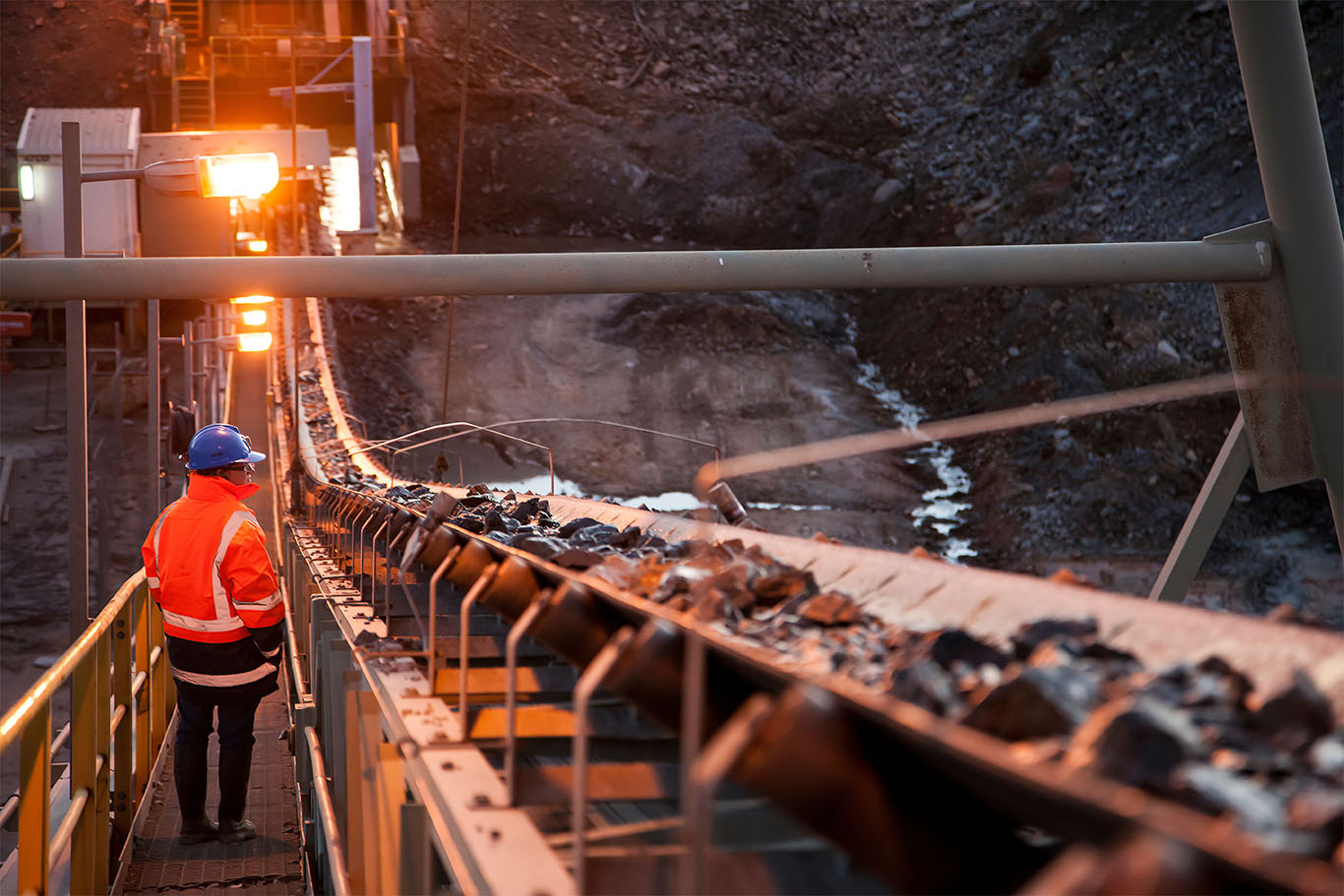
    First, we need to dig. Not literally, but the most basic activity underpinning economic activity since the Stone Age is probably the extraction of basic materials. So, when a potentially massive deal in the mining sector is reported we should pay attention. The $39 billion approach by BHP Billiton for De Beers owner, Anglo American, shines a light on a sector which has been largely shunned by investors on ESG, geopolitics, talent retention and energy cost worries. A pick up in M&A activity suggests a floor for executive expectations and potential upside opportunity for investors. Indeed, in our recent Private Portfolio Thoughts newsletter we wrote:


    “….the entire out-of-favour global mining sector is now worth approximately the same as just one technology company, Google ($2.2 trillion). However, when we see research showing China controlling almost 80% of the value chain in electric vehicle (EV) battery production we’d expect a few mining and mining technology ‘diamonds’ to be completely undervalued as the world races to EV adoption and net zero targets.”


    The mining sector, despite its sustainability (ESG) challenges, is a critical part of our decarbonised future. As an illustration, the race to electrify the global economy requires more copper in the next 25 years than has been produced in the sector’s entire history.  But a shortage of investment threatens that electric transition. For investors, capital shortage (vs ‘hot’ capital stampedes) means probable opportunity and…..on the capital front, there might be better news too.

    The critical cog in the global financial system is the banking sector. Of course, banking had its almost-perennial risk shock last year with the failure of Silicon Valley Bank(SVB) but, arguably, the lack of systemic knock-on impact should be taken as a positive. Furthermore, the stabilisation of interest rates (even if not falling) without major economic casualties to date is also encouraging. So, like the mining sector, we’d be looking for major deal activity from ‘insider’ executives to confirm there was potential sector upside ahead. Step forward Spanish banking.

    Bilbao-based BBVA has just launched a hostile $13 billion bid for its domestic competitor, Sabadell. Not just a bid, but a riskier hostile one too. Also, don’t forget recent bank deals in the UK  – Nationwide buying Virgin Money ($3.7 billion) and Barclays acquiring Tesco Bank (up to $1 billion). This feels significant and check out the performance of the financial sector in a “Magnificent 7” tech-dominated US market. Larger US financials are actually outperforming the top tech names in the Nasdaq 100 index year-to-date (+10% vs +7.6%). Also, it is interesting that the traditional barometer of the broader old economy, the Dow Jones Index, is on a 6-day winning tear. Perhaps, the dogs (but not Cricket) are back?

    Finally, the combination of the old economy Dow Jones rising, banks gaining deal confidence and shunned sectors doing M&A prompts a further thought. Public markets have been shrinking for years in terms of numbers of quoted companies listed on public exchanges. However, the role of private capital and private markets has grown in significance. Pitchbook’s latest research suggests private markets now control $14.7 trillion in assets, growing by an annualised 12.8% each year since 2012.

    Those private assets include private equity, real estate, infrastructure, venture capital and private debt/credit. The latest projections from the Pitchbook research team say these assets could stretch to $24 trillion by 2028 in a positive macro environment. This writer has also seen research showing family offices for the uber-rich now allocate 46% of their investment portfolios to private assets. So, let’s join the dots here. It seems entirely possible that ‘old economy’ companies could be purchased in private buy-out deals, backed by private capital and more confident banks. That’s a healthy development for investment markets but also provides opportunities for investors to diversify their portfolio into private assets. Now, start digging, or even mining those possibilities.