Tag: Stock Markets

  • Big Numbers That Can’t Be Missed

    Big Numbers That Can’t Be Missed

    Now, it’s my turn. I get to vote this week. For lots of busy good reasons, I haven’t read a huge amount on our own election but there’s no doubt it is important. However, I’m conscious I’m just one of 4 billion people voting in the current 12 month period. This also prompts another nagging feeling that it is external events over the lifetime of the next government which will define it. From Ukraine, to Utah, to even Mars, our planet is at an inflection point. The ‘world order’ is dangerously shifting as North Korean troops enter a European conflict zone for the first time, and yet, it would be ill-advised to down tools and just wait. There are other themes and trajectories already established and unlikely to change. Simply put, the numbers are now too big. And, we will continue to watch SIX in particular.

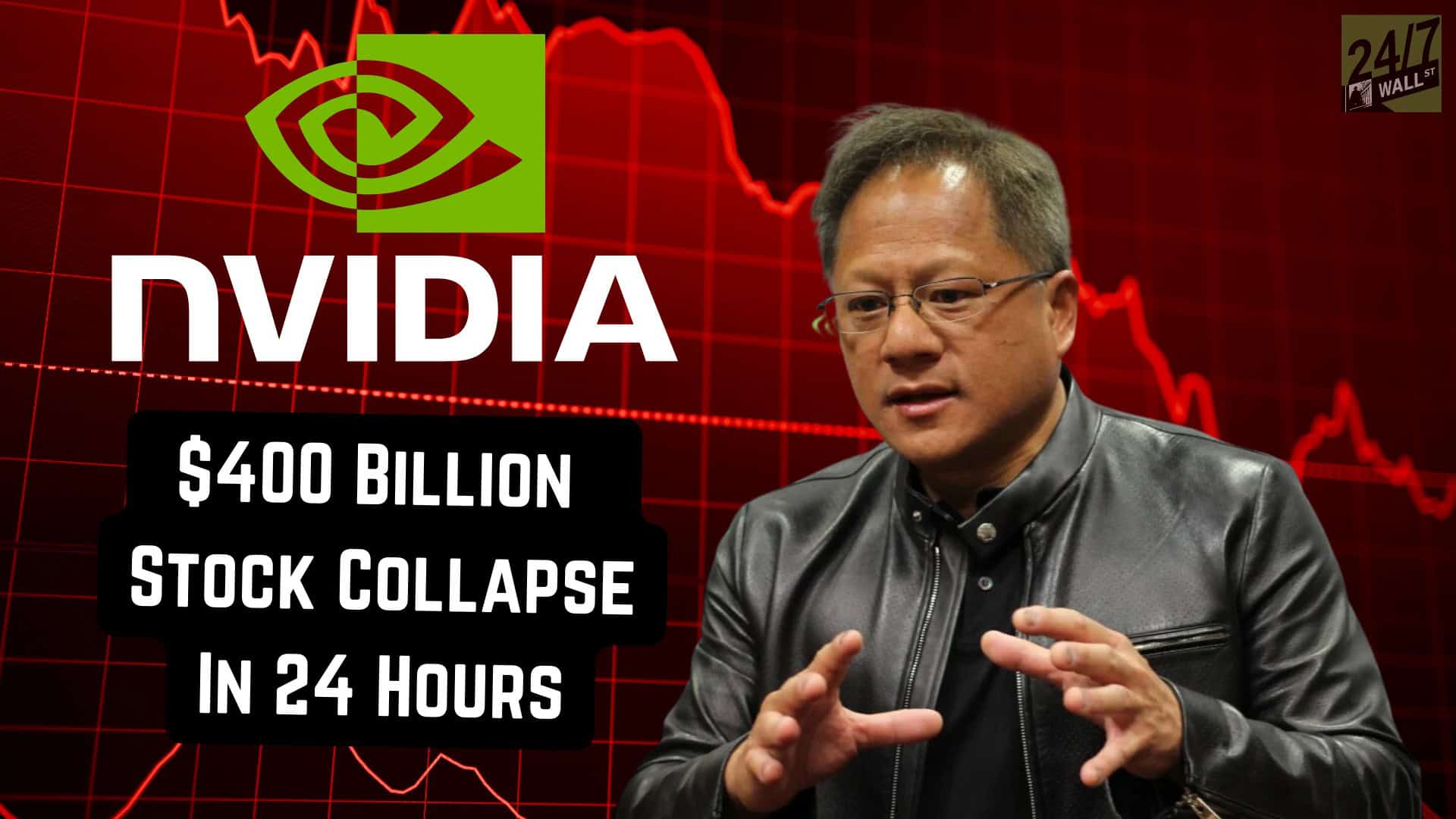
    Artificial Intelligence: It is striking to see various commentaries question the real ‘value’ of AI. During the summer, Goldman Sachs estimated that tech companies were about to spend $1 trillion on AI but queried whether they would ever earn a return on this capital expenditure. Fair question, but there’s another point to be made. The ‘winner takes all’ nature of this tech arms race is existential. The poster child of the AI revolution is Nvidia. Yet again, it smashed analyst forecasts this week in its latest quarterly results. My takeaway is that, of course, there will be misallocation of capital in this existential race but tech companies are going to continue to spend to stay in the race. ‘Exhibit A’ must be Nvidia’s own revenues in its data centre chip division. A whopping $30.8 billion revenues generated in the last quarter revealed a growth rate of 112% vs a year ago. Also, for context, this division has increased its quarterly revenue 7-fold since the early quarters of last year. Note, data centres are the battle ground where AI models are tested and trained, and this trend is set to continue.

    Cleantech: European cleantech suffered a blow this week as Northvolt sought Chapter 11 bankruptcy protection from its creditors. It’s a significant blow to Europe’s efforts to decouple from its dependency on China for electrical vehicle (EV) battery materials, chemistry, design and manufacture. Northvolt tried to deliver in all four process functions and received $15 billion of investment backing to do so. This has been a very expensive way to experience execution risk; both Goldman Sachs and VW have written off investments in Northvolt of $1 billion each. However, just like AI, loss is a recurring feature in any new technology area. So, keep an eye on the big numbers. In this instance, the EU is outspending the US with a $125 billion spend in 2023 (vs $86 billion). But….. China is really the cleantech benchmark. The Middle Kingdom spent $390 billion in 2023 across renewables, carbon capture, utilization and storage, hydrogen, batteries and nuclear power.

    Space: Elon Musk’s SpaceX is the most valuable private company on the planet with a recent funding mark indicating a $250 billion valuation, ahead of ByteDance (parent company of TikTok) on $225 billion. At current pace, it is launching its Starlink satellites (via Falcon 5 rockets) every 2.8 days. If you’re just about getting your head around that launch frequency think about Space X’s massive re-usable Starship which completed its 7th test flight last week. Its payload capacity is 150 tonnes and the plan is for Starship to do two launches…. daily. Now, what if the entire tonnage launched into space in history has been just shy of 40,000 tonnes? That means in the very very near future, Starship alone would be capable of repeating the entire payload history of space in just over 4 months. I’m not sure we have grasped the enormity of this feat and the implications for industries like telecommunications, mining, military defence, tourism, manufacturing or even housing (on Mars?).

    Crypto/Blockchain: Bitcoin is on the cusp of breaking the $100,000 mark. However, we need to start thinking about the entire crypto/blockchain ecosystem. Check out MicroStrategy which on the face of it is a loss-making software business but since 2020 has been investing in Bitcoin. If you thought Nvidia was the best performing share price in the world you’d be nearly correct – it has delivered 2660% returns to shareholders in the last 7 years. But….. MicroStrategy has rocketed by 3420%. Its current market value is $117 billion, making it more valuable than Nike, UPS or Starbucks. Of course, MicroStrategy is a leveraged play on Bitcoin but there are other ways to ‘leverage’ the rapid expansion of stablecoins, crypto funds, tokenisation, blockchain etc. The crypto asset ecosystem has just passed the $3 trillion valuation mark which exceeds the asset value of most countries’ stock markets. These numbers, and the opportunities to plug into this investment pool, are too big to miss…or ignore.

    Banks: It would be easy to move on to the ‘next shiny thing’ in the space or crypto universe but the banking sector is worth watching right now. Governments are finally getting good selling prices (even premia) for rescued bank shares as the UK (Nat West), Germany (Commerzbank), Ireland(AIB), Greece (Piraeus Bank), the Netherlands (ABN-AMRO) and Italy (Monte dei Paschi) all reduce sovereign shareholdings or exit altogether. As an aside, and interesting contrast to ‘shiny new things’  Monte dei Paschi began commercially lending 20 years before Christopher Columbus’s trip to America was financed. Anyway, old or not, the bank sector is hotting up. Breaking news over the weekend suggests Italy’s Unicredito will make a €10 billion + bid for rival BPM, and note Unicredito is already circling Germany’s Commerzbank. Also, it is worth noting that the tax/accounting professional services arm of UK wealth player, Evelyn Partners, has just been bought by private equity (Apax) for £700m. That is significantly more than the £500 million price tag suggested by City analysts.

    Technology Rotation: We have written previously about the particularly strong comeback for technology hardware thanks to AI, semiconductors, EVs and iPhones. The world has become very used to these themes powering the “Magnificent Seven” – Microsoft, Apple, Nvidia, Google, Meta, Amazon and Tesla – to all-time-highs but this analysis of last week’s technology price action in the newsletter, Clouded Judgment, caught the eye:


    This week saw the rapid acceleration of an interesting trend that started not too long ago – Magnificent 7 underperformance and software outperformance. Might this be the start of a rotation into software and growth (ie more risky assets)? Meta was down 3% over the last week. Amazon was down 7%. Microsoft down 3%. Google down 6%. Nvidia flat. Apple / Tesla were slightly up. QQQ was down 1.5%. Meanwhile, the WCLD index was up 6% over the last week! In addition to that, there were some really big moves in individual names. Snowflake was up >30% on Thursday after reporting earnings on Wednesday, which lifted the rest of the software market. Also just on Thursday Mongo was up 14%, Confluent / Datadog / Cloudflare were each up 7%.


    As a reminder, the Magnificent 7 have an aggregate value of $13.5 trillion which is more than the GDPs of India, Germany and Japan combined. The potential risk of an investor rotation OUT of the Magnificent 7 is a multi-trillion dollar consideration, and also can’t be missed.

    Clearly, my vote can’t change any of the big numbers above. However, these are the numbers which are far more likely to define our investing and business futures on this island.


     

  • Banking On A Deal Frenzy

    Banking On A Deal Frenzy

    This hurts a bit. It kills me to potentially reward poor behaviour, but hey, I’m not nominated to be the Attorney General of the United States of America. The financial giants of Wall Street kept their heads down in the lead up to the US election. We didn’t hear too much commentary on the rule of law, inflationary tariffs or accelerating budget deficits. I mean…who needs property rights (law) or a functioning national balance sheet? Possibly, the infamous Leona Hemsley’s “little people” because they pay taxes, aka the price, in time. But, for now, there’s a very clear short-term calculation being made by Wall Street. A Trump administration determined to slash regulation and speed up commercial transactions is a godsend for bankers. Of course, Elon Musk, Tesla and Bitcoin are perceived as the early big ‘winners’ of a transactional incoming President. However, at a broader level the clear winner in the week since election is the enormous financial sector.

    US Financials are the best performing sector in the markets over the last week (+1.5%) while tech, telecoms, healthcare and materials all have actually booked negative returns for investors(Source: Finviz). That big picture split is interesting and highlights the very essence of what financials are about. It’s all about deals. More deals, more commissions, more fees, more revenues, more bonuses. What deals you ask? Let’s start with the biggies like massive M&A deals. In recent years, the broligarchs have been frustrated by FTC Commissioner, Lina Khan, who has blocked more than 30 corporate mergers/acquisitions on grounds of reduced competition. High-profile deals attracting government(FTC) scrutiny included Microsoft/Activision and Kroger/Albertsons. Only this week, the parent companies of luxury brands Coach and Michael Kors abandoned their merger due to FTC competition-based objections. No deal, no fees. Hence, a more lenient transaction-friendly FTC under Trump is expected to increase deal flow. And, not just in M&A.

    How do I put this delicately? Well, if the incoming Attorney General is already under investigation by his House of Representatives colleagues for sex trafficking, let’s just say the whole area of compliance could be significantly relaxed. We can expect more financial products to be launched and faster in a more relaxed regulatory environment. One area already due to increase activity levels is the IPO sector. Interestingly, Sweden’s Klarna has just announced its plans to list publicly (IPO). However, despite its Swedish home, Klarna is going to list in the US, not Europe. Oh, and Klarna is a financial company. It’s also a great comeback story – the buy-now-pay-later (BNPL) platform and its 85 million customers is heading for a $20 billion valuation. That’s a tripling of value since the fintech ‘winter’ of 2022. Note fintech is not the only survivor of the investor ‘winter’ of 2022…

    The cryptocurrency universe has already been perceived as a Trump regulatory relaxation winner. Bitcoin has rocketed to all-time-highs of $93,000 with an individual asset value of $1.7 trillion exceeding that of Facebook/Meta. The wider cryptocurrency ecosystem has achieved a market value of $3.2 trillion but the bigger story is possibly stablecoins (cryptocurrencies backed by liquid financial assets ). Again, I’d highlight ‘transactions’ as the opportunity for financial services platforms. Stablecoins were used in $8.5 trillion of transactions in the second quarter of this year. That’s more than double Visa’s transaction volume of $3.9 trillion. It also provides a pretty good clue as to why Stripe acquired stablecoin platform, Bridge, for $1.1 billion.

    For the avoidance of doubt, more transactions and deals is an overall positive. More exits, more funding, more deals… the circle of start-up life. At Spark we know more deals, exits and IPOs eventually feeds into the smaller regions of financial markets. We also know there’s a hefty €150 billion sitting in Irish bank accounts earning almost zero returns. It’s not just an Irish phenomenon. There is currently a record $7 trillion of cash sitting in US money-market funds. That’s not a huge surprise when one can earn 4-5% interest in these US deposit accounts for relatively minimal risk. However, watch out for lower US interest rates and increased mega deal headlines in the coming months. Then watch that cash move. And, not just in the USA.

    The EU economy is 99% driven by 26 million private small and medium sized businesses (SME) who account for €5.4 trillion of economic activity. The headlines will almost exclusively focus on the impact of a Trump regime on US multinationals, corporation tax, homeshoring etc. Rather like the trading evidence in markets of the past week, probably not much will really change for the “broligarchs” and the big tech multinationals. However, the markets are telling you financial services will enjoy greater deal activity which will feed through the global funding ecosystem. Indeed, right now there’s an all-time-high number of investment campaigns on the Spark platform (8) with interesting additional private asset/deal opportunities in the 2025 pipeline. We’ve written it before; the future is private.

    So, it seems like a good time to launch Spark Private, the personalised service to grow your private asset portfolio. More details on that next week, after you’ve finished gasping at AG Gaetz.

  • Silver Linings For Finishing 2nd Almost Everywhere…

    Silver Linings For Finishing 2nd Almost Everywhere…

    I blame the Irish. Should have seen it coming. Poor immigrants once upon a time, the changed perspectives were there for all to see. A couple of Kellys, a Mulvaney, a Spicer, a McMahon and a McGahn, all key lieutenants in the Trump 1.0 cabinet of 2017, championed Muslim bans, Mexican walls and family separations. I’m being flippant and skipping through a few decades of political evolution here but political integration of immigrant communities is a good thing. Take it as a genuine US presidential election positive. Of course, there will be plenty of Democratic Party navel-gazing and gnashing of teeth in the days and years ahead, but finishing second for the first time in 20 years (last popular vote loss was 2004) will focus minds on the stunning shift of ethnic minority voters to an anti-immigrant Trump ticket.

    Things looked bad for the Harris campaign very early on Tuesday evening. Hispanic-heavy Miami-Dade County in Florida had given Hilary Clinton a 30 point winning margin in 2016. On election day, Trump obliterated that by 40 points to secure a 10 point winning margin. There were other shockers – Star County (Texas and 97% Hispanic), Suffolk County (New York) and my personal favourite, Anson County in North Carolina. Republicans have won this 45% black county only once before since…. 1870. Wowzers. The purpose of this article is not to follow most post-mortem commentary and examine where the Democrat messaging didn’t connect but rather to highlight some potentially positive developments. If anything, the change in the mix of the Republican vote is more interesting. Try the dilution of white voting power.  The ‘dilution’ phrasing might surprise readers’ perceptions of what constitutes the Republican party base vote, but the scores are in:


    *Trump won less of the white vote this year (55%) than 2020 or 2016. And…


    *Harris (43%) did better with the white vote than Hilary Clinton or Joe Biden.


    *Hispanic men voted for Trump 54% vs 44% for Harris.


    The always excellent Noah Smith in his newsletter recalled a former Irish Republican, Ronald Reagan, saying that Latinos would eventually become Republicans. The social negatives attached to that shift are for another day but Smith highlights an even more important point for a polarised US society:


    “This largely destroys the narrative that non-white immigration will demographically drown White Americans under a tide of imported minority votes….. At some point, Republicans are going to realize this, and hopefully become less anxious about America’s racial future. Hopefully they will also realize that any attempt to make voting harder actually hurts them in the future, because the impact would fall disproportionately on their own base”.


    Oooooh Tucker Carlson might not like that narrative challenge to the “Great Replacement Theory”. But, there’s also another positive attached to this stunning shift in voting patterns. Harris lost so emphatically and so early that there was no dispute over electoral process. In fact, Trump improved his vote in 90% of all counties in the USA, and that includes Guam flipping to red. For those who hoped for decency, that feels like finishing 2nd just about everywhere. Many wanted democracy to prevail. It did, but with the anticipation that the “right” side probably had to win for a smooth transition, right? That caveat is for another day’s discussion too.

    Also, while we are on the topic of ‘right’, another stunner for me was that the white evangelical vote was 22% of the total vote and they voted 81-17 for Trump. Other voters who make up the remaining 78% of the electorate voted overwhelmingly for Harris by a 19 point margin (58-39). So, without white evangelicals Harris would have won the election by 20 points!  Let’s hope God is right……

    Meanwhile, for the socially agnostic financial markets, uncertainty is a wealth destroyer, paralyses decisions and kills investment activity. So, not surprisingly, there have been a few financial wins in the early days after the election. We’d highlight the following:


    *Banking and asset management stocks like Goldman Sachs, Blackstone, Blackrock, JP Morgan and Apollo all flew up by 10% or more.


    *The S&P 500 had its best day in 2 years and best ever post-election bump (+2.5%).


    *Elon Musk’s Tesla jumped 15%


    *Bitcoin’s price rise by 9% to $75,000.


    The Musk win is probably a struggle for some but the EV revolution is climate critical and hopefully keeps Trump tangentially on board with decarbonisation of the economy. Intriguingly, the presence of Musk as chief Trump mascot could bring a slightly contrary positive. There are some, including me, not comfortable with the billionaire “broligarchs” brazenly pushing their own commercial agendas. However, it would be a mistake to conclude that it is only the Republican party engaging billionaire promoters. The Democrats had their own, possibly glitzier line up of billionaires, influencers and celebs. And, the big strategic mistake would be to react to a Jaws-like electoral savaging by suggesting “we need a bigger boat” or better billionaires. That boat has sailed. The positive lesson from this would be to “listen” and start exerting proactive power.

    One of the critical shifts in voting patterns was urban voting. Democrats still won the big cities but the winning margins were embarrassingly small compared to double-digit history. Urban voters in the likes of New Jersey, New York, Chicago, San Francisco and Detroit have witnessed a disgraceful decline in the condition of their cities. And, other urban voters have noticed. Where Democrats have governing power, they need to deliver better city living. Security, mental healthcare, housing, crime and infrastructure are very real challenges experienced, in particular, by the lower middle and working classes. Investment and solutions to these challenges will improve urban lives and win votes.

    Commentators recently described the US voter base as one now split evenly across three cohorts: i) white college-educated, ii) white non-college educated and iii) everybody non-white. Currently, the Republican party is connecting more effectively and adding voters with two of those three. The Democratic Party should be surprised and concerned about the only one with which they are growing/connecting. The good news is that the key driver of political power in today’s America is not ideology or race. The winning factor is DELIVERY, perceived or promised. Clearly, social growth and stability are important for a nation but there’s a price for everything. In this instance, the price (inflation) – and a perception of social agenda prioritisation – was too high. Just ask Latinos, now known as “Latinx” in Democratic Party literature.

    For investors, less financial regulation, lower technology oversight(AI) and more deals (M&A, IPOs) all promise more exits and further investment cycles. All good news, until it’s not. Note, only 15 years ago the world paid a shattering economic price for deregulation of financial credit markets. Go back another two decades, and here’s a final thought for the autocracy delivery (over democracy) fans out there celebrating technology and commercial freedom…….

    The last global authoritarian empire to implode was tipped into collapse by lies and a catastrophic failure of technology .


    “Every lie we tell incurs a debt to the truth. Sooner or later, that debt is paid”


    Valery Legasov, chief of the Chernobyl disaster investigative commission.

  • Looking For US Election Clues In The Data….

    Looking For US Election Clues In The Data….

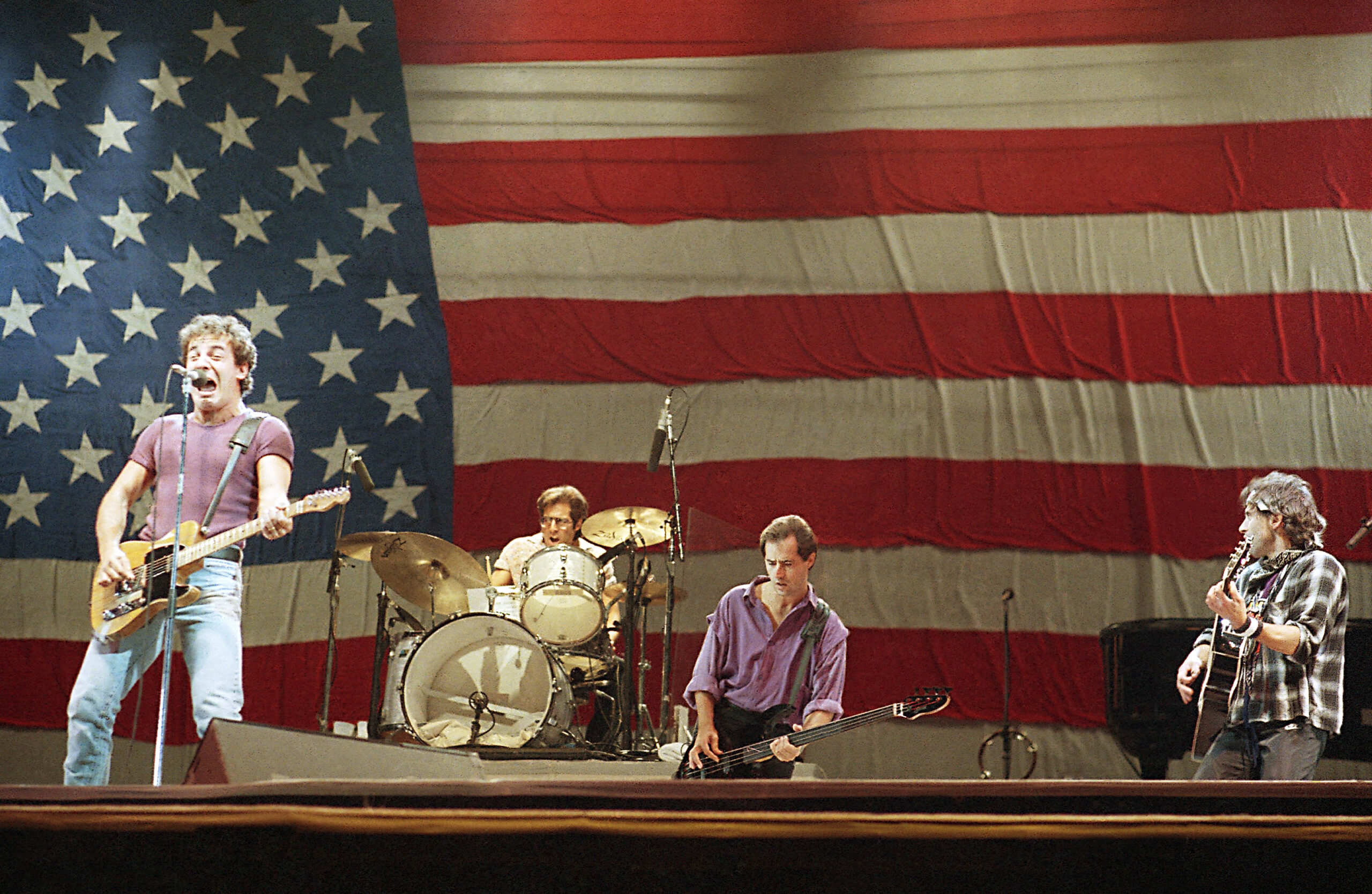
    Despite the lead photo in this article, I’m going to steer clear of politics. And, hopefully in 8 days’ time we can steer clear of 1939. For now, there is possibly one area where there is no debate. The 2024 US Presidential election is too close to call. That hasn’t stopped some big bets, and even bigger statements. But, they are just bets. For posterity, I took a screenshot of the latest betting probabilities yesterday. You might think “game over” with a 94.5% probability of a win for Donald Trump. I think not. Furthermore, the data doesn’t ‘think’, but instead provides robust guidance.


    First, not a single vote in the election has been counted yet. However, early voting has already started and is a mix of ballots mailed/returned in advance and early in-person voting at designated early voting stations in certain states. So, the data so far gives us an idea of WHO has voted. In turn, we can compare the profiles/mix of who has voted so far with the early voting patterns in the elections of 2016(Presidential), 2020(Presidential) and 2022(Mid-terms), and try to identify significant CHANGE. To add to the complexity of analysis this time are the unusual characteristics of earlier elections which make it difficult to make apples-to-apples type comparison. Here are the two most significant factors:

    Covid 19: Due to the ongoing pandemic health measures in 2020, early voting accounted for 101 million votes out of 158 million votes cast. Democrat voters overwhelmingly chose to avoid in-person voting and used postal ballot papers.

    GOP Election Strategy:The Republican share of that early voting was depressed by the party’s strong messaging on the potential for fraud, and encouragement to vote in-person on the day. That messaging has been reversed for the 2024 election.

    So, in the states where early voting registers record party affiliation we would expect to see reduced health fears lowering the share of Democrat early voting. At the same time, the share of Republicans voting early would be expected to increase. This is, in fact, what has happened. However, there are some interesting data points which might surprise when you look a bit closer. In the critical “swing states” where registration details are available there are ‘outlier’ representations (not votes) along ethnic, age generation, education, gender and party affiliation lines. Given we have 8 days and 8 articles to write, I don’t propose to go through each line today. However, given the 94% win probability flagged above, I’d start with a few ‘biggies’.

    The betting markets are not votes. However, one of the factors cited by the analysts is the very tight margins in the polls/surveys conducted with likely voters. As current polling sees it, the seven swing states (Wisconsin, Pennsylvania, Michigan, Georgia, Nevada, Arizona and North Carolina) are +/- a few percentage points for Kamala Harris or Donald Trump. In real terms these swing state pulse checks are “within the margin of error” which the experts think is 4-5%. Now, what gives the betting markets and various experts more fuel is the historic tendency of polls to miss the “hidden” Republican voters who turn out on election day. The consensus thinking is that the polls are probably not picking up this hidden Republican vote again. So, there’s a school of thought out there that thinks Trump is probably going to do 4-5% better than even the current polls are showing. Hmmm. That thinking presumes professional pollsters have decided to NOT model that factor again. That is unlikely given professional pollsters have had their credibility battered by big misses in 2016 and 2020. So, as a data person, I’m wondering if there’s now a possibility of  a 5% over-count of prospective Trump votes? Two factors are worth considering.

    Turnout:I said they’d be “biggies”. So, the biggest number of the lot is overall turnout. If it’s very high, or at record levels, then traditional analysis would suggest that favours a Democrat presidential win. Early voting levels at 50% of 2020 numbers at this point (41 million votes returned) indicates a strong turnout. But the next data ‘biggie’ is intriguing.

    Female Vote: The female vote has been bigger than the men vote in every US general election since 1964. In 2020 63% of eligible females voted vs 59.5% of men. Now, add the fuel of abortion/healthcare freedoms to female voting fire and consider the current female polling gap of 12% points in favour of Harris (55-43). In the other column, men break about 9% points for Trump (54-45). The maths of the female vote holding those levels is that a smaller male voting cohort won’t close the losing gap of 2020 even if Trump wins the men’s vote by 10%. Of course, the swing states will have their own cultural characteristics but arguably the ‘hidden vote’ this year could be female Republican voters switching to Harris. Recall current thinking is up to 10% of Republicans might switch (or stay home?). A further gender point is that Republican strategy is to get new male voters to vote. According to election strategists, that is notoriously difficult to deliver. Current early voting numbers are not showing any real male surge. On the contrary, the 248% increase in black female voters in Georgia is eye-catching. Also, in Michigan, the gender gap in the early voting is actually bigger than 2020 or 2022 (56.6% female, 43.4% male).

    For me, the female vote is the critical data point to watch. There have been millions of words written on shifts within the Hispanic vote, younger Gen Z voters and Black males but the big momma of this election is women. We will dig deeper in later articles. In particular, 2022 mid-term elections might be the more powerful guide to this one. It feels like not enough weight has been given to the massive 2022 swings seen in recent red states like Kansas, Ohio and Kentucky. As said, not a single vote counted yet, but here’s a bet which might be attractively priced right now…

    Just a bet but….. Kamal Harris to win the national vote by 5%, and wins 5 of 7 swing states easier than the polls show. Oh, and gets to within 1% of taking a huge red scalp in Texas or Florida. More tomorrow.

  • Torn In The USA: A European View

    Torn In The USA: A European View

    I know, I know. Who wants views, just get this bloody vote over with. Well, we hope the bloody bit doesn’t come true but, if you want Hitler’s generals and your chief cheerleader is a just-revealed Putin (pay)pal, then you never know. Anyway, forget the politics. Let’s pause and reflect where the US economy is today, not where it will be in 11 days. Also, note that financial markets, for the first time in 2024, through emerging market equities and inflation-measuring instruments (bonds, gold) are beginning to think about a different USA to come. However, in this article I’d like to highlight ten things which the average European would envy about our US ally today.


    1. The US stock market now accounts for 50% of the global total, but is home to less than 5% of the world’s population.


    1. The IMF this week (Financial Times) has provided some explanation for this dominance by highlighting stagnant European productivity growth since 2005. In the same two decade period US productivity has rocketed by 40%.


    1. Technology you say. You’d be right. Just 5 US technology companies – Apple, Amazon, Google, Microsoft and Meta/Facebook – have a collective market value of $12.2 trillion which is more than the value of any other stock market in the world. Indeed, the new AI chip star, Nvidia, is worth more than the entire stock markets of five of the G7 countries.


    1. The old stuff is going well too. US domestic oil production hit 13.4 million barrels a day in August. That’s the highest production number for ANY country(even OPEC) in history. The US is a NET exporter of oil while Europe watches its eastern gas pipelines anxiously. But, you won’t hear that on Fox News. Drill baby, drill…just not the facts.


    1. Not surprisingly, US banks with the biggest corporate customers in the world are doing quite well. US banking giant, JP Morgan, has a market value of $540 billion which exceeds the combined value of Europe’s top 10 banks.


    1. Maybe Europe will disrupt US economic hegemony and bounce back with AI? Ehhhh…that’s not looking like a great bet right now. The sheer cost of talent and large-language-models (LLM) used to train and build AI applications are turning the AI race into Big Tech 2.0. Recent newsflow would suggest it’s only Microsoft/OpenAI, Amazon, Meta and Google who have the deep pockets to win the race. And, Asia will be watching anxiously too. The Asian dominance of hardware/semiconductor chip production is in “transition” as Taiwan’s TSMC just told the markets that the production yields in its new Arizona plant are 4% higher than in its home base Taiwan.


    1. Speaking of home bases…US home owners are sitting on $32 trillion of value attached to their home equity. That’s a quadrupling of property wealth from the $8 trillion low recorded as recently as 2012. How did that happen?


    1. Jobs, and lots of them. The US economy is at full employment, the highest seen in 100 years. Oh, and average hourly earnings are up 26% since 2020. In fact, US real (adjusted for inflation) wage growth is up 26% since 2000. More companies too…


    1. Back in 2015, 2.8 million new companies were formed in that year. The number in 2023 was 5.5 million. That’s a near doubling of start-up activity in less than 10 years. And…. money doesn’t just talk.


    1. Risk earns rewards. High risk venture capital (VC) is the oxygen of innovation and explains much of the US tech dominance. The US capital markets are the source of 50% of ALL venture capital funding globally. Asia is 40%. And Europe…… ahem…… 5%.


    That’s enough. But, I could mention military dominance too as Russia impales itself on imperial delusion in Ukraine and is now resorting to throwing North Korean troops into meat-grinder combat action on its own soil in Kursk. Of course, the US is not in a perfect place, leaving aside its toxic partisan politics. Its health and hate crises seem to be impossible to address by looking overseas for solutions or perspective. Indeed, the sheer presence of 350 million guns in the most prosperous land on the planet are a startling reflection of fear in the midst of so much opportunity. We can only watch over the next few days, as US citizens cast their votes. The list of ‘wins’ above looks like a fabulous starting point. The polls suggest voters are not so sure.

    As Europeans, we can attest to similar ‘win’ lists for Germany and the UK ten years ago. Not so today, and their voters painfully know they played their part in believing not-so-great-again political calculations in new energy and trade policies. Tick tock…..


  • Raining Catfights And Dogs On The Trump Victory Trade

    Raining Catfights And Dogs On The Trump Victory Trade

    You could smell the global fear on Monday. By Friday, that fear mostly wafted around Donald Trump’s Mar-a-Lago compound. Forty five years ago Colonel Kilgore in Apocalypse Now first memorably stated, “I love the smell of napalm in the morning. It smells like victory”.  Arguably, the Republican party scribes will recount in time how the smell of ketchup-spattered walls in Florida this week marked the beginning of the end for a once-likely victory for Donald Trump. Tuesday’s Presidential debate watched by an audience of 67 million people was a disaster for Trump, and hailed as a triumph for “dumb as a rock” Kamala Harris. As eminent Bush Republican strategist, Karl Rove, cheekily asked, “What does that make Trump?”. A loser, but possibly there’s a bigger loser out there. It is interesting to note that Colonel Kilgore and Francis Ford Coppola’s Vietnam epic is today viewed as possibly the most powerful  “anti-lie” rather than “anti-war” movie of all time. Fast forward to today, and here are a few big lies under pressure in the real world, real money arena of financial markets….

    On the debate night, Trump flounced into the post-debate spin room declaring victory and quoting nonsensical Twitter and Fox viewer polls. However, as we always say… opinion is cheap, but investment decisions risk real money. So, it was striking to see the following morning that Trump’s publicly listed vehicle for his Truth Social platform, $DJT,  puked 16% of its value and now trades 80% lower than 6 short months ago. It should also be noted that the climate denial Don’s awful performance prompted heavy buying of clean/green energy stocks too; First Solar was up 14%, Enphase Energy up 5% and Sunrun up 10%…in one day. Let’s just say traders had a very different take on Trump’s bloviating spin-room review.

    We should also review some of the markets we highlighted in our article back in March “How To Trade A Trump Win”. In brief, we stated that there were three key ‘canaries’ which tracked the major Trump policies:

    Tariffs: Trump wants a 10% across -the-board tariff on all imported goods. Tariffs on imports are agreed by all credible economists as inflationary costs borne by the consumer. But…current inflation expectations in the market tracked by bonds, loans and money markets suggest those tariffs ain’t happening. Moreover, the current inflation rate of 2.5% is at a 3-year low. In fact, if one were to step out of the partisan bubble of US politics, one would know that the US is the global superstar in the post-Covid inflation battle.

    Oil: The Donald likes to tell voters he’s the fossil fuel industry’s best friend while promising consumers he will cut energy bills by 50%. This is almost as ridiculous as promising to protect cats, dogs and geese in Springfield Ohio, and becoming quite embarrassing for the Trump team on both fronts. Even Homer Simpson could tell you US oil and gas production is at all time highs of 14m barrels per day (vs Saudi Arabia 8m!). Meanwhile, oil costs measured by benchmark Brent Crude prices are back to the same levels seen before Russia’s full invasion of Ukraine in February 2022. Go figure!

    Ukraine: Finally, on the subject of foreign policy, and Ukraine in particular, the chances of a Trump victory also look flaky. We flagged the extreme risk of placating Russia – with ceasefire negotiations forced by Trump’s ending of Ukraine military support – and the threat this capitulation posed to eastern European countries like Poland. Well, check out Poland’s stock market; in the last 12 months it has roared upwards by 40% compared to the giddy S&P 500 ‘only’ rising 26%. Smell that Trump capitulation fear? No, me neither.

    The financial markets are struggling to believe Trump, and his chances of victory. With less than 60 days left before voting, expect an increasingly panicked Trump campaign team. The meltdown of Trump immigration/racist-in-chief, Stephen Miller, when being caught out on a Venezuela crime statistic lie is one for the ages. And, for pure popcorn moments, keep an eye on the social media spats between rabid Trump surrogate, Laura Loomer, and the more restrained Marjorie Taylor Greene(no really!) and Senator Lindsay Graham. You just couldn’t make it up. Well, Donald could.

  • Are You Following The Wrong Monster AI Moves?

    Are You Following The Wrong Monster AI Moves?

    There are now “Nvidia watch” parties. Yip. Stay up on a Wednesday night, grab some popcorn and watch the release of Nvidia’s quarterly results. There’s a whiff of Nokia about this single company focus. Then again, the commentariat are beginning to say in all seriousness that Nvidia’s results are more important to global financial markets than the Federal Reserve’s Open Market Committee (FOMC) and its guidance on the direction of interest rates. Bonkers. Anyway, Nvidia’s results this week were a bit of a yawn. Stunning growth, earnings beat, $50 billion buy backs and raised forward guidance. Still not enough for the party people, as the AI chip monster promptly lost $150 billion of market value in the after-hours trading session. Interestingly, data from the last 50 trading days has confirmed Nvidia as the most traded stock in the world with an average value transfer of $40 billion each day(!). That’s more than previous kings of the tape, Apple and Tesla, daily trading combined. So, AI certainly is focusing trading minds but we could be missing more significant business events. Like real monster moves. Try these for size….

    Coding Carnage:  During a leaked “fireside chat,” the head of Amazon Web Services (AWS), Matt Garman, suggested that in as little as two years, human developers may need to learn different skills to make way for artificial intelligence coders. “If you go forward 24 months from now, or some amount of time — I can’t exactly predict where it is — it’s possible that most developers are not coding,” he exclaimed in audio leaked to Business Insider.

    Consulting Charge: The big global consultancy firms are on the AI charge, and I don’t mean their fees. CB Insights has flagged some very big numbers as the Big 4 accountancy outfits ramp up AI investment:


    • Deloitte — announced $1.4B upskilling program (December 2022) and $2B for development of industry-specific applications of tech including AI (April 2024)
    • EY — invested $1.4B in AI, launching EY.ai enablement platform (September 2023)
    • KPMG — spending $2B on AI & cloud services in partnership with Microsoft over 5 years (July 2023)
    • PwC — investing $1B in genAI in its US operations over 3 years (April 2023)


    Then check out what another professional services giant is saying. Less than one year after announcing it would invest $3B in AI tech, publicly traded Accenture reported $600M in gen AI bookings in Q2 FY 24 and $900M in Q3 FY 24. On the company’s Q2 earnings call, CEO Julie Sweet said, “Our sales in generative AI…are the fastest we’ve ever seen.”

    Productivity Proof: There’s lots of commentariat guff about AI lacking enough use cases. Ahem. Let’s see what European payments player, Klarna, is doing. Quite well actually. Having cut staff from 5,000 to 3,800, staff productivity has exploded upwards by 78%. The company has so much faith in the AI tasks performed in marketing and customer service that management is talking about cutting staff by a further 50%. One can only imagine what other European fintechs like Stripe and Revolut are going to do. But two things are certain. These nimble fintechs can’t do nothing as the cost advantage is existentially massive with AI. Oh, and that’s fintechs. So, what are the lumbering ‘digital transition’ legacy banks going to do? Do, or dAI me thinks.

    Of course, AI chip expectations attached to Nvidia have a good chance of ultimately disappointing as with all cyclical manufacturing companies in history. However, the twaddle about “lack of use cases” now needs to come with serious business health warnings. Note that Klarna also told the market that 90% of its staff are using generative AI tools… daily.  Also, when talking to a medtech consultant with IBM in Dubai this week, she stated that EVERY pitch or business project now contains an AI piece.

    Just today I’m reading about plans in the UK to move to a 4-day week and you know AI will be in the discussion. It’s also in HSBC’s latest report on the UK venture capital scene. A stunning more than one in every 5 dollars raised ($4.4 billion forecast for 2024) is going to the not so niche sector of AI. Not technology, not life sciences…. just AI. Now think about ChatGPT’s parent, OpenAI, potentially receiving multi-billion dollar investments from Apple and Nvidia at a $100 billion + valuation, and then see CB Insights report M&A activity in the AI sector delivering a record 119 deals in Q2 this year.

    The business message seems very clear. Don’t watch. Move, and fast.

  • Watch Out For Joyful Asset Shocks

    Watch Out For Joyful Asset Shocks

    Wow, what just happened! In the last 33 days we saw an incumbent US President forced out of his re-election campaign, financial markets take a battering, Japan’s Nikkei dropping 20% in just two days’ trading,  the Republican National Convention celebrate polls predicting the second-coming of their Cheesus, and a likely funds-deprived military capitulation of Ukraine to Agent Orange’s mate in the Kremlin. It was all rather scary and in the financial markets the ‘fear gauge’ measured by an options derivative, the VIX index, rocketed from its long-run median level of $17.6 to $60 on the 5th August. In fact, that was the largest single-day increase in the ‘fear index’ in history. Then, over the next 7 days it fell right back to its average $17 level. Incredible. But, not even the VIX could have foretold the emergence of the ‘joyful warrior’ Kamala Harris as the pollsters’ best current bet for the White House in the November election, nor the invasion of Russian territory for the first time since 1941 by Ukrainian soldiers (in German tanks!!). These are amazing geopolitical turnarounds but not necessarily the type of shocks to move financial markets. However, we’d like you to think about a few developments which really could shock….in a good way.


    Productivity: The scary headlines would suggest recent ‘revisions’ of US jobs data revealed a less healthy US employment picture. The revisions showed that the statisticians over-counted the number of jobs created in the year to March 2024 by 818,000. However, before we go all wobbly-kneed about job creation moving at a pace of  ‘only’ 175,000 new jobs per month (vs previous estimate of 245,000) we need to consider that US GDP growth numbers have not changed. This means that labour productivity which has stalled for decades is picking up serious speed. Hmmm. Anyone tempted to ask ChatGPT what’s going on? Well, our AI boom might be beginning to pay dividends but in a more subtle way. Probably the best read of the week is a guest contribution by Brian Albrecht, Chief Economist at the International Centre for Law & Economics, on Noah Smith’s always excellent blog. Two snippets really hit home with me. First, the subtle impact of AI:


    To be clear, the progress isn’t about chatbots. Instead, it’s about small improvements across every sector of the economy. It’s the human resources manager using AI to sift through resumes more efficiently, the logistics planner optimizing delivery routes in real-time, or the data analyst automating report generation. These minor advances, multiplied across millions of workers and thousands of businesses, are what will ultimately drive significant productivity gains.


    Second, massive change in productivity could be already under way but is hidden by upfront costs like training, reorganizing workflows and designing new processes:


    The computer revolution offers a helpful parallel. In 1987, Nobel laureate Robert Solow famously quipped, “You can see the computer age everywhere but in the productivity statistics.” This “productivity paradox” persisted for years. It’s almost comical now to think of 1987—when the original Macintosh was brand new, and C++ was just gaining traction—as an era when “the computer age was everywhere.” Even then, the transformative potential of computers was clear to many observers. Despite the invention of the personal computer in the 1970s, we didn’t see significant productivity gains until the late 1990s. Why? It took time for businesses to figure out how to use computers effectively, redesign workflows, and develop complementary innovations.


    My own sense of things is that we are obsessing over generative AI (chat bots) and missing the integration of AI applications which have been around far longer than ChatGPT or Gemini; think machine learning, automation, robotics, virtual assistants etc. Of course, with far more powerful digital assistance available this has a potentially huge impact on the formation of new companies.


    New Business Formation: The US Census Bureau shows that 5.5 million businesses were started in 2023. This is the highest total ever and is a 57% increase on the numbers prior to Covid in 2019. Recent data from Ryan Decker and John Haltiwanger at the US Federal Reserve showed a surge in new business formation, particularly in hi-tech industries. But, there’s a pick-up in business formation in sectors like construction and building services too. These trends point to fresh ideas, innovation and pressure on incumbents to keep pace. It also points to higher productivity ahead. Our reference to ‘old economy’ activities like construction is deliberate because there is another forgotten sector beginning to stir.


    Critical Materials: This week the price of a gold bar reached $1 million for the first time ever. I’m no gold bug and I really don’t want to get into a philosophical debate about stores of wealth and inflation protection. But, I do know one thing. Gold tends to lead when the mining sector is due a recovery. Mining has been in the naughty corner for almost 15 years but I’m beginning to wonder whether sovereign anxiety over the supply of critical materials will lead to not just regulatory action (see the EU Critical Raw Materials Act) but actual sovereign/state investment in mining assets? If AI is now considered by nearly all experts as a sovereign-level risk race then the sector critical to industrial supply chains and decarbonising the planet could be about to receive its own positive sovereign attention.


    Electric Vehicles: Finally, on the theme of global decarbonisation, we could be on the cusp of a serious acceleration in electric vehicle (EV) adoption. Consider the following three developments:


    *For the first time ever in July, more than half of all vehicles sold in China were electric.


    *BMW pulled ahead of Tesla as the lead EV brand in Europe last month for the first time. Note to Elon Musk, Silicon Valley “broligarchs” and a few tech heads closer to home; funding a felon can be brand destructive.


    *Electric vehicles are now cheaper than combustion models in China.


    So, the competitive landscape is broadening out with Chinese and European players catching up with Tesla. This also means production of EVs is ramping up as market penetration of the total auto market approaches 20%. This production volume surge also has cost implications. According to Wright’s Law, used by MIT and proven in the wind and solar markets, when production of an item doubles the cost of producing that item falls by 20%. Critical to the EV revolution is the cost of lithium-ion batteries, and the cost of those batteries has fallen by 90% since 2010. Indeed, as the headline above suggested, China has reached a critical market penetration inflection point. Given the cost of batteries in China have fallen by 51% in just the last year, one can understand why EVs are racing past combustion models. Get ready for the virtuous circle of more production, lower costs and accelerated consumer adoption globally.


    All four developments above are capable of delivering significant positive shocks to the global economy and could be perfectly timed for a joyful new US President. Whoodathunk!


  • Five Tech And Money Moves To Watch

    Five Tech And Money Moves To Watch

    You do wonder. Regulators all over the world are in a flap about AI and cryptocurrencies, and their potential dangers in the wrong hands. Meanwhile, every summer millions go on holiday and are literally robbed. Welcome to the “Wild West” of foreign exchange. Who hasn’t puked at the ridiculous margins/commissions charged by airport exchange bureaux, retail banks and various financial intermediaries for a basic financial transaction?  One doesn’t need to be a financial guru to know that nowadays, in our ‘flash boy’ world of high-speed trading technology, the professional traders trade financial instruments like bonds, equities, commodities and currencies at ultra-low costs where commissions are struck at tiny portions of a single percent. The professional traders’ jargon monoxide might use the term ‘basis points’  for these tiny percentages but main street consumers will usually use expletives to describe commissions (plus margins or spreads) that can amount to a cost well over 10%…. or a thousand of those basis points. So, that’s the moaning over. Let’s look at the recent tech and money developments which might inspire…

    Turning first to one of the better solutions to foreign exchange (FX) pain, Revolut, it was interesting to see the company just receive regulatory approval in the UK after a three year wait. The Revolut FX service is, on average, about 25x cheaper than the majority of consumer options. A new UK licence was also nicely timed for a share sale which put a $45 billion valuation on Revolut. That looks like a 50% uplift in valuation for the British fintech and illustrates a renewed investor enthusiasm for innovative payments platforms. Check out Ireland’s Stripe where a secondary share sale from early investors(and staff) to VC giant Sequoia was done at a $70 billion valuation. That’s an encouraging 40% jump from its March 2023 valuation low. However, it’s not just Irish international financial giants attracting foreign investment capital.

    The recent Renatus Private Equity M&A H1 report on the Irish market showed activity picking up with 207 deals completed in the first half of 2024. That compares against a 30% fall in M&A deals globally (Source: PwC). For this writer, it was significant to see, in a high interest rate environment, that financial services was the second most active sector in the country after software. Indeed 21 of those 31 deals in financial services were in accountancy and insurance. Many of the acquirers were larger overseas groups looking to consolidate intermediaries rather than the wholesale providers of financial products. Maybe, there’s a bit more going on than just cost and brand consolidation?  What about a seismic cost shift?

    If you thought cryptocurrencies and blockchain were dead you’d be dead wrong. Bitcoin is flying high and supporting a digital currency ecosystem worth $1.3 trillion. Small stuff really, but think of my FX moan earlier and know that digital currencies and blockchain are ABSOLUTELY the route to cutting out the commission cowboys and intermediary ‘tolls’ which bedevil global financial services, and particularly the average consumer. Consider the following headlines:


    Kamala Harris’ digital dollar vision: A new era of financial inclusion?  –  American Banker


    “Bitcoin is a legitimate financial instrument,” Says Blackrock CEO Larry Fink – Yahoo Finance


    Goldman Sachs to launch 3 tokenization projects by end of year – Fortune 


    You didn’t think I wouldn’t mention Kamala this week, did you! So, in the interest of political balance it should be noted that it’s not just the prosecutor getting involved in digital currencies. The felon too is due to headline the 2024 Bitcoin Conference. The former fella used to call cryptocurrencies a ‘scam’ but, not unlike his disastrous recent VP pick, he’s capable of the most marvellous position reversals (and debate commitments). It’s difficult to call or even visualise the US political future but there’s a fascinating visual story developing on the AI front.

    We have written previously about a subtle technology shift in the investment world away from software and towards hardware. We all know the Nvidia chip story by now, but who knows EssilorLuxottica? Not quite the tech everyday name. And, that’s because EssilorLuxottica is not a typical technology play. It is, in fact, a luxury sunglasses designer and manufacturer – yep Oakley, Ray-Ban, D&G, LensCrafter and Vogue are all their brands. Moreover, Facebook/Meta who dived into the metaverse prematurely are now looking to buy a stake in the luxury glasses player. Of course, the potential of a worn screen/glass interface could be the next iteration of the 8 billion mobile phones on the planet. Early days yet, but AI continues to move at rapid pace. Of course, Meta’s move for hardware could be viewed as a strategically defensive move as the consumer information landscape shifts rapidly. Google had pretty robust quarterly results this week but latest breaking news could be interesting…

    The AI pioneers at OpenAI have announced the launch of their own AI-powered search engine, SearchGPT. The product is only available in beta version for 10,000 users but I’m sure Google’s executives will be watching the feedback rather closely. So, despite the summer holidays it’s fair to say there is plenty going on. And hopefully, one day, holiday makers will have an AI assistant embedded in their ‘sunnies’ to spot an airport FX robbery in real time!


  • The Hottest Investment This Summer

    The Hottest Investment This Summer

    Ok, I’m a bit hot and bothered. When a tee-shirt ripping Hulk Hogan is the warm-up act for possibly the next President of the United States I’m inclined to think our planet is in trouble. The Republican National Convention(RNC) in Milwaukee this week marked a new level of bizarre in US politics, but the hot air sadly can’t be confined to the GOP speaker line-up. As a record-breaking 1,400 tornadoes and scorching heat batters the US, I am resigned to the fact that decarbonisation of the global economy is way down the MAGA Republican (GOP) list of priorities. However, political mayhem can often leave investment markets unmoved, even relaxed. This seems to be the case so far, but things are fascinatingly stirring in long-forgotten parts of the market and I see one particular opportunity heating up fast. First, let’s look at some data:

    Technology: It’s not just Microsoft having a bad cyber outage day. In recent days, technology stocks experienced their worst share price falls since 2022. However, overall, stock markets continue to hit new highs. Why?


    Old Economy: Sectors neglected for months, even years, are attracting investors who are watching potential interest rate cuts and interesting valuation discounts to technology, pharma and AI-giddy companies. The top performing sectors over the past week were old-fashioned financials, industrials, energy and real estate.


    Smaller Companies: Only a few weeks ago we wrote an article “Betting On Small Can Really Win”. Hoo boy. The share prices of smaller companies over the past week have been on an historic tear. Stock indices which track smaller companies are flying as Trump would say “like you’ve never seen before”. The Russell 2000 is a benchmark used for smaller companies in the US and it has rocketed 12% in just the past week.


    UK Markets: The benchmark FTSE 100 post the Tory election rout immediately embarked on a two week winning streak. Coinciding with this political re-set, UK consumer confidence just hit a 3 year high.


    Venture Capital (VC): The latest data from VC research team, Pitchbook, shows that fintech and cleantech/sustainability start-ups are attracting the most investment in Europe of recent quarters.


    Clearly, investment capital is ‘rotating’ out of large company technology and looking for alternative opportunities. Furthermore, some structural themes are here to stay. So, we believe there are alternative opportunities to plug into the ‘monster themes’ like AI, decarbonisation, cloud wars and electrification. Where better to start than our planet and the urgent need to stem global warming? We have written many times before that this $9 trillion per year decarbonisation spend can’t happen without critical materials like rare earths and base metals. However, the mining sector essential to extract these critical materials has been starved of investment as large pools of capital shun the sector’s poor sustainability/ESG track record.

    That is changing as the big money now realises if there’s no mining, there’s no EVs, no batteries, no AI, no data centres etc These big funds are now pushing for sustainability assurance solutions which will allow them to deploy capital again and ensure the supply of critical materials can keep up with the demands of economic electrification. So, if you can excuse the mining pun, we have found a little gem of a play on mining/ESG which ticks the following boxes:

    *Market leadership: The company is a fintech with mining-valuable data built over 4 years.

    *Market fit: It is winning mining company customers – there are 4,500 publicly listed and investment capital-hungry mining companies – and generating more than $1m of annual revenues already.

    *Institutional endorsement: Critically, big investment houses are telling the mining industry this company’s independent ESG assurance process can open up investment and significantly speed up investment decisions.

    *Structural tailwinds: The macro themes of smaller companies, UK and old economy all feature in this opportunity.

    *Money talks: And.. founders and international institutions are putting in their own money to grow the company’s global footprint.

    So many boxes ticked, with macro and structural themes aligning. This has to be our hottest opportunity to fight global heat this summer, and for many summers more. But, not too many. This company will surely be bought by a global data player or consultancy in less than 5 years with a potential 10x return to private investors. Think Bloomberg, Accenture, Reuters, S&P Global etc but don’t tell them yet – we are keeping this opportunity exclusive and private.

    Links to next week’s webinar here and the company’s investment memorandum here.