Author: Gary McCarthy

  • Investment Shocker: France Has World-Beating Strategies

    Investment Shocker: France Has World-Beating Strategies

    If you’re a Daily Mail or Daily Telegraph reader stop reading now. If you’re looking for an update on French skipper, Antoine DuPont’s, eye-socket injury you can stop now too and call my maxillofacial surgeon cousin instead. But…. if you’re looking for an investment view that might surprise you then keep reading. And, it’s not just my view. Let’s start with the biggest private equity player on the planet. Blackstone’s billionaire CEO, Stephen Schwarzman said this week that “France has been the biggest beneficiary of Brexit”. Arguably, Brexit is a bit too narrow a lens to look through and you might think Schwarzman is really only highlighting financial services. However, his Bloomberg TV interview referred to France as the “best of the European countries” and how Blackstone are expanding their office in Paris. Crikey… there will be many investment veterans who will struggle with that observation but look closer and one can see France winning on many fronts.

    The perennial image of France as a capitalist-unfriendly paradise for socialist ‘woke’, punchy pensions and labour strikes took a bit of a bang earlier in the year when global rich lists were published. Topping the male and female categories for world’s richest billionaires were two French citizens. Luxury visionary, Bernard Arnault, of LVMH has rolled up $200 billion of wealth and brands over the decades while L’Oreal heiress, Francoise Bettencourt Meyers, is another $85 billion beneficiary of French dominance in the world of luxury goods. In fact, just 5 French companies(Hermes, LVMH, Essilor, Kering and Dior) have a combined market value of over $1 trillion and account for 80% of the value of the 20 largest public luxury companies globally. The strategy of focusing on long-term premium brand build has paid off spectacularly with possibly even greater riches ahead. Indeed, long-term strategic thinking must have clocked the prospect of two thirds of the world’s middle class being located in luxury-obsessed Asia by 2030. This is not the only long-term French bet paying off.

    Some might be surprised that Blackstone have put France ahead of Germany in Europe but the world changed when Ukraine was invaded by Russia. The German strategy of appeasing Putin and guzzling its oil and gas has been a spectacular own-goal and exposed another French strategic win. The Fukushima nuclear accident in 2011 pushed Germany to commit to decommissioning its nuclear power plants while France stuck with its 68% exposure to nuclear electricity generation. The world on a climate emergency footing and reconfiguring its power sources can only look on in envy at France right now. But there’s more….

    Go on, admit it; we’re all a bit jealous of France on an endless TV loop of sporting mega-events…. FIFA World Cups, Olympics and Rugby World Cups did not happen by accident. Again, the French played hard and paid up to win hosting rights for these events because they could see the long-term value of live events in a noisy digital multi-screen world. Sport is for instant gratification, not customised viewing schedules. However, investment in sport has been very strategic. Moreover, as live concert music tickets, sporting tickets and festival tickets continue to rocket on “experiential” demand premia, the value of sport(even gaming) as an engagement tool is almost unmatched. It is no accident that Steve Ballmer’s first purchase after leaving Microsoft was the LA Clippers. The $2 billion price was the subject of some sniggering at the time. Not now.

    In fact, my own personal experience of having breakfast with Chelsea FC owner, Todd Boehly, way back when he looked after the money of America’s richest financiers was my fascination about what he’d do next as a thirty something whizzkid. Yep, he went for sport investment and built a $6 billion empire. The French ‘get’ that most human beings are programmed for sports and games engagement and see it as a great opportunity to sell brand France, its goods and services. Closer to home, it is striking to see marketing technology company, XtremePush, go out and buy a gaming franchise, Thunderbite, and declare it a game-changer. Back to France, it would be mistaken to think a nuclear break and a historical appetite for champagne and sports leisure explains success. We can learn more from the French. Literally.

    France is an educational powerhouse too. A top 5 ranking globally for its education system is no accident. We associate France with the Arts and Humanities but a STEM focus (maths, science) and emphasis on critical thinking(vs learning by rote) has prepared its workforce well for the digital age. But, it’s not just technology and derivatives trading who have benefitted from France’s digital dividend. France has identified other commercial sweet spots, particularly where scarcity(think luxury) is involved. Is it any surprise that two of the largest water companies on the planet are French(Suez and Veolia)? Also, as the world economy re-constructs its industrial base for cleaner manufacturing check out the order books for giant construction companies like Vinci and Lafarge-Holcim. That cleantech manufacturing revolution is in full swing in Europe but there is another challenge – an ageing population. Guess who’s thinking ahead?

    Two of the top three nursing home operators in Europe are French. In fact, one of them, Orpea, is the largest operator of nursing home beds in Ireland and a good example of a potential acquiror of  smaller healthcare operators. In the world of start ups ‘exits’ or trade sales, predatory acquirors are always at the top of investor queries and considerations. So, for both founders and investors, dare I suggest we keep a closer eye on France as an opportunity and not just a World Cup threat!

     

  • Back To Debt School

    Back To Debt School

    Will we ever learn? I know, I know…. it seems a bit extreme to go back to school forty years later. Then again, we haven’t experienced this kind of thing since the early 1980s. I’m specifically thinking about the current financial environment where interest rates have dramatically spiked in a little more than one calendar year and perennial deflation fears(Europe, Japan etc) have been replaced by a genuine global inflation challenge. For illustration, this week the ECB raised its key deposit interest rate to 4%. Think back to summer of last year and European interest rates were actually negative. Frankly, the cost of money(rates) affects everything and when one considers the sheer pace of change we need to go back to the books or, at least, re-visit a number of emerging risks not seen for decades. Even hidden ones.

    Equity is not debt but…. the relationship is typically very tight. The text books say higher rates hurt business and equity valuations but not this year. Global equities are up 15% year to date and the tech-heavy Nasdaq index is up a whopping 33%. Of course, you will have read about AI excitement and the fact that the giant technology names are doing most of the stock market heavy-lifting this year. That makes sense when you compare previous debt/inflation shift periods. The fortunate truth for big tech is that they have absolutely no debt! Back in the 1980s the biggest companies in the world were the likes of GE, Exxon and General Motors; classic old economy industrial names with traditional balance sheets and plenty of debt. In contrast, some of big tech’s customers are not so fortunate and a few things have caught my eye….


    • US corporate bankruptcy rates (via Chapter 11 filings) are at a 12 year high. Chapter 11 filings surged by 68% in the first half of 2023 versus the year earlier period (Source: Epiq).


    • Retail bankruptcies can also reveal consumers tightening spend so the demise of the iconic Bed Bath & Beyond in April was a big deal in the US. However, it’s not just the US experiencing retail stress. The collapse of 400 Wilko stores and its 12,000 employees in the UK shows that not every self-imposed economic challenge can be solved by filling the English Channel with sh*t, slashing school safety budgets or machine-gunning dinghies.


    On a more global(and serious) basis, there are two key personal assets which are impacted by higher interest rates and debt dynamics. One well-flagged, one not so much. Mortgages as debts attached to properties are attracting the headlines but this could be a slow burner in many countries where markets use fixed rate mortgage products rather than variable rate products which are already causing stress in the UK and Ireland. Thankfully, that cohort of variable borrowers is a much smaller one than in previous rate spike cycles. One cannot forecast the future but it is quite likely that the re-financing, or re-set, of fixed rate products over the coming years will be in a significantly higher rate environment than previous negotiations. Now, for some good news….

    Pensions might bore people but something’s up. Income. Yep, a senior stockbroker was telling me last week that the hottest product for him this year was boring old government bonds, but with a relatively new twist. These debt instruments are actually generating decent income for people’s pensions for the first time in ages. It might not sound very exciting but the possibility of earning 4-5% per annum from almost risk-free assets is a huge bonus for pension funds which have been starved of income for years. That’s a great result for individuals but for governments with stretched debt profiles it’s going to hurt.

    We are approaching another US government debt ceiling deadline at the end of the month. Sadly, it’s not just women’s bodies being held hostage by the lunatic wing of the Orange Toddler cult on Capitol Hill. House Speaker, Kevin McCarthy, and the GOP have reneged on the original debt deal struck with the Biden administration so there are an anxious few weeks ahead. However, the longer term debt scenario for the US and other countries is beginning to have real budgetary consequences. The US is hurtling towards a $33 trillion government debt total and the servicing of that debt is meeting the recent reality of higher interest rates. Debt costs for the US government have increased by 25% this year and will be approaching an annual cost of $1 trillion soon. That’s more than the US spends on its defence budget.

    In the UK another form of government debt is in the headlines – the state pension. Currently, this commitment is costing the government over £100 billion per annum. The problem is that the Tory government have bribed their last remaining voters, retirees, with a “triple-lock” promise. In effect, pensions must increase every April by the highest of the following three cost of living rates: inflation rates, wage growth rates or 2.5%. Well, it’s not going to be 2.5% next April. Try 8.5%, on top of the 10% increase last year. Given the UK already has other, ahem, economic challenges it is no huge surprise that RishiGPT Sunak (or more recently nicknamed “Inaction Man”) is beginning to wobble on that commitment. At least the Tories have 13 years practice of false promises but other governments will have awkward budgetary choices in the coming years. And yet, I have become more hopeful in recent times….

    The fiscal support of governments in transforming industrial policy and moving away from fossil fuels can be viewed as a must-do climate emergency response. However, there are two key policy consequences which could be of longer term benefit. First, as seen in the US, Bidenomics is not just capital spend. It is creating jobs, new industries and growth. Europe and Asian economies are following suit and, in a world facing the increased threat of populism and false promises, we might actually be witnessing a second key policy consequence – the death of one of the great canards of modern politics. Trickle-down economics. The decades-long conservative/GOP orthodoxy of believing tax cuts for the asset-rich would ‘trickle down’ into main street growth never ever materialised. Bidenomics is proving that governments can use a far more effective policy lever to spread and grow the wealth. However, that lesson must be balanced with old-school debt discipline as I fear the headlines will keep coming on that front. Always learning, eh.

  • How To Capture The Investment Value Of A Crowd

    How To Capture The Investment Value Of A Crowd

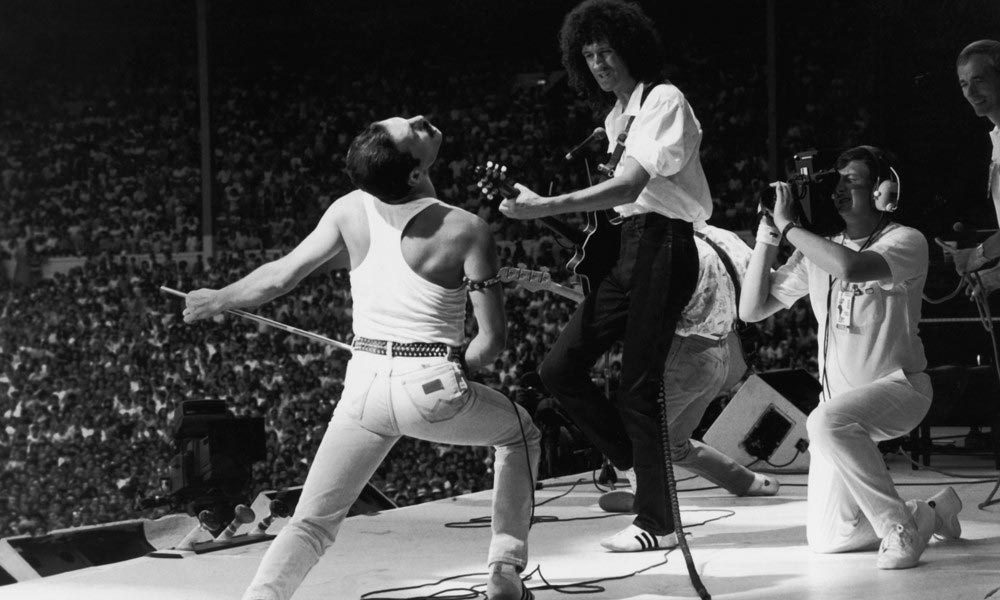
    I’ve always been fascinated by crowds and how their energy can sometimes spontaneously erupt. A personal all-time favourite crowd watching moment was the 1985 Live Aid concert, Freddie Mercury conducting the Wembley crowd and the “Ay-Oh” chant described as “the note heard around the world”. He nailed it. And, he’s doing it again. The contents of Freddie’s Garden Lodge home are on exhibit in the Sotheby’s auction rooms of New Bond Street for all of August and well over 100,000 people have queued for hours to take a peek. Of the thousands of lots on show, from the Yamaha piano, to the original Bohemian Rhapsody lyric sheet, to his art collection there is one item which has caught my eye in recent press coverage. A silver Tiffany moustache comb, estimated to be worth £400-£600, is currently expected to fetch over £24,000 and that should not really surprise. In fact, those that believe this emotional “premium” only applies to collectibles and celebrity memorabilia would be very wrong. You see, there are lots of crowds out there and it doesn’t always make sense. Here are a few current favourites of mine…

    Banking: A short five months ago, the Swiss banking authorities had to plead with UBS to ‘rescue’ the collapsing Credit Suisse(CS) banking group. In the end, UBS paid $3.4 billion to acquire the entire assets of CS. Fast forward to this week and UBS have posted a Q2 quarterly profit of $29 billion! This is the largest quarterly profit in banking history but the vast majority of the Q2 profit was an accounting treatment of ‘negative goodwill’ acquired with CS. In main street speak UBS is booking the gap between the $3.4 billion acquisition price and the ‘value’ of the assets on the CS balance sheet. Sadly, for CS, at the time of takeover there was a total lack of confidence in those assets(loans, property, IT, investments etc) and there was a “crowd” of buyers which amounted to precisely one.

    Automobiles: The internal combustion engine (ICE) has been around, mostly unchanged, for more than a century. But, there’s a new electric (EV) guy on the block, with Tesla being the trillion dollar poster child of the EV revolution. The crowd who cheerlead this revolution are very excited but there is another large crowd of investors who wonder about the competition from the traditional players like BMW, Toyota, GM and Ford. To illustrate this crowd push-pull, check out the recent IPO of the third most valuable car manufacturer in the world which you’ve never heard of, VinFast. This Vietnamese EV manufacturer is yet to make profits but at one point of trading post-IPO in New York the company was worth more than Ford, BMW and GM combined. A $170 billion climb in value to almost $200 bilion in just 4 trading days was followed by a $130 billion collapse in value over the next 4 days. That’s how two big crowds sometimes work.

    Restaurants: Subway, once the largest franchise on the planet, has sold its 37,000 restaurants to private equity player, Roark Capital, for just under $10 billion. Now, consider McDonalds with a very similar market footprint of 36,000 restaurants. It’s a bigger hit with the fast food crowd, doing nearly 50% better annual revenues of $23 billion(vs $16 billion). However, here’s the real crowd kicker – McDonalds is valued at more than $200 billion or 20x Subway. If you look more closely, you’ll see McDonalds is not just a food business, but a brilliant property business. However, some property crowds can be fickle…

    Offices: At its peak, serviced office player, WeWork, was valued at $47 billion. Its 2019 IPO was originally pulled but eventually listed in 2021 with a $9 billion market cap. Today, not so much. A 99.9% collapse in the share price and its fantasy balance sheet leaves WeWork on the cusp of liquidation. The days of founder Adam Neumann’s private waterfall, 3 storey water slides and $1.7 billion severance “parachute” are now but a distant, albeit soggy, memory.

    Insurance: Like banking, a purchase, when the crowd is tiny and all are fearful, can be very lucrative. Check out recent news closer to home that Axa has purchased Laya Healthcare(formerly known as Quinn Insurance) for €650 million. As recently as 2015, AIG bought this book of business for just €80 million. It was a small buying crowd back then…

    Artificial Intelligence(AI): The research analysts thought Nvidia was a bit giddy rich in valuation when its share price surged 80% in the first weeks of this year’s ChatGPT excitement. Then in May, Nvidia told the analysts everybody’s forecasts needed to be revised UPWARDS by 50%. It turns out Nvidia’s semiconductor chips are critical to AI processing power so the stock before its results last week was sitting on a $1 trillion valuation or almost 40x its revenues(not profits!!) – and you thought 10x for SaaS was exuberant? And, guess what? Yep, Nvidia’s results last week showed revenues for the last quarter still beating the upwardly revised estimates of Wall Street’s finest minds by another $2 billion…


    The above illustrations are not exactly Malkiel’s “Random Walk Down Wall Street”. However, Malkiel’s 50- year old message is just as relevant today; asset prices are random and unpredictable. Crowds play a big part in unpredictability and can make it difficult for investors to spot emotional ‘fear’ or emotional “exuberance” in a valuation. But….. there is a way for an investor to play to bigger and more varied crowds.

    We have written many times about the value of a portfolio approach to investing. Trying to time, or spot, opportunity on an ad hoc basis is fraught with challenges. The superior investor knows that regularly adding to a portfolio keeps them in the market at all times irrespective of “the crowd”. As a stark illustration, the entire excess returns of the S&P 500 in its almost 100 years of existence(1926) were delivered by just 4% of stocks in the database(Source: Bessembinder, Arizona State University 2017). That might rock you, but you don’t need to comb through all the research; Buffett and Lynch have said it for decades. The best investment strategies represent a portfolio of crowds.


  • RISK ALERT: ESG, Compliance and RICO On Collision Course

    RISK ALERT: ESG, Compliance and RICO On Collision Course

    Oooohhh this could be awkward. As somebody who looks at risk and writes about it on a daily basis, there are a very select number of developing situations which can hide in plain sight over a period of years, suddenly explode on to our screens and then trigger an embarrassing clean-up strategy. The obvious example would be the Ukraine war, given it was first invaded by “little green men” in 2014, not 2022. Indeed, neither the 2018 Salisbury poisonings nor the 2016 interference in US elections were able to move governments or corporates to act against an increasingly brazen Kremlin crime gang, until Russian paratroopers were literally hovering over Kyiv airport 545 days ago. As additional illustrations, the Credit Suisse collapse was a recent financial market example of multi-year inaction and, of course, our planet’s journey from global warming to “global boiling” is a very current reminder of risk leadership paralysis. Now, I increasingly believe there is another risk event developing but is being framed or hidden in an entirely ‘normalised’ manner. First, let’s introduce the key protagonists.

    There is a very large organisation in the United States which is legally registered and known to the Inland Revenue Service, the Department of Justice(DOJ), the US Chamber of Commerce and Capitol Hill. The activities of the organisation are cyclical with annual revenues ranging from $2 billion to $5 billion and its commercial relationships and spending would typically be concentrated in the media, legal, consulting and events management sectors. However, there are thousands of businesses and millions of US citizens who would also be considered connected parties to this organisation on a commercial or voluntary basis. And, that might be a problem. Imagine you are a connected party, or a provider of finance, goods or services to an organisation which has been worryingly caught up in the following legal developments:


    • Financial fraud, misuse of funds


    • Obstruction of justice


    • Corruption of judicial figures and witnesses


    • Defamation of corporate entities and individuals


    • Criminal damage to property


    • Assault of law enforcement officers


    • Corruption of government


    • Criminal breaches of data protection codes


    The illegality is potentially at a national or multiple state level so the investigation and prosecution of the organisation could involve high degrees of complexity. Thankfully, United States federal law has since 1970 provided its DOJ with a series of prosecutorial tools specifically designed to deal with the unlawful activities of those engaged in organised crime. The Racketeer Influenced and Corrupt Organizations Act (RICO) is particularly powerful in its conspiracy provisions which allows prosecution of a series of unrelated actions, but with a common criminal objective. So, RICO can tie large numbers of individuals to a criminal conspiracy, where even a failure to report illegality could be a crime. And, this is where things could get really awkward. The media and its legions of air-time hungry oxygen thieves are totally fixated on whether a failed casino owner will be able to run for presidential office again, rather than the startling implications of the RICO charges he will be arraigned on in Atlanta, Georgia, this week. Allow me to RICO expand….

    The District Attorney for Fulton County, Georgia, is the highly regarded Fani Willis and she is casting the RICO net over a much bigger beast than Donald Trump. The felony charges against Trump and 18 co-conspirators amount to a total 41 counts under the RICO Act. However, there are intriguingly a further 30 unindicted co-conspirators referenced in the Fulton County indictment. Now, think carefully about the mix of known individuals already charged and you might begin to see a bigger risk picture emerge. Here’s a quick reminder of who’s meeting RICO reality with their mobster boss:


    • Republican Party (GOP) White House officials in the Trump administration including Rudy Giuliani and Chief of Staff, Mark Meadows.
    • Republican Party (GOP) officials in government departments like Jeffrey Clarke (Justice)
    • Republican Party (GOP) lawyers including John Eastman, Kenneth Chesebro, Sydney Powell and Jenna Ellis.
    • Republican Party (GOP) officials in Georgia who put their names to fake elector documents including former Georgia GOP Chairman David Shafer, Shawn Still and Cathleen Latham.


    I deliberately reference the Republican Party (GOP) in each group above because this is currently the big “risk miss”. It is very clear that Donald Trump is the leader of a significant cabal within the GOP who are being charged collectively as a criminal enterprise engaged in organised crime under RICO statutes. That is massive – the GOP as a political entity with annual commercial revenues of up to $5 billion is inextricably linked with multiple criminal activities. We have listed criminal damage and assault as potential legal liabilities which will receive most scrutiny from Special Counsel, Jack Smith, in his indictment for the Jan 6th  assault on Capitol Hill and conspiracy to defraud the US of a democratic transfer of power. More than 1,100 people have already been charged in relation to the January 6th insurrection but it is highly likely Mr. Smith and his DOJ colleagues will establish a clear nexus between senior GOP officials and the “foot soldiers” who violently charged the gates of American democracy.

    That plot to disenfranchise 81 million voters, if proven in court, would be the tipping point for the wider international and national realisation that the GOP is effectively a criminal organisation. There will potentially be a GOP ‘establishment’ attempt to blame Trump and a small gang of rogues but the scale of the conspiracy across the GOP/Trump administration, many of its senior officials,  its legal teams and local state officials will make that plea very difficult. The pathetic GOP leadership ‘hostage’ figures of Kevin McCarthy and Mitch McConnell are hardly going to convince either. In fact, leadership in cleaning house is likely to come from the following:


    • Corporates: “ESG” has been described as a failed approach in recent commentary but one thing is well established in corporate board rooms. From a compliance perspective, RICO and organised crime is not something you want in your supply chain, investment or sponsorship activities. There will be anxious discussions already in the board rooms of major media, consultancy and legal firms. However, there’s one sector where the regulations and regulators are already very clear…
    • Banking: RICO, organised crime and dubious associations should have been ringing Anti-Money Laundering (AML) alarm bells in bank compliance departments but criminal convictions will leave no wiggle room in Wall Street or anywhere else. Closer to home, there seems to be some regulatory concern about ATM failures but, to me, the far more interesting question is how AML checks were conducted at the banking counter-parties for the Trump Doonbeg and Turnberry resorts??
    • Ratings: Ratings agencies are hugely important to the cost of debt. So, when ratings agency Fitch, downgrades US debt because of a “steady deterioration in standards of governance” we should pay attention. The prospect of a criminal organisation being close to power in Washington and effectively in control of the highest judicial court in the land could lead to some classic ratings agency horse-bolting analysis. But, on a more serious note, states perceived to be under GOP control are already suffering higher pension and insurance costs (see Florida and Texas). Who knows what the additional financial penalties would be for those unfortunate to live in states governed by an organised crime gang.


    Clearly, RICO convictions which include senior GOP figures (48 convicted for Watergate, this time could be hundreds) will require action from corporate and banking leaders. For the avoidance of doubt, corporates, banks and professional services firms will discreetly seek to cut ties with the GOP to avoid criminal risk contagion. In many ways, the Trump show is already over. The media, of course, want to make it look like the presidential race will be tight with Trumpy thrills and spills along the way. However, this only wins eyeballs. The truth is Trump and his organised crime co-conspirator, the GOP, are highly likely to lose the 2024 election in a landslide. Like Brexit, there might be a survey/poll reluctance to admit a wrong ‘un but the data looks ugly on these issues:


    • Female healthcare – the classic “dog who caught the car” scenario as women voters push back vehemently on the GOP-engineered conservative Supreme Court decision to reverse Roe vs Wade in the Dobbs case.
    • Mid-term & state elections – the very poor GOP showings at recent votes in key “red” or swing states like Kansas, Michigan, Ohio and Wisconsin have demonstrated the significant shift in women and young voters.
    • Bidenomics – embarrassing for GOP representatives who voted against the relevant legislation in Congress but the reality is a manufacturing investment boom with  “Jobs Biden” creating even more jobs in GOP-controlled states.
    • Demographics – the ageing GOP voting base is dying and the youth vote is motivated/angry re GOP climate denial and female healthcare rights.
    • GOP in-fighting – independent and moderate GOP voters must wince every time Marjorie Taylor Greene, Lauren Bobert, Matt Gaetz and the lunatic fringe appear on their TV screens to abuse their colleagues.
    • Criminal silence – in a scene straight from “Succession”, out of 44 former members of the Trump Cabinet just 4 have openly endorsed Trumpolini’s presidential bid in 2024. All are real-time witnesses to criminality in the years 2016-2020 and are about to find out that writing a tell-all book doesn’t quite cut it in RICO land for criminal immunity.


    Don’t expect the media to flog those facts and spoil the delusion just yet. Of course, if you’re a Trump supporter, apparently 71% of you already trust the Orange Toddler more than family, friends, the media or clergy. Truth Social indeed. So, for the rest of us, we gotta hope the Truth really hurts this time.

  • Watch For Rogues In Retreat

    Watch For Rogues In Retreat

    What a time to be alive. I see TV news about a former US president now requires bracketed warning notices saying “not a typo” running alongside chyron headlines. Not a typo. Yep, it certainly has its role in the media these days. But, while we’re at it, let’s consider the rather innocuous percentage of 15% of Americans in a recent poll who agree with a Qanon conspiracy theory that their government and other public entities are controlled by Satan-worshipping pedophiles running a child sex trafficking ring. That equates approximately to half the US voting population who identify as Republicans. So, it is possible.

    However, if I turn that into an absolute number I’m compelled to attach a “not a typo” notice to the fact that potentially 50 million Americans are weapons-grade batsh*t crazy. Now, we are talking about a vulnerable audience which is within shouting distance of the populations of Spain, South Korea or Italy. Then, throw into the mix that 12% of Americans(40 million, not a typo) recently polled do not have a single close friend and I’m beginning to understand how bad news seems to win eyeballs. Moreover, the media moguls know it too. As a species, fear and bad stuff engages us more strongly on an emotional level, and what the consumer wants, the consumer gets. So let’s start with an example of the fear stuff this week.

    Regular readers will know I’m slightly bemused by the negativity attached to “Jobs Biden” and the industrial revolution taking place in the US. Only today I see that, according to the Department of Energy, 95% of counties in the US have seen the number of jobs in energy increase(not a typo) between 2021 and 2022. What say the fossil fuel climate deniers to that awkward truth? And yet, the commentariat still manage to come up with a new fear. How about the spiritual home of oil, the Middle East?

    Just last week I spotted a headline stating “America has lost the Middle East. Now it’s the turn of Russia and China to move in.” Cue, a cornflake choke in Gravitas Towers and a wipe of the eyes. Then, I double-checked the recent newsflow about China and Russia to reassure myself that all was not imagined. Sure enough, I picked up a distinct vibe that both China and Russia were moving, but not in a good way. Let’s go to the Middle Kingdom first which has managed to catch the eye of every financial trader on the planet in recent days, bar possibly the author of the headline referenced above. Here’s how China has been moving in recent weeks…


    • China central bank unexpectedly cuts rates to support sputtering economyReuters
    • China stocks hit after developer Country Garden suspends some bond tradingFinancial Times
    • China suspends youth unemployment data after record highBBC
    • China Property Investment Drop Deepens As Beijing Vows HelpBloomberg


    The uncomfortable truth for any autocracy is that the ‘party line’ can only work up to a point. Then, the money talks. Clearly, the $80 trillion Chinese property market and associated debt mountains are experiencing the Wile E Coyote moment familiar to Japan market veterans and survivors of the Troika Tricolour work-out period closer to home. Increasingly, we read of the potential “Japanification” of China – a multi-year unwind of huge debt mountains. We shall see, but what might be more difficult to imagine is China deploying investment capital overseas while it is shoring up balance sheets throughout its own economy. Of course, President Xi is not the only autocrat receiving a sharp lesson in international capital flows. The multi-year award winning war criminal, Vladimir Putin, has not only incinerated his best military assets on the mud flats of Ukraine, but has broken the Russian economy too. So, before he ‘moves in’ on the Middle East the following possibly needs his urgent attention:


    • Russian Ruble At Weakest Level Since Early Days Of Ukraine WarWall Street Journal
    • Russia Sharply Raises Interest Rates As Wartime Financial Problems Pile UpThe Times of India
    • Russia’s inflation spike sets Kremlin and central bank on collision courseCNBC
    • Russia could reintroduce compulsory sale of FX revenues “at any moment”Reuters


    For me, the rogues are clearly in geopolitical retreat driven back by the realities of international financial markets. Of course, there will be those who will caution us to be careful what we wish for. Indeed, a Chinese economy in serious bother would not be a good thing but Japan-like subdued growth could help on the inflation fighting front. Also, did I mention another country with 1.4 billion citizens trucking along at 7% GDP growth rates? It might just be perfect timing for India to pick up the Asian growth baton and re-balance western economic dependencies and supply chains. Simply put, in today’s global economy there is more to Asia than China. Anyone spot a Vietnamese company doing an IPO in New York this week? For a brief moment the valuation of electric vehicle (EV) manufacturer, Vinfast, exceeded that of Ford and GM…..combined.

    Anyway, I’m in the optimistic camp and firmly believe the more realistic fear is domestic implosion for either Russia or China rather than overseas ‘moves’. I’m also hopeful that the younger generation might become more savvy consumers of media. The median age of a Fox News viewer is 65, and he/she has binged on a Murdochian fear-fest of threatening imagery for years. … remember those Fox News ‘War on Terror’ chyrons blazing across our screens while gun manufacturing and Sackler opioid sales machines sold the real deal; domestic terror on a scale greater than total US losses in the Vietnam War, every bloody year.

    So, scrutiny of words rather than emotional images might be a start. And, my favourite data point of the week is that, per YouGov, up to 60% of US under-30s prefer to watch TV with subtitles on, even in a language they speak. Hopefully, one day words and truth will regain primacy and the media rogues will fall into retreat too.

  • Don’t Bank On No Change

    Don’t Bank On No Change

    Speaking English can dramatically slow infrastructure projects. The results are in, and Spain and Italy do big infrastructure better than the UK, US, New Zealand, Canada, Ireland or Hong Kong. That’s according to a Transit Costs Project(TCP) report cited by Sean Keyes in an excellent piece in The Currency this week. The comparison is possible because TCP looked at 900 metro projects across the world and well, a tunnel is a tunnel. The staggering 10x variation in the cost of building 1km of metro is for another day’s discussion or a read of The Currency. However, our focus in this piece is banking. We know banks have two operational levers; a deposit rate paid to savers and lending rates charged to borrowers. But, did we know language might again separate national banking delivery for citizens?

    Check out the news this week. The Italian government shocked the markets this week by announcing a ‘windfall’ tax on supra-normal Italian banking profits generated by much higher lending rates which were not shared with savers via deposit rates. The Spanish had already moved to do the same because its banks had only passed on 8% of rate gains to depositors. In Italy that proportion of gains was a measly 11%. However, in Ireland that number is just 7% versus the euro average of 20% ( Source: Financial Times and S&P Global Ratings). Dearie me. Looks like Europe’s banks have been keeping more than just the change. You might even say “plus ca change” but, as always, there is other CHANGE coming down the tracks. Perhaps the bigger news this week was in a monetary world which has been under even more fire than the dinosaur banks.

    Cryptocurrencies as Trumpolini might say are “going through some things” but I’m in the camp that believes digital currencies entering mainstream usage is inevitable. Particularly, if the currency is “backed” by everyday financial assets. A cryptocurrency whose value is fixed, or pegged, to the value of a major currency like the dollar is known as a “stablecoin”. And, this week PayPal launched its very own stablecoin (PYUSD) fully backed by the US dollar. Now, think about PayPal’s 430 million users and the network effects of these digital currency flows. However, it doesn’t feel like it’s just the traditional banks who might be missing a significant shift. We actually should be paying attention to another under-pressure asset class.

    The VC world has been as miserable as a Trump legal team this year but two things caught my eye this week. First, the latest VC report from CB Insights was highlighting an uptick in one part of the market for the first time in two years. Global corporate venture capital (CVC) funding of $14.6 billion in Q2 was the highest level of activity seen since Q3 2021. More intriguing, was evidence of a recovery in CVC fintech deals and funding activity with $2.1 billion across 143 deals delivering 5% and 8% growth respectively, and arresting a six quarter slide. I was thinking about the fact that it is companies not funds starting to make moves and also why fintech was reversing trend rather than deal teams sticking with the the hotter cleantech or health tech sectors? Then I read something which resonated with a previous piece we had written about London’s fintech scene and the massive activity databases owned by traditional banks.

    The always thought-provoking Angular Ventures newsletter suggested “AI may not be that disruptive after all”. In this instance they are referencing the huge volumes of proprietary AI training data available to Big Tech incumbents like Microsoft, Amazon, Google and others. They are also suggesting the owners of large datasets have a very significant head start on wannabe smaller disruptors.When you consider the S&P 500 performance this year is being driven by a small number of Big Tech stocks you do wonder is the market already seeing an incumbent sustainable “edge” versus smaller disruptor competitors? Indeed, it is amazing to see just 10 stocks account for 30% of the value of the entire S&P 500 and this possibly underpins that thesis.

    We shall see, but if there is one sector where the incumbent databases might be in the wrong hands, then perhaps it is the banking sector. And, that might be why corporate deal teams are revisiting the fintech space. Also, we should consider the fintech payment networks(PayPal, Stripe, MasterCard etc) and wannabe networks (X or Twitter!!) as those best placed to win the trust from bank customers who have clearly not seen their fair share of interest rate and savings returns. After all, change is almost guaranteed and trust is the universal banking language.


  • Big Picture Changing Fast

    Big Picture Changing Fast

    Whisper it carefully but I’m getting quite excited. My recent change of day-to-day role to overseeing risk should surely temper this giddiness, but no. The clue is in the word ‘change’. It just feels like the pace of change has picked up again across many parts of our lives, and in a good way. Believe it or not, if you think the last few years have been racy get ready for lots more. In fact, American economist, Tyler Cowen, thinks we are only just emerging from a 50 year slowdown in innovation and productivity which he has called “The Great Stagnation”. Let’s start at the top, or at leadership level.

    Amazingly, the famous mobile phone slogan “The Future’s Bright, the Future’s Orange” is coming up for its 30th anniversary next year but, despite the wildfires, the future is definitely not orange. As the Trumpolini crime gang awaits its third criminal arraignment proceedings this week there’s emerging chatter of an incarceration reality or a highly restrictive plea bargain to take agent Orange off the presidential stage. Closer to home, UK prime minister, Rishi Sunak, is staging his very own political extinction event by gaslighting the entire planet with an extra 100 North Sea oil drilling licences which won’t produce anything until well(!) after 2050 and its net-zero commitments. One could be depressed by this delusional Tory government death rattle but, like Brexit, the wider world will move on and expose the nonsense with reality-based fact. However, we are not just talking about a political power shift. Power itself could be about to change dramatically with three recent developments…

    • The US nuclear industry has just seen the Plant Vogtle (Unit 3 ) delivering commercial electricity to the Georgia state power grid. This is a watershed moment as it is the first nuclear reactor built from scratch in more than three decades to be approved for commercial service. The mind-set shift is important as smaller modular reactors are about to change the investment proposition for the nuclear industry. And yet, there’s more…
    • The blockbuster movie Oppenheimer reminds us that we are still dealing with the risk-reward of harnessing nuclear fission, but the ultimate clean renewable energy source would, in fact, be nuclear fusion. The source of nuclei would be seawater and because the process combines(not splits) nuclei there is no long-term radioactive waste. Also, fusion produces far more energy than fission. More excitingly, a big US breakthrough in fusion technology in 2022 has prompted the UK Atomic Energy Authority to plan for its first compact fusion reactor by 2040.
    • That 2040 timeline might need updating. This week the scientific community is racing to verify a Korean discovery of a super conducting substance, currently known as ‘LK-99’. This superconductor material can apparently conduct electricity at room temperature and pressure WITHOUT resistance, or energy loss as heat. The possibilities of this breakthrough for the transport of power, magnetic levitation and computing power are enormous and can accelerate the development of other technologies.


    So, that’s the power bit, but an individual with even a cursory knowledge of today’s technology hot topic, AI, knows that computing power and cost improvements have accelerated the development of these large language models(LLM) and generative pre-training (GPT) platforms. Indeed, we have often referred to the powerful theses in “The Future Is Faster Than You Think” written by Diamandis and Kotler. In particular, this writer has been struck by their description of the “compounding effect” of a variety of new technologies arriving at the same time. Clearly, the development of superior energy delivery would accelerate AI development and I’m thinking more than just generating chat and creative content.

    How about healthcare? Already this week, we have read that AI use in breast cancer screening can match the efforts of two radiologists. In fact, the Lancet Oncology journal cites Swedish studies showing AI improving detection by 20%. Now, think about the “compounding” effect of quantum computing combining with AI models and room-temperature superconductors. Typically, quantum computing needs extremely low temperatures and huge amounts of expensive energy. Harnessing advanced energy and computing power sounds like very good news for new medical research processes and healthcare systems under strain. For illustration, the Swedish analysis above shows human workloads could be halved.

    Time is money we are often told. Actually, time also moves money. So, if the previous developments in power and technology still feel a little bit “out there” in terms of actual arrival, it’s worth thinking about the change in pace I’m seeing. In commercial terms, the threshold for an innovative product achieving “adoption” used to be 25% market ‘take up’. For electricity it was 46 years from invention to adoption; 26 years for TVs; 16 years for PCs; 13 years for mobile phones, 7 years for the internet; 4 years for smartphones. We know ChatGPT racked up 100 million users in 2 months but what about Threads/Meta taking 100 million Twitter users in 4 days! My point is that all adoption cycles are being compressed. That can be scary for business but the always-interesting blogger, Noah Smith, flagged another cycle compression which we have been banging on about for a while.

    Smith points out that the “vibe-cession” and gloomy headlines are struggling to keep up with the reality of the US economy. He quite rightly asks that “if this is a bad economy, please tell me what a good economy looks like?” The current economic data frames that question beautifully – full employment, inflation halving, real wages rising, a huge manufacturing boom and real disposable income rising in 11 of the last 12 months. Of course, full employment is a weird one when all the financial headlines, and admittedly activity, have retreated from post-Covid frenzy levels. However, Smith intriguingly asks the same question I have been hinting at for a few months.

    Are businesses learning that economic slowdowns are opportunities to keep staff, and invest in people and franchises? The more interesting consequence of less emotional behaviour and more strategic risk thinking from business leaders is that slowdown cycles could be shallower in the future. That is a game-changer for equity and investment risk; and leaves open the possibility that technology advances and improved business cycles could prompt a money stampede into a market which has been “hated” for a long time. Sure enough, Morgan Stanley’s market analysts have confessed error in recent days and Bank of America have gone full reverse-ferret on their recession scenario.

    If Tyler Cowen is correct about a ‘Great Stagnation’ being behind us, then we really haven’t seen anything yet. However, the problem with just seeing change is that when the big picture presents itself clearly it will be too late to move your business or your money. The future’s bright, the future’s yours.


  • What The XXXX Just Happened!

    What The XXXX Just Happened!

    I miss my Dad. His 30-year anniversary is this week but it’s also one of those occasional weeks where there’s so much mad stuff going on I’d just love to have one more chance to chat with him. From his celestial perch he would have a pretty good view of how we are burning our planet to death. However, I’m still struggling to comprehend some of the data points hitting our screens but here are a few standouts:

    • Temperatures in the Mediterranean Sea have exceeded 28C.


    • Air temperatures in Sardinia have smashed through the 48C barrier.


    • Wildfires in Rhodes have forced the evacuation of 19,000 tourists as Corfu and Dubrovnik stare down the barrel of a similar fate.


    • Sea temperatures off the Florida Keys have exceeded 100 degrees Fahrenheit.


    Given the enormity of that last figure, it looks like an extinction event for all coral reefs around Florida and the mother and father of super-heated hurricane seasons to come. Of course, when it comes to the climate emergency there’s always a populist charlatan ready to step up and fill the airwaves for a complicit “both sides” media. Cometh the hour, cometh the moron. And who better than the weather-named but Brexit shamed, Lord Frost, to offer his latest global leadership ‘genius’ and advocate UK exceptionalism. According to the good Lord, the UK is fortunate(again!!) that “far more people die of cold than heat. Rising temperatures are actually likely to be beneficial.” I rest my case, m’Lord.

    Indeed, the self-destruct button is not exclusively in the hands of the loony Lords of Brexit. In the world of financial trading we are going through a significant period of AI hype with the five biggest companies in the space – Microsoft, Apple, Amazon, Alphabet and Nvidia – known as the “MAAAN” stocks accounting for a record 24% of the value of the entire S&P 500 index. My personal view is that these big tech names could indeed benefit hugely from an estimated $16 trillion addition to global GDP by 2030 (source: PWC) but be wary of the “concept” companies and ideas currently chasing FOMO (fear of missing out) capital. As an illustration of giddy destruction, cast your minds back to Metaverse excitement and the parallel development of crypto currencies and tokens, or NFTs. The big cryptocurrencies are still holding value but the NFT world is a wasteland. Only this week we heard that an NFT of Twitter founder, Jack Dorsey’s, first tweet originally purchased for $2.9 million was now worth….. $4. And if we stick with tweet value destruction we need to talk about X and Elon Musk.

    It has been described as the $44 billion bonfire of a brand. The replacement of the familiar blue bird logo at Twitter with “X” is breathtakingly bold or bonkers. And, don’t get me started on this week’s Capitol Hill hearings on aliens, UFOs and probably X-Men. Back on planet earth, the initial take by almost all of the commentariat is that, having incinerated the engineering support and revenue/advertising business model of the social messaging platform, Musk has gone full Al Pacino “Scarface” on the brand. It’s difficult to defend the move but I’m still thinking there’s a financial services opportunity for Twitter. Our first article when Musk announced his Twitter bid outlined many of those possibilities so I was intrigued to read the thoughts of Steve Jobs biographer, Walter Isaacson. He has spent three years with Musk as prep for a further biography and he makes three very interesting points.


    • Musk has always wanted to disrupt finance. Even in the early days at PayPal he had set up X.com and wanted it to replace PayPal as the brand. He was ousted as PayPal CEO on that initiative.
    • Musk has been plotting the X rebranding of Twitter since BEFORE closing the purchase of Twitter.
    • Musk sees the 250 million-strong content creation platform as a trillion dollar financial payments platform for creators of all media content.


    We shall see. My father as a former marketing guy would be fascinated how this rebrand plays out. But, he might also remark upon the resilience of Twitter; it still reaches millions and remains the best real-time search engine on the planet. And perhaps, in a week of disturbing planetary news we should finish with an illustration of global resilience. The US Federal Reserve raised interest rates again this week and rates are now at a 22 year high. I have to confess I am gobsmacked that both the speed and scale of monetary tightening in the past 15 months has not blown up the world economy. Instead, this week we received further optimistic signals from China, excellent big tech results from Microsoft and Google, US consumer confidence and real wages rising ahead of expectations, the IMF upgrading 2023 global GDP, and cyclical sectors like banks and commodities outperforming. No wonder the commentariat have begun to refer to the “Godot recession”.

    As for the rest of us, we will just have to wait and hope that monetary and environmental discipline will ultimately pay off as a global good thing rather than destruction. It won’t take 30 years to find out either.


  • Investment Stick Or Twist Moment

    Investment Stick Or Twist Moment

    A senior stockbroker told me the other day it has been the quietest July for trading in 30 years. Of course, our conversation, as we took shelter from yet another torrential Dublin downpour, did hint at the distinct possibility that the city’s investor population had fled the country. However, another factor was cited. The simple fact is that many investors are confused.

    The daily dose of conflicting headlines as to economic recession or expansion, rising or falling future interest rates and inflation rate uncertainty does make forecasts difficult. But, possibly not binary. In other words, the outlook might not be all blue skies but nor is it Oppenheimer-nuclear awful. Perhaps, we should just view the headlines as Barbie-pink cautionary warnings rather than code red catastrophe. I certainly agree the signals are confusing but I’m more a Barbie guy than an Oppenheimer doomster. Here are a few developments I spotted this week which suggest some broKEN markets actually might be recovering….

    The property market in China has been struggling for years as huge debt piles and rising interest rates met returns reality. However, shares of Chinese property developers listed in Hong Kong have started to bounce on expectations of supportive policy measures from the Beijing government. Apparently, the government is considering relaxing residential building restrictions and easing mortgage rules which have suppressed demand for years.

    Improved Chinese economic activity is already seeing steel prices hit 4 week highs domestically. However, the rest of the global hard commodities sector has been on the floor as the dollar weakened to a 15 month low in recent weeks. Typically, a weak dollar helps commodities and analysts are suggesting commodities are due significant ‘catch up’.

    In a nutshell, is the economic cycle capable of an upside surprise? The business surveys like the Manufacturing ISM in US or the ZEW in Germany would suggest an emphatic “NO”. But, equity markets are signalling better times ahead with US cyclical sectors, surprisingly, outperforming defensive sectors year-to-date.

    And, if you’re looking for another critical cycle barometer where better than the banking sector. Only a few months ago the eyes of the world were on the US banking sector for all the wrong reasons. Now, the biggest 5 banks in the US have announced their Q2 results in recent weeks and each of JP Morgan, Citigroup, BOA, Wells Fargo and Goldman Sachs saw their shares rise sharply in the hours after earnings reports. Interest rates were definitely a profit boost. Trading and investment banking less so. Anyway, the bounce in share prices tells us expectations are cyclically low which means a lot of money might have to chase the market if the economic cycle is actually picking up speed.

    Oh, and we need to be careful about suggesting “markets” are difficult. Yes, some asset markets are experiencing pain but private equity giant, Blackstone, has been around long enough to know there are always opportunities to make returns. In fact, Blackstone has just hit the $1 trillion dollar assets under management(AUM) mark three years ahead of plan, thanks to good growth in their private debt/credit units.

    So, perhaps the key point is timing and trading is very difficult in a cycle. There are too many twists. As Buffett and the Blackstone crew will tell you the most expensive investment decision is to opt out of the markets. Stick with building a diversified investment portfolio and the miracle of time and compounding returns will do the heavy lifting while you read the jittery headlines.


  • Your Pension Ready For Startups?

    Your Pension Ready For Startups?

    In the land that crime forgot it’s possible to impoverish a nation, party with the KGB, refuse to hand over your phone and still face no prime ministerial shame. But, if you’re a BBC newsreader….oh, forget it. In fact, knock me over with a Suella Braverman morality manual (a bit lighter than a feather) I’m actually cheering a different UK headline this week. Yep, the chancellor, Jeremy Hunt, has announced plans to allow pension funds invest in homegrown private companies, including startups. This is a big deal. Again, the numbers don’t lie and there are a few I would highlight…


    • The UK is the largest pensions market in Europe. The ONS at the end of 2021 estimated gross UK pension assets of £2.7 trillion.


    • Fresh pension savings inflows in 2021 alone were a whopping £115 billion.


    • Nine of the biggest insurance companies in the UK market have agreed to allocate 5% of funds to private investments. This suggests pension giants like Aviva, L&G and Scottish Widows will free up an estimated £75 billion for investment in fast-growing startups.


    Leaving aside the huge amounts of money potentially flowing into UK startups, this move signals a shift in risk tolerance at pensions and a recognition by government that startups can boost the wealth of the nation. The huge size of the US tech sector has definitely benefitted from VC funds receiving 70% of their capital from pension funds. In the, UK that percentage is just 20%. Savings wealth creation requires a bit of modelling but the British Business Bank found that the average 22-year-old could boost their total retirement savings by 7-12% with a 5% allocation to private investment/VCs. It is early days yet, but for those already investing in startups, this structural shift in private investment markets could have promising consequences. Three positives quickly spring to mind….


    1. More money chasing private investment opportunities pushes up valuations of startups. In fact, £75 billion looks almost too big a number. So, what if….


    1. Pension fund vehicles waited for startups to achieve a certain size and then buy them out? It is possible pension fund investment vehicles could become potential exits for startup investors before IPO or trade sale.


    1. The recognition by normally risk-averse pension/insurance giants that allocation to private investments can be part of a retirement savings strategy is a huge boost to the credibility of startups and their ability to boost wealth.


    Only last week, I wrote that this is possibly the greatest time in history to be investing in startups so the timing of this UK announcement is interesting. It should also be a timely reminder that investment should be a habit not a headline chaser. My sense is that some people have stalled their investment decisions or strategies until the recession-worry headlines turn more positive. That could be an expensive pause, or to be more blunt, money never sleeps. Here are a few snippets which should tweak the interest of the startup curious….


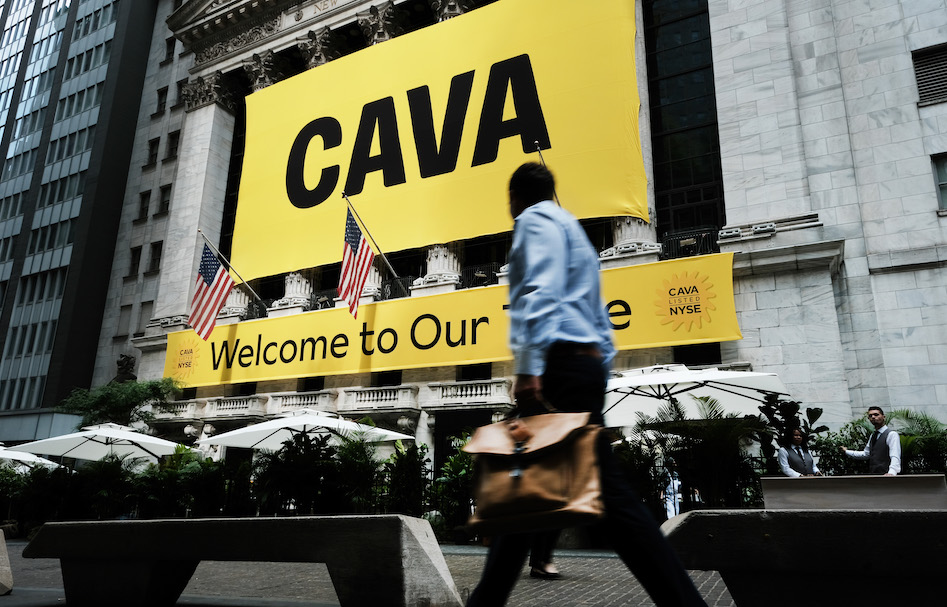
    • It is not just technology or AI which is hot. My sense of old economy, real assets is that they are due a re-visit just as Bidenomics is putting the entire US manufacturing sector on a decarbonisation re-set footing. How about good old fashioned cooking? Even Mediterranean-style restaurants?  Check out the Cava Group restaurant-chain which has doubled in price since its New York IPO in June.


    • However, we can’t ignore technology and specifically AI. The startup, Inflection AI, co-founded by LinkedIn’s Reid Hoffman, has just received $1.3 billion of investment from the likes of Microsoft and Nvidia. The company is just a year old and valued at $4 billion. Now, tech is not just a US story….


    • Irish cyber security play, Binarii Labs, is in the middle of a funding round on the Spark Crowdfunding platform and has already smashed campaign targets in just 10 days. And why not? Breaking news this week of a €400,000 investment by the prestigious European Institute of Innovation (EIT) has an interesting little kicker; that investment values Binarii at €20 million but crowdfunding investors can buy in at a €6.7 million valuation. And… that’s before any EIIS tax rebates. That looks like an 80% discount worth checking out.


    In many ways, the snippets above capture the compounding of some key drivers of the investment environment right now. Recall the UK pension announcement and then look at EIIS tax incentives. Also, think about the balance of opportunities presenting themselves in both old and new economies. And then think about the hugely enhanced pool of buyers compared to previous decades. It’s not just pension funds coming to the table. Cash rich big tech companies(Microsoft, Google etc), government innovation agencies(EIT, Enterprise Ireland), sovereign wealth funds, family offices and a wall of retirement savings(10,000 retirees a day in US) are all building portfolios of young companies and ideas. Sovereignty, innit. Nope, just supply and demand.