Author: Gary McCarthy

  • Not All Bad – 7 Rays Of Sunshine

    Not All Bad – 7 Rays Of Sunshine

    The writing juices struggled to flow this week. Dreadful news on all levels but we battle on and look for the light. No sun yet, but there’s a few hopeful twists on lots of negative headlines. In fact, if we look more closely at the data there is a real possibility that the headlines are looking at the wrong things. Here are my top 7 twists on the gloomy consensus out there….

    Torn in the USA: One of the few consensus views among Americans is that the country is floundering. Just 18% of US citizens think the nation is heading in the right direction. And yet, they seem to have more jobs than ever before. The US unemployment rate is at historic lows with a whopping 479,000 new jobs added to the private sector in just the month of June. That was double analyst expectations this week but for those watching Bidenomics there is actually an industrial revolution happening. An enormous $500 billion of private and public investment in US manufacturing over the last 12 months is not just good for America but, for giggles, it seems Republican states are getting the majority share. Deliciously awks for the Trump-first GOP cult when a real President puts America first and says “Well, that’s okay with me because we are all Americans.”

    Tax Or Deliver: There’s a poll-topping view closer to home that more taxes on the wealthy will make everyone much happier. The awkward truth is that Ireland already has a very progressive(top heavy) tax system, has full employment and at the half-year stage the government tax take is billions of euro in surplus. Now, for the contrarian twist. The brain-melting dysfunction in smaller semi-state organisations like RTE and Inland Fisheries Ireland should actually be the start of a closer examination of all uses of taxpayer monies. And, that’s a positive thing. Anybody want to think about the €26 billion spend in Health or €9 billion in Education? I’m thinking this could be the early days of a “Tax And Deliver” commitment winning votes. Would Marty say Car(pe) diem?

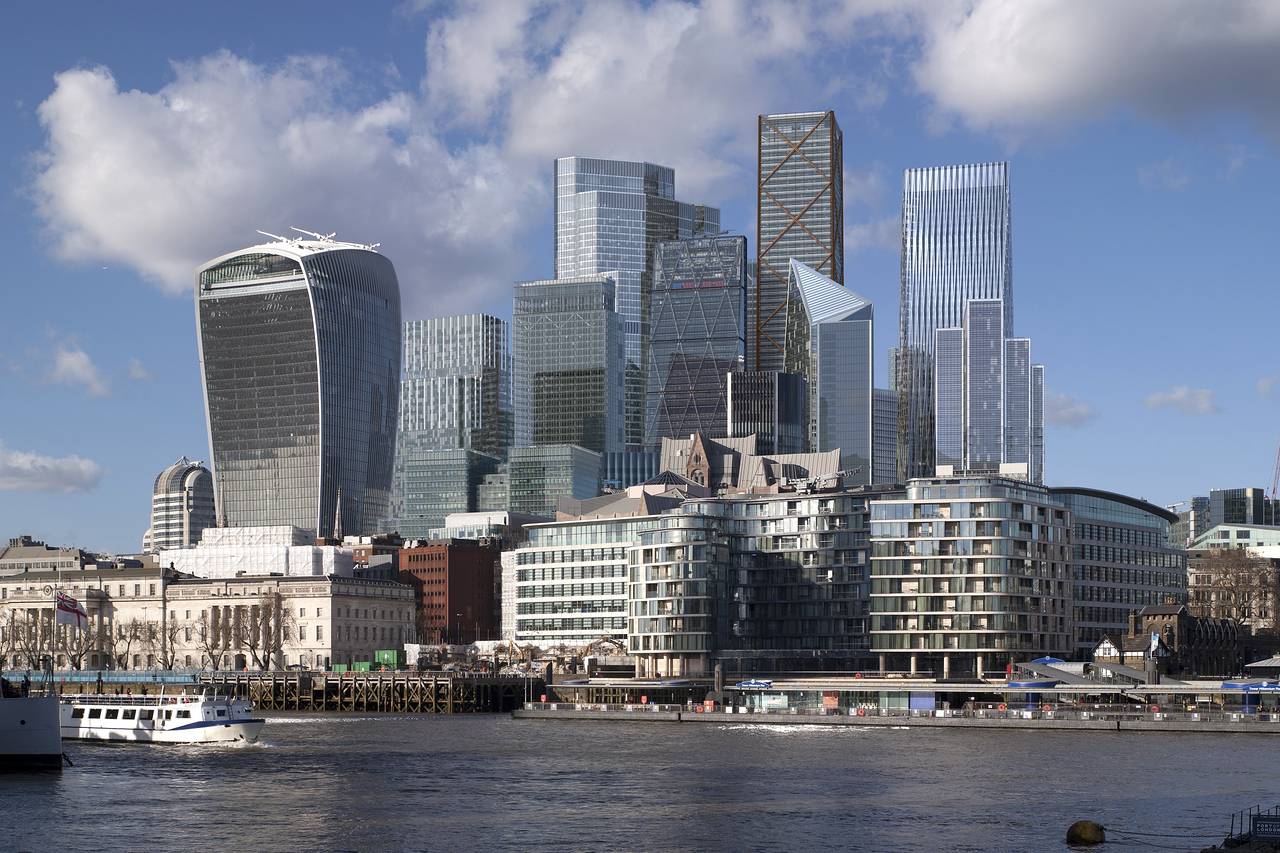
    London Losing: It’s only a matter of time before the government of Rishi Sunak throws up its hands and claims its ‘five pledges, promises, priorities” were all the work of a rogue hallucinaTory chatbot (not Rishbot) in Conservative Party HQ. However, political chaos aside, don’t write London off. The Smart Centre Index compiled by Zen/Y Group has named London as “tech capital of the world” ahead of New York, San Francisco and Zurich. Furthermore, a thousand pubs and businesses across the City Square Mile have seen Tuesday to Thursday footfall get back to 80% of pre-Covid activity levels, and actually exceed pre-pandemic levels at weekends (Source: City of London Corporation’s Licensing Committee).

    Oil Oligarchy: We continue to read about crippling energy prices but if you think about oil as a tax on the global economy then things are looking good for business. Production cuts by the Arab and Kremlin oligarchs have failed to halt the decline of oil prices. Even better, the Russian Ruble has quietly fallen by 30% in recent months. Coup, or no coup, it may not be just the Wagner “chef “ that Putin can’t afford to pay any more. Bad news for oligarchs, good news for global business.

    Europe Inflation War: Europe defies the doomsters as war in Ukraine grinds on and generates headlines warning of a tough winter ahead with sticky inflation. Except the numbers are not playing ball with the commentariat consensus. Recall, oil prices as a “global tax on business” and then consider that the Eurozone Producer Price Index (PPI) which measures prices paid by businesses has just gone into negative territory on a year-over-year basis. Of course, this signals a cooling economy too but maybe a bit of cooling off is needed generally. Try social media..

    Twitter or Tobacco: It looks like Zuckerberg and Musk are not going to do the cage fight but the slow motion $44 billion incineration of Twitter value has just gone nuclear. The Zuck has launched a rival messaging platform, Threads, on his Instagram platform. Thirty million sign-ups in a few days spells trouble in the headlines but there’s a far bigger development which never got enough headlines. On Tuesday 22nd May the Surgeon General of the United States effectively told the world social media was killing American teenagers with a “profound risk of harm”. To this writer, it’s a “tobacco” moment for Twitter and social media. My upbeat take must be for further social media fragmentation like Twitter/Threads and ultimately a more healthy use of technology by teens.

    Fear of AI: There’s a lot of fear out there about AI. That’s not a surprise when one considers the eyeball-catching potential bad uses and accidental threats to life as we know it. However, stick with the life bit and know AI is already massively advancing medical research. From protein modelling to prototyping to clinical testing things are moving at warp speed. So, expect more and more medical research to avail of AI tools. Training those tools/models needs a platform and if you were looking for evidence of training demand check out the recent acquisition of such a training platform, MosaicML. It was just bought for $1.3 billion which equates to 65x its current annual recurring revenue (ARR), or 29x its seed round valuation in late 2020. Nice to have that in your portfolio.

    Portfolio Pitch: I can’t tell you how enthused I get when I consider start-up investing right now. I’m wondering has there ever been a better time in history to put circa 10% of your investment firepower into a portfolio of start-ups. Consider the following:


    • Start-ups in a tighter funding environment are raising money at 30-50% discounts to valuations achieved 18 months ago.


    • In UK and Ireland tax rebates of up to 40% (EIIS) lock in a further discount.


    • Businesses today in many cases are asset-light. Even if growth or profitability is a struggle, the founder team experience, customers acquired and proprietary databases have real “value” to bigger businesses.


    • Asset light businesses scale-up way faster than companies 20 years ago. That means valuations ratchet up earlier and with bigger multiples.


    As an extreme example, one “Mosaic” in a 100-company portfolio could generate a positive return for the overall portfolio even if the other 99 returned zero. Start-ups involve lots of risk, but we sometimes lose sight of the opportunity. Like the consensus headlines challenged above, a portfolio approach is worth a closer examination. As for the other twists, they might seem hopeful but might make you smile. That will do this week. Real joy, like investment, will take a bit longer to return…


     

  • Russia And ESG Contagion Risk

    Russia And ESG Contagion Risk

    The silence was deafening. Where were Vladimir Putin’s supporters as the rebel Wagner tank column rolled up the M4 highway towards Moscow last Saturday? The oligarchs’ private jets raced to Dubai, Istanbul and Yerevan. China stayed “forever” quiet. And, the far-right Vlad ‘fan boys’ in the GOP, NRA, Fox News, GB News and Mar-a-Lago steered clear of the airwaves. For a brief moment I dared to hope. The war crimes trial of Putin in The Hague, peace in Ukraine and the unmasking of Russia’s secret enablers in the West over the past 20 years were further dreamy leaps into fantasy. Sadly, we must wait. The Wagner mercenary army “coup” was abandoned within 24 hours as negotiations quickly moved away from political revolution to contract dispute territory. Clearly, the political successors of Lenin and Gorbachev don’t do big picture wealth distribution; it’s purely transactional, not philosophical, and just between friends or crime gangs. Meanwhile, financial markets barely moved on Monday suggesting business as usual. However, I’m concerned this investment capital calm smacks of complacency.

    The brutal truth is that our world has become far more unstable at exactly the same time as one of the key weapons for global “good” is in danger of being stood down. The instability bit is informed by a very real prospect of a weakened Putin losing power (and thousands of nuclear weapons) to an even more extreme crime gang. Even the Chinese sound a bit unsettled by Putin’s apparent weakness but the aligning of interests on a global scale just became a lot more difficult to achieve. North Korea and Russia watchers will know that a key weapon in enforcing discipline on rogue regimes has been financial capital. However, the umbrella movement for “doing good” in finance is driven by the sustainability principles contained in global environmental, social and governance standards, or ESG. And, ESG is in trouble. The CEO of the world’s largest asset manager with almost $10 trillion of funds under management, Blackrock’s Larry Fink, has ditched the term ‘ESG’ because it has become “entirely weaponised”. Oh, the irony. Nuclear weapons on the cusp of going on sale but no, it is investment principles to do better which have been turned into weapons. Thank Russia again and its spectacularly successful use of social media to sow chaos in US political discourse. Think I’m giving Russia too much credit? Think again.

    ESG principles, in particular energy conservation and progressive social empowerment, have become a lightning rod for ambitious Republican (GOP) leaders to polarise debate by promoting climate change denial and fears of liberal “woke” social decay. In turn, social media in its all-too-familiar echo chamber way has mobilised the lost, the lonely and the lunatics. Over recent months red (GOP) states like Texas and Florida have banned ESG-committed companies like Blackrock and Goldman Sachs from state commercial contracts while the citizens of these same states pay the price of polarisation with higher insurance costs and reduced pension returns. Russia happens to have a self-interest in defending its fossil fuel riches but its overarching geopolitical goal is to undermine social and political harmony in geopolitical rival nations. We also know the key protagonists.

    If Wagner’s leader, Yevgeny Prighozin, sounds familiar then you will recall that in 2018 he and his Internet Research Agency were criminally indicted by a grand jury for “2016 interference with US political and electoral processes”. Of course, the Russians must be delighted to see ESG join guns, immigration and abortion as polarising political debates. But, even better for the Kremlin, it could potentially undermine a globally co-ordinated acceleration of financial pressure on Putin’s regime to abandon the criminal invasion of Ukraine. This muddying of ESG aspirations has also had some very willing non-Russian accomplices. Earlier in this article I had hoped for an eventual unmasking of Russia’s secret enablers but it might not be as far-fetched as I thought. Just as ESG has been caught up in Russia contagion, there are increasing signs that Kremlin contagion might accelerate the downfall of some very significant masters of disinformation and their discredited supporters. Consider the following….

    Boris Johnson and his lies have departed Westminster; and hopefully dignified political discourse will recover swiftly. However, the Brexit disaster will have generational impact. In time, there will be a serious national reflection on how so much disinformation entered the political debate before 2016. But for now, Nadine Dorries won’t be the only one miffed with interference in the dear leader’s honours list. The recent revelations that Johnson ignored MI5 warnings in 2020 about Evgeny Lebedev being appointed to the House of Lords are stunning. Apparently, the alarming MI5 assessment that Lebedev’s father was still an active KGB agent was not enough to dissuade Johnson. Then again, he liked the wild parties of Lebedev senior at his luxury Umbrian villa. The Italian intelligence services less so. The Italians were monitoring the Lebedev villa “being used for espionage purposes” in 2018 when Johnson (Foreign Secretary at the time) ditched his security team to attend a Lebedev party. Not sure the “only a cake” defence will work this time. But, at least there are no tapes….

    Ah yes, Agent Orange himself, Donald Trump, has had decades of Russian mafia fingerprints all over his business and political career. But not even his most fervent apologists really expected him to play fast and loose with the nation’s military secrets. When his 2016 campaign manager, Paul Manafort, shared election polling data with Russian agents his GOP party leaders, enablers and media fluffers held their noses and closed their eyes. However, their ears will be burning with the latest tape to emerge on CNN of Trump bragging to staff and visiting journalists about top secret military documents sitting in his Bedminster office. As Putin potentially becomes weaker do not be surprised to see further incriminating revelations appear. Rats, ship, succession….you know, like Goodfellas and a great Layla soundtrack. Obviously, in the event of a Kremlin transfer of power, there will be a huge number of politicians, business leaders and media players extremely anxious that their complicity in the Putin disinformation wars does not emerge. We will see; literally I would think.

    Today, ESG is facing a challenge which can be connected to Russia. That is not good for our rapidly warming world. However, if those leaders in the West, who willingly enabled political interference and adopted a ‘transactional’ approach to power, can finally be exposed….. then I’m all for bringing on Russian contagion right now.

  • Six Degrees Of Change

    Six Degrees Of Change

    It’s not just the Joycean waters of The Forty Foot reminding us of a very changed world. The much higher June water temperatures make for alarming headlines but a smaller news item did catch the eye. The private equity founder of EV battery giant, Northvolt, and hydrogen steel producer, H2 Green Steel, is now getting into heat pumps. Harald Mix is launching Aira to sell air-to-air heat pumps on a monthly fee basis directly to consumers who are loving the energy efficiencies of a heater/AC combination. The technology is not new but has massively improved as a highly effective way to relocate heat, outside-to-in or inside-to-out. Not surprisingly, in a Russian gas decoupling world, the attractions of a safer, smaller and electrical option has been a big hit with European consumers. Check out these numbers….


    • Three million heat pumps were sold in Europe in 2022 which was a 38% increase on 2021’s total.


    • In 2022 Germany experienced 53% growth in heat pump adoption; Poland’s growth rate was closer to 100% and Finland leads in units sold per household.


    • The International Energy Agency (IEA) has published a good report showing heat pumps are already cheaper than gas heating + traditional AC in every country except for the UK(!).


    This might surprise readers but heat pumps are a rare example of a green technology installation where Europe or the US is actually leading the world. In most cases, China leads the world. As an illustration, the Chinese will install 154 GW of solar capacity this year alone. That’s more than the TOTAL installed capacity of the US. In fact, Beijing’s combined wind and solar ambitions for 2023 are bigger than what the entire world built in 2020. But, perhaps the next statistic will be the one that causes European heads to wobble. For those just getting used to the recent blast of radio ads for Chinese manufactured cars, be aware Europe’s auto industry relationship with China is about to flip. By the end of this year, China will become a net exporter of autos and auto parts to the EU. In fact, China has overtaken Japan as the largest exporter of electric vehicles (EVs) globally. Before we worry for Europe’s established auto manufacturers, let’s consider another surprising data point to emerge this week.

    A report in the FT this week points out that back in 2008 the EU economy with a GDP of $16 trillion was ahead of the US’s $14.7 trillion. Fast forward to 2022 and the US economy has grown to $25 trillion while Europe(including UK) crawled to just under $20 trillion. That’s a serious divergence in fortunes and perhaps reflects three key drivers moving in favour of the US; more aggressive use of debt in a 60% heavier debt/GDP expansion, a tech sector 10x bigger and a workforce expanding by 10% vs a sclerotic 1.5%. Equity valuations are more or less telling a similar story with a price/earnings valuation multiple of 13x in Europe at a significant discount to the US universe sitting on 19x.

    Goldman Sachs reckon this size of discount is the biggest they’ve seen in more than a decade and arguably the discount has gone too far. Some investors seem to agree. Germany’s DAX index is up 16% year-to-date while the US benchmark Dow Jones Index is up less than 4%. In fact, the benchmark Stoxx50 European index hit a 22 year high in April and one has to consider a European catch-up is long overdue. Unless….you’re a crack team of French AI gurus.

    Perhaps the most startling number of the past week was the $115 million raised by French AI startup, Mistral. The founder team of four have a fantastic track record in AI large-language-model building but this is the largest seed funding round in European history. And, it was raised a mere 4 weeks after incorporation with just a deck presentation. No product, no customers, no revenues…..no problem. Yes, AI is the new shiny bright thing but Warren Buffett has seen it all before and…… he’s buying old elsewhere.

    Japan is where Buffett is buying as news broke this week that he has added to his holdings in five Japanese trading companies which have been around since the 1860s. Japan’s Nikkei index of larger public companies has been on a tear and is up almost 30% this year. However, it is the older smaller companies which have tweaked my interest. Yes, Japan has been considered ‘cheap’ for years but if Buffett is buying, and international investors are interested in non-China options to pursue the Asian middle-class explosion then the next two numbers, from Merryn Somerset Webb writing in Bloomberg, are very interesting:


    • 50% of Japan’s publicly quoted companies are valued at below their book value. In other words you can buy the company for less than the value of its assets in the shape of property, equipment, technology, investments and CASH on their balance sheets. In the US, the median company trades at 3.9x book value.


    • 25% of Japan’s publicly quoted companies trade on a price/earnings multiple of between 5 and 10x. And we thought Europe on 13x looked interesting!


    Of course, Japan’s markets are more than 40 years into a property crash ‘recovery’ which is a stark reminder of how mad economics can have multi-decade consequences. Mad economics, eh? But faster than you can say ‘lettuce’, I would quickly say the UK will not suffer a similar fate. TrussT me. However, I am concerned, and my final number of the week comes from Chris Johns’ in a recent substack article, ‘Brexit’s Unwanted Birthday Present’. Persistent inflation pressures are forcing bond markets to ‘price in’ an additional FIVE interest rate hikes by the Bank of England (BOE) before the end of the year. And that spells mortgage market trouble, but not yet.

    According to an excellent Resolution Foundation report, around half of households have previously fixed their mortgage rates and have yet to see their mortgage payments impacted by BOE action. But, in the next couple of years millions of households will see fixed mortgage arrangements expire and the potential hit to incomes in the poorer and younger cohorts will be a very significant 3-4% annually; now, think of that as a tax hike. Clearly, this mortgage “bomb” could really hurt the housing market and an already fragile UK democracy economy. So, when I look to the UK’s crop of current leaders for economic reassurance, I must confess to Blackadder flashbacks on the 40th anniversary of its first appearance on our TV screens, and a famously withering assessment…..

    “The eyes are open, the mouth moves, but Mr Brain has long since departed, hasn’t he Percy?”


  • London And Finance Back In Favour?

    London And Finance Back In Favour?

    Boris says he’ll be back. He won’t. But, what about London and the banking sector who wanted a modern Sir Lancelot and ended up platforming Mayor Lies-A-Lot for Downing Street disgrace? London and its banks have had little to cheer since that dreadful error of judgement. However, that could be about to change. First, we should take a look at the financial world which is not quite throwing a Nadine Dorries pity party but will be acutely aware of the party times in technology. The top 100 names in US tech are up 35% year-to-date and Apple after a 42% rocket ride is about to hit the $3 trillion valuation mark again. Recession talk, interest rate rises, tighter lending conditions and a consumer cost of living crisis are not ideal financial conditions but if AI has a future why can’t finance? In other words, is there evidence of investors and financial leaders looking through the current conditions(nobody knows!) and seeing future opportunities? Let’s consider the following:


    • The mighty US stock exchange for technology, the Nasdaq, has just bought a financial risk management software company, Adenza, for $10.5 billion. This is REAL executive action, not words, which signal confidence. As for the valuation, the future must be very interesting. That $10.5 billion price tag equates to a whopping revenue multiple of 18x.


    • Closer to home, another fintech software deal got over the line this week. Terry Clune has sold his Immedis payroll software company to US tech multinational, UKG, for $600 million. The Irish State through its ISIF fund is also a related beneficiary of that sale but it’s not just Ireland feeling the love for its fintech support strategy.


    • Its London Tech Week and we should all remind ourselves that, despite Brexit, London actually attracts more fintech start-up investments than any other global hub. In 2022 its $10.1 billion haul beat off competition from the Californian Bay Area and New York. There is no denying the City’s powerful positioning with 45% of all London VC investment going to fintech. So, it is not hugely surprising to read this week that global VC titan, Andreessen Horowitz(a16z), is putting its first international office in London.


    If the above feels more tech than traditional financial services, then consider the US Regional Banking index which has been battered by SVB and First Republic Bank failures. The index has bounced 20% from its year lows but it’s not the only battered part of the financial sector seeing an interesting return to favour. London’s stockbrokers have been starved of juicy fees in the IPO market wasteland but that didn’t stop Deutsche Bank in April buying Numis Corp for just over $500 million. And, there’s more…


    • This week Evelyn Partners(ex- Smith & Williamson) have announced the purchase of City boutique wealth manager Dart Capital.


    • If you’re looking for even braver moves, how about the proposed management/leveraged buy-out of Canaccord Genuity (ex-Collins Stewart) for more than $800 million.


    • Smaller brokers have also been busy with Cenkos and finnCap announcing a merger in March.


    Some of these moves will be perceived as defensive or survival strategies in challenging conditions but the underlying vibrancy of the fintech and start-up arena does prompt a more opportunistic thought. It also requires an understanding of London’s traditional positioning as the most important financial hub in the world, uniquely straddling time zones in Asia and the US. This concentration of enormous capital flows and financial experience is a perfect building platform for…….. AI-powered solutions. Note, the recurring ‘must have’ in every AI strategic discussion or advisory note is DATA. It’s difficult to think of any financial hub other than London with a richer concentration of long-run data, transaction activity and a workforce knowledgeable enough to harness such “digital oil”. The reference to data as the oil of the digital economy could be considered apt. Indeed, the sector blessed with the richest data might need more than a golf deal to ‘greenwash’ its reputation. Yep, banks don’t get much customer love but you can see why bank executives are keen to embrace generative AI.

    Think about every bank customer having its own AI ‘Alexa’ as a financial assistant. Personalisation, lower costs, speed of service, compliance, security, fraud prevention and investment/saving mentorship are hugely exciting upgrade opportunities for both banks and their customers. And remember, the banks already have incredibly valuable data about all those customers. As for London… Boris and his notorious “IT lessons” in Shoreditch may leave an unintended legacy. Technology and AI could be the City’s saviour….


  • Wiping Away Valuation Tears

    Wiping Away Valuation Tears

    It has been an emotional few weeks and I don’t even watch “This Morning” on ITV. No, I have to confess to still being a wee bit gutted about Leinster’s European Rugby Cup Final loss to Stade ROGelais. Munster fans will have different winning emotions this week but I find myself a bit like a start-up owner remonstrating with the valuation gods and demanding to know how a few years of best-in-class performance have failed to add up to appropriate recognition, or silverware. The more considered response to this wailing at the sporting gods is to perhaps acknowledge that sometimes sport does not reward. Similarly, there will be occasional haughty rebukes from the financial commentariat that the markets are efficient and there’s no such thing as a wrong valuation. But, I strongly disagree and award both views a “Jacob” or anything that rhymes with ‘rollicks’ or ‘Rees-Mogg’. Let’s get the emotion and the sport out of the way first.

    Leinster might be going through a difficult recognition patch but consider the mighty All Blacks. The New Zealand national rugby team are officially recognised as the most successful sports team in history with a 75% winning ratio over 100 years and a best-selling book on All Black winning culture, ‘Legacy’, featuring on every MBA reading list. So, no surprises that the very first Rugby World Cup in 1987 was won by the team from the Land of the Long White Cloud. However, it was an excruciating 24 more years before the All Blacks won another one. No winning medals for Jonah Lomu or Zinzan Brooke in 1995, and yet that team ranks with the legends. And how about Brazil in football?

    The Pele-inspired magic of the 1970 World Cup winning team was but a distant memory when, again, it took another 24 years for the ‘greatest’ footballing nation to be recognised in 1994. No winning medals in 1982 for Socrates, Eder, Zico or Falcao but still we recognise and remember them as one of the most thrilling teams of all time. Enough said on sport. But, the valuations of companies can also endure emotional extremes of frenzied funding or buyer boycotts for extended periods of time. However, the good news is that it rarely lasts as long as an All Black or Brazil silverware famine. The even better news is that financial markets are constantly presenting emotional examples and probable opportunities. Here are my favourite 5 right now….

    1. AI is hot hot hot right now. And the hottest of the hot things is the company you never heard of until last week. Nvidia has just joined the trillion dollar valuation club a week after it told Wall Street analysts they would need to bump up their revenue forecasts by 50% thanks to a stampede of orders for their best-in-class AI chips. Yep, Nvidia on the night added a whole McDonalds Corp in valuation terms($220 billion) and now trades on valuation multiples of 37x revenues(that’s sales, not earnings!) or a price/earnings multiple of 215x! If the money is chasing AI to infinity it’s possible there is opportunity in neglected parts of the market like…
    2. Sports betting was hot. Now, not so much. Fanatics Betting & Gaming just acquired PointsBet’s US betting business for $150 million. That helps Fanatics get into the US market thanks to PointsBet’s 14 state licences which can cost from $10 million(Pennsylvania) to $25 million (New York) each. The interesting thing is that Fanatics swooped after a 94% fall in PointsBet’s share price. Game on, me thinks!
    3. The mainstream media would have you believe AI is going to destroy the earth. Some might recall we were told by tech investment guru, Marc Andreessen, back in 2011 “software is eating the world”. Well, not quite, but SaaS valuations 10 years later in November 2021 hit 20x revenue multiples. Today, the publicly quoted SaaS sector in the US trades closer to 5x revenues. For privately owned SaaS companies those multiples could be closer to 2-3x. Time for investors to eat software?
    4. The US regional banking sector is under huge pressure. Then again, it’s not a big surprise given interest rates have rocketed by 500 bps (that’s 5%) in just one year! Yes, there have been failures at SVB and First Republic but I’m actually pleasantly surprised at how robust the financial system has coped with the interest rate shock. If you’re a survival believer that the worst acceleration is over, then check out the US regional banking sector trading on price earnings multiples below 7x. I’m banking on less fear over time.
    5. Finally, this one is closer to home. If venture capital funds and public markets are taking fright at 500bps tightening of private funding markets, then one can assume the anecdotal evidence of more miserly valuations for start-ups raising money is correct. However, that’s a temporary emotional response and human beings, particularly investors in early stage companies, have no idea what the future holds. So, as Warren Buffett might ask – why is the investment world the only supermarket where the customers flee the aisles when items are on sale at 50% discounts? Throw in 40% EIIS tax rebates for Irish investors in start-ups and one could be forgiven for believing the bots might indeed inherit the earth.


    Anyway, some opportunistic food for thought. Banish the Leinster blues and what-ifs, and embrace the certainty of a Brazil or All Black performance-focused mindset. Then think of valuations and silverware as moments in time. And… know that class, greatness and investment returns are permanent.


  • Is Compounding Technology The New Investment Miracle?

    Is Compounding Technology The New Investment Miracle?

    Einstein is credited with describing compound interest as the “most powerful force in the universe” and “the eighth wonder of the world”. That’s punchy stuff from a guy who changed physics forever by mathematically proving and visualising the power of atomic energy. Compound interest is indeed an investment and wealth mathematics phenomenon but what about the exponential possibilities of multiple technologies converging together at the same time? Diamandis and Kotler wrote about a faster future because of this fusion of technologies but we might need to adjust our time horizons. Like now. Einstein’s theories paved the way for nuclear energy and Microsoft has been the dominant force in bringing computing power to humanity, but now Microsoft is going nuclear… no, really.

    This week Microsoft signed a stunning agreement to purchase electricity from Helion Energy’s nuclear fusion generator as soon as 2028. Yes, you read that correctly – fusion not fission. Helion believes it can mimic the stars in fusing hydrogen nuclei to create heat and light, at a commercially viable price and without harmful radioactive waste. Nuclear physicists have dreamt of this for decades but now it could be a reality in just a few years. For Microsoft, this is a bet. However, it gives us a clue as to the company’s thinking on the potential explosion of Artificial Intelligence (AI) adoption, and the energy-intensive demands of AI chips, known as GPUs. However, some GPUs started their commercial lives in a different world. I’d almost say the metaverse but let’s just say the foundations are still being dug, or mined.

    The mining of crypto currencies is notoriously energy-intensive – huge computer processing power used to solve mathematical puzzles and verify the network/blockchain. The favoured comparison metric for intensity was the consumption levels of a small country like Iceland but things have moved on. Even though crypto may not be the “hot” asset these days, Bitcoin alone accounts for the equivalent of 80% of the Netherlands’ annual energy consumption. Of course, the hot tech today is AI and the crypto bros have spotted an opportunity. Massive investment in crypto-mining infrastructure was in danger of sitting idle but these huge ‘GPU farms’ have been repurposed to process AI workloads rather than verify and secure blockchain networks. So, expect other players to follow cryptominers, Hut 8 and Hive Blockchain, into AI ‘pivot’ mode. In the grand scheme of things these are small players, and I’m wondering are we missing more subtle compounding of tech capabilities by the incumbent giants?

    The current AI headlines might suggest an existential threat to the tech world order but I’m considering another possibility. It’s a big call, with a smartphone prompt. The phones of today are perhaps the greatest current example of tech compounding as wireless infrastructure combined with powerful IoS/Android software and cloud services/app support to deliver the ultimate mobile super-tool. So, should we be paying more attention to Apple and Google moves in recent weeks? Let’s start with Apple.

    Apple has about 1.2 billion iPhone users and has recently teamed up with Goldman Sachs to offer a savings account with a 4.15% interest rate. Within 4 days, a billion dollars of deposits had moved to Apple and it’s not just savings accounts they are thinking about in Cupertino. They have already launched Apple Pay, Apple Cash, Apple Buy-Now-Pay-Later(BNPL), Apple Card and Tap to Pay. And it’s not even a bank! However, it is arguably a fintech with a services division already doing almost $80 billion of revenues annually. For context, Goldmans does less than $50 billion. Given the uncertainties of how the AI future will pan out there is real power in Apple’s combination of hardware and software ecosystems platforming additional services. Fintech banking today, personal AI assistant tomorrow? However, if 1.2 billion users looks like a powerful starting position for tech compounding strategies how about Google’s 3.6 billion users of its Android mobile operating system?

    Yes, the Bard AI chatbot launch hasn’t exactly been a dream start for Google in the AI race. Nevertheless, Google’s annual I/O Keynote presentation last week highlighted how much AI is already in the Google suite of products and how additional AI upgrades to email, search, maps and docs will play very well with billions of its users. No wonder the value of Google’s stock jumped by $50 billion on the day. Valuation volatility tells you levels of strategic uncertainty are high. And, there has been a lot of press coverage of an alleged leaked memo from a Google executive warning of the threat of open-source(free to access ) AI to Google’s competitive ‘moat’. For sure, AI innovation will accelerate with open-source chatbot code available to all but it feels like the enormous user platforms at Apple and Google contain huge ‘option value’ for compounding tech innovation, even AI collaborations. We often write opinion is cheap, money talks. So, we should be seeing the compounding of tech and the option value attached to that future attract some interesting capital and valuations. Well, here’s a flavour of recent days’ headlines:


    Hugging Face reaches valuation of $2 billion to build the GitHub of machine learning  – TechCrunch

    Generative AI Start-Up Cohere Valued at About $2 billion in Funding Round – The New York Times

    Character.AI, with no revenue, raises $150 mln led by Andreessen HorowitzReuters

    AI StartUp Rewind Gets 170 Offers- and $350m valuation in Unusual FundraisingDealmaker

    AI chip startup Cerebras Systems raises $250 million in funding – Reuters

    Generative AI Startup Runway Raised $100 million at $1.5 Billion ValuationBusiness Insider


    It does make you think. But…soon you might not even need to write or speak those thoughts. Scientists at University of Texas, Austin, have combined MRI technology and AI to ‘translate’ people’s brain activity into actual speech. It would appear the predictive element in AI is able to monitor blood-flow patterns picked up in the MRI scan and read thoughts with surprising accuracy. And, there we were thinking GDPR compliance would be the privacy check on tech. You could feel a bit uneasy about the pace of change, even disruption, ahead but an individual struggling for speech today through disability will have a very different perspective. In fact, let’s step out of our entitled developed world economy and think for a moment about the greatest wealth generator of them all. Education.

    Sal Khan founder of the Khan Academy, thinks AI could spark the greatest positive transformation education has ever seen. His upbeat vision is truly exciting – “AI can be the super tutor students need AND the assistant every teacher wants”.

    Now, that would be the ultimate wealth compounder……for our world.

  • An Electric Drive To Survive

    An Electric Drive To Survive

    One could lose hope. The climate crisis is very real but we run the risk of battling delusional distractions. In the UK one could be forgiven for thinking that the criminalisation of a refugee dinghy or a Coronation protest placard was the pinnacle of meaningful legislative success. Meanwhile in the US, Florida presidential wannabe, Ron DeSantis, goes to war with Mickey Mouse and ‘woke’ sustainability campaigners. Of course, Texas may as well be at war with so many mass- killings in recent days but their Governor Greg Abbott doesn’t want us to focus on the guns or the neo-Nazi leanings of the killers. In fact, he has just pledged to immediately pardon soldier, Daniel Perry, after his sentencing this week to 25 years prison for the murder of a Black Lives Matter protestor in 2020. WTF.

    Maybe CNN will give murderer Perry a town hall platform? Or, maybe they’ll just stick with a former multi-accused President joking about sexual assault. You could scream, rather than laugh like the CNN audience last night, but then something else brought a smile to my face. Mark Hulbert writing in the excellent Callaway Climate Insights newsletter pointed out that Florida and Texas residents are paying an extra $803 and $1,170 respectively for homeowner insurance because of “woke” climate change risks. The risk and the cost is real, as is the irony. Supposed MAGA champions of capitalism, Ron and Greg, are being exposed by….. the free market. In fact, markets might be our best hope for climate survival. We all know about the future shift to electric vehicle (EV) usage but did you know that the future is pretty much now? There seems to have been a ‘tipping point’ in EV market penetration and the numbers are staggering.

    Sustainability expert, Hannah Ritchie, has written this week that EV is scaling on a similar exponential trajectory to that experienced by solar energy(PV). And, for those who know the horrible track-record of solar energy forecasters, Hannah is politely telling us that the International Energy Agency (IEA) is playing catch-up again on EV growth forecasts. As an illustration, last year the IEA forecast 21% of all car sales in 2030 would be EVs. Just one year later, and that forecast has been increased to 36%. Clearly, the combination of supportive government policy and technology is generating earlier-than-expected confidence for consumers. Check out the following data highlights;


    • Almost one-in-five cars(18%) purchased in 2023 will be electric(EV). That number was 4% in 2020.
    • The IEA thinks EVs will be 23% of new car sales in 2025. I think the IEA will be wrong, again.
    • The fossil-fear fluffers Donnie, Ron and Greg may not be happy but the IEA has changed its view on the US market. Last year the 2030 EV sales forecast was 22% of all cars sold. The new forecast is 50%!
    • China is the market to watch. 2030 IEA forecasts suggest 62% of all cars bought will be EVs. China accounted for 60% of all EVs sold worldwide in 2022.
    • EV market share of new sales in China could hit 30% this year. A price war in EV is helping to drive 60% sales growth in 2023.
    • The Tesla Model Y is the best-selling car of any kind in Europe right now. Yep, right in the backyard of Renault, VW, Daimler, Fiat, Opel, Peugeot and BMW.
    • 80% of cars bought in Norway in 2022 were electric!


    It feels like governments from Beijing to Washington to Oslo now ‘get it’ and are going ‘all in’. For governments and consumers to be comfortable they must be reassured that the EV manufacturing ambition can be matched with charging infrastructure, battery factory capacity and metals/materials sourcing. Indeed, one can’t help but be struck by the almost daily announcements of EV-related investment across the globe. The following headlines recently caught the eye…

    • Small Towns Chase America’s $3 trillion Climate Gold Rush – Wall Street Journal
    • Battery factories are driving Chinese investment in Europe – New York Times
    • Becancour: Quebec’s bold new EV hub – The Globe and Mail
    • Irish-founded Jolt raises €150 million for fast-charging EV stations – Business Post 
    • Allkem inks $15.7b deal with US rival to create lithium superpower – Sydney Morning Herald 


    One can almost sense the urgency in the wording of these headlines – bold, fast-charging, gold rush, superpower. However, as Texas and Florida residents are about to find out, the risks and costs of political ignorance are rising. But, the transport sector’s rapid shift from fossil fuels is only one initiative in the planet’s drive to survive. What about the construction industry/built environment which accounts for 40% of total global carbon emissions? The net carbon impact of housing the manufacture of cleaner technology is clearly a meaningful calculation for ESG-focused investment capital. So, it is encouraging to see the global EV manufacturing ecosystem seek out regions with green energy potential. Of course, cleantech sector watchers will know the investment headlines and speculation from Canada and Scandinavia are no accident.

    The road ahead will not be without bumps but the incredible pace of EV adoption by consumers brings real hope of climate survival. Oh, and when markets move fast there are two types of people it is safer to ignore; institutionalised market analysts and political leaders in denial. Drive on!


  • The Better Storyteller Gets The Better Valuation

    The Better Storyteller Gets The Better Valuation

    A quick search on LinkedIn tells me there are 109,000 storyteller job openings in the US right now. If that’s a bit of a ‘nothingburger’ to you then lets talk burgers. Last week we mentioned that burger giant, McDonalds, is currently trading on the New York Stock Exchange at a SaaS-shaming valuation multiple of almost 10x revenues, or $220 billion. Weren’t we told once upon a time that software was going to eat the world? Anyway, we also mentioned that Subway, with approximately similar numbers of restaurants and a global 100-country footprint, generated about two-thirds of the revenues of McDonalds. However, Subway is currently valued by private equity buyers at less than 1x revenues, or just $10 billion. So, what’s the story with the 90% valuation multiple disparity? Well, it’s quite likely the story, or the storyteller, is a significant factor in the gap. Apple’s Steve Jobs once said, “The most powerful person in the world is the story teller”. But, why the need for a story? In a piece we wrote a few years ago we focused on the power of a story with the following thoughts…

    “A business needs to answer the most basic question for its product or service: why should people care – why should  customers, employees or investors care? Stories are incredibly effective at capturing human attention in an increasingly noisy world. There are four key reasons why stories engages more of the human brain than other communications.


    1. When a story is told it isn’t just the language processing parts of the brain which are engaged. A story generates an emotional reaction , a sensory stimulus, which causes you to feel what the characters in the story are feeling. And we don’t make rational decisions when we buy, we make decisions with emotion. Emotion is a powerful selling tool.
    2. Stories grab attention. They create and release tension as our brains seek certainty and closure. The release of neurochemicals like Oxytocin in our brains when immersed in a story can generate empathy; an essential factor in building community and loyalty.
    3. Stories transfer values and beliefs. Think childhood stories and parables. Now think of the power of a customer who sees in a story how a character arrived at a belief. If the customer begins to adopt that belief the sale is almost done.
    4. In a world experiencing a data explosion the human brain struggles to retain information over time. Studies show that messages delivered as stories are more than twenty times more memorable than just facts”


    The references to “power” and “powerful” are not just used for emphasis. And, not just for customers. A story in the investment world is a combination of narrative and numbers. Arguably, these two critical components are multipliers rather than additives. The much-followed professor of marketing at NYU Stern School of Business, Scott Galloway, famously highlighted in 2022 the $3 million value implied for each unit sold in Tesla’s market valuation, and then compared that to Mercedes’ $92,000 and BMW’s $180,000 unit equivalent. Galloway was very clear that the story Elon Musk was telling had massively moved the valuation dial. Of course, the valuation could be wrong but the future of electric vehicles, clean tech and consumer demand for carbon-friendly alternatives contained enough big numbers to create a credible vision of Tesla’s place in the future.

    Valuation depends on the numbers, but also the future. One of the foremost experts in the field of financial analysis and valuations is Aswath Damodaran and he firmly believes “a good valuation is not just numbers on a spreadsheet”. In a recent November 2022 post he made the following instructive points:

    • There is no right answer to what is the best mix of storytelling and numbers.
    • He suggests there should be a “bridge” between stories and numbers ie back up your numbers with stories, anecdotal evidence.
    • The reverse is also true. Each story should have a number.
    • Stories are memorable, numbers less so.
    • Numbers create accountability.


    I like this idea of a “bridge” or connectivity between narrative and numbers. One of them will probably be outside a founder’s comfort zone but it’s clearly worth more than a burger to leverage both story-building tools. Also, prepare to be asked who helps the business with storytelling. This week I will attend an excellent SME entrepreneurs and investment networking event and I have no doubt all will be able to confirm who they pay to assist with their legal and accounting requirements. But, for an investor perhaps the far bigger question in determining future value creation will be who is the business’s storyteller?

    It’s unlikely to be just a marketing person; the numbers must demonstrate the value as well as the product or service. But, a financial analyst or a chatbot is probably not going to craft a Musk or Jobs vision of the future either. Yes, that ‘bridge’ between narrative and numbers requires expertise, but the multiplier effect of a well-constructed story moves minds and capital powerfully. Well, that’s my story anyway.

  • Whose Number Is Up?

    Whose Number Is Up?

    Goldman Sachs have just published a research piece suggesting that up to two-thirds of all jobs in Europe and the US are exposed to some degree of AI automation. Sounds like I should be nervous. And yet, I’m not. The reason is a powerful one which at first glance might sound a bit mad. I don’t know. No, seriously, my and others’ ability to say or admit “I don’t know” could be our kryptonite against the AI bots. At the moment, a major flaw in generative AI is the tendency of chatbots to emphatically give an answer with impressive references and confident language. The small problem being the answer could be utter nonsense. Now, before you whisper Minister Donnelly, Lord Frost or Leader McCarthy it is true that current political discourse is plagued with spoofery, dogmatic drivel and occasional outright misinformation. Such is modern or 1930s politics, eh. But what about the commercial world of risk and opportunity where hard numbers should win over spin? Well, I don’t know. And, here are a few illustrations….

    Confidence:

    The US Conference Board measure of Consumer Confidence in current conditions compared to expectations just registered a negative spread of 83 points. That’s the most negative reading since March 2001. Go sell everything, right? Not so fast. Unemployment is at a 50 year low; US average disposable income is double the OECD average; record new construction jobs have been created and just the $200 billion has been invested back into US manufacturing during the Biden administration. Even the Wall Street Journal is perking up with an “America Is Back In the Factory Business” headline. So, maybe consumers are just hearing a different story?

    I don’t know.

    Communication:

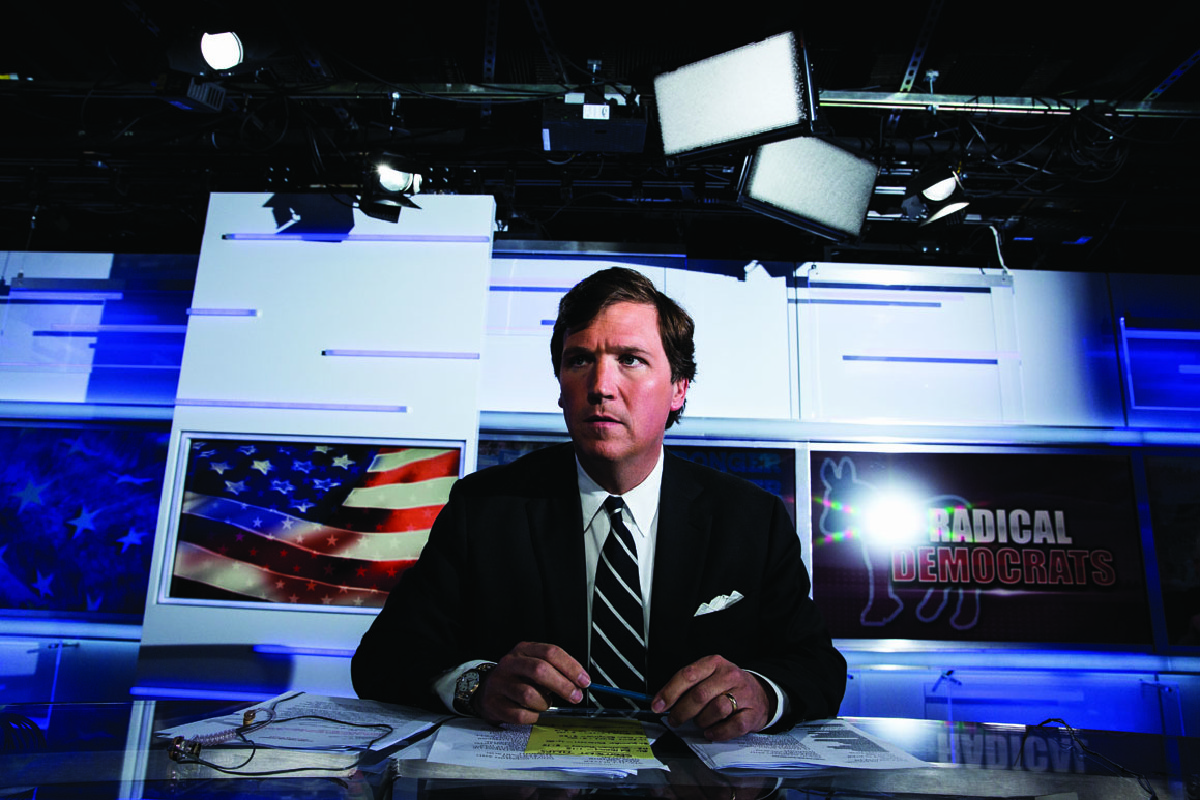
    The regulator of the public airwaves in the US is the Federal Communications Commission(FCC). However, the FCC is relatively toothless in policing responsible media behaviour on private cable networks. For those hurt or damaged by private media operators the only real available remedy has been incredibly expensive and risky legal proceedings. So, last week looked like a potential seismic media moment as Rupert Murdoch’s Fox Corp faced a personal and corporate stint in the witness box as Dominion Voting Systems sued for defamation damages on the 2020 Election “Big Lie”. The Murdochs balked and settled out of court for almost $800 million. Some commentary suggested the plaintiffs, Dominion Voting Systems, let democracy down by taking the money – just the 7 years’ worth of Dominion’s annual revenues. Yes, Fox’s lying to its own viewers didn’t get the court room airing the pre-trial legal discovery process had already revealed. But then days after settlement, its biggest star, Tucker Carlson, was fired with 10 minutes notice and the Fox Corp share price dropped another $600 million. Oh, Lordy there are 90 tapes too. As we cruise towards a $1.5 billion hit for Fox, you do wonder what exactly the cost needed to be for the Murdochs to actually try to prove their corporate innocence?

    I don’t know.

    Credit:

    If one thought confidence in the truth was the foundation of news media, what is the average person to think of banking? As First Republic Bank teeters on the brink of failure after the flight of $100 billion in depositor monies, we are reminded that the strength of a bank’s credit status is critical to its survival. However, credit is really a banking jargon word for confidence. And, for banks, confidence has just become a lot more complicated. Check out mighty Credit Suisse which was recently rescued from bankruptcy by the Swiss authorities and a nervous rival, UBS. The takeover is not officially complete so Credit Suisse was able to report its Q1 results. Now, the bots, Wall Street research analysts and probability/trading algorithms would have anticipated Q1 carnage for the wobbling Credit Suisse. But, no. Credit Suisse just reported its best ever quarterly profits, nearly $13 billion. However, that’s an accounting profit thanks to a profitable write-down of a particular bond liability. In the real world, $65 billion of client funds was running out the door through the Q1 period. So, we are faced with a remarkable numerical situation where the assets of Credit Suisse are actually ‘valued’ about $56 billion higher than its liabilities, the bank is profitable and the regulators are happy that it is sufficiently capitalised. But, as a business, the bank is bust. In simple terms, accountancy principles allow assets to be valued on the basis that the sale of those assets will be done over time. The business reality is that in times of uncertainty, creditors will make a judgment on the value which can be realised on an instant sale. No banking model can actually survive that so should we just skip the financial reports(and the auditors) and agree on a bank confidence metric?

    I don’t know.

    Comparisons

    If the bank sectors’ accounting metrics mean different things for different stakeholders, surely food companies can provide easier comparatives? Well, chew on the following. Subway, the submarine sandwich franchise, operates circa 37,000 restaurants in 100 countries and, as recently as 2015, was the fastest growing franchise in the world. Today, Subway generates $16 billion of annual revenues and it’s for sale. Reports would suggest that the private equity arms of Goldman Sachs, TPG and Roark Capital might acquire it for a price in the region of $10 billion. That looks like a sales multiple of 0.63x, and even if the bid surprises, the upper limit looks to be sub 1x sales. That feels like an ex-growth multiple but the company this week actually reported same-store sales growth of 12%. Now, check out a Big Mac valuation. McDonalds is also growing same store sales at a similar clip(13%) and does about 50% more sales every year($23 billion) but the Golden Arches’ valuation is a whopper swallow. Food.. check; franchised.. check; convenience.. check; global footprint.. check; growth.. check. Subway and McDonalds seem to be doing similar business things. But, if you’re a SaaS start-up founder look away now; McDonalds as a publicly quoted company is currently valued at over $200 billion or almost 10x annual sales. Maybe it’s the Big Mac sauce, or the culture, or the breakfasts, or the better margins but actually it is many things that are not so easy to quantify. Arguably, at a ten times valuation divergence, either Subway or McDonalds are trading at the wrong price. Or, they are not.

    I don’t know.

    We have warned on these pages previously that ‘certainty’ can be a disastrous wealth destroyer. From the illustrations above you can see the snap interpretation of numbers might not necessarily be helpful. However, experience, context, judgment and behavioural IQ can be helpful in understanding those numbers. At the very least, those qualities can support a very human answer, but also avoid a very damaging dash to destruction.

    I do know that.


  • Should We Look East With Buffett?

    Should We Look East With Buffett?

    In 1853 Commodore Matthew Perry led four warships into Tokyo Bay and politely asked could Japan be “Friends” with the US. This was no ordinary trading request. The Japanese had done their own Brexit hara-kiri way back in 1639 and had cut themselves off from the rest of the world over the following two centuries. Foreign visitors faced the death penalty, as did cooperative locals, for any defiance of the powerful Shoguns’ wishes so the island nation was relatively friendless by the time Perry arrived. However, the Commodore displayed strong diplomatic skills, kept his head (literally) and benefitted from a Japanese leadership realisation that Rwanda wasn’t really an option to stop the boats and that they had fallen too far behind the rest of the world. As a prescient show of outside progress, Perry’s ships anchored off Yokosuka boasted an arsenal of new Paixhan guns. These French inventions were the first naval guns to fire explosive shells and were an acute reminder of Japan’s need to catch up industrially and militarily. And… quickly. Only a few years later, after accepting American trading overtures, Japan returned to centralised government; restored its Meiji emperor and rapidly industrialised the country. The shoguns and samurai were gone. The railways, factories and armies were built and there was a new economic “Shogun” leading the global trading charge.

    The new “Shoguns” were family-controlled business conglomerates like Mitsubishi, Mitsui and Sumitomo and were known as zaibatsu. More importantly, for current discussion, these zaibatsu set up trading companies to source commodities, manage transportation and arrange financing across potentially hundreds of companies within a family business group. These trading houses with 150-year histories are a bit older than Warren Buffett but in many ways the Sage of Omaha’s investment vehicle, Berkshire Hathaway, shares common ground with these firms which became known as sogo shosha after World War II. So, we shouldn’t be so surprised Buffett has been in the news recently having boosted his stakes in five Japanese trading firms; Mitsubish Corp, Sumitomo, Marubeni, Itochu and Mitsui. In fact, their shared skill-sets, prompted Buffett to hint that his interest in these firms goes beyond just holding them as portfolio stocks. Ok, so there’s a degree of strategic sense in Buffett’s look eastward but why now? Well, Buffett doesn’t exactly hide his investment thinking or processes. His annual letter to Berkshire Hathaway shareholders is a must-read for any investor with lots of common-sense analyses and current investment market examples. However, the underlying principles in the stories never change. Japan’s trading houses are merely the badges, so let’s consider the investment principles.

    Valuation: Warren’s famous steer that “It’s far better to buy a wonderful company at a fair price, than a fair company at a wonderful price” still holds true. The check list for Buffett’s fab five Japanese trading firms looks pretty good when we consider their inflation-hedge characteristics (commodities), market access and connections (China/India) plus seriously strong cash flow. Traditional valuation metrics support “fair price” or even better with a forward P/E less than 7x, expected dividend yields above 5% and current earnings yields of 14% to support that expectation. Yep, a good price but as the Sage would say “Price is what you pay, value is what you get”. The intrinsic value and strength of an investment is driven by the quality of a business and that needs to be checked too.

    Quality: My favourite Buffettism is “When a management with a reputation for brilliance tackles a business with a reputation for bad economics, it is the reputation of the business that remains..” That won’t cheer up Chelsea supporters but the cash flows, market intelligence, connectivity and longevity of the sogo shosha are instructive as to Warren’s managerial ambition. My other thought is that the modern business world has witnessed the explosive global power and wealth creation of ‘platform businesses’. From stock exchanges, to Google, to Bloomberg, to Meta, to Amazon, to Microsoft or to SaaS the “value” is derived from the connectivity of the platform, the network effect. One suspects a 150 year trading history in Asia gives these firms serious ‘platform’ characteristics and……. opportunities.

    Growth: One of Buffett’s huge success factors is that he avoids “value traps”. In other words, businesses can be bought for cheap prices, but for a very good reason. Often, that reason will be a sclerotic road to obsolescence. Think Nokia, Blackberry, Tupperware or Blockbuster. Cash generation and sales alone won’t stop franchise attrition. A good or growth company must have opportunities to deploy capital and compound returns. So, I was struck by Buffett’s comment that “These five companies are a cross-section of not only Japan, but of the world”. Then, I thought of these three data points:

    1. Two thirds of the world’s middle class will live in Asia by 2030.
    2. The US has overtaken China as India’s top trading partner; activity now valued at $122 billion annually.
    3. This US-Indian trading relationship in American sporting parlance might be “still in the early innings”. Check out Apple who have just opened their very FIRST retail store in India this week; not just any week, but the week the UN announced that India’s population had surpassed that of China at 1.4826 billion citizen consumers.


    The connections of sogo shosha firms are going to become very valuable. As long-term financiers in the region they must be shown nearly every deal going. And if, we are valuing market intelligence, how about…. data? 

    Economic Moat: Buffett says, “In business, I look for economic castles protected by unbreachable moats”. The trading houses’ network of relationships, size and funding liquidity would be traditional sources of competitive advantage but there’s more. In these frantic weeks of generative AI and the scary march of the chatbots one would be forgiven for thinking all economic models are facing extinction-level disruption. Well, maybe not. In fact, the nimble quick disruptors of the past five digital decades might face a very different moat. Big established businesses already have huge data to train their AI internally. Think about Bloomberg who have just announced their own AI chatbot, but with a difference. This bot is trained with the best financial data/intelligence in the world, and Bloomberg’s enormous moat just got bigger. Now think about huge platform businesses like the ones Buffett just bought in Japan.

    Whatever about Buffett’s assertion that his new portfolio holdings “are a cross-section…of the world”, it feels to this writer that the ‘cross-section’ of Asia’s middle-class consumer and AI is going to be a very big deal, involving seismic shifts in power. Indeed, barely fifty years after Commodore Perry’s landing at Yokosuka, the modernised military forces of Japan embarrassed the super-power of the time, Russia, in Manchuria. However, the consequences of the Russo-Japanese War were global, not Asian. The shock of Russia’s defeat forced a re-calibration of geo-politics in both Europe and Asia, but still failed to stop the Bolshevik revolution in October 1917. Buffett is watching Asia carefully again. We should too.