Category: Investment

  • Big Picture Changing Fast

    Big Picture Changing Fast

    Whisper it carefully but I’m getting quite excited. My recent change of day-to-day role to overseeing risk should surely temper this giddiness, but no. The clue is in the word ‘change’. It just feels like the pace of change has picked up again across many parts of our lives, and in a good way. Believe it or not, if you think the last few years have been racy get ready for lots more. In fact, American economist, Tyler Cowen, thinks we are only just emerging from a 50 year slowdown in innovation and productivity which he has called “The Great Stagnation”. Let’s start at the top, or at leadership level.

    Amazingly, the famous mobile phone slogan “The Future’s Bright, the Future’s Orange” is coming up for its 30th anniversary next year but, despite the wildfires, the future is definitely not orange. As the Trumpolini crime gang awaits its third criminal arraignment proceedings this week there’s emerging chatter of an incarceration reality or a highly restrictive plea bargain to take agent Orange off the presidential stage. Closer to home, UK prime minister, Rishi Sunak, is staging his very own political extinction event by gaslighting the entire planet with an extra 100 North Sea oil drilling licences which won’t produce anything until well(!) after 2050 and its net-zero commitments. One could be depressed by this delusional Tory government death rattle but, like Brexit, the wider world will move on and expose the nonsense with reality-based fact. However, we are not just talking about a political power shift. Power itself could be about to change dramatically with three recent developments…

    • The US nuclear industry has just seen the Plant Vogtle (Unit 3 ) delivering commercial electricity to the Georgia state power grid. This is a watershed moment as it is the first nuclear reactor built from scratch in more than three decades to be approved for commercial service. The mind-set shift is important as smaller modular reactors are about to change the investment proposition for the nuclear industry. And yet, there’s more…
    • The blockbuster movie Oppenheimer reminds us that we are still dealing with the risk-reward of harnessing nuclear fission, but the ultimate clean renewable energy source would, in fact, be nuclear fusion. The source of nuclei would be seawater and because the process combines(not splits) nuclei there is no long-term radioactive waste. Also, fusion produces far more energy than fission. More excitingly, a big US breakthrough in fusion technology in 2022 has prompted the UK Atomic Energy Authority to plan for its first compact fusion reactor by 2040.
    • That 2040 timeline might need updating. This week the scientific community is racing to verify a Korean discovery of a super conducting substance, currently known as ‘LK-99’. This superconductor material can apparently conduct electricity at room temperature and pressure WITHOUT resistance, or energy loss as heat. The possibilities of this breakthrough for the transport of power, magnetic levitation and computing power are enormous and can accelerate the development of other technologies.


    So, that’s the power bit, but an individual with even a cursory knowledge of today’s technology hot topic, AI, knows that computing power and cost improvements have accelerated the development of these large language models(LLM) and generative pre-training (GPT) platforms. Indeed, we have often referred to the powerful theses in “The Future Is Faster Than You Think” written by Diamandis and Kotler. In particular, this writer has been struck by their description of the “compounding effect” of a variety of new technologies arriving at the same time. Clearly, the development of superior energy delivery would accelerate AI development and I’m thinking more than just generating chat and creative content.

    How about healthcare? Already this week, we have read that AI use in breast cancer screening can match the efforts of two radiologists. In fact, the Lancet Oncology journal cites Swedish studies showing AI improving detection by 20%. Now, think about the “compounding” effect of quantum computing combining with AI models and room-temperature superconductors. Typically, quantum computing needs extremely low temperatures and huge amounts of expensive energy. Harnessing advanced energy and computing power sounds like very good news for new medical research processes and healthcare systems under strain. For illustration, the Swedish analysis above shows human workloads could be halved.

    Time is money we are often told. Actually, time also moves money. So, if the previous developments in power and technology still feel a little bit “out there” in terms of actual arrival, it’s worth thinking about the change in pace I’m seeing. In commercial terms, the threshold for an innovative product achieving “adoption” used to be 25% market ‘take up’. For electricity it was 46 years from invention to adoption; 26 years for TVs; 16 years for PCs; 13 years for mobile phones, 7 years for the internet; 4 years for smartphones. We know ChatGPT racked up 100 million users in 2 months but what about Threads/Meta taking 100 million Twitter users in 4 days! My point is that all adoption cycles are being compressed. That can be scary for business but the always-interesting blogger, Noah Smith, flagged another cycle compression which we have been banging on about for a while.

    Smith points out that the “vibe-cession” and gloomy headlines are struggling to keep up with the reality of the US economy. He quite rightly asks that “if this is a bad economy, please tell me what a good economy looks like?” The current economic data frames that question beautifully – full employment, inflation halving, real wages rising, a huge manufacturing boom and real disposable income rising in 11 of the last 12 months. Of course, full employment is a weird one when all the financial headlines, and admittedly activity, have retreated from post-Covid frenzy levels. However, Smith intriguingly asks the same question I have been hinting at for a few months.

    Are businesses learning that economic slowdowns are opportunities to keep staff, and invest in people and franchises? The more interesting consequence of less emotional behaviour and more strategic risk thinking from business leaders is that slowdown cycles could be shallower in the future. That is a game-changer for equity and investment risk; and leaves open the possibility that technology advances and improved business cycles could prompt a money stampede into a market which has been “hated” for a long time. Sure enough, Morgan Stanley’s market analysts have confessed error in recent days and Bank of America have gone full reverse-ferret on their recession scenario.

    If Tyler Cowen is correct about a ‘Great Stagnation’ being behind us, then we really haven’t seen anything yet. However, the problem with just seeing change is that when the big picture presents itself clearly it will be too late to move your business or your money. The future’s bright, the future’s yours.




  • Investment Stick Or Twist Moment

    Investment Stick Or Twist Moment

    A senior stockbroker told me the other day it has been the quietest July for trading in 30 years. Of course, our conversation, as we took shelter from yet another torrential Dublin downpour, did hint at the distinct possibility that the city’s investor population had fled the country. However, another factor was cited. The simple fact is that many investors are confused.

    The daily dose of conflicting headlines as to economic recession or expansion, rising or falling future interest rates and inflation rate uncertainty does make forecasts difficult. But, possibly not binary. In other words, the outlook might not be all blue skies but nor is it Oppenheimer-nuclear awful. Perhaps, we should just view the headlines as Barbie-pink cautionary warnings rather than code red catastrophe. I certainly agree the signals are confusing but I’m more a Barbie guy than an Oppenheimer doomster. Here are a few developments I spotted this week which suggest some broKEN markets actually might be recovering….

    The property market in China has been struggling for years as huge debt piles and rising interest rates met returns reality. However, shares of Chinese property developers listed in Hong Kong have started to bounce on expectations of supportive policy measures from the Beijing government. Apparently, the government is considering relaxing residential building restrictions and easing mortgage rules which have suppressed demand for years.

    Improved Chinese economic activity is already seeing steel prices hit 4 week highs domestically. However, the rest of the global hard commodities sector has been on the floor as the dollar weakened to a 15 month low in recent weeks. Typically, a weak dollar helps commodities and analysts are suggesting commodities are due significant ‘catch up’.

    In a nutshell, is the economic cycle capable of an upside surprise? The business surveys like the Manufacturing ISM in US or the ZEW in Germany would suggest an emphatic “NO”. But, equity markets are signalling better times ahead with US cyclical sectors, surprisingly, outperforming defensive sectors year-to-date.

    And, if you’re looking for another critical cycle barometer where better than the banking sector. Only a few months ago the eyes of the world were on the US banking sector for all the wrong reasons. Now, the biggest 5 banks in the US have announced their Q2 results in recent weeks and each of JP Morgan, Citigroup, BOA, Wells Fargo and Goldman Sachs saw their shares rise sharply in the hours after earnings reports. Interest rates were definitely a profit boost. Trading and investment banking less so. Anyway, the bounce in share prices tells us expectations are cyclically low which means a lot of money might have to chase the market if the economic cycle is actually picking up speed.

    Oh, and we need to be careful about suggesting “markets” are difficult. Yes, some asset markets are experiencing pain but private equity giant, Blackstone, has been around long enough to know there are always opportunities to make returns. In fact, Blackstone has just hit the $1 trillion dollar assets under management(AUM) mark three years ahead of plan, thanks to good growth in their private debt/credit units.

    So, perhaps the key point is timing and trading is very difficult in a cycle. There are too many twists. As Buffett and the Blackstone crew will tell you the most expensive investment decision is to opt out of the markets. Stick with building a diversified investment portfolio and the miracle of time and compounding returns will do the heavy lifting while you read the jittery headlines.


  • Your Pension Ready For Startups?

    Your Pension Ready For Startups?

    In the land that crime forgot it’s possible to impoverish a nation, party with the KGB, refuse to hand over your phone and still face no prime ministerial shame. But, if you’re a BBC newsreader….oh, forget it. In fact, knock me over with a Suella Braverman morality manual (a bit lighter than a feather) I’m actually cheering a different UK headline this week. Yep, the chancellor, Jeremy Hunt, has announced plans to allow pension funds invest in homegrown private companies, including startups. This is a big deal. Again, the numbers don’t lie and there are a few I would highlight…


    • The UK is the largest pensions market in Europe. The ONS at the end of 2021 estimated gross UK pension assets of £2.7 trillion.


    • Fresh pension savings inflows in 2021 alone were a whopping £115 billion.


    • Nine of the biggest insurance companies in the UK market have agreed to allocate 5% of funds to private investments. This suggests pension giants like Aviva, L&G and Scottish Widows will free up an estimated £75 billion for investment in fast-growing startups.


    Leaving aside the huge amounts of money potentially flowing into UK startups, this move signals a shift in risk tolerance at pensions and a recognition by government that startups can boost the wealth of the nation. The huge size of the US tech sector has definitely benefitted from VC funds receiving 70% of their capital from pension funds. In the, UK that percentage is just 20%. Savings wealth creation requires a bit of modelling but the British Business Bank found that the average 22-year-old could boost their total retirement savings by 7-12% with a 5% allocation to private investment/VCs. It is early days yet, but for those already investing in startups, this structural shift in private investment markets could have promising consequences. Three positives quickly spring to mind….


    1. More money chasing private investment opportunities pushes up valuations of startups. In fact, £75 billion looks almost too big a number. So, what if….


    1. Pension fund vehicles waited for startups to achieve a certain size and then buy them out? It is possible pension fund investment vehicles could become potential exits for startup investors before IPO or trade sale.


    1. The recognition by normally risk-averse pension/insurance giants that allocation to private investments can be part of a retirement savings strategy is a huge boost to the credibility of startups and their ability to boost wealth.


    Only last week, I wrote that this is possibly the greatest time in history to be investing in startups so the timing of this UK announcement is interesting. It should also be a timely reminder that investment should be a habit not a headline chaser. My sense is that some people have stalled their investment decisions or strategies until the recession-worry headlines turn more positive. That could be an expensive pause, or to be more blunt, money never sleeps. Here are a few snippets which should tweak the interest of the startup curious….


    • It is not just technology or AI which is hot. My sense of old economy, real assets is that they are due a re-visit just as Bidenomics is putting the entire US manufacturing sector on a decarbonisation re-set footing. How about good old fashioned cooking? Even Mediterranean-style restaurants?  Check out the Cava Group restaurant-chain which has doubled in price since its New York IPO in June.


    • However, we can’t ignore technology and specifically AI. The startup, Inflection AI, co-founded by LinkedIn’s Reid Hoffman, has just received $1.3 billion of investment from the likes of Microsoft and Nvidia. The company is just a year old and valued at $4 billion. Now, tech is not just a US story….


    • Irish cyber security play, Binarii Labs, is in the middle of a funding round on the Spark Crowdfunding platform and has already smashed campaign targets in just 10 days. And why not? Breaking news this week of a €400,000 investment by the prestigious European Institute of Innovation (EIT) has an interesting little kicker; that investment values Binarii at €20 million but crowdfunding investors can buy in at a €6.7 million valuation. And… that’s before any EIIS tax rebates. That looks like an 80% discount worth checking out.


    In many ways, the snippets above capture the compounding of some key drivers of the investment environment right now. Recall the UK pension announcement and then look at EIIS tax incentives. Also, think about the balance of opportunities presenting themselves in both old and new economies. And then think about the hugely enhanced pool of buyers compared to previous decades. It’s not just pension funds coming to the table. Cash rich big tech companies(Microsoft, Google etc), government innovation agencies(EIT, Enterprise Ireland), sovereign wealth funds, family offices and a wall of retirement savings(10,000 retirees a day in US) are all building portfolios of young companies and ideas. Sovereignty, innit. Nope, just supply and demand.


  • Not All Bad – 7 Rays Of Sunshine

    Not All Bad – 7 Rays Of Sunshine

    The writing juices struggled to flow this week. Dreadful news on all levels but we battle on and look for the light. No sun yet, but there’s a few hopeful twists on lots of negative headlines. In fact, if we look more closely at the data there is a real possibility that the headlines are looking at the wrong things. Here are my top 7 twists on the gloomy consensus out there….

    Torn in the USA: One of the few consensus views among Americans is that the country is floundering. Just 18% of US citizens think the nation is heading in the right direction. And yet, they seem to have more jobs than ever before. The US unemployment rate is at historic lows with a whopping 479,000 new jobs added to the private sector in just the month of June. That was double analyst expectations this week but for those watching Bidenomics there is actually an industrial revolution happening. An enormous $500 billion of private and public investment in US manufacturing over the last 12 months is not just good for America but, for giggles, it seems Republican states are getting the majority share. Deliciously awks for the Trump-first GOP cult when a real President puts America first and says “Well, that’s okay with me because we are all Americans.”

    Tax Or Deliver: There’s a poll-topping view closer to home that more taxes on the wealthy will make everyone much happier. The awkward truth is that Ireland already has a very progressive(top heavy) tax system, has full employment and at the half-year stage the government tax take is billions of euro in surplus. Now, for the contrarian twist. The brain-melting dysfunction in smaller semi-state organisations like RTE and Inland Fisheries Ireland should actually be the start of a closer examination of all uses of taxpayer monies. And, that’s a positive thing. Anybody want to think about the €26 billion spend in Health or €9 billion in Education? I’m thinking this could be the early days of a “Tax And Deliver” commitment winning votes. Would Marty say Car(pe) diem?

    London Losing: It’s only a matter of time before the government of Rishi Sunak throws up its hands and claims its ‘five pledges, promises, priorities” were all the work of a rogue hallucinaTory chatbot (not Rishbot) in Conservative Party HQ. However, political chaos aside, don’t write London off. The Smart Centre Index compiled by Zen/Y Group has named London as “tech capital of the world” ahead of New York, San Francisco and Zurich. Furthermore, a thousand pubs and businesses across the City Square Mile have seen Tuesday to Thursday footfall get back to 80% of pre-Covid activity levels, and actually exceed pre-pandemic levels at weekends (Source: City of London Corporation’s Licensing Committee).

    Oil Oligarchy: We continue to read about crippling energy prices but if you think about oil as a tax on the global economy then things are looking good for business. Production cuts by the Arab and Kremlin oligarchs have failed to halt the decline of oil prices. Even better, the Russian Ruble has quietly fallen by 30% in recent months. Coup, or no coup, it may not be just the Wagner “chef “ that Putin can’t afford to pay any more. Bad news for oligarchs, good news for global business.

    Europe Inflation War: Europe defies the doomsters as war in Ukraine grinds on and generates headlines warning of a tough winter ahead with sticky inflation. Except the numbers are not playing ball with the commentariat consensus. Recall, oil prices as a “global tax on business” and then consider that the Eurozone Producer Price Index (PPI) which measures prices paid by businesses has just gone into negative territory on a year-over-year basis. Of course, this signals a cooling economy too but maybe a bit of cooling off is needed generally. Try social media..

    Twitter or Tobacco: It looks like Zuckerberg and Musk are not going to do the cage fight but the slow motion $44 billion incineration of Twitter value has just gone nuclear. The Zuck has launched a rival messaging platform, Threads, on his Instagram platform. Thirty million sign-ups in a few days spells trouble in the headlines but there’s a far bigger development which never got enough headlines. On Tuesday 22nd May the Surgeon General of the United States effectively told the world social media was killing American teenagers with a “profound risk of harm”. To this writer, it’s a “tobacco” moment for Twitter and social media. My upbeat take must be for further social media fragmentation like Twitter/Threads and ultimately a more healthy use of technology by teens.

    Fear of AI: There’s a lot of fear out there about AI. That’s not a surprise when one considers the eyeball-catching potential bad uses and accidental threats to life as we know it. However, stick with the life bit and know AI is already massively advancing medical research. From protein modelling to prototyping to clinical testing things are moving at warp speed. So, expect more and more medical research to avail of AI tools. Training those tools/models needs a platform and if you were looking for evidence of training demand check out the recent acquisition of such a training platform, MosaicML. It was just bought for $1.3 billion which equates to 65x its current annual recurring revenue (ARR), or 29x its seed round valuation in late 2020. Nice to have that in your portfolio.

    Portfolio Pitch: I can’t tell you how enthused I get when I consider start-up investing right now. I’m wondering has there ever been a better time in history to put circa 10% of your investment firepower into a portfolio of start-ups. Consider the following:


    • Start-ups in a tighter funding environment are raising money at 30-50% discounts to valuations achieved 18 months ago.


    • In UK and Ireland tax rebates of up to 40% (EIIS) lock in a further discount.


    • Businesses today in many cases are asset-light. Even if growth or profitability is a struggle, the founder team experience, customers acquired and proprietary databases have real “value” to bigger businesses.


    • Asset light businesses scale-up way faster than companies 20 years ago. That means valuations ratchet up earlier and with bigger multiples.


    As an extreme example, one “Mosaic” in a 100-company portfolio could generate a positive return for the overall portfolio even if the other 99 returned zero. Start-ups involve lots of risk, but we sometimes lose sight of the opportunity. Like the consensus headlines challenged above, a portfolio approach is worth a closer examination. As for the other twists, they might seem hopeful but might make you smile. That will do this week. Real joy, like investment, will take a bit longer to return…


  • Russia And ESG Contagion Risk

    Russia And ESG Contagion Risk

    The silence was deafening. Where were Vladimir Putin’s supporters as the rebel Wagner tank column rolled up the M4 highway towards Moscow last Saturday? The oligarchs’ private jets raced to Dubai, Istanbul and Yerevan. China stayed “forever” quiet. And, the far-right Vlad ‘fan boys’ in the GOP, NRA, Fox News, GB News and Mar-a-Lago steered clear of the airwaves. For a brief moment I dared to hope. The war crimes trial of Putin in The Hague, peace in Ukraine and the unmasking of Russia’s secret enablers in the West over the past 20 years were further dreamy leaps into fantasy. Sadly, we must wait. The Wagner mercenary army “coup” was abandoned within 24 hours as negotiations quickly moved away from political revolution to contract dispute territory. Clearly, the political successors of Lenin and Gorbachev don’t do big picture wealth distribution; it’s purely transactional, not philosophical, and just between friends or crime gangs. Meanwhile, financial markets barely moved on Monday suggesting business as usual. However, I’m concerned this investment capital calm smacks of complacency.

    The brutal truth is that our world has become far more unstable at exactly the same time as one of the key weapons for global “good” is in danger of being stood down. The instability bit is informed by a very real prospect of a weakened Putin losing power (and thousands of nuclear weapons) to an even more extreme crime gang. Even the Chinese sound a bit unsettled by Putin’s apparent weakness but the aligning of interests on a global scale just became a lot more difficult to achieve. North Korea and Russia watchers will know that a key weapon in enforcing discipline on rogue regimes has been financial capital. However, the umbrella movement for “doing good” in finance is driven by the sustainability principles contained in global environmental, social and governance standards, or ESG. And, ESG is in trouble. The CEO of the world’s largest asset manager with almost $10 trillion of funds under management, Blackrock’s Larry Fink, has ditched the term ‘ESG’ because it has become “entirely weaponised”. Oh, the irony. Nuclear weapons on the cusp of going on sale but no, it is investment principles to do better which have been turned into weapons. Thank Russia again and its spectacularly successful use of social media to sow chaos in US political discourse. Think I’m giving Russia too much credit? Think again.

    ESG principles, in particular energy conservation and progressive social empowerment, have become a lightning rod for ambitious Republican (GOP) leaders to polarise debate by promoting climate change denial and fears of liberal “woke” social decay. In turn, social media in its all-too-familiar echo chamber way has mobilised the lost, the lonely and the lunatics. Over recent months red (GOP) states like Texas and Florida have banned ESG-committed companies like Blackrock and Goldman Sachs from state commercial contracts while the citizens of these same states pay the price of polarisation with higher insurance costs and reduced pension returns. Russia happens to have a self-interest in defending its fossil fuel riches but its overarching geopolitical goal is to undermine social and political harmony in geopolitical rival nations. We also know the key protagonists.

    If Wagner’s leader, Yevgeny Prighozin, sounds familiar then you will recall that in 2018 he and his Internet Research Agency were criminally indicted by a grand jury for “2016 interference with US political and electoral processes”. Of course, the Russians must be delighted to see ESG join guns, immigration and abortion as polarising political debates. But, even better for the Kremlin, it could potentially undermine a globally co-ordinated acceleration of financial pressure on Putin’s regime to abandon the criminal invasion of Ukraine. This muddying of ESG aspirations has also had some very willing non-Russian accomplices. Earlier in this article I had hoped for an eventual unmasking of Russia’s secret enablers but it might not be as far-fetched as I thought. Just as ESG has been caught up in Russia contagion, there are increasing signs that Kremlin contagion might accelerate the downfall of some very significant masters of disinformation and their discredited supporters. Consider the following….

    Boris Johnson and his lies have departed Westminster; and hopefully dignified political discourse will recover swiftly. However, the Brexit disaster will have generational impact. In time, there will be a serious national reflection on how so much disinformation entered the political debate before 2016. But for now, Nadine Dorries won’t be the only one miffed with interference in the dear leader’s honours list. The recent revelations that Johnson ignored MI5 warnings in 2020 about Evgeny Lebedev being appointed to the House of Lords are stunning. Apparently, the alarming MI5 assessment that Lebedev’s father was still an active KGB agent was not enough to dissuade Johnson. Then again, he liked the wild parties of Lebedev senior at his luxury Umbrian villa. The Italian intelligence services less so. The Italians were monitoring the Lebedev villa “being used for espionage purposes” in 2018 when Johnson (Foreign Secretary at the time) ditched his security team to attend a Lebedev party. Not sure the “only a cake” defence will work this time. But, at least there are no tapes….

    Ah yes, Agent Orange himself, Donald Trump, has had decades of Russian mafia fingerprints all over his business and political career. But not even his most fervent apologists really expected him to play fast and loose with the nation’s military secrets. When his 2016 campaign manager, Paul Manafort, shared election polling data with Russian agents his GOP party leaders, enablers and media fluffers held their noses and closed their eyes. However, their ears will be burning with the latest tape to emerge on CNN of Trump bragging to staff and visiting journalists about top secret military documents sitting in his Bedminster office. As Putin potentially becomes weaker do not be surprised to see further incriminating revelations appear. Rats, ship, succession….you know, like Goodfellas and a great Layla soundtrack. Obviously, in the event of a Kremlin transfer of power, there will be a huge number of politicians, business leaders and media players extremely anxious that their complicity in the Putin disinformation wars does not emerge. We will see; literally I would think.

    Today, ESG is facing a challenge which can be connected to Russia. That is not good for our rapidly warming world. However, if those leaders in the West, who willingly enabled political interference and adopted a ‘transactional’ approach to power, can finally be exposed….. then I’m all for bringing on Russian contagion right now.

  • Wiping Away Valuation Tears

    Wiping Away Valuation Tears

    It has been an emotional few weeks and I don’t even watch “This Morning” on ITV. No, I have to confess to still being a wee bit gutted about Leinster’s European Rugby Cup Final loss to Stade ROGelais. Munster fans will have different winning emotions this week but I find myself a bit like a start-up owner remonstrating with the valuation gods and demanding to know how a few years of best-in-class performance have failed to add up to appropriate recognition, or silverware. The more considered response to this wailing at the sporting gods is to perhaps acknowledge that sometimes sport does not reward. Similarly, there will be occasional haughty rebukes from the financial commentariat that the markets are efficient and there’s no such thing as a wrong valuation. But, I strongly disagree and award both views a “Jacob” or anything that rhymes with ‘rollicks’ or ‘Rees-Mogg’. Let’s get the emotion and the sport out of the way first.

    Leinster might be going through a difficult recognition patch but consider the mighty All Blacks. The New Zealand national rugby team are officially recognised as the most successful sports team in history with a 75% winning ratio over 100 years and a best-selling book on All Black winning culture, ‘Legacy’, featuring on every MBA reading list. So, no surprises that the very first Rugby World Cup in 1987 was won by the team from the Land of the Long White Cloud. However, it was an excruciating 24 more years before the All Blacks won another one. No winning medals for Jonah Lomu or Zinzan Brooke in 1995, and yet that team ranks with the legends. And how about Brazil in football?

    The Pele-inspired magic of the 1970 World Cup winning team was but a distant memory when, again, it took another 24 years for the ‘greatest’ footballing nation to be recognised in 1994. No winning medals in 1982 for Socrates, Eder, Zico or Falcao but still we recognise and remember them as one of the most thrilling teams of all time. Enough said on sport. But, the valuations of companies can also endure emotional extremes of frenzied funding or buyer boycotts for extended periods of time. However, the good news is that it rarely lasts as long as an All Black or Brazil silverware famine. The even better news is that financial markets are constantly presenting emotional examples and probable opportunities. Here are my favourite 5 right now….

    1. AI is hot hot hot right now. And the hottest of the hot things is the company you never heard of until last week. Nvidia has just joined the trillion dollar valuation club a week after it told Wall Street analysts they would need to bump up their revenue forecasts by 50% thanks to a stampede of orders for their best-in-class AI chips. Yep, Nvidia on the night added a whole McDonalds Corp in valuation terms($220 billion) and now trades on valuation multiples of 37x revenues(that’s sales, not earnings!) or a price/earnings multiple of 215x! If the money is chasing AI to infinity it’s possible there is opportunity in neglected parts of the market like…
    2. Sports betting was hot. Now, not so much. Fanatics Betting & Gaming just acquired PointsBet’s US betting business for $150 million. That helps Fanatics get into the US market thanks to PointsBet’s 14 state licences which can cost from $10 million(Pennsylvania) to $25 million (New York) each. The interesting thing is that Fanatics swooped after a 94% fall in PointsBet’s share price. Game on, me thinks!
    3. The mainstream media would have you believe AI is going to destroy the earth. Some might recall we were told by tech investment guru, Marc Andreessen, back in 2011 “software is eating the world”. Well, not quite, but SaaS valuations 10 years later in November 2021 hit 20x revenue multiples. Today, the publicly quoted SaaS sector in the US trades closer to 5x revenues. For privately owned SaaS companies those multiples could be closer to 2-3x. Time for investors to eat software?
    4. The US regional banking sector is under huge pressure. Then again, it’s not a big surprise given interest rates have rocketed by 500 bps (that’s 5%) in just one year! Yes, there have been failures at SVB and First Republic but I’m actually pleasantly surprised at how robust the financial system has coped with the interest rate shock. If you’re a survival believer that the worst acceleration is over, then check out the US regional banking sector trading on price earnings multiples below 7x. I’m banking on less fear over time.
    5. Finally, this one is closer to home. If venture capital funds and public markets are taking fright at 500bps tightening of private funding markets, then one can assume the anecdotal evidence of more miserly valuations for start-ups raising money is correct. However, that’s a temporary emotional response and human beings, particularly investors in early stage companies, have no idea what the future holds. So, as Warren Buffett might ask – why is the investment world the only supermarket where the customers flee the aisles when items are on sale at 50% discounts? Throw in 40% EIIS tax rebates for Irish investors in start-ups and one could be forgiven for believing the bots might indeed inherit the earth.


    Anyway, some opportunistic food for thought. Banish the Leinster blues and what-ifs, and embrace the certainty of a Brazil or All Black performance-focused mindset. Then think of valuations and silverware as moments in time. And… know that class, greatness and investment returns are permanent.


  • An Electric Drive To Survive

    An Electric Drive To Survive

    One could lose hope. The climate crisis is very real but we run the risk of battling delusional distractions. In the UK one could be forgiven for thinking that the criminalisation of a refugee dinghy or a Coronation protest placard was the pinnacle of meaningful legislative success. Meanwhile in the US, Florida presidential wannabe, Ron DeSantis, goes to war with Mickey Mouse and ‘woke’ sustainability campaigners. Of course, Texas may as well be at war with so many mass- killings in recent days but their Governor Greg Abbott doesn’t want us to focus on the guns or the neo-Nazi leanings of the killers. In fact, he has just pledged to immediately pardon soldier, Daniel Perry, after his sentencing this week to 25 years prison for the murder of a Black Lives Matter protestor in 2020. WTF.

    Maybe CNN will give murderer Perry a town hall platform? Or, maybe they’ll just stick with a former multi-accused President joking about sexual assault. You could scream, rather than laugh like the CNN audience last night, but then something else brought a smile to my face. Mark Hulbert writing in the excellent Callaway Climate Insights newsletter pointed out that Florida and Texas residents are paying an extra $803 and $1,170 respectively for homeowner insurance because of “woke” climate change risks. The risk and the cost is real, as is the irony. Supposed MAGA champions of capitalism, Ron and Greg, are being exposed by….. the free market. In fact, markets might be our best hope for climate survival. We all know about the future shift to electric vehicle (EV) usage but did you know that the future is pretty much now? There seems to have been a ‘tipping point’ in EV market penetration and the numbers are staggering.

    Sustainability expert, Hannah Ritchie, has written this week that EV is scaling on a similar exponential trajectory to that experienced by solar energy(PV). And, for those who know the horrible track-record of solar energy forecasters, Hannah is politely telling us that the International Energy Agency (IEA) is playing catch-up again on EV growth forecasts. As an illustration, last year the IEA forecast 21% of all car sales in 2030 would be EVs. Just one year later, and that forecast has been increased to 36%. Clearly, the combination of supportive government policy and technology is generating earlier-than-expected confidence for consumers. Check out the following data highlights;


    • Almost one-in-five cars(18%) purchased in 2023 will be electric(EV). That number was 4% in 2020.
    • The IEA thinks EVs will be 23% of new car sales in 2025. I think the IEA will be wrong, again.
    • The fossil-fear fluffers Donnie, Ron and Greg may not be happy but the IEA has changed its view on the US market. Last year the 2030 EV sales forecast was 22% of all cars sold. The new forecast is 50%!
    • China is the market to watch. 2030 IEA forecasts suggest 62% of all cars bought will be EVs. China accounted for 60% of all EVs sold worldwide in 2022.
    • EV market share of new sales in China could hit 30% this year. A price war in EV is helping to drive 60% sales growth in 2023.
    • The Tesla Model Y is the best-selling car of any kind in Europe right now. Yep, right in the backyard of Renault, VW, Daimler, Fiat, Opel, Peugeot and BMW.
    • 80% of cars bought in Norway in 2022 were electric!


    It feels like governments from Beijing to Washington to Oslo now ‘get it’ and are going ‘all in’. For governments and consumers to be comfortable they must be reassured that the EV manufacturing ambition can be matched with charging infrastructure, battery factory capacity and metals/materials sourcing. Indeed, one can’t help but be struck by the almost daily announcements of EV-related investment across the globe. The following headlines recently caught the eye…

    • Small Towns Chase America’s $3 trillion Climate Gold Rush – Wall Street Journal
    • Battery factories are driving Chinese investment in Europe – New York Times
    • Becancour: Quebec’s bold new EV hub – The Globe and Mail
    • Irish-founded Jolt raises €150 million for fast-charging EV stations – Business Post 
    • Allkem inks $15.7b deal with US rival to create lithium superpower – Sydney Morning Herald 


    One can almost sense the urgency in the wording of these headlines – bold, fast-charging, gold rush, superpower. However, as Texas and Florida residents are about to find out, the risks and costs of political ignorance are rising. But, the transport sector’s rapid shift from fossil fuels is only one initiative in the planet’s drive to survive. What about the construction industry/built environment which accounts for 40% of total global carbon emissions? The net carbon impact of housing the manufacture of cleaner technology is clearly a meaningful calculation for ESG-focused investment capital. So, it is encouraging to see the global EV manufacturing ecosystem seek out regions with green energy potential. Of course, cleantech sector watchers will know the investment headlines and speculation from Canada and Scandinavia are no accident.

    The road ahead will not be without bumps but the incredible pace of EV adoption by consumers brings real hope of climate survival. Oh, and when markets move fast there are two types of people it is safer to ignore; institutionalised market analysts and political leaders in denial. Drive on!


  • The Better Storyteller Gets The Better Valuation

    The Better Storyteller Gets The Better Valuation

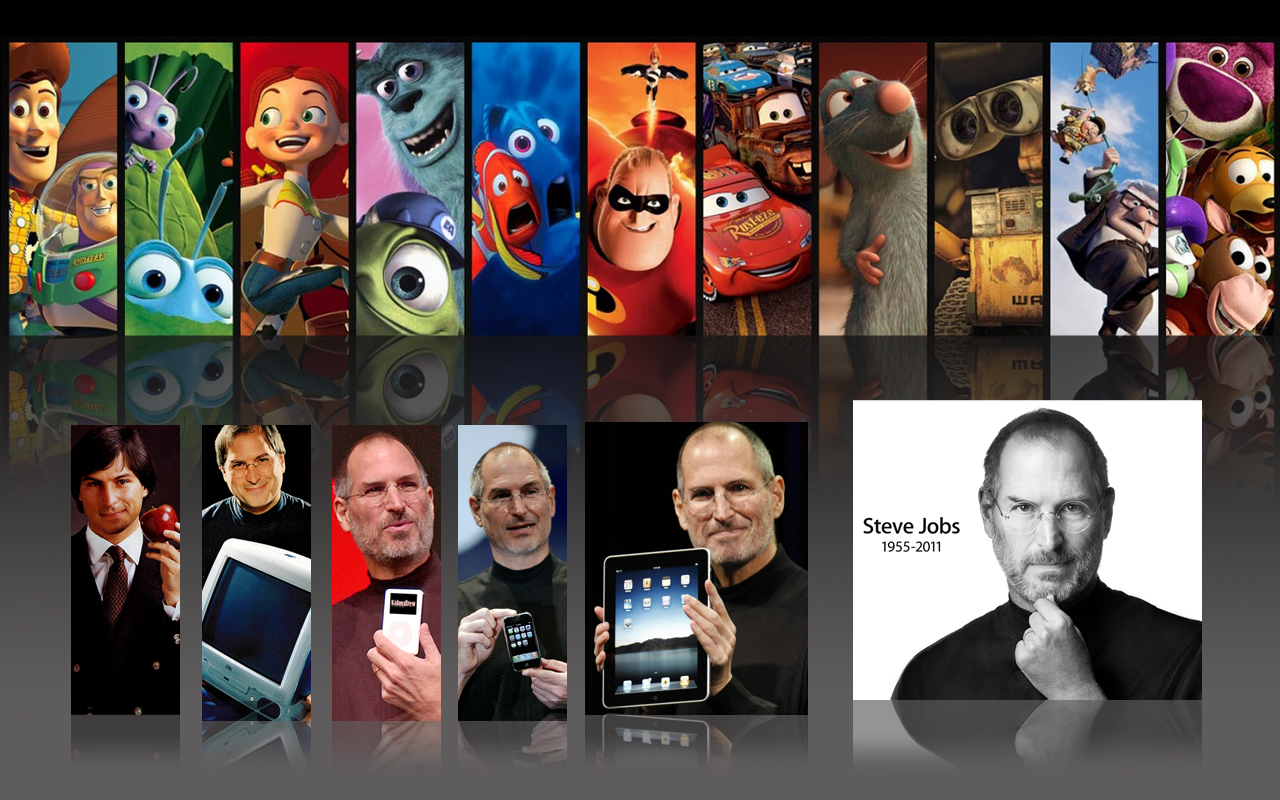
    A quick search on LinkedIn tells me there are 109,000 storyteller job openings in the US right now. If that’s a bit of a ‘nothingburger’ to you then lets talk burgers. Last week we mentioned that burger giant, McDonalds, is currently trading on the New York Stock Exchange at a SaaS-shaming valuation multiple of almost 10x revenues, or $220 billion. Weren’t we told once upon a time that software was going to eat the world? Anyway, we also mentioned that Subway, with approximately similar numbers of restaurants and a global 100-country footprint, generated about two-thirds of the revenues of McDonalds. However, Subway is currently valued by private equity buyers at less than 1x revenues, or just $10 billion. So, what’s the story with the 90% valuation multiple disparity? Well, it’s quite likely the story, or the storyteller, is a significant factor in the gap. Apple’s Steve Jobs once said, “The most powerful person in the world is the story teller”. But, why the need for a story? In a piece we wrote a few years ago we focused on the power of a story with the following thoughts…

    “A business needs to answer the most basic question for its product or service: why should people care – why should  customers, employees or investors care? Stories are incredibly effective at capturing human attention in an increasingly noisy world. There are four key reasons why stories engages more of the human brain than other communications.


    1. When a story is told it isn’t just the language processing parts of the brain which are engaged. A story generates an emotional reaction , a sensory stimulus, which causes you to feel what the characters in the story are feeling. And we don’t make rational decisions when we buy, we make decisions with emotion. Emotion is a powerful selling tool.
    2. Stories grab attention. They create and release tension as our brains seek certainty and closure. The release of neurochemicals like Oxytocin in our brains when immersed in a story can generate empathy; an essential factor in building community and loyalty.
    3. Stories transfer values and beliefs. Think childhood stories and parables. Now think of the power of a customer who sees in a story how a character arrived at a belief. If the customer begins to adopt that belief the sale is almost done.
    4. In a world experiencing a data explosion the human brain struggles to retain information over time. Studies show that messages delivered as stories are more than twenty times more memorable than just facts”


    The references to “power” and “powerful” are not just used for emphasis. And, not just for customers. A story in the investment world is a combination of narrative and numbers. Arguably, these two critical components are multipliers rather than additives. The much-followed professor of marketing at NYU Stern School of Business, Scott Galloway, famously highlighted in 2022 the $3 million value implied for each unit sold in Tesla’s market valuation, and then compared that to Mercedes’ $92,000 and BMW’s $180,000 unit equivalent. Galloway was very clear that the story Elon Musk was telling had massively moved the valuation dial. Of course, the valuation could be wrong but the future of electric vehicles, clean tech and consumer demand for carbon-friendly alternatives contained enough big numbers to create a credible vision of Tesla’s place in the future.

    Valuation depends on the numbers, but also the future. One of the foremost experts in the field of financial analysis and valuations is Aswath Damodaran and he firmly believes “a good valuation is not just numbers on a spreadsheet”. In a recent November 2022 post he made the following instructive points:

    • There is no right answer to what is the best mix of storytelling and numbers.
    • He suggests there should be a “bridge” between stories and numbers ie back up your numbers with stories, anecdotal evidence.
    • The reverse is also true. Each story should have a number.
    • Stories are memorable, numbers less so.
    • Numbers create accountability.


    I like this idea of a “bridge” or connectivity between narrative and numbers. One of them will probably be outside a founder’s comfort zone but it’s clearly worth more than a burger to leverage both story-building tools. Also, prepare to be asked who helps the business with storytelling. This week I will attend an excellent SME entrepreneurs and investment networking event and I have no doubt all will be able to confirm who they pay to assist with their legal and accounting requirements. But, for an investor perhaps the far bigger question in determining future value creation will be who is the business’s storyteller?

    It’s unlikely to be just a marketing person; the numbers must demonstrate the value as well as the product or service. But, a financial analyst or a chatbot is probably not going to craft a Musk or Jobs vision of the future either. Yes, that ‘bridge’ between narrative and numbers requires expertise, but the multiplier effect of a well-constructed story moves minds and capital powerfully. Well, that’s my story anyway.

  • Who’s Banking In The Fast Lane?

    Who’s Banking In The Fast Lane?

    Ireland still managed to beat Scotland with five disruptive injuries in Sunday’s 6 Nations rugby showdown. Injuries are part of the game but so are substitutes who can step in to keep the team functioning. But…sometimes even the substitutes get injured and then we are into Donald Rumsfeld’s “known unknowns” territory. Ireland did survive a double-whammy loss in the specialist hooker position to win but it was hairy stuff. Now, think about the banking industry this past weekend.

    The Silicon Valley Bank (SVB) collapse is arguably a “known known”, the unknown bit just being the identity of the bust bank. That didn’t stop some pretty high profile venture cap(VC) and tech founders going into meltdown mode with striking similarities to an infamous Clare Devlin finger-pointing outburst in Derry Girls. How wonderfully appropriate does Sister Michael’s withering observation sound today: “Well, I think it’s safe to say we all just lost a bit of respect for you there Clare”. Also, probably safe to politely say that the VC world needs to brush up on its banking knowledge and credibility. To be clear, the US in an average year experiences 7 or 8 bank failures. In fact, we were due a few failures as there were none in 2021 and 2022. The banking system will be fine but there are a few new challenges for the sector. So, our analytical focus, amid the blizzard of commentary, is the ‘unknown unknowns’ which have emerged.

    First, let’s deal briefly with the known unknowns. The unexpected, albeit traditional, banking factors in SVB’s collapse did echo some of our experiences in the 2008-2009 credit crisis(GFC). I would pinpoint two areas which should generate GFC flashbacks:

    1. There was an operational/timing mismatch between what the bank’s customers deposited(liabilities) and what the bank invested in(assets) to generate a profit(excess return) and beat what they were paying customers for deposits. There’s a lot of tosh being written about long term assets being unsuited to quick cash-out/sales to pay customers withdrawing deposits. The reality was that the vast majority of SVB’s assets were in US Treasuries and other highly liquid bond securities which can be sold in a nano-second. Yes, the maturities of these securities were long-dated (eg 10 years) but had absolutely nothing to do with an inability to sell/cash out. The timing issue was far more fundamental than maturity of the assets. Thanks to rapidly rising interest rates these securities have lost value and in an ideal world the bank would be planning to hold them full term, and experience no loss. The timing of deposit withdrawal requests was unhelpful and causing losses but why the withdrawal requests?
    2. The customer base of SVB was massively concentrated in the tech and start-up sector. Think back to Anglo Irish and its army of property guru customers all with the same problems, and assets/loans. Back to California, and the customer concentration issue provided a new twist on balance sheet challenges for a bank. Yes, the customer concentration risk is a banking known but these customers were not big borrowers. They were minted with VC and funding-round cash. Unlike Anglo Irish, the customers’ borrowings(assets) were not the concentration problem. The cash was the problem, the unknown. A tech slow down, higher interest rates and shareholders/VCs demanding a commensurate uplift in rates of return(profit) was forcing SVB customers, all at the same time, to tap their cash deposits at an increased withdrawal rate. More disastrously, the vast majority of this cash came in to the bank in similar circumstances. The tech and VC “gold rush” through the Covid-19 pandemic can be seen quite clearly in SVB’s asset base tripling in size from $70 billion to $212 billion in the 3 years since 2019. Sure enough, when the reversal of this trend, from funding to spending, happened through 2022 and 2023 it was relatively symmetrical. Lots of customers doing the same thing at the same time, quickly. However, there’s quick and then there’s the warp speed of our digital world.


    In the 24 hours after SVB told the market that the challenges above were causing manageable losses(circa $2 billion against a market capitalisation value of $45 billion) and they planned to raise some extra capital, something extraordinarily unknown to the banking regulators and industry executives happened. Almost twelve years to the day after the Tohoku earthquake and tsunami, the banking system had its own knock-on nuclear moment. Those 24 hours saw $42 billion removed from SVB deposit accounts. As somebody who watched the GFC crisis unfold in 2008 from the inside, I can tell you that this is a different galaxy of operational speed and stress.

    The miracle is that SVB after this tsunami was only about $1 billion in cash shortfall when the FDIC stepped in to stabilise the banking system. But that won’t get any press right now. What will focus regulators and bank executive minds is that seamless, digital, mobile and customer-friendly banking can kill a bank at the touch of a button egged on by dubious influencers on Twitter. Was it only Friday we were writing about bad actors and “their perennial appearance on the wrong side of eventual truths”? Here’s hoping history will be very unkind. In the interim, regulators and the US Treasury will be reviewing how the customer rights’ pendulum may have swung too far in the direction of speed.

    We have often cited the compounding effect of so many new technologies on the speed of our world and regularly reference the Diamandis and Kotler book, “The Future is Faster Than you Think”. The uncomfortable truth is that things could become much much faster. Every bank in the world is looking at blockchain to cut out costs and intermediaries(read time) and crypto/digital currencies are a logical technology development in that race. Time to pause, and think about unknown speed? Then we may need to think about our second unknown unknown; where banking services and banks themselves go from here. You have read so many times our mantra about the dangers of a business model dependent on “other people’s money” and how everything can be fine, until it isn’t.

    As we write, Signature Bank and First Republic Bank are about to enter the banking graveyard despite the US government and monetary authorities guaranteeing all SVB deposits, irrespective of insurance coverage. We have also regularly suggested that we think of financial services as a feature rather than a standalone business in the future. Think Amazon and delivery. Once upon a time retail and delivery were separate. Then Jeff B said that’s BS. Now I’m seeing Apple get into buy now/pay later (BNPL) activities and I’m still wondering about Elon’s PayPal formative years and his 368 million Twitter-user platform. So, will the following be “unknown” in the banking world in the coming decades……?

    Global Platforms: Just as the US government realised this weekend technology (start-ups or not) impacts all businesses (payroll, security, data etc), we may need to think about global banking mirroring Big Tech and consolidating rapidly. A world with just 5-10 big banking platforms with very diversified customer bases looks like the required trade-off for increased operational speed and technological complexity(blockchain, digital currencies etc). The disappearance of smaller banks and customer focus(SVB was very much part of the tech sector success story) could curb innovation but….

    Global Capital: I could drone on about yield curve shapes and duration here but let’s be very clear. Forever and a day, the bank analyst orthodoxy was that higher interest rates would be good for banks and their profit margins. So why did SVB struggle? Remember all those cash deposits? In the good old days banks were able to sell customers new products(capital) in the form of loans to buy houses, cars, credit cards, holidays etc (assets). My personal view is that it is not just banks selling capital to consumers – think BNPL(Klarna), car finance(VW, Ford banks), crowdfunding(Spark), Big Tech(Apple Card). The other side of that capital availability coin is that banks face increased competition and are struggling to match assets(loan products) with their customer service liabilities (deposits). Traditional banking “assets” will increasingly become just a feature of various consumer platforms, be it Big Tech, social media platforms, e-commerce, metaverse or whatever. The other killer for the banks is that many of their non-traditional competitors are in the ‘fast lane’ of data analytics. Better data means not just better products, but better risk management. The irony of SVB’s unmatched connection to technology and failure is that even basic banking data would have foretold a highly combustible risk environment.

    SVB may be just the canary in the banking coal mine for massive concentration of banking platforms amid product/asset proliferation for consumers. We shall see, but we might just mention one other canary. In the musings above we referenced higher interest rates(true) and asset-liability mismatch (not so true). Yes, there was a timing mismatch at SVB but the assets (bonds, Treasuries etc) were easy to sell and raise cash. There is one part of the financial ecosystem which does, in fact, meet that definition of mismatch; real estate can’t be sold quickly. We note that specialist fund managers like Blackrock, Blackstone, M&G and Schroders have restricted investor withdrawals from some of their property funds. These are not traditional banks but I worry there will be a few banks who have serious concentration risk. I’m also worried about Credit Suisse trading at a value implying 85% of its book value is wiped ie the equity and bond holders are facing big losses.

    Anyway, who knew higher interest rates and the capital tide going out would reveal some naked cheeks? Actually, lots of people. But if you’re really cheeky, you’d ask those champions of smaller government, socialist scare-mongering and social division in the Tory and Republican parties why the two interest rate explosions so far – pensions and SVB – could only be sorted by sensible state intervention? Clearly, they are still in the slow lane……


  • The Wisdom And Energy Of Crowds

    Mitt Romney defied his own crowd last night when voting to convict GOP cult President Trump of high crimes and misdemeanors in the White House. History will probably be kind to Romney but, as a general observation, large groups tend to make superior decisions in the fields of pop culture, psychology, biology, behavioural economics and other fields. The concept of crowd superiority was popularized by James Surowiecki in his 2004 book, ‘The Wisdom of Crowds’.

    The key idea is that large groups of people are collectively smarter than individual experts. We would agree that’s a rather difficult thought to digest in the midst of Trump and Brexit chaos. Indeed, it is not just the political arena that presents difficulties for this concept given current events in the world of investment and financial markets. Traditional thinking is that the predictive power of crowds will win out over individual expertise but this is tested now and again when things go a bit crazy. Financial history is peppered with periods of crowd “mania” behaviour as tulips, South Sea Islands, technology, crypto-assets and property markets bubble up with investor excitement only to pop painfully after sucking in vast amounts of the crowd and price-following investment capital.  Take Tesla as a very recent example of manic investor excitement.

    The US electric vehicle manufacturer Tesla experienced a parabolic rise in its share price this week which attracted many raised eyebrows from those who did not read our surprises for 2020. True, we didn’t expect this level of madness. Nevertheless, various milestones were truly breathtaking. Here are a few of them:

    •  At one point the value of Tesla with $25 billion worth of annual sales exceeded that of Ford, GM, Chrysler and Daimler (Merc) who actually sell $620 billion worth of cars annually.
    •  One of the daily moves in Tesla’s share price was the equivalent of the entire value of Ford Motor Inc.
    •  The actual value of Tesla shares traded in one day approached $40 billion which is a record for an individual stock.
    •  At the peak valuation of $170 billion on Tuesday the Tesla electric vehicle (EV) franchise was worth more than BP, McDonalds or HSBC and would rank as the second-highest valued stock in Europe.

    We include an oil company deliberately in the final observation above for good reason. Energy is at the centre of the two most extreme market conditions right now. One is a very recent spike in activity (Tesla), the other is a slow-moving multi-year trend (oil stocks). The two examples highlight a key point about the concept of the wisdom of crowds. The information value of a multi-year trend is far more significant than a short term explosion of enthusiasm in the market. One can debate the merits of Tesla’s valuation and the exciting theories as to recent share price surges. Take your pick from climate change, EV revolutions, hidden data centre capabilities and AI but we do need more time to arrive at firm conclusions on the Tesla investment rationale. For the curious, Gavin Sheridan (@gavinsblog) on Twitter is very interesting on the data story. In contrast, the oil market is sending out some serious distress signals.

    First, energy stocks have just had their worst January on record despite World War 3 nearly breaking out in the Persian Gulf. More damning, as a longer trend, the energy sector has been the worst-performing industrial sector for three consecutive years. The arrival of ESG as a primary investment consideration has dramatically reduced investment flows into the sector culminating in the spectacular failure of the Saudi giant, Aramco, to attract any international capital for its 2019 IPO. Furthermore, bankruptcies are picking up significantly in the US oil sector as falling oil prices and declining shale oil well performance squeezes cash flows. And, to cap it all off, the Swiss investment bank, UBS, with lots of Middle-Eastern clients(!) has just published a research paper stating that recently announced global climate/ temperature targets render vast amounts of reserve energy assets almost worthless. UBS estimates the cost of writing off these reserves, or stranded assets, could be in the region of $900 billion. The energy sector is in very big trouble and for lots of reasons which brings us to our final point about crowd wisdom.

    One of the caveats in Surowiecki’s book was that wise crowds should be able to have a diversity of opinions. In the case of energy there is more than one driver of the steady decline in the sector – renewable energy, EV revolution, climate change, etc all have their champions. In the Tesla share price gymnastics this week there was a sense the only driver of investor purchasing or selling was overconfidence on an individual and crowd basis that expertise existed on the direction of the share price. We are tempted to use the expression “price cult” as a description of the crowd. Sadly, history and science would beg to differ with that crowd’s confidence in its ability to predict future price moves.

    Similarly, we would boldly suggest Trump and Brexit cults will in years to come painfully understand the difference between the wisdom of crowds and cult-like intolerance of diverse opinions, history and science.

    “You know, a long time ago being crazy meant something. Nowadays everybody’s crazy” – Charles Manson

    Enjoyed this blog? Then why not check out our other great content by clicking here!