Tag: portfolio

  • Watch Out For Joyful Asset Shocks

    Watch Out For Joyful Asset Shocks

    Wow, what just happened! In the last 33 days we saw an incumbent US President forced out of his re-election campaign, financial markets take a battering, Japan’s Nikkei dropping 20% in just two days’ trading,  the Republican National Convention celebrate polls predicting the second-coming of their Cheesus, and a likely funds-deprived military capitulation of Ukraine to Agent Orange’s mate in the Kremlin. It was all rather scary and in the financial markets the ‘fear gauge’ measured by an options derivative, the VIX index, rocketed from its long-run median level of $17.6 to $60 on the 5th August. In fact, that was the largest single-day increase in the ‘fear index’ in history. Then, over the next 7 days it fell right back to its average $17 level. Incredible. But, not even the VIX could have foretold the emergence of the ‘joyful warrior’ Kamala Harris as the pollsters’ best current bet for the White House in the November election, nor the invasion of Russian territory for the first time since 1941 by Ukrainian soldiers (in German tanks!!). These are amazing geopolitical turnarounds but not necessarily the type of shocks to move financial markets. However, we’d like you to think about a few developments which really could shock….in a good way.


    Productivity: The scary headlines would suggest recent ‘revisions’ of US jobs data revealed a less healthy US employment picture. The revisions showed that the statisticians over-counted the number of jobs created in the year to March 2024 by 818,000. However, before we go all wobbly-kneed about job creation moving at a pace of  ‘only’ 175,000 new jobs per month (vs previous estimate of 245,000) we need to consider that US GDP growth numbers have not changed. This means that labour productivity which has stalled for decades is picking up serious speed. Hmmm. Anyone tempted to ask ChatGPT what’s going on? Well, our AI boom might be beginning to pay dividends but in a more subtle way. Probably the best read of the week is a guest contribution by Brian Albrecht, Chief Economist at the International Centre for Law & Economics, on Noah Smith’s always excellent blog. Two snippets really hit home with me. First, the subtle impact of AI:


    To be clear, the progress isn’t about chatbots. Instead, it’s about small improvements across every sector of the economy. It’s the human resources manager using AI to sift through resumes more efficiently, the logistics planner optimizing delivery routes in real-time, or the data analyst automating report generation. These minor advances, multiplied across millions of workers and thousands of businesses, are what will ultimately drive significant productivity gains.


    Second, massive change in productivity could be already under way but is hidden by upfront costs like training, reorganizing workflows and designing new processes:


    The computer revolution offers a helpful parallel. In 1987, Nobel laureate Robert Solow famously quipped, “You can see the computer age everywhere but in the productivity statistics.” This “productivity paradox” persisted for years. It’s almost comical now to think of 1987—when the original Macintosh was brand new, and C++ was just gaining traction—as an era when “the computer age was everywhere.” Even then, the transformative potential of computers was clear to many observers. Despite the invention of the personal computer in the 1970s, we didn’t see significant productivity gains until the late 1990s. Why? It took time for businesses to figure out how to use computers effectively, redesign workflows, and develop complementary innovations.


    My own sense of things is that we are obsessing over generative AI (chat bots) and missing the integration of AI applications which have been around far longer than ChatGPT or Gemini; think machine learning, automation, robotics, virtual assistants etc. Of course, with far more powerful digital assistance available this has a potentially huge impact on the formation of new companies.


    New Business Formation: The US Census Bureau shows that 5.5 million businesses were started in 2023. This is the highest total ever and is a 57% increase on the numbers prior to Covid in 2019. Recent data from Ryan Decker and John Haltiwanger at the US Federal Reserve showed a surge in new business formation, particularly in hi-tech industries. But, there’s a pick-up in business formation in sectors like construction and building services too. These trends point to fresh ideas, innovation and pressure on incumbents to keep pace. It also points to higher productivity ahead. Our reference to ‘old economy’ activities like construction is deliberate because there is another forgotten sector beginning to stir.


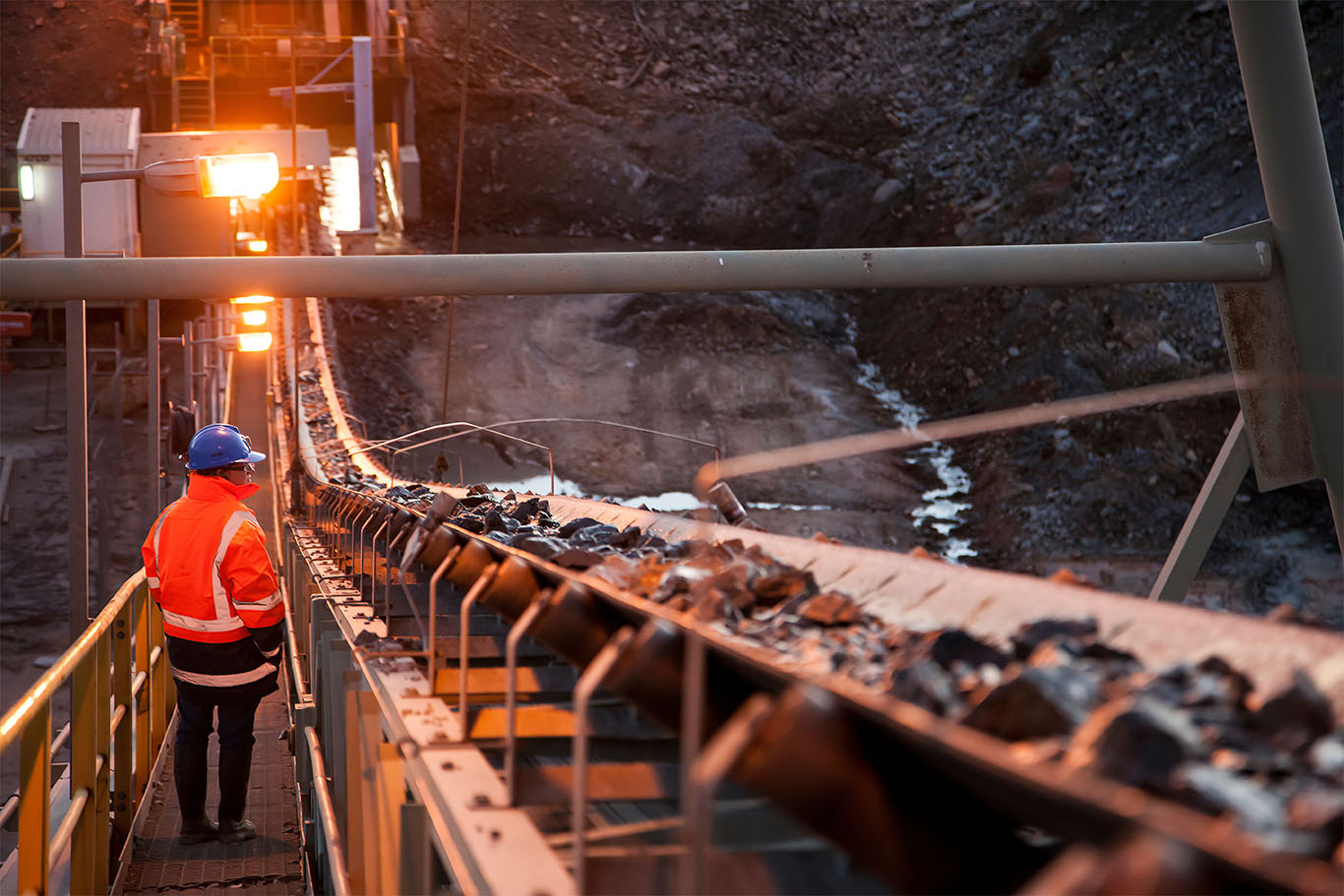
    Critical Materials: This week the price of a gold bar reached $1 million for the first time ever. I’m no gold bug and I really don’t want to get into a philosophical debate about stores of wealth and inflation protection. But, I do know one thing. Gold tends to lead when the mining sector is due a recovery. Mining has been in the naughty corner for almost 15 years but I’m beginning to wonder whether sovereign anxiety over the supply of critical materials will lead to not just regulatory action (see the EU Critical Raw Materials Act) but actual sovereign/state investment in mining assets? If AI is now considered by nearly all experts as a sovereign-level risk race then the sector critical to industrial supply chains and decarbonising the planet could be about to receive its own positive sovereign attention.


    Electric Vehicles: Finally, on the theme of global decarbonisation, we could be on the cusp of a serious acceleration in electric vehicle (EV) adoption. Consider the following three developments:


    *For the first time ever in July, more than half of all vehicles sold in China were electric.


    *BMW pulled ahead of Tesla as the lead EV brand in Europe last month for the first time. Note to Elon Musk, Silicon Valley “broligarchs” and a few tech heads closer to home; funding a felon can be brand destructive.


    *Electric vehicles are now cheaper than combustion models in China.


    So, the competitive landscape is broadening out with Chinese and European players catching up with Tesla. This also means production of EVs is ramping up as market penetration of the total auto market approaches 20%. This production volume surge also has cost implications. According to Wright’s Law, used by MIT and proven in the wind and solar markets, when production of an item doubles the cost of producing that item falls by 20%. Critical to the EV revolution is the cost of lithium-ion batteries, and the cost of those batteries has fallen by 90% since 2010. Indeed, as the headline above suggested, China has reached a critical market penetration inflection point. Given the cost of batteries in China have fallen by 51% in just the last year, one can understand why EVs are racing past combustion models. Get ready for the virtuous circle of more production, lower costs and accelerated consumer adoption globally.


    All four developments above are capable of delivering significant positive shocks to the global economy and could be perfectly timed for a joyful new US President. Whoodathunk!


     

  • Themes Checklist For The Beach

    Themes Checklist For The Beach

    The weather forecast isn’t great.  I’d usually suggest some couch thinking time but that phrasing has now become a politically-charged innuendo in the US which tops off possibly the most bizarre presidential campaign month ever. Don’t ask about couches or dolphins, or JD Vance. And, he thought having no children was the problem…..! Anyway, given the amount of delusion in the air, I’m going to suggest a beach plan. That might be the wrong plan, but thematically we might be on the right track in the world of finance. So, for those enjoying some time off, one can review and reflect on the following:


    Old economy: Our suggestion “Investors Need The Old Economy Too” in May started subtle, then went full hammer. This move hasn’t just been a tech shift from software to more traditional hardware manufacturing. Say hello to the ‘great rotation’. The old economy stocks roared in July. The top performing sectors in the US were industrials, financials, utilities, basic materials and real estate. As an illustration of the scale of rotation, note technology stocks actually had a negative month (-2%) while US regional banks and housebuilders rocketed 19% and 17% respectively.


    Smaller companies: We have written “Betting On Small Can Really Win” but boy oh boy did it rock in July. Smaller companies tracked by the Russell 2000 index whipped the performance of the large company S&P 500 by 10 percentage points. That’s the largest monthly divergence between size cohorts ever recorded in history.


    Climate and cleantech: Another theme close to our hearts. VC Breakthrough Energy Ventures backed by Bill Gates has just raised the largest climate fund of the year with a funding round of $839m. In Europe, the momentum is good too. Private equity deal values in European cleantech are now on track for their best year ever(Source: Pitchbook).


    Fintech: Stripe and Revolut valuations in recent private share sale activity have jumped by 40-50% and London remains a fintech investment hotbed. Latest British Business Bank data tells an interesting City story –  the UK fintech sector is attracting 11% of global VC investment (and 48% of all investment in Europe), a share only exceeded by the US.


    UK Comeback: In March we wrote “Time For A UK Recovery” and waited for credibility and competence to return to Westminster. The scorecard at the moment looks pretty good: UK equities are seeing the strongest inflows of foreign institutional investment for years (Source: BOA), and on the currency front, the GBP (formerly known as the “Great British Peso”) has been the strongest major currency performer in the year so far (Source: Bloomberg).


    Digital infrastructure: We wrote “Get Ready For The Cloud Wars” back in November and this has morphed into a global foot race to acquire, invest, service and build the infrastructure of our digital/AI future. From data centres to state-of-the-art chip manufacturing plants the investment giants are moving fast to get involved. While Microsoft opens a data centre every three days, it feels like the likes of Blackrock, Apollo and Blackstone are competing for digital infrastructure headlines every few days too. In fact, Blackstone estimate digital infrastructure spend by top tech companies will exceed $1 trillion over the next 5 years.


    Wall Street veterans would say  ‘the trend is your friend’. So, we aren’t giving up on any of these themes just yet. However, we will return to two critical risk factors for many of these themes in a later article. Geopolitical risk from Taiwan to Iran to US electoral chaos looks like it is escalating rather than fading. US politics can make for electric watching (with the shock too) but the just announced prisoner swap deal between Russia and the US was significant. The allied multinational effort by the Biden White House shows the value of joined up thinking and shared values but the planet faces other bigger challenges. Arguably, our highly charged politics needs to address the fundamental challenge of climate and electricity too. For another day, but the race to decarbonise and electrify the global economy is definitely not on track…..


  • Five Tech And Money Moves To Watch

    Five Tech And Money Moves To Watch

    You do wonder. Regulators all over the world are in a flap about AI and cryptocurrencies, and their potential dangers in the wrong hands. Meanwhile, every summer millions go on holiday and are literally robbed. Welcome to the “Wild West” of foreign exchange. Who hasn’t puked at the ridiculous margins/commissions charged by airport exchange bureaux, retail banks and various financial intermediaries for a basic financial transaction?  One doesn’t need to be a financial guru to know that nowadays, in our ‘flash boy’ world of high-speed trading technology, the professional traders trade financial instruments like bonds, equities, commodities and currencies at ultra-low costs where commissions are struck at tiny portions of a single percent. The professional traders’ jargon monoxide might use the term ‘basis points’  for these tiny percentages but main street consumers will usually use expletives to describe commissions (plus margins or spreads) that can amount to a cost well over 10%…. or a thousand of those basis points. So, that’s the moaning over. Let’s look at the recent tech and money developments which might inspire…

    Turning first to one of the better solutions to foreign exchange (FX) pain, Revolut, it was interesting to see the company just receive regulatory approval in the UK after a three year wait. The Revolut FX service is, on average, about 25x cheaper than the majority of consumer options. A new UK licence was also nicely timed for a share sale which put a $45 billion valuation on Revolut. That looks like a 50% uplift in valuation for the British fintech and illustrates a renewed investor enthusiasm for innovative payments platforms. Check out Ireland’s Stripe where a secondary share sale from early investors(and staff) to VC giant Sequoia was done at a $70 billion valuation. That’s an encouraging 40% jump from its March 2023 valuation low. However, it’s not just Irish international financial giants attracting foreign investment capital.

    The recent Renatus Private Equity M&A H1 report on the Irish market showed activity picking up with 207 deals completed in the first half of 2024. That compares against a 30% fall in M&A deals globally (Source: PwC). For this writer, it was significant to see, in a high interest rate environment, that financial services was the second most active sector in the country after software. Indeed 21 of those 31 deals in financial services were in accountancy and insurance. Many of the acquirers were larger overseas groups looking to consolidate intermediaries rather than the wholesale providers of financial products. Maybe, there’s a bit more going on than just cost and brand consolidation?  What about a seismic cost shift?

    If you thought cryptocurrencies and blockchain were dead you’d be dead wrong. Bitcoin is flying high and supporting a digital currency ecosystem worth $1.3 trillion. Small stuff really, but think of my FX moan earlier and know that digital currencies and blockchain are ABSOLUTELY the route to cutting out the commission cowboys and intermediary ‘tolls’ which bedevil global financial services, and particularly the average consumer. Consider the following headlines:


    Kamala Harris’ digital dollar vision: A new era of financial inclusion?  –  American Banker


    “Bitcoin is a legitimate financial instrument,” Says Blackrock CEO Larry Fink – Yahoo Finance


    Goldman Sachs to launch 3 tokenization projects by end of year – Fortune 


    You didn’t think I wouldn’t mention Kamala this week, did you! So, in the interest of political balance it should be noted that it’s not just the prosecutor getting involved in digital currencies. The felon too is due to headline the 2024 Bitcoin Conference. The former fella used to call cryptocurrencies a ‘scam’ but, not unlike his disastrous recent VP pick, he’s capable of the most marvellous position reversals (and debate commitments). It’s difficult to call or even visualise the US political future but there’s a fascinating visual story developing on the AI front.

    We have written previously about a subtle technology shift in the investment world away from software and towards hardware. We all know the Nvidia chip story by now, but who knows EssilorLuxottica? Not quite the tech everyday name. And, that’s because EssilorLuxottica is not a typical technology play. It is, in fact, a luxury sunglasses designer and manufacturer – yep Oakley, Ray-Ban, D&G, LensCrafter and Vogue are all their brands. Moreover, Facebook/Meta who dived into the metaverse prematurely are now looking to buy a stake in the luxury glasses player. Of course, the potential of a worn screen/glass interface could be the next iteration of the 8 billion mobile phones on the planet. Early days yet, but AI continues to move at rapid pace. Of course, Meta’s move for hardware could be viewed as a strategically defensive move as the consumer information landscape shifts rapidly. Google had pretty robust quarterly results this week but latest breaking news could be interesting…

    The AI pioneers at OpenAI have announced the launch of their own AI-powered search engine, SearchGPT. The product is only available in beta version for 10,000 users but I’m sure Google’s executives will be watching the feedback rather closely. So, despite the summer holidays it’s fair to say there is plenty going on. And hopefully, one day, holiday makers will have an AI assistant embedded in their ‘sunnies’ to spot an airport FX robbery in real time!


  • The Hottest Investment This Summer

    The Hottest Investment This Summer

    Ok, I’m a bit hot and bothered. When a tee-shirt ripping Hulk Hogan is the warm-up act for possibly the next President of the United States I’m inclined to think our planet is in trouble. The Republican National Convention(RNC) in Milwaukee this week marked a new level of bizarre in US politics, but the hot air sadly can’t be confined to the GOP speaker line-up. As a record-breaking 1,400 tornadoes and scorching heat batters the US, I am resigned to the fact that decarbonisation of the global economy is way down the MAGA Republican (GOP) list of priorities. However, political mayhem can often leave investment markets unmoved, even relaxed. This seems to be the case so far, but things are fascinatingly stirring in long-forgotten parts of the market and I see one particular opportunity heating up fast. First, let’s look at some data:

    Technology: It’s not just Microsoft having a bad cyber outage day. In recent days, technology stocks experienced their worst share price falls since 2022. However, overall, stock markets continue to hit new highs. Why?


    Old Economy: Sectors neglected for months, even years, are attracting investors who are watching potential interest rate cuts and interesting valuation discounts to technology, pharma and AI-giddy companies. The top performing sectors over the past week were old-fashioned financials, industrials, energy and real estate.


    Smaller Companies: Only a few weeks ago we wrote an article “Betting On Small Can Really Win”. Hoo boy. The share prices of smaller companies over the past week have been on an historic tear. Stock indices which track smaller companies are flying as Trump would say “like you’ve never seen before”. The Russell 2000 is a benchmark used for smaller companies in the US and it has rocketed 12% in just the past week.


    UK Markets: The benchmark FTSE 100 post the Tory election rout immediately embarked on a two week winning streak. Coinciding with this political re-set, UK consumer confidence just hit a 3 year high.


    Venture Capital (VC): The latest data from VC research team, Pitchbook, shows that fintech and cleantech/sustainability start-ups are attracting the most investment in Europe of recent quarters.


    Clearly, investment capital is ‘rotating’ out of large company technology and looking for alternative opportunities. Furthermore, some structural themes are here to stay. So, we believe there are alternative opportunities to plug into the ‘monster themes’ like AI, decarbonisation, cloud wars and electrification. Where better to start than our planet and the urgent need to stem global warming? We have written many times before that this $9 trillion per year decarbonisation spend can’t happen without critical materials like rare earths and base metals. However, the mining sector essential to extract these critical materials has been starved of investment as large pools of capital shun the sector’s poor sustainability/ESG track record.

    That is changing as the big money now realises if there’s no mining, there’s no EVs, no batteries, no AI, no data centres etc These big funds are now pushing for sustainability assurance solutions which will allow them to deploy capital again and ensure the supply of critical materials can keep up with the demands of economic electrification. So, if you can excuse the mining pun, we have found a little gem of a play on mining/ESG which ticks the following boxes:

    *Market leadership: The company is a fintech with mining-valuable data built over 4 years.

    *Market fit: It is winning mining company customers – there are 4,500 publicly listed and investment capital-hungry mining companies – and generating more than $1m of annual revenues already.

    *Institutional endorsement: Critically, big investment houses are telling the mining industry this company’s independent ESG assurance process can open up investment and significantly speed up investment decisions.

    *Structural tailwinds: The macro themes of smaller companies, UK and old economy all feature in this opportunity.

    *Money talks: And.. founders and international institutions are putting in their own money to grow the company’s global footprint.

    So many boxes ticked, with macro and structural themes aligning. This has to be our hottest opportunity to fight global heat this summer, and for many summers more. But, not too many. This company will surely be bought by a global data player or consultancy in less than 5 years with a potential 10x return to private investors. Think Bloomberg, Accenture, Reuters, S&P Global etc but don’t tell them yet – we are keeping this opportunity exclusive and private.

    Links to next week’s webinar here and the company’s investment memorandum here.


  • Betting On Small Can Really Win

    Betting On Small Can Really Win

    Please, no political bets. The headline is absolutely not referring to the UK Prime Miniature. The 14-year Conservative Party mission to shrink public services, business investment, critical trading relationships, institutional integrity and individual standards of public behaviour is ending in electoral wipe-out. Time for new beginnings, even small ones. As I read about UK ‘global leadership’ (with China) in a potential 9,000 millionaires leaving the country before the end of this year, I’m thinking more about generational change and down-sizing shifts in wealth creation strategies. That might seem strange in a world of mega-trillion tech companies but wealth works across different types of assets and for different generations. First a couple of size observations.

    An interesting chart this week from Private Equity/VC research data house, Pitchbook, showed smaller private equity(PE) funds outperformed bigger ones over a 10-year time horizon. In the best performing quartile of funds the performance gap was a whopping 6.7%. In real money terms, the returns of small funds were one third higher than the bigger funds. Here’s the chart:


    Clearly, the challenge of earning high returns with massive pools of money runs into the problem of a smaller opportunity set. In other words, big funds can only deploy capital in bigger companies and miss out on opportunities with smaller (probably faster growing) companies. However, funds as they become bigger can also suffer from strategy “drift” as pressure to deploy capital forces funds into other sectors, geographies, vintages, styles etc. As a classic illustration of this challenge, look no further than the ARKK innovation fund managed by Cathie Wood. Back in 2021, a big winning bet on Tesla and other innovative companies by the ARKK fund attracted billions of investor dollars. However, since then, the fund has cratered in value by 59% while the funds which track the Nasdaq tech index are up 37%. Big can sometimes be painful. Of course, new strategies can help diversify risk for investors and five headlines caught my eye this week:


    Blackrock Muscles Into Private Assets Market For Wealth ClientsBloomberg

    Andreessen Horowitz plans to launch a private equity fund  –  Fortune

    Carlyle and KKR beat rivals to win $10bn Discover Financial loan portfolio – Financial Times

    Private Credit Is Trouncing Private Equity So Far This Year – Wall Street Journal

    Watford FC Sells Digital Equity Tokens – Techopedia


    So, the giant manager of publicly listed assets is looking for private assets, the venture capital giant wants private equity, the private equity monsters are going for better returns in private credit (loans) and Elton John’s former club is looking for digital equity. Got all that? Probably not, but, if we think about Elton and the music business 20 years ago then you’re witnessing a similar generational shift in investment/wealth products. Investors, as individuals or as families, are increasingly looking to invest in private assets, not just publicly listed companies or funds. There is also an additional trend we should be watching. Private investors are now organising themselves in syndicates or family office structures and the latter segment is sitting on enormous pools of wealth. Try these for size:


    *Family offices currently manage circa $10 trillion of investments. Compare that to the higher profile hedge fund industry which manages $6.5 trillion.


    *There are currently 15,000 family offices operating and actively investing globally.


    *Now, for the banger. In the next 20 years there will be a seismic transfer of wealth from “Baby Boomers” to the next generation. Current estimates of this generational wealth transfer exceed $80 trillion.


    So, this investor base of family offices will have new principals and new ‘purpose’. Apart from asset growth , tax structuring, succession planning and philanthropy, it is increasingly likely these investors will be ‘values driven’, and possibly less interested in the buy-and-sell 5-year cycles of private equity and venture capital funds. In this writer’s view, a massive pool of patient purposeful capital is poised to disrupt the traditional way companies are funded. And, for smaller companies and smaller investors this should be considered a win without any need for Gambling Commission scrutiny…..

  • Watch Out For A New Wealth Wave

    Watch Out For A New Wealth Wave

    AI superstar stock, Nvidia, has just reached a valuation of over $2.75 trillion. That exceeds the value of the entire German stock market. How about the combined value of IBM, Tesla, Facebook, AMD, Netflix and Intel? Yup, that’s what happens when a share price clocks up a 1,000% return since 2022. And yet, those “combined” companies listed all have an AI story too. In fact, I have seen data indicating that 179 of the S&P 500’s constituent companies referenced AI in their recent quarterly analyst results’ calls. So, is AI the only game in town? We think not, and then we found a striking headline…..

    Hargreaves Lansdown rejects £5 billion bid from PE consortium –  Financial Times

    What’s the big deal? It’s not even a big deal. I mean, Nvidia just increased in value by $150 billion over a few hours on NO company-specific news. Allow me to expand. Or should I say converge….?  For those readers unfamiliar with Hargreaves Lansdown, the company is an investment platform serving 1.8 million UK-based clients with a combined £150 billion of wealth assets. However, what really caught the eye and what should resonate with regular readers is the convergence of four distinct themes we have written about in recent months:


    *The PE in the headline stands for ‘private equity’ and we are expecting stable or falling interest rates to prompt an increase in buy-out deal activity.


    *The rapidly increasing weight of private (not publicly listed) assets in high-net-worth investment portfolios. Research data from Pitchbook reckons private assets could reach a total value of $20 trillion by 2028.


    *The UK might be in the middle of the worst election campaign by any governing party in history but investors are beginning to look past the Tory party meltdown. UK companies are cheaper than similar companies in other markets and investors see opportunity and dinghy-free sanity ahead.  


    *We have highlighted the potential of ‘old economy’ companies in neglected areas of the market beginning to show signs of a new life. Specifically, we flagged a huge merger deal in the mining sector, the US bank sector actually outperforming technology this year and breaking news of an agreed £3.57 billion buy-out of the Royal Mail by a Czech billionaire.


    So, of course, we are intrigued by potential private equity interest in a cheap UK old economy financial services company. However, it’s a bit early for thematic victory laps. It feels like there is more going on than opportunistic feasting on cheap UK assets. Indeed, our curiosity is focused on the sudden appeal of wealth management businesses. Deal activity has been building steadily with Canada’s RBC buying Brewin Dolphin, private equity house Pollen Street swooping for Mattioli Woods and US bank Raymond James acquiring Charles Stanley. Other mid-size UK wealth operations like Quilter, Brooks McDonald and St James’s Place will likely feature in additional media buy-out speculation. This might appear like a simple consolidation trend in a fragmented sector plagued by digital, regulatory, capital, pricing and demographic/behavioural challenges.  In deal jargon this could be described as ‘defensive M&A’. Or, that description could be just plain wrong. What if there’s a new opportunity in wealth management? I can think of two significant drivers right now:


    1. We referenced the explosion of private investment assets to $20 trillion by 2028. The good news for investment platforms is that fees on private investments are higher than publicly traded assets given they cannot be traded on a stock exchange in a nano-second.
    2. AI, and Nvidia in particular, is investing in the processing power required for these large language models (LLMs) used to train AI applications. However, there’s a basic component of AI that every business leader, regulator, customer or user will tell you is critical – robust data.


    Thanks to years of onerous KYC(know your client) and AML (anti-money laundering) compliance, it is reasonable to conclude that the wealth management industry must be in possession of some of the most accurate and high-value/personal data on the planet. Whisper it quietly but blockchain and digital currency(crypto) technology are also staging impressive comebacks in 2024. We often write about the compounding effect of the convergence of new technologies and I’m wondering if a faltering wealth management industry might be on the cusp of increased revenue opportunities in private assets and reduced costs through AI, blockchain, digital assets, tokenisation etc. Even those companies considered digital leaders are revving up their curiosity. Only this week in Dublin, Revolut’s chair, Martin Gilbert, and founder of Aberdeen Asset Management admitted that a move into asset management by the fintech platform was a possibility – “It’s something we talk about a lot”.

    Expect lots more talk on investment desks in London and Dublin too. On days like today, I miss those desk chats…. and the laughs, lots of them.

    Mark “Dicey” Reilly RIP

  • Market Bulls Shopping in China?

    Market Bulls Shopping in China?

    Well, this is awkward. Perhaps the only fully bipartisan view in Washington these days is that China’s economic influence needs to be curtailed. The Biden administration has just announced further Chinese import tariffs and the push to decouple from Beijing’s giant manufacturing machine is in full swing. Thanks to the Bidenomics IRA and Chips Acts, a wave of multi-billion dollar projects in cleantech (EV batteries, renewable energy etc) and critical computing technology (AI chips, fab construction etc) have landed in the US. Arguably, Europe is on the homeshoring case too, particularly in the EV and cleantech areas. However, while the world focuses this week on the current ‘big shiny thing’ in the guise of AI – and pending results from its $2 trillion poster child Nvidia – the more significant global economic story right now is probably China.

    You might have read headlines about Chinese electric vehicles piling up at ports around the world but there’s much more going on. Chinese export surpluses are exploding as global markets are flooded with not just cars but steel, chips, solar panels, clothing, machinery and many other manufactured goods. It feels like the Beijing regime is compensating for a debt-slowed domestic economy by ramping up its manufacturing and export efforts. Check out the following data points:


    *Chinese steel exports in April amounted to 92 million tons, up 16%.

    *Chinese car exports reached 417,000 units in April, up 38%.

    *Chinese aluminum output hit all-time highs in recent weeks.

    *Chinese exports of key cleantech items – batteries, EV cars, solar panels – hit $150 billion in 2023 by growing 20%.  


    In fact, despite decoupling attempts in the US and official ‘dumping’ complaints from the EU, China’s current account surplus is at all-time highs powered by exports worth more than $3.5 trillion. One might presume the impact of flooding markets with cheap goods would be deflationary but that ignores the sheer scale of domestic Chinese consumption. It also ignores the reality right now in financial markets. I would highlight three markets in particular:


    1. Commodities markets: Copper, iron and zinc prices have jumped by 10% in the past 30 days. Copper has actually clocked up a 30% gain in 2024 alone.
    2. Chinese stocks: Despite US tariffs, banking debt issues and a moribund domestic economy the benchmark stock market, the Shanghai Composite Index, is up 7.6% this year after 3 years of negative returns. In Hong Kong, the news is even better with a 15% gain after 4 painful years of losses.
    3. German stocks: You’d think they’d learn but, fresh from a painful Russian energy dependency experience, Germany’s industrial base is perceived as heavily exposed to China’s economic activity.  That strategic risk is for another day’s discussion but, for now, investors are buying German shares and driving the DAX benchmark to all-time highs.  Arguably, a China ramp up of activity is helping investor sentiment towards German stocks.


    There’s a part of me wondering has China become too big and therefore nobody else can compete with the scale and unit costs of their manufacturing base? It’s probably too early to jump to conclusions and the domestic property debt unwind has a long way to go as Japan financial historians will attest. However, there is clearly a Beijing long-term strategy in play now. I would highly recommend the recent article from Noah Smith as to potential current Politburo thinking but these three thoughts stood out for me:


    *China wants to dominate and be the ‘world’s manufacturer’.

    *China is balancing overproduction and a weak consumer with a compensatory export ramp up.

    *China is preparing its manufacturing base for flexibility and the capacity to switch to war production mode.


    The final strategic explainer is more than slightly concerning. So, let’s not over-hype the significance of Nvidia’s results this week. The AI revolution and Nvidia, as barometer of that manic race to technological superiority, is almost irrelevant if China is putting itself on a war footing. On a more upbeat note, the upturn in Chinese economic activity could be the beginning of a significant global economic recovery and a rotation away from technology into ‘old economy’ assets. Regular readers will recognise that thought from previous writings here. Of course, that broadening out of investor confidence will help bulls, portfolios and pensions in the near term but not even the best generative AI model can really tell us what China wants to do in the long run. And remember, the Russian bear experience is that we should probably believe what we are seeing.


  • Investors Need The Old Economy Too

    Investors Need The Old Economy Too

    Investors need to be aware of investment cycles as well as economic cycles. The investment stars of today can be the performance dogs of tomorrow. Just don’t tell South Dakota Governor, Kristi Noem, who has spectacularly blown up her vice-presidential ambitions in recent days. Kristi got her MAGA guns, God and babies messaging confused and thought it was a good idea to publish a book featuring a tale about her shooting a misbehaving puppy, Cricket. Not sure there’s even an emoji to cover that. Nor do investors really need to be told that shooting puppies is not a great vote winner. However, investors do need to know that star stocks can fade and badly performing ‘dogs’ do make comebacks.

    Financial market stars are often the ‘next shiny thing’ and the Covid-19 pandemic introduced lots of new companies which suddenly entered our daily lives and kept the global economy going. Consider online payments and Shopify. Its share price collapsed by 20% (and $20 billion!) in one evening this week and joined other pandemic superstars like Peloton, Zoom, RingCentral etc. in a combined $1.5 trillion loss of market value since the end of 2020 (Source: Financial Times). Meanwhile, the old economy which was kept alive by these companies is finally shaking off its ‘dog’ status as the tech-obsessed investment markets realise we need the old stuff too. In fact, three recent developments have caught our eye and signal potential opportunity.

    First, we need to dig. Not literally, but the most basic activity underpinning economic activity since the Stone Age is probably the extraction of basic materials. So, when a potentially massive deal in the mining sector is reported we should pay attention. The $39 billion approach by BHP Billiton for De Beers owner, Anglo American, shines a light on a sector which has been largely shunned by investors on ESG, geopolitics, talent retention and energy cost worries. A pick up in M&A activity suggests a floor for executive expectations and potential upside opportunity for investors. Indeed, in our recent Private Portfolio Thoughts newsletter we wrote:


    “….the entire out-of-favour global mining sector is now worth approximately the same as just one technology company, Google ($2.2 trillion). However, when we see research showing China controlling almost 80% of the value chain in electric vehicle (EV) battery production we’d expect a few mining and mining technology ‘diamonds’ to be completely undervalued as the world races to EV adoption and net zero targets.”


    The mining sector, despite its sustainability (ESG) challenges, is a critical part of our decarbonised future. As an illustration, the race to electrify the global economy requires more copper in the next 25 years than has been produced in the sector’s entire history.  But a shortage of investment threatens that electric transition. For investors, capital shortage (vs ‘hot’ capital stampedes) means probable opportunity and…..on the capital front, there might be better news too.

    The critical cog in the global financial system is the banking sector. Of course, banking had its almost-perennial risk shock last year with the failure of Silicon Valley Bank(SVB) but, arguably, the lack of systemic knock-on impact should be taken as a positive. Furthermore, the stabilisation of interest rates (even if not falling) without major economic casualties to date is also encouraging. So, like the mining sector, we’d be looking for major deal activity from ‘insider’ executives to confirm there was potential sector upside ahead. Step forward Spanish banking.

    Bilbao-based BBVA has just launched a hostile $13 billion bid for its domestic competitor, Sabadell. Not just a bid, but a riskier hostile one too. Also, don’t forget recent bank deals in the UK  – Nationwide buying Virgin Money ($3.7 billion) and Barclays acquiring Tesco Bank (up to $1 billion). This feels significant and check out the performance of the financial sector in a “Magnificent 7” tech-dominated US market. Larger US financials are actually outperforming the top tech names in the Nasdaq 100 index year-to-date (+10% vs +7.6%). Also, it is interesting that the traditional barometer of the broader old economy, the Dow Jones Index, is on a 6-day winning tear. Perhaps, the dogs (but not Cricket) are back?

    Finally, the combination of the old economy Dow Jones rising, banks gaining deal confidence and shunned sectors doing M&A prompts a further thought. Public markets have been shrinking for years in terms of numbers of quoted companies listed on public exchanges. However, the role of private capital and private markets has grown in significance. Pitchbook’s latest research suggests private markets now control $14.7 trillion in assets, growing by an annualised 12.8% each year since 2012.

    Those private assets include private equity, real estate, infrastructure, venture capital and private debt/credit. The latest projections from the Pitchbook research team say these assets could stretch to $24 trillion by 2028 in a positive macro environment. This writer has also seen research showing family offices for the uber-rich now allocate 46% of their investment portfolios to private assets. So, let’s join the dots here. It seems entirely possible that ‘old economy’ companies could be purchased in private buy-out deals, backed by private capital and more confident banks. That’s a healthy development for investment markets but also provides opportunities for investors to diversify their portfolio into private assets. Now, start digging, or even mining those possibilities.

  • Risk Warning: Trust, But Verify…..

    Risk Warning: Trust, But Verify…..

    On the fifth check of my passport at Paris’s Orly airport I did wonder. Will trust die before our planet dies? Both are under severe threat and, yet, I’m hopeful. Let’s take a look at three particular examples of widely-held mistrust where recent developments might challenge the negativity. First, some history. Ronald Reagan’s signature phrase in nuclear disarmament talks with the Soviet Union was derived, ironically, from an old rhyming Russian proverb: Trust, but verify. Of course, it was tough to trust the Kremlin but technology, in the form of satellite imagery, was the critical verification tool. These days it’s technology which is not trusted but could also be the solution.

    We have previously written about global payments processing as possibly the biggest ‘network’ yet to platform and join social media and cloud computing in the multi-trillion dollar wealth creation club. However, the payments opportunity starts with technology mistrust. Bitcoin is flying high but the cryptocurrency ecosystem is still widely mistrusted by consumers, governments and regulatory authorities. Stripe famously ceased processing Bitcoin payments on its platform back in 2018. Now, it’s all change. Stripe is bringing back crypto payments, this time with a stablecoin. The USDC stablecoin to be accepted by the platform will be pegged to the US dollar ie it tracks the US dollar value. More critically, the technology which underpins the security and verification of these currency assets is blockchain. On so many levels this is a huge verification moment for digital currencies and the software blocks used to build them. Now, for some more building…..

    The 2022 CHIPS and Science Act was a Biden administration attempt to reinvigorate the US manufacturing base by attracting huge factory construction projects. Scepticism was rife, given the Trump toddler promised ‘infrastructure week’ every week but never delivered. Well, let’s verify. First, the US government has paid out more than half its ear-marked $39 billion of incentives to companies planning to invest in manufacturing facilities. The corporate follow-through has been extraordinary – microchip manufacturers and their suppliers have announced $327 billion of investments over the next 10 years. Micron alone is planning a $100 billion project in Syracuse, NY. That’s a nationwide 15x leap in construction spend on these type of facilities and will capture 20% of the global chip manufacturing market by 2030. Currently, that number is zero. But what about our planet and other targets with Zero (Net)?

    Let’s face it, the push back on global sustainability and ESG targets is worrying. We often write that money talks and the following headlines paint a picture of worrying reversal:


    Flows to European ESG exchange traded funds halve in first quarter –  Financial Times


    US Fund Managers With ESG Mandates Have Worst-Ever OutflowsBloomberg


    Clearly, this is not good news. However, we should be careful not to equate fund flows with commitment to climate change targets. For example, the banking sector in recent decades could be described as the ultimate counterparty requiring ‘trust, but verify’ checks on their behaviours and risk management. So, with the global financial crisis barely 15 years in the rear-view mirror, how did genuine ESG investors feel about this week’s staggering headline?


    Western banks in Russia paid $800m in taxes to Kremlin last year –  Financial Times


    Yep, that was the tax bit. The profits according to the FT were over $3 billion. Trust, but verify indeed……ESG investors can rightly ask how are those “S” and “G” policies going in these shame-free and profit-full banks? Answers on a post card to Kyiv please.  Before we all blow a complete gasket, let’s finish with some more wind but a bit more climate positivity. And, no, it’s not a Trump legal challenge. But it could ultimately rhyme by starting badly, and then ending with a positive reality check.

    First, the severity of the storms and tornados sweeping through the Midwest heartland of the US this week are truly frightening. However, there’s a bigger financial storm brewing further south. An excellent article in The Lever this week highlighted the plight of Louisiana homeowners struggling to insure their houses while 12 insurance companies have failed, and 12 others have left the state. Almost one in five Louisiana residents lost their homeowner insurance last year. The crisis is climate caused. Global insurance giant, Swiss Re, in a recent report stated that natural disasters now cost the United States $97 billion a year.

    In Florida, the climate denial Governor, Ron De Santis, might be kissing the Trump ring again but home insurance rates jumped 42% last year and coverage from big players, AAA and Farmers Insurance, has been pulled from the market before hurricane season. Unsurprisingly, Florida for-sale housing inventory has jumped 57% in 12 months. Leaders in denial-mode face a wave of voters, mortgage banks, pension funds and Wall Street analysts giving them the ultimate verification check on climate crisis. The critical shift is that investment capital has checked, and is already fleeing.

    Trust me, that seismic capital flight will force leadership change and action. Verification…..pending.

  • Another Heroic Age Begins…..

    Another Heroic Age Begins…..

    I’m nervous. My trip to the Park Hotel Kenmare this week isn’t quite in the league of those heroic voyages chronicled in ancient Greek mythology, but the dress code request on the invite pumped the pulse rate for a moment. Just a moment. The invitation to recreate the year of the hotel’s opening in 1897 in a gathering of mostly creative types (after momentary panic) seemed like an opportune way to ditch my far-from-hip personal wardrobe and embrace Victorian disguise. Party on, but still I’m nervous. I have this nagging feeling that the years 1897 and 2024 might have more in common than we’d like to imagine. Indeed, Mark Twain would say the years and risks are rhyming.

    The Thirty Days War of 1897 between Greece and the Ottoman Empire (Turkey) was hardly a century, or even decade, defining event whereas the current war in Ukraine is generationally significant for Europe. Furthermore, the first border-to-border direct attack by Iran on Israel in the past week could, left to escalate unchecked, threaten the planet with warfare of global dimensions. Neither of the current conflicts will necessarily snowball into multi-country warfare, but 1897 starkly demonstrated how military alliances fracturing under pressure in local skirmishes can lead to tragic global outcomes.

    Just before the Greco-Turkish War broke out on the mainland in 1897, there was an intervention made by The International Squadron, a naval flotilla formed by the ‘Great Powers’ of Europe (UK, France, Italy, Russia, Austro-Hungary, Germany) to address a rebellion by native Greeks on the island of Crete against rule by the Ottoman Empire. Apart from being a precursor to war on the mainland, the Cretan intervention ultimately led to strategic disagreement followed by Germany and the Austro-Hungarian Empire withdrawing from the International Squadron. Only seventeen years later the same Balkan region erupted, and those two nations formed the Central Powers alliance with Bulgaria and the Ottoman Empire to fight the Allied Powers in World War I. So, fast forward to today and it’s not difficult to spot the strains in geopolitical alliances as they confront the following crises:


    Ukraine-Russia: European members of NATO bordering Russia are terrified by Ukrainian funding (frozen) being used as a partisan political chess piece in an increasingly dysfunctional US Congress. How long before Poland asks for, or sources, its own nuclear deterrent against Russian aggression….?

    Israel-Iran: Clearly, hundreds of missiles launched directly against Israel by Iran is a worrying first-time development in the traumatic history of the Middle-East. However, the co-ordinated defence of Israeli and neighbouring airspace by a coalition of US, UK, Jordanian, UAE, Saudi and Israeli forces could be considered a relatively surprising show of unity between Allied and Arab nations. Less encouraging is the horror of Gaza, and European countries (and the UN) looking for the US to pressure Israel’s leadership into a more humane approach.

    China-Taiwan: The potential collapse of munitions-starved Ukraine is not just terrifying eastern European nations. The perception of ‘abandonment’ of Ukraine by the US has massive European and NATO implications, but will also reverberate through Asia-Pacific island nations watching China’s moves on Taiwan. It is no surprise to see high profile visits from the leaders of Japan and the Philippines to Washington in recent weeks. However, the fate of Ukraine will be the true indicator of the strength of this trilateral alliance. And, China will be watching closely.


    Arguably, the timing-fuse for the potential explosion of any of the above crises is going to be a lot shorter than 1897’s seventeen year WW I burn. So, do we panic or seek inspiration? Geopolitical leadership, frankly, is lacking courage or heroes right now. However, dig deeper into the history of 1897 and that year’s other claim to historical significance was its status as the beginning of the last “Heroic Age” and lasted until 1922. This 25-year period saw 17 pioneering Antarctic expeditions launched from 10 different countries, but the Antarctic was not the only study subject enhanced by these expeditions.

    The methods of expedition commanders like Robert Scott, Roald Amundsen and Ernest Shackleton have been the subject of many academic studies and have provided a uniquely pure window into different leadership approaches to life or death decisions under extreme conditions while cut off from the outside world. Geopolitical anxiety aside, I am increasingly optimistic that the stars are aligning for another Heroic Age. So, who are today’s heroes and where is the 2024 unexplored equivalent of the Antarctic? More importantly, can these exploits alter the geopolitical direction of travel?  I have three pioneering hopes.

    Space Exploration: The brilliant George Mason University economist, Tyler Cowen, asserted more than 10 years ago that the US economy had been in a long productivity stall since the early 1970s. He referred to it as The Great Stagnation and this appears to have coincided with the suspension of genuine space exploration in the form of manned lunar landings since 1972. Undoubtedly, the space race of the 1960s accelerated many technological developments so I’m wondering will the renewal of manned space voyages to the moon (Artemis II) and Mars trigger global progress in remote services and activities. Consultancy group, McKinsey, have estimated the space economy will be worth $1.8 trillion by 2035. So, that’s almost like finding another Brazil with lots of new investment capital driving innovation. Think tele-health, agriculture, communications etc. Space exploration also remains a beacon of hope for collaborative endeavour – see the International Space Station (ISS) as a continuing example of cooperation between Japan , USA, Russia, Canada and the European Space Agency.

    Artificial Intelligence (AI): We have written many times about the urgent need to defend The Truth in a digital world overwhelmed by misinformation and bad actors at a corporate and sovereign level. So, it might seem strange that Artificial Intelligence (AI) could be part of the solution. A quick glance at any media headlines would suggest AI will be in the vanguard of misinformation rather than authenticity. However, I am struck in my day-to-day investment role by the number of recent AI applications which focus on one area and also could be a very profound instrument in the discovery of truth. The latest AI focus is video. We know Gen AI tools like Chat GPT or Gemini can be used to deliver super-quick summaries of large volumes of text from market analyst research to autobiographies to business plans. But, now hours of video can be analysed and checked in minutes, even seconds. So, imagine a future screen broadcast which is actually two screens, and the second screen is not a betting or chat platform. The broadcast could be Liz Truss, Donald Trump or Vladimir Putin in full delusion mode and the second AI screen could fact check (or just show previous contradictory video footage of same speaker) and alert viewers to misinformation. My hope is that real time credibility checks could be incredibly powerful in exposing populist charlatans and assisting truth discovery.

    Healthcare: Every week we read about new therapeutic discoveries using gene editing (CRSPRS), cell therapies (CAR-T), mRNA vaccine platforms, neural implants(Neuralink) or even drug manufacturing in space using micro-gravity(Varda). Healthcare remains a challenge for all governments and the recent memory of the Covid-19 pandemic should be an inspiration for further research co-operation. Recent news headlines on WHO worries about H5N1 bird flu mutations will likely focus minds and provide a potent reminder that viruses don’t stop at disputed historical borders. Indeed, a government closer to home looks like it will lose power despite delivering best-on-planet economic performance. Why? Ireland’s government coalition didn’t do enough on the health (hospitals) and safety (homes) of its citizens. You would have thought focus groups and polling research might have picked up on that genetic human instinct……to live. Politics, eh.

    So, maybe nothing much has changed since those courageous expeditions trudged across an unforgiving continent all those years ago. As a species, we are probably still driven by the same three things: discovery of new worlds, the truth, and survival. Clearly, success in these pursuits can be shared and, in turn, bring humanity closer together. So, I’m not sure this vision of our future requires heroic optimism, but we could definitely do with some leadership. And…. I’m sure the ghost of Tom Crean would have some wise Kerry thoughts this weekend on where it can all go wrong.

    P.S. The dressing up worked out, the creative crew were fantastic company, and the hotel is wow….!