Tag: risk

  • Nightmare On October’s Street….

    Nightmare On October’s Street….

    Hallowe’en has provided its fair share of horror movie classics, but Hollywood does not have exclusive rights to October fears. Wall Street is nervous every year. No pagan myths needed. The historic data shows that financial markets are at their most volatile this month. However, do not confuse volatility with sudden downward moves for stock markets. Yes, two of the worst market crashes in 1929 and 1987, and three of the four 10% + monthly falls for the benchmark Dow Jones Index over the past century all beat Freddy Krueger to the fear punch at the end of the month. However, as a professional risk observer it’s important to know that volatility and risk includes upside moves too. As gold, bitcoin, the German Dax, the S&P 500 and Nvidia hit, or threaten, all-time-highs this week you’d think the volatility this month is only going one way. I’m not so sure. Four things bother me….

    1. US ELECTIONS: Maybe it’s the seasonal pumpkins, but my mood is more orange than blue. Foremost in my mind is that the polling for the US presidential election has increasingly moved into toss-up territory. I’m in danger of going into denial mode (and consistent with earlier articles) when I take comfort from German stock markets(Ukraine) at all-time-highs, bond market stability (inflation) and utilities/ electricity stocks (climate) smoking every sector in the US including technology over the past 3 months. None of these should do well in the event of a Trump regime taking power. Yet, betting markets with real money (Polymarket) are showing Trump a full 12% ahead of Harris in the probability stakes. Of course, this just reflects weight of betting on a Musk mate’s betting platform (and backer of JD Vance) rather than votes. Anyway, it feels like there’s a few things not quite in the price of various US financial assets right now. Here’s a list of US institutions and voting cohorts who could suffer a major crisis of confidence if Trump wins:


    • US Federal Reserve – Trump making explicit noises about “control” of interest rate policy.


    • US Supreme Court – the ship has sailed on the nation’s highest court swinging violently to the right. But, the five extreme “Justices of the Apocalypse” on the Court will be emboldened to interfere further with federal laws governing female health, the environment, public safety and corporate governance.


    • US Media – Trump is talking about taking away licences from national broadcasting networks.


    • US Clean Energy sector – the irony of Governor Ron DeSantis banning mention of climate crisis in Florida’s text books won’t be lost on many this week. But, expect Trump to try to undo many of Biden’s signature industrial initiatives in decarbonising the US economy.


    • US Department of Justice – senior DOJ officers, the rule of law and 91 felony convictions could be about to ‘go through some things”.


    • US Stock Markets – Trump’s plan to apply import tariffs across the board is not just inflationary, but could cause chaos for US manufacturing supply chains.


    2.CHINA CYCLE: Trump is pretty clear about being “a dictator on day one” but what about his other autocratic heroes? Well, it looks like the Donald has been in touch reasonably regularly with his Kremlin handler (thanks Bob Woodward) which does not augur well for the defence of Ukraine’s sovereignty. However, we really should be watching China closely. The Beijing administration has launched a massive fiscal stimulus to lift China’s economic activity, with a further $238 billion economic package to be announced this weekend. Chinese stock markets have rocketed by 25% since mid-September and added $3.2 trillion of value to companies listed on the main Shanghai stock exchange. My fear is that this “whatever it takes” move by President Xi fails to alleviate the stresses in the Chinese property market and domestic economy weighed down by an estimated $15 trillion of debt owed (and much of it hidden) in local government financing vehicles (LGFVs).

    Maybe it’s coincidental, but there is a distinctly soggy feel to lots of manufacturing activity data around the world – see September PMI in US, German GDP downgrades etc. So, it’s not just China which needs a boost, and a global cyclical slow down might be the least of our worries. If the Chinese economy continues to stall and Xi becomes worried about his ability to keep power, then the ultimate distraction is war. And, Taiwan is in the crosshairs of that option. Then, note that 90% of the world’s most advanced chips are made in Taiwan and 20% of global goods trade goes through its surrounding waters. Xi might even be watching developments in the Middle-East….

    3.MIDDLE-EAST UNKNOWN: Israel’s Bibi Netanyahu seems quite keen on a permanent state of war, and staying in power. And, possibly out of jail. Sound familiar? Answers on a postcard to Mar-A-Lago. Meanwhile, Lebanon looks like the sixth country or region after Iraq, Yemen, Kurdistan, Syria and Gaza to face mass destruction and population displacement through a combination of rogue leadership and external powers forcing regime change miltarily. Now, we await Israel’s response to recent mass-missile attacks by Iran. The chat is Israel’s critical ally, the US, has asked for restraint. Apparently, Netanyahu might not be in agreement with that approach. Meanwhile, Israeli tanks are firing at UN peacekeeping bases in Lebanon. Bizarrely, these events could be described as fitting previous experiences – it’s Israel’s third invasion of Lebanon, and Iran actually attacked US bases and injured 100 servicemen during the Trump presidency. However, my real fear is that the pace of events is increasing rapidly and could potentially upset the “chaotic equilibrium”. I’m sensing an “unknown unknown” could be on the cards and create a whole new paradigm.

    4.AI CONCENTRATION: Finally, we know AI can’t solve the leadership and power problems above. But, AI itself is inspiring financial markets and business spend. Be careful. A recent Fortune article flagged the dwindling number of contenders in the AI large-language-model (LLM) race. Yes, OpenAI just raised $6.5 billion at a whopping $157 billion valuation for the largest VC raise in history. Elsewhere, the numbers might just be getting too big. Or… should I say costs. Start-up Character.AI has abandoned its attempts to build an LLM to compete with Google, Amazon or Microsoft/OpenAI citing the model training costs as “insanely expensive”. In fact, the Character.AI team and its founder Noam Shazeer have been acquired (kinda) by Google. I say ‘kinda’ because other commentators have been saying this is, in reality, a monster $2.7 billion re-hire of the former Googler, Shazeer. Big bucks. Anyway, if the field of LLM contenders is shrinking, there’s a possibility we end up with concentrated Big Tech 2.0. On that basis, there is a real danger billions will be wasted trying to take on Big Tech in the LLM space. Even for the big wallets there are increasing reports of data limitations for LLMs. In other words, the exponential demand for data to optimise performance is now generating relatively small/linear improvements. Not quite what Moore or other technology scaling laws had in mind. Oh, and the tech sector’s weighting in the S&P 500 hit 42% this month, a record which puts TMT dotcom “bubble” levels of 32% into perspective.

    Perspective indeed, maybe Hallowe’en has spooked my normal optimism. On a slightly more positive front and addressing my biggest current destabilising fear – a Trump win – here’s a few things probably not in the AI training models or the current US polling surveys. Don’t forget pollsters are facing an embarrassing hat-trick of misses, after under-polling Republican votes ahead of the 2016 and 2020 elections.  What are the chances they have over-compensated this time? Here’s a few consoling changes in electoral intentions which could surprise on November 5th:

    Female vote: All actual votes in the last 12 months at a state level have missed the huge turnout of motivated female voters alarmed by the assault on healthcare choices waged by the Supreme Court’s reversal of Roe v Wade. See votes in Kansas, Michigan, Ohio, Montana and Kentucky as good lead indicators of what motivation means.

    White college graduates: Apparently wild fantasies about eating pets, visits to Gaza, Hannibal Lecter and election denial is not a vote getter for non-cult GOP voters.

    Senior vote: Like in the UK election, we can miss the senior votes. Literally. Approximately 12 million Americans have died since Trump lost in 2020. Many will have succumbed to old age. Given the average age of a Fox News viewer is 67, there’s a reasonable chance millions of Fox viewers/MAGA cult voters will miss this vote.

    A slightly morbid end, but there could be a happy ending where the ghoulish baddie disappears as the cops arrive.

    Who needs Freddy!

  • M&A Deals Showing Us New Opportunities

    M&A Deals Showing Us New Opportunities

    Global leadership is on my mind. Not the extreme stuff. If you can’t avoid the headlines on the excruciating UK Conservative party leadership battle between “Honest Bob” Jenrick and “Jimmy Dimly” Cleverly, I can assure you it’s well worth the effort. Instead, I’m just back from the IMI National Leadership conference and one of the key speaker messages in our uncertain geopolitical world was to watch ‘personalities’ closely. And, believe them. So, rather than jump into geopolitics, this advice can also be applied to business and financial markets too. The return of large merger and acquisition activity (M&A) is a reliable ‘tell’ of executive confidence. These big deals are the real “believe them” leadership actions, not the quarterly analyst conference call types where management commentary is invariably upbeat, and the analysis even worse. So, with excellent timing a number of M&A developments are catching the eye….


    Banking: We mentioned in recent weeks an interesting standoff between Unicredito and the German establishment after the Italian bank swooped in to take a 9% stake in Commerzbank. Let’s just say the biggest Commerzbank shareholder, the German government, were not happy. So, imagine the scenes in Berlin’s political corridors last week when Unicredito used derivative instruments to up their beneficial interest in Commerzbank to 21% and overtake the government’s 12% stake as the biggest shareholder in Commerzbank. This is highly unusual cross-border aggressive M&A tactics and suggests high levels of Italian banking confidence. Indeed, another Italian bank, Intesa, in recent days briefly became the most valuable bank in the eurozone. Not long ago the Italian banking system was in a mess as the world’s oldest bank, Monte dei Paschi di Siena, entered near-collapse restructuring in 2022.


    Software: All the tech glory has been in hardware in 2024, and software has been feeling the pain. Valuations in SaaS have slipped, pipelines have sputtered and AI has become a deflationary impetus in the coding ecosystem. Uncertainty has bred deal paralysis. So, the sector would have been hugely relieved to see a big private equity buy-out of Smartsheet by Blackstone and Vista for a chunky $8.4 billion, and a 41% premium to its recent share price average. We will return to the significance of private equity doing buy-outs of large public listed companies, but for now let’s focus on high-risk sector consolidation where management teams are already under pressure…


    Hardware: Yes, AI has been a winner for chip manufacturing superstars like Nvidia and Broadcom. However, as with all sudden technology shifts, there can be disruption to established players. Intel is a good example of model disruption. The share price is off 50% and the company has adopted a split company strategy across manufacturing(foundry) and chip design(product). As the sole US player with sufficient process/manufacturing technology, Intel has a future but possibly with a partner…..or predator. Apollo Global have been mentioned in the media as private equity financing partners, but recent reports suggest California’s Qualcomm have approached Intel in pursuit of a friendly takeover. That combination would be a $300 billion (+) chip monster supported by US government policy (US Chips & Science Act) and would cause a seismic shake up in the semiconductor manufacturing ecosystem.


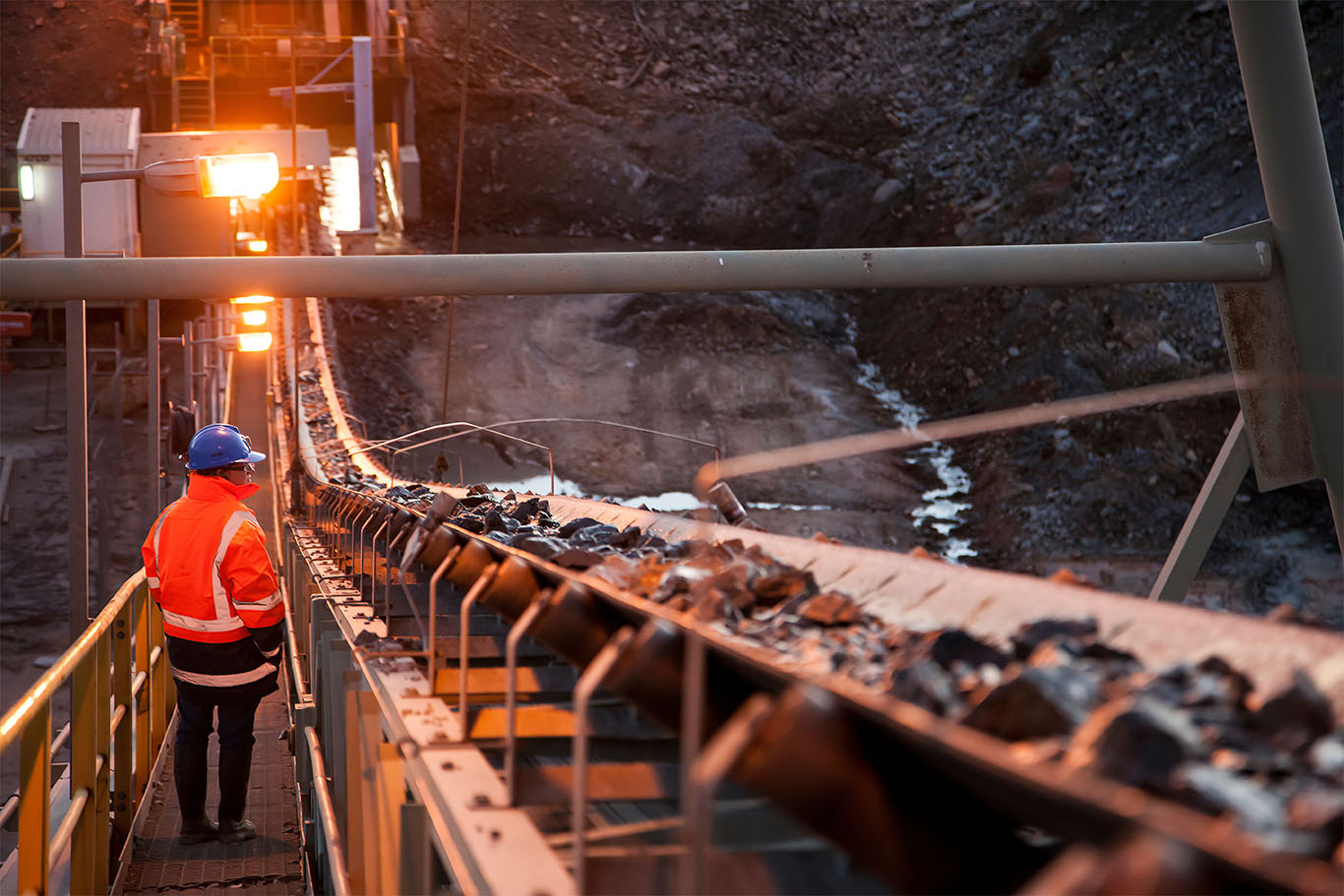
    Mining: The software sector might feel unloved over the past 18 months, but spare a thought for the mining sector. And, I’m not talking crypto. No, the basic materials critical to our decarbonised electrified future are supplied by a global mining industry which has been starved of investment capital for….. 15 years. That is about to change. Supra-sovereign legislation like the Critical Raw Materials Act (EU) are a siren sound to the frightening mis-match between our cleantech future and the metals needed to meet climate crisis targets. So, watch the ‘leader signals’ as gold and silver prices hit all time highs, and then check out the deal activity. AngloGold is buying Centamin for $2.5 billion while BHP and Lundin are jointly closing a $4 billion purchase of Canadian copper play, Filo. Also, there’s an interesting $2.8 billion green equipment partnership deal between Australian giant, Fortescue, and Swiss construction player, Liebherr. We’d better start believing……in our planetary survival.


    UK: Our final M&A development is not a sector specific observation but highlights another unloved area of the investment world. The UK has been in the international investment ‘naughty corner’ thanks to its own historic lack of investment in domestic assets….and a world-first voluntary trade-reduction deal which nobody wants to talk about anymore. So, it was intriguing to read a recent piece of research from stockbroker, Peel Hunt, on UK deal activity. Apparently, there are currently a remarkable 19 ongoing bids for UK companies in the FTSE 350 index. Not all will happen, as Rightmove, Currys and Anglo American have demonstrated. But, the imminent take private deals for the Royal Mail and Hargreaves Lansdowne are a serious ‘tell’. Britain is in play.


    The deal environment is definitely picking up. Early private equity research data from Pitchbook shows deal count in Q3 was up 8% and deal value up 20% compared to last year. Also, helpfully, the story on the exit side of things is progressing too – global private equity exits are up 13% in value and 3% in deal count. Now, consider that private equity houses have circa $4 trillion of unspent investment capital (“dry powder”) to deploy and things could get rather interesting in unloved parts of the market. Finally, keep an eye on the Middle East for more than conflagration reasons. Oil prices might be falling but investment in the region is rocketing. The recent FT Mining Summit 2024 featured a whopper statistic that 20% of the world’s cranes are located in just one country…. Saudi Arabia. Oh, and Abu Dhabi’s national oil company just bought Bayer’s plastics spin-off for $16 billion. Yep, plastics. If market personalities are telling you they are beginning to love the unloved, believe them.


  • A Quick Guide For Private Investors In Start-Ups

    A Quick Guide For Private Investors In Start-Ups

    One of our portfolio companies ceased operating this week. Lesson learned? Yes. Would we use the same vetting process again? Yes. And, no, Einstein’s definition of insanity is not in play here. Let’s be very clear that mistakes will continue to be made. We just can’t forecast the future. In fact, human beings are not particularly good at the forecasting thing. However, we can control the controllables,  and one of the critical things for a private investor to control is one’s investment process. Call it a check list. Then, know that we probably turn down 10 opportunities for every one we offer on the Spark platform. So here’s a quick guide as to how we compile a score card for companies seeking new investment capital. Note we will expand on some areas in later articles but, for now, this could be an outline framework used by any wannabe early-stage investor….


    Founders: This is probably the most fundamental factor in any company assessment. The calibre of the founders is critical to our confidence that the key people in a startup have the energy, resilience, expertise, discipline and ‘market-listening’ gene to drive a project or business to success.


    Solution: A laser-like focus on solving a consumer or business problem which can be clearly defined should underpin any analysis of a company’s product or service.


    Validation: Revenues generated by the product or service are the ultimate validation. Note business customers are ‘stickier’ than main street consumers so it is not surprising that business-to-business (B2B) investments tend to attract more investment. Other elements of validation like awards, patents or industry thought-leader financial backers can also add weight to the pitch.


    Market Opportunity: Huge global market spend numbers sound good but also attract plenty of competing products and services, and imply a danger subsequent funding rounds shift to the perceived ‘winners’. A niche focus on a particular segment of the market can be an easier ‘sell’ and gain better traction with both prospective customers and investors.


    Communication: We just mentioned customers and investors together. For good reason. Founders and startups must be on top of their communications and messaging. A poorly worded investment pitch should raise investor concerns about the primary challenge – forget funding, what about founders’ abilities to win over prospective customers?


    Endorsement: Many pitches feature impressive testimonials or endorsements. However, there is a higher impact endorsement – money. Typically, in a funding round we would expect founders to bring some financial/investment endorsement to the table. Think about it – if the founders can’t ‘sell’ their business to ‘warm’ friends, family or commercial counterparties, it’s going to be a lot harder to convince ‘cold’ investors to back a project.


    Financials: Of course, not everyone is an accounting wizard. However, returning to our comment about ‘forecasting the future’, whatever projections are put in a business plan are most definitely going to be ‘wrong’. The thing to control is unsubstantiated growth trajectories or ‘hockey stick’ forecasts. Initial projections should show an understanding that a slower grind in the early years is a better (and more credible) base case.


    Business Model: Company’s when first entering a market will try out different pricing strategies but there’s a bigger strategic consideration than price. The payment framework for the customer is critical: monthly/annual subscription, up front/service models, wholesale, distribution partnerships etc. Investors should be clear as to how an investee company is going to be paid.


    Valuation: This is another area/assessment which is going to end up being completely wrong. However, a base valuation can be derived from the projected revenues/profits in the next two forecast years (and previous 12 months if any). Also, where it is very early days with minimal revenues, a good way to think about a business is to calculate how much would it cost to build the product/company/service today. Monies invested in a company to date are a good basis for valuation. And watch out for technology overspend (so so common) and marketing waste (lots of Google ads algorithm sob stories). On the other hand, proprietary databases built in a niche area can support a business valuation.


    Last Mile: Very often investors see great products or services and wonder why the business ultimately does not succeed. This writer increasingly believes ‘the last mile’, aka commercial intensity/engagement, is where analytical frameworks need to beef up risk metrics. Clearly, ‘build it and they will come’ is not a business strategy in today’s world. Scaling up customer bases and revenues is a real challenge for early stage companies. Hence, investors should be very clear about what the marketing/distribution/partner strategy is for a start up business. In many ways, fuzziness on this question makes estimates on the size of a market opportunity (with juicy TAM and SAM numbers) completely irrelevant. A roadmap with milestones, skills/talent build, later funding series, and customer mix evolution should be sufficiently clear for investors to understand the plan and the building blocks required to scale.


    Exit: Healthy deal activity for smaller businesses, a sector’s track record of consolidation, cash-rich global players as serial acquirors, the network of the founders etc all help paint an exit picture for an investor. For investors, make sure there is plenty of colour in the answer.


    The above is not an exhaustive list but captures the main pillars in our analytical framework, and could become a regular check list for a private investor. Of course, each section features mere highlights and headlines but at the same time this should not be ‘rocket science’. Many of the questions you, the investor, want answered need to be answered by customers and partners too. And, we know clear communication is critical to customer success. So, understand the fundamentals of a business and that’s a decent start to building a robust investment score-card. That’s all you can control. Or as ‘Cousin’ Greg in Succession might say… you don’t need to know everything, just the key business/relationship levers which matter.

  • Are You Following The Wrong Monster AI Moves?

    Are You Following The Wrong Monster AI Moves?

    There are now “Nvidia watch” parties. Yip. Stay up on a Wednesday night, grab some popcorn and watch the release of Nvidia’s quarterly results. There’s a whiff of Nokia about this single company focus. Then again, the commentariat are beginning to say in all seriousness that Nvidia’s results are more important to global financial markets than the Federal Reserve’s Open Market Committee (FOMC) and its guidance on the direction of interest rates. Bonkers. Anyway, Nvidia’s results this week were a bit of a yawn. Stunning growth, earnings beat, $50 billion buy backs and raised forward guidance. Still not enough for the party people, as the AI chip monster promptly lost $150 billion of market value in the after-hours trading session. Interestingly, data from the last 50 trading days has confirmed Nvidia as the most traded stock in the world with an average value transfer of $40 billion each day(!). That’s more than previous kings of the tape, Apple and Tesla, daily trading combined. So, AI certainly is focusing trading minds but we could be missing more significant business events. Like real monster moves. Try these for size….

    Coding Carnage:  During a leaked “fireside chat,” the head of Amazon Web Services (AWS), Matt Garman, suggested that in as little as two years, human developers may need to learn different skills to make way for artificial intelligence coders. “If you go forward 24 months from now, or some amount of time — I can’t exactly predict where it is — it’s possible that most developers are not coding,” he exclaimed in audio leaked to Business Insider.

    Consulting Charge: The big global consultancy firms are on the AI charge, and I don’t mean their fees. CB Insights has flagged some very big numbers as the Big 4 accountancy outfits ramp up AI investment:


    • Deloitte — announced $1.4B upskilling program (December 2022) and $2B for development of industry-specific applications of tech including AI (April 2024)
    • EY — invested $1.4B in AI, launching EY.ai enablement platform (September 2023)
    • KPMG — spending $2B on AI & cloud services in partnership with Microsoft over 5 years (July 2023)
    • PwC — investing $1B in genAI in its US operations over 3 years (April 2023)


    Then check out what another professional services giant is saying. Less than one year after announcing it would invest $3B in AI tech, publicly traded Accenture reported $600M in gen AI bookings in Q2 FY 24 and $900M in Q3 FY 24. On the company’s Q2 earnings call, CEO Julie Sweet said, “Our sales in generative AI…are the fastest we’ve ever seen.”

    Productivity Proof: There’s lots of commentariat guff about AI lacking enough use cases. Ahem. Let’s see what European payments player, Klarna, is doing. Quite well actually. Having cut staff from 5,000 to 3,800, staff productivity has exploded upwards by 78%. The company has so much faith in the AI tasks performed in marketing and customer service that management is talking about cutting staff by a further 50%. One can only imagine what other European fintechs like Stripe and Revolut are going to do. But two things are certain. These nimble fintechs can’t do nothing as the cost advantage is existentially massive with AI. Oh, and that’s fintechs. So, what are the lumbering ‘digital transition’ legacy banks going to do? Do, or dAI me thinks.

    Of course, AI chip expectations attached to Nvidia have a good chance of ultimately disappointing as with all cyclical manufacturing companies in history. However, the twaddle about “lack of use cases” now needs to come with serious business health warnings. Note that Klarna also told the market that 90% of its staff are using generative AI tools… daily.  Also, when talking to a medtech consultant with IBM in Dubai this week, she stated that EVERY pitch or business project now contains an AI piece.

    Just today I’m reading about plans in the UK to move to a 4-day week and you know AI will be in the discussion. It’s also in HSBC’s latest report on the UK venture capital scene. A stunning more than one in every 5 dollars raised ($4.4 billion forecast for 2024) is going to the not so niche sector of AI. Not technology, not life sciences…. just AI. Now think about ChatGPT’s parent, OpenAI, potentially receiving multi-billion dollar investments from Apple and Nvidia at a $100 billion + valuation, and then see CB Insights report M&A activity in the AI sector delivering a record 119 deals in Q2 this year.

    The business message seems very clear. Don’t watch. Move, and fast.

  • Watch Out For Joyful Asset Shocks

    Watch Out For Joyful Asset Shocks

    Wow, what just happened! In the last 33 days we saw an incumbent US President forced out of his re-election campaign, financial markets take a battering, Japan’s Nikkei dropping 20% in just two days’ trading,  the Republican National Convention celebrate polls predicting the second-coming of their Cheesus, and a likely funds-deprived military capitulation of Ukraine to Agent Orange’s mate in the Kremlin. It was all rather scary and in the financial markets the ‘fear gauge’ measured by an options derivative, the VIX index, rocketed from its long-run median level of $17.6 to $60 on the 5th August. In fact, that was the largest single-day increase in the ‘fear index’ in history. Then, over the next 7 days it fell right back to its average $17 level. Incredible. But, not even the VIX could have foretold the emergence of the ‘joyful warrior’ Kamala Harris as the pollsters’ best current bet for the White House in the November election, nor the invasion of Russian territory for the first time since 1941 by Ukrainian soldiers (in German tanks!!). These are amazing geopolitical turnarounds but not necessarily the type of shocks to move financial markets. However, we’d like you to think about a few developments which really could shock….in a good way.


    Productivity: The scary headlines would suggest recent ‘revisions’ of US jobs data revealed a less healthy US employment picture. The revisions showed that the statisticians over-counted the number of jobs created in the year to March 2024 by 818,000. However, before we go all wobbly-kneed about job creation moving at a pace of  ‘only’ 175,000 new jobs per month (vs previous estimate of 245,000) we need to consider that US GDP growth numbers have not changed. This means that labour productivity which has stalled for decades is picking up serious speed. Hmmm. Anyone tempted to ask ChatGPT what’s going on? Well, our AI boom might be beginning to pay dividends but in a more subtle way. Probably the best read of the week is a guest contribution by Brian Albrecht, Chief Economist at the International Centre for Law & Economics, on Noah Smith’s always excellent blog. Two snippets really hit home with me. First, the subtle impact of AI:


    To be clear, the progress isn’t about chatbots. Instead, it’s about small improvements across every sector of the economy. It’s the human resources manager using AI to sift through resumes more efficiently, the logistics planner optimizing delivery routes in real-time, or the data analyst automating report generation. These minor advances, multiplied across millions of workers and thousands of businesses, are what will ultimately drive significant productivity gains.


    Second, massive change in productivity could be already under way but is hidden by upfront costs like training, reorganizing workflows and designing new processes:


    The computer revolution offers a helpful parallel. In 1987, Nobel laureate Robert Solow famously quipped, “You can see the computer age everywhere but in the productivity statistics.” This “productivity paradox” persisted for years. It’s almost comical now to think of 1987—when the original Macintosh was brand new, and C++ was just gaining traction—as an era when “the computer age was everywhere.” Even then, the transformative potential of computers was clear to many observers. Despite the invention of the personal computer in the 1970s, we didn’t see significant productivity gains until the late 1990s. Why? It took time for businesses to figure out how to use computers effectively, redesign workflows, and develop complementary innovations.


    My own sense of things is that we are obsessing over generative AI (chat bots) and missing the integration of AI applications which have been around far longer than ChatGPT or Gemini; think machine learning, automation, robotics, virtual assistants etc. Of course, with far more powerful digital assistance available this has a potentially huge impact on the formation of new companies.


    New Business Formation: The US Census Bureau shows that 5.5 million businesses were started in 2023. This is the highest total ever and is a 57% increase on the numbers prior to Covid in 2019. Recent data from Ryan Decker and John Haltiwanger at the US Federal Reserve showed a surge in new business formation, particularly in hi-tech industries. But, there’s a pick-up in business formation in sectors like construction and building services too. These trends point to fresh ideas, innovation and pressure on incumbents to keep pace. It also points to higher productivity ahead. Our reference to ‘old economy’ activities like construction is deliberate because there is another forgotten sector beginning to stir.


    Critical Materials: This week the price of a gold bar reached $1 million for the first time ever. I’m no gold bug and I really don’t want to get into a philosophical debate about stores of wealth and inflation protection. But, I do know one thing. Gold tends to lead when the mining sector is due a recovery. Mining has been in the naughty corner for almost 15 years but I’m beginning to wonder whether sovereign anxiety over the supply of critical materials will lead to not just regulatory action (see the EU Critical Raw Materials Act) but actual sovereign/state investment in mining assets? If AI is now considered by nearly all experts as a sovereign-level risk race then the sector critical to industrial supply chains and decarbonising the planet could be about to receive its own positive sovereign attention.


    Electric Vehicles: Finally, on the theme of global decarbonisation, we could be on the cusp of a serious acceleration in electric vehicle (EV) adoption. Consider the following three developments:


    *For the first time ever in July, more than half of all vehicles sold in China were electric.


    *BMW pulled ahead of Tesla as the lead EV brand in Europe last month for the first time. Note to Elon Musk, Silicon Valley “broligarchs” and a few tech heads closer to home; funding a felon can be brand destructive.


    *Electric vehicles are now cheaper than combustion models in China.


    So, the competitive landscape is broadening out with Chinese and European players catching up with Tesla. This also means production of EVs is ramping up as market penetration of the total auto market approaches 20%. This production volume surge also has cost implications. According to Wright’s Law, used by MIT and proven in the wind and solar markets, when production of an item doubles the cost of producing that item falls by 20%. Critical to the EV revolution is the cost of lithium-ion batteries, and the cost of those batteries has fallen by 90% since 2010. Indeed, as the headline above suggested, China has reached a critical market penetration inflection point. Given the cost of batteries in China have fallen by 51% in just the last year, one can understand why EVs are racing past combustion models. Get ready for the virtuous circle of more production, lower costs and accelerated consumer adoption globally.


    All four developments above are capable of delivering significant positive shocks to the global economy and could be perfectly timed for a joyful new US President. Whoodathunk!


  • Themes Checklist For The Beach

    Themes Checklist For The Beach

    The weather forecast isn’t great.  I’d usually suggest some couch thinking time but that phrasing has now become a politically-charged innuendo in the US which tops off possibly the most bizarre presidential campaign month ever. Don’t ask about couches or dolphins, or JD Vance. And, he thought having no children was the problem…..! Anyway, given the amount of delusion in the air, I’m going to suggest a beach plan. That might be the wrong plan, but thematically we might be on the right track in the world of finance. So, for those enjoying some time off, one can review and reflect on the following:


    Old economy: Our suggestion “Investors Need The Old Economy Too” in May started subtle, then went full hammer. This move hasn’t just been a tech shift from software to more traditional hardware manufacturing. Say hello to the ‘great rotation’. The old economy stocks roared in July. The top performing sectors in the US were industrials, financials, utilities, basic materials and real estate. As an illustration of the scale of rotation, note technology stocks actually had a negative month (-2%) while US regional banks and housebuilders rocketed 19% and 17% respectively.


    Smaller companies: We have written “Betting On Small Can Really Win” but boy oh boy did it rock in July. Smaller companies tracked by the Russell 2000 index whipped the performance of the large company S&P 500 by 10 percentage points. That’s the largest monthly divergence between size cohorts ever recorded in history.


    Climate and cleantech: Another theme close to our hearts. VC Breakthrough Energy Ventures backed by Bill Gates has just raised the largest climate fund of the year with a funding round of $839m. In Europe, the momentum is good too. Private equity deal values in European cleantech are now on track for their best year ever(Source: Pitchbook).


    Fintech: Stripe and Revolut valuations in recent private share sale activity have jumped by 40-50% and London remains a fintech investment hotbed. Latest British Business Bank data tells an interesting City story –  the UK fintech sector is attracting 11% of global VC investment (and 48% of all investment in Europe), a share only exceeded by the US.


    UK Comeback: In March we wrote “Time For A UK Recovery” and waited for credibility and competence to return to Westminster. The scorecard at the moment looks pretty good: UK equities are seeing the strongest inflows of foreign institutional investment for years (Source: BOA), and on the currency front, the GBP (formerly known as the “Great British Peso”) has been the strongest major currency performer in the year so far (Source: Bloomberg).


    Digital infrastructure: We wrote “Get Ready For The Cloud Wars” back in November and this has morphed into a global foot race to acquire, invest, service and build the infrastructure of our digital/AI future. From data centres to state-of-the-art chip manufacturing plants the investment giants are moving fast to get involved. While Microsoft opens a data centre every three days, it feels like the likes of Blackrock, Apollo and Blackstone are competing for digital infrastructure headlines every few days too. In fact, Blackstone estimate digital infrastructure spend by top tech companies will exceed $1 trillion over the next 5 years.


    Wall Street veterans would say  ‘the trend is your friend’. So, we aren’t giving up on any of these themes just yet. However, we will return to two critical risk factors for many of these themes in a later article. Geopolitical risk from Taiwan to Iran to US electoral chaos looks like it is escalating rather than fading. US politics can make for electric watching (with the shock too) but the just announced prisoner swap deal between Russia and the US was significant. The allied multinational effort by the Biden White House shows the value of joined up thinking and shared values but the planet faces other bigger challenges. Arguably, our highly charged politics needs to address the fundamental challenge of climate and electricity too. For another day, but the race to decarbonise and electrify the global economy is definitely not on track…..


  • The Hottest Investment This Summer

    The Hottest Investment This Summer

    Ok, I’m a bit hot and bothered. When a tee-shirt ripping Hulk Hogan is the warm-up act for possibly the next President of the United States I’m inclined to think our planet is in trouble. The Republican National Convention(RNC) in Milwaukee this week marked a new level of bizarre in US politics, but the hot air sadly can’t be confined to the GOP speaker line-up. As a record-breaking 1,400 tornadoes and scorching heat batters the US, I am resigned to the fact that decarbonisation of the global economy is way down the MAGA Republican (GOP) list of priorities. However, political mayhem can often leave investment markets unmoved, even relaxed. This seems to be the case so far, but things are fascinatingly stirring in long-forgotten parts of the market and I see one particular opportunity heating up fast. First, let’s look at some data:

    Technology: It’s not just Microsoft having a bad cyber outage day. In recent days, technology stocks experienced their worst share price falls since 2022. However, overall, stock markets continue to hit new highs. Why?


    Old Economy: Sectors neglected for months, even years, are attracting investors who are watching potential interest rate cuts and interesting valuation discounts to technology, pharma and AI-giddy companies. The top performing sectors over the past week were old-fashioned financials, industrials, energy and real estate.


    Smaller Companies: Only a few weeks ago we wrote an article “Betting On Small Can Really Win”. Hoo boy. The share prices of smaller companies over the past week have been on an historic tear. Stock indices which track smaller companies are flying as Trump would say “like you’ve never seen before”. The Russell 2000 is a benchmark used for smaller companies in the US and it has rocketed 12% in just the past week.


    UK Markets: The benchmark FTSE 100 post the Tory election rout immediately embarked on a two week winning streak. Coinciding with this political re-set, UK consumer confidence just hit a 3 year high.


    Venture Capital (VC): The latest data from VC research team, Pitchbook, shows that fintech and cleantech/sustainability start-ups are attracting the most investment in Europe of recent quarters.


    Clearly, investment capital is ‘rotating’ out of large company technology and looking for alternative opportunities. Furthermore, some structural themes are here to stay. So, we believe there are alternative opportunities to plug into the ‘monster themes’ like AI, decarbonisation, cloud wars and electrification. Where better to start than our planet and the urgent need to stem global warming? We have written many times before that this $9 trillion per year decarbonisation spend can’t happen without critical materials like rare earths and base metals. However, the mining sector essential to extract these critical materials has been starved of investment as large pools of capital shun the sector’s poor sustainability/ESG track record.

    That is changing as the big money now realises if there’s no mining, there’s no EVs, no batteries, no AI, no data centres etc These big funds are now pushing for sustainability assurance solutions which will allow them to deploy capital again and ensure the supply of critical materials can keep up with the demands of economic electrification. So, if you can excuse the mining pun, we have found a little gem of a play on mining/ESG which ticks the following boxes:

    *Market leadership: The company is a fintech with mining-valuable data built over 4 years.

    *Market fit: It is winning mining company customers – there are 4,500 publicly listed and investment capital-hungry mining companies – and generating more than $1m of annual revenues already.

    *Institutional endorsement: Critically, big investment houses are telling the mining industry this company’s independent ESG assurance process can open up investment and significantly speed up investment decisions.

    *Structural tailwinds: The macro themes of smaller companies, UK and old economy all feature in this opportunity.

    *Money talks: And.. founders and international institutions are putting in their own money to grow the company’s global footprint.

    So many boxes ticked, with macro and structural themes aligning. This has to be our hottest opportunity to fight global heat this summer, and for many summers more. But, not too many. This company will surely be bought by a global data player or consultancy in less than 5 years with a potential 10x return to private investors. Think Bloomberg, Accenture, Reuters, S&P Global etc but don’t tell them yet – we are keeping this opportunity exclusive and private.

    Links to next week’s webinar here and the company’s investment memorandum here.


  • Market Bulls Shopping in China?

    Market Bulls Shopping in China?

    Well, this is awkward. Perhaps the only fully bipartisan view in Washington these days is that China’s economic influence needs to be curtailed. The Biden administration has just announced further Chinese import tariffs and the push to decouple from Beijing’s giant manufacturing machine is in full swing. Thanks to the Bidenomics IRA and Chips Acts, a wave of multi-billion dollar projects in cleantech (EV batteries, renewable energy etc) and critical computing technology (AI chips, fab construction etc) have landed in the US. Arguably, Europe is on the homeshoring case too, particularly in the EV and cleantech areas. However, while the world focuses this week on the current ‘big shiny thing’ in the guise of AI – and pending results from its $2 trillion poster child Nvidia – the more significant global economic story right now is probably China.

    You might have read headlines about Chinese electric vehicles piling up at ports around the world but there’s much more going on. Chinese export surpluses are exploding as global markets are flooded with not just cars but steel, chips, solar panels, clothing, machinery and many other manufactured goods. It feels like the Beijing regime is compensating for a debt-slowed domestic economy by ramping up its manufacturing and export efforts. Check out the following data points:


    *Chinese steel exports in April amounted to 92 million tons, up 16%.

    *Chinese car exports reached 417,000 units in April, up 38%.

    *Chinese aluminum output hit all-time highs in recent weeks.

    *Chinese exports of key cleantech items – batteries, EV cars, solar panels – hit $150 billion in 2023 by growing 20%.  


    In fact, despite decoupling attempts in the US and official ‘dumping’ complaints from the EU, China’s current account surplus is at all-time highs powered by exports worth more than $3.5 trillion. One might presume the impact of flooding markets with cheap goods would be deflationary but that ignores the sheer scale of domestic Chinese consumption. It also ignores the reality right now in financial markets. I would highlight three markets in particular:


    1. Commodities markets: Copper, iron and zinc prices have jumped by 10% in the past 30 days. Copper has actually clocked up a 30% gain in 2024 alone.
    2. Chinese stocks: Despite US tariffs, banking debt issues and a moribund domestic economy the benchmark stock market, the Shanghai Composite Index, is up 7.6% this year after 3 years of negative returns. In Hong Kong, the news is even better with a 15% gain after 4 painful years of losses.
    3. German stocks: You’d think they’d learn but, fresh from a painful Russian energy dependency experience, Germany’s industrial base is perceived as heavily exposed to China’s economic activity.  That strategic risk is for another day’s discussion but, for now, investors are buying German shares and driving the DAX benchmark to all-time highs.  Arguably, a China ramp up of activity is helping investor sentiment towards German stocks.


    There’s a part of me wondering has China become too big and therefore nobody else can compete with the scale and unit costs of their manufacturing base? It’s probably too early to jump to conclusions and the domestic property debt unwind has a long way to go as Japan financial historians will attest. However, there is clearly a Beijing long-term strategy in play now. I would highly recommend the recent article from Noah Smith as to potential current Politburo thinking but these three thoughts stood out for me:


    *China wants to dominate and be the ‘world’s manufacturer’.

    *China is balancing overproduction and a weak consumer with a compensatory export ramp up.

    *China is preparing its manufacturing base for flexibility and the capacity to switch to war production mode.


    The final strategic explainer is more than slightly concerning. So, let’s not over-hype the significance of Nvidia’s results this week. The AI revolution and Nvidia, as barometer of that manic race to technological superiority, is almost irrelevant if China is putting itself on a war footing. On a more upbeat note, the upturn in Chinese economic activity could be the beginning of a significant global economic recovery and a rotation away from technology into ‘old economy’ assets. Regular readers will recognise that thought from previous writings here. Of course, that broadening out of investor confidence will help bulls, portfolios and pensions in the near term but not even the best generative AI model can really tell us what China wants to do in the long run. And remember, the Russian bear experience is that we should probably believe what we are seeing.


  • Warning: 3 Zones Of Interest

    Warning: 3 Zones Of Interest

    Nobody likes to be admonished. So, it’s an interesting commercial call to deliberately call out one’s customers. Even more daring to use the Holocaust as your messaging context. There are no adequate words (almost literally in many scenes) for Jonathan Glazer’s brilliant but upsetting Oscar-winning film, The Zone of Interest. The luxury dream life of Auschwitz commandant Rudolf Höss, his wife Hedwig and five children in a house right next door to the walls of the Nazi death camp is almost two films. One is seen, the other heard. The effect is extremely unsettling – you see nothing, but hear and know really evil events are happening.  However, director Glazer is using this notorious historical setting to deliver a present day admonishment. Like Hedwig Höss and her household, we hear things but choose not to ‘see’ bad things. However, you’ll be relieved to read I don’t plan a similar scolding…..but have some cautionary thoughts.

    It has been an interesting week for the planet’s hottest investment topic, Artificial Intelligence or AI. For main street consumers we are on the cusp of not just hearing about AI, but actually ‘seeing’ it in action. First, Google showed off the latest use cases for its AI model, Gemini, in search, education, video, workflow etc. All hugely impressive, and the intention is for Gemini to be embedded in Android powered phones soon. Not to be outdone, reports are flying around that Apple will do something similar with its iPhone and OpenAI’s ChatGPT model. As the tech-heavy Nasdaq index hits all-time-highs, it’s clear AI is going to move rapidly from being a corporate cloud story (Nvidia, Microsoft etc) to being a main street consumer revolution on our phones. However, the cloud and the powering of AI models is still entirely relevant to this move. Arguably, AI infrastructure is today’s gold rush version of  ‘spades and shovels’ which, for investors, means data centres are critical to deploying AI. You’ve probably already heard that. But, do you ‘see’ the reality…?

    My favourite trivia question of the week has been how many data centres will Microsoft open in 2024. Every answer I have received has been wrong, mainly in the low double digits. The reality, per a recent Financial Times article, is that Microsoft is opening a data centre “every three days”. Mind-blowing. These are $300-400 million facilities, not Starbucks cafes or KFC restaurants. And, that’s just one company. Here’s another – Echelon Data Centres. I had the pleasure of briefly meeting its owner, Niall Molloy, at the excellent Renatus Real Deal 2024 conference this week where Molloy was interviewed as winner of the “Deal of the Year” award. I was stunned to learn Echelon only started in the data centre construction business in 2017. Just 7 years later private equity giant, Starwood Capital,  has invested $850 million in Echelon and the business is currently valued at north of $2 billion. A super story of bold vision and world-class execution, but Molloy had a cautionary word about the pressures on global electricity grids as data centre campuses begin to match the power consumption of capital cities. The AI and data centre revolution is coinciding with an even bigger global shift – decarbonisation of our economies. The solution is more electricity power, and the challenge is the expansion of under-invested electricity grids. However, where there is risk there is opportunity.

    Ireland has been mentioned as one of the most challenged national electricity grids and many readers will have ‘heard’ the negatives of data centre power consumption. However, all data centres now have to create/install their own power supply and most likely the source will be renewable energy. That means huge investment capital is required because it is no longer just a construction project, but also includes incremental builds of electricity generation and water supplies. Hence, we should ‘see’ this week’s reports of Intel’s plans to expand its Fab34 semiconductor chip factory in Leixlip as a ‘wow’ moment. The plans are not new but the financing is ground-breaking. Intel was originally looking to spend $2 billion. Now, the number is $11 billion and global private equity player, Apollo Global, is being tapped as the solo partner on the project. The entry of global private equity into AI infrastructure funding should signal opportunity and expert eyes ‘seeing’ a way forward despite grid challenges. So, my second cautionary word after ‘seeing’ a consumer AI shift is that there are risks but also huge opportunities away from the actual technology. In other words, investing in power, storage, construction, critical minerals/materials, water, skills training/resourcing and other professional support services could generate top class returns.

    Clearly, private equity giants have spotted an investment opportunity. And, don’t forget Blackstone’s recent $1 billion purchase of a majority stake in Dublin-headquartered data centre engineering firm, Winthrop Technologies. Still, there’s one final cautionary tale; under-investment caused by political inertia or regulatory uncertainty. Exhibit A on political misrule is probably the UK. However, Brexit might be the go-to lament you ‘hear’ but the reality is a long-standing issue we wrote about in March:


    The Institute for Public Policy Research estimates the under-investment in business at $500 billion less than what other comparable OECD countries have invested since 2005. Public sector investment (infrastructure) was a further $200 billon below the G7 average. All in, this chronic lack of investment places the UK 27th out of 30 OECD countries.


    As regular readers will know, we have been quite positive about UK investment opportunities in recent months but this warmer view has been based on a contrarian prompt. Investors have been fleeing UK investments for years and Panmure Gordon published some startling figures in a research report from their Economics team this week. I would highlight three in particular:


    • UK public companies trade on a like-for-like basis (taking into account sector and growth characteristics) at a 17% valuation to comparable companies trading in the rest of the world (RoW).
    • The gap in valuation between the biggest UK companies (FTSE 100) who are globally engaged and the more domestically-focused smaller UK companies (FTSE 250) is at its widest in 20 years.
    • Funds focused on UK investing strategies have reported outflows for 82 of the last 97 months (Source: IA)


    Please ‘see’ this as the damage inflicted by chronic under-investment for almost 20 years. So, given our planet faces an existential threat without decarbonisation, the critical need for investment in global electricity grids is not exclusively an AI or data centre issue. Data centres are just a ‘wall’ blocking the bigger picture view . Without joined-up policy thinking, we risk ‘hearing’ about data centres but missing a planetary extinction event moving into irreversible territory. Don’t zone out on this one.


  • Investors Need The Old Economy Too

    Investors Need The Old Economy Too

    Investors need to be aware of investment cycles as well as economic cycles. The investment stars of today can be the performance dogs of tomorrow. Just don’t tell South Dakota Governor, Kristi Noem, who has spectacularly blown up her vice-presidential ambitions in recent days. Kristi got her MAGA guns, God and babies messaging confused and thought it was a good idea to publish a book featuring a tale about her shooting a misbehaving puppy, Cricket. Not sure there’s even an emoji to cover that. Nor do investors really need to be told that shooting puppies is not a great vote winner. However, investors do need to know that star stocks can fade and badly performing ‘dogs’ do make comebacks.

    Financial market stars are often the ‘next shiny thing’ and the Covid-19 pandemic introduced lots of new companies which suddenly entered our daily lives and kept the global economy going. Consider online payments and Shopify. Its share price collapsed by 20% (and $20 billion!) in one evening this week and joined other pandemic superstars like Peloton, Zoom, RingCentral etc. in a combined $1.5 trillion loss of market value since the end of 2020 (Source: Financial Times). Meanwhile, the old economy which was kept alive by these companies is finally shaking off its ‘dog’ status as the tech-obsessed investment markets realise we need the old stuff too. In fact, three recent developments have caught our eye and signal potential opportunity.

    First, we need to dig. Not literally, but the most basic activity underpinning economic activity since the Stone Age is probably the extraction of basic materials. So, when a potentially massive deal in the mining sector is reported we should pay attention. The $39 billion approach by BHP Billiton for De Beers owner, Anglo American, shines a light on a sector which has been largely shunned by investors on ESG, geopolitics, talent retention and energy cost worries. A pick up in M&A activity suggests a floor for executive expectations and potential upside opportunity for investors. Indeed, in our recent Private Portfolio Thoughts newsletter we wrote:


    “….the entire out-of-favour global mining sector is now worth approximately the same as just one technology company, Google ($2.2 trillion). However, when we see research showing China controlling almost 80% of the value chain in electric vehicle (EV) battery production we’d expect a few mining and mining technology ‘diamonds’ to be completely undervalued as the world races to EV adoption and net zero targets.”


    The mining sector, despite its sustainability (ESG) challenges, is a critical part of our decarbonised future. As an illustration, the race to electrify the global economy requires more copper in the next 25 years than has been produced in the sector’s entire history.  But a shortage of investment threatens that electric transition. For investors, capital shortage (vs ‘hot’ capital stampedes) means probable opportunity and…..on the capital front, there might be better news too.

    The critical cog in the global financial system is the banking sector. Of course, banking had its almost-perennial risk shock last year with the failure of Silicon Valley Bank(SVB) but, arguably, the lack of systemic knock-on impact should be taken as a positive. Furthermore, the stabilisation of interest rates (even if not falling) without major economic casualties to date is also encouraging. So, like the mining sector, we’d be looking for major deal activity from ‘insider’ executives to confirm there was potential sector upside ahead. Step forward Spanish banking.

    Bilbao-based BBVA has just launched a hostile $13 billion bid for its domestic competitor, Sabadell. Not just a bid, but a riskier hostile one too. Also, don’t forget recent bank deals in the UK  – Nationwide buying Virgin Money ($3.7 billion) and Barclays acquiring Tesco Bank (up to $1 billion). This feels significant and check out the performance of the financial sector in a “Magnificent 7” tech-dominated US market. Larger US financials are actually outperforming the top tech names in the Nasdaq 100 index year-to-date (+10% vs +7.6%). Also, it is interesting that the traditional barometer of the broader old economy, the Dow Jones Index, is on a 6-day winning tear. Perhaps, the dogs (but not Cricket) are back?

    Finally, the combination of the old economy Dow Jones rising, banks gaining deal confidence and shunned sectors doing M&A prompts a further thought. Public markets have been shrinking for years in terms of numbers of quoted companies listed on public exchanges. However, the role of private capital and private markets has grown in significance. Pitchbook’s latest research suggests private markets now control $14.7 trillion in assets, growing by an annualised 12.8% each year since 2012.

    Those private assets include private equity, real estate, infrastructure, venture capital and private debt/credit. The latest projections from the Pitchbook research team say these assets could stretch to $24 trillion by 2028 in a positive macro environment. This writer has also seen research showing family offices for the uber-rich now allocate 46% of their investment portfolios to private assets. So, let’s join the dots here. It seems entirely possible that ‘old economy’ companies could be purchased in private buy-out deals, backed by private capital and more confident banks. That’s a healthy development for investment markets but also provides opportunities for investors to diversify their portfolio into private assets. Now, start digging, or even mining those possibilities.