Tag: Trump

  • Looking For US Election Clues In The Data….

    Looking For US Election Clues In The Data….

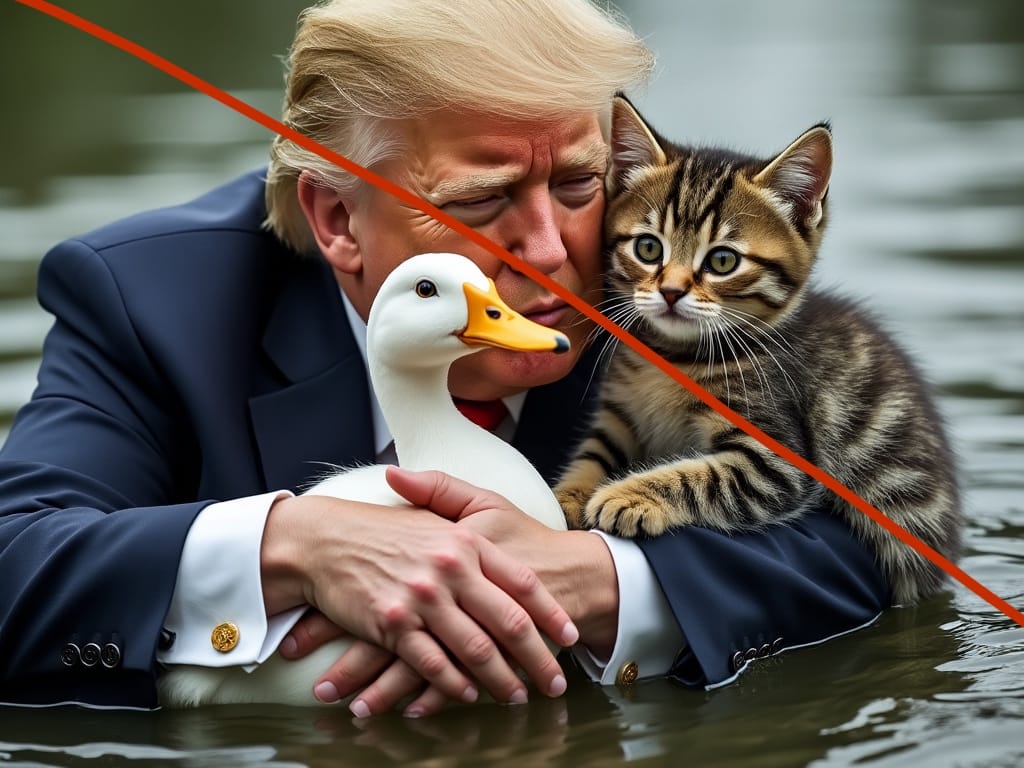
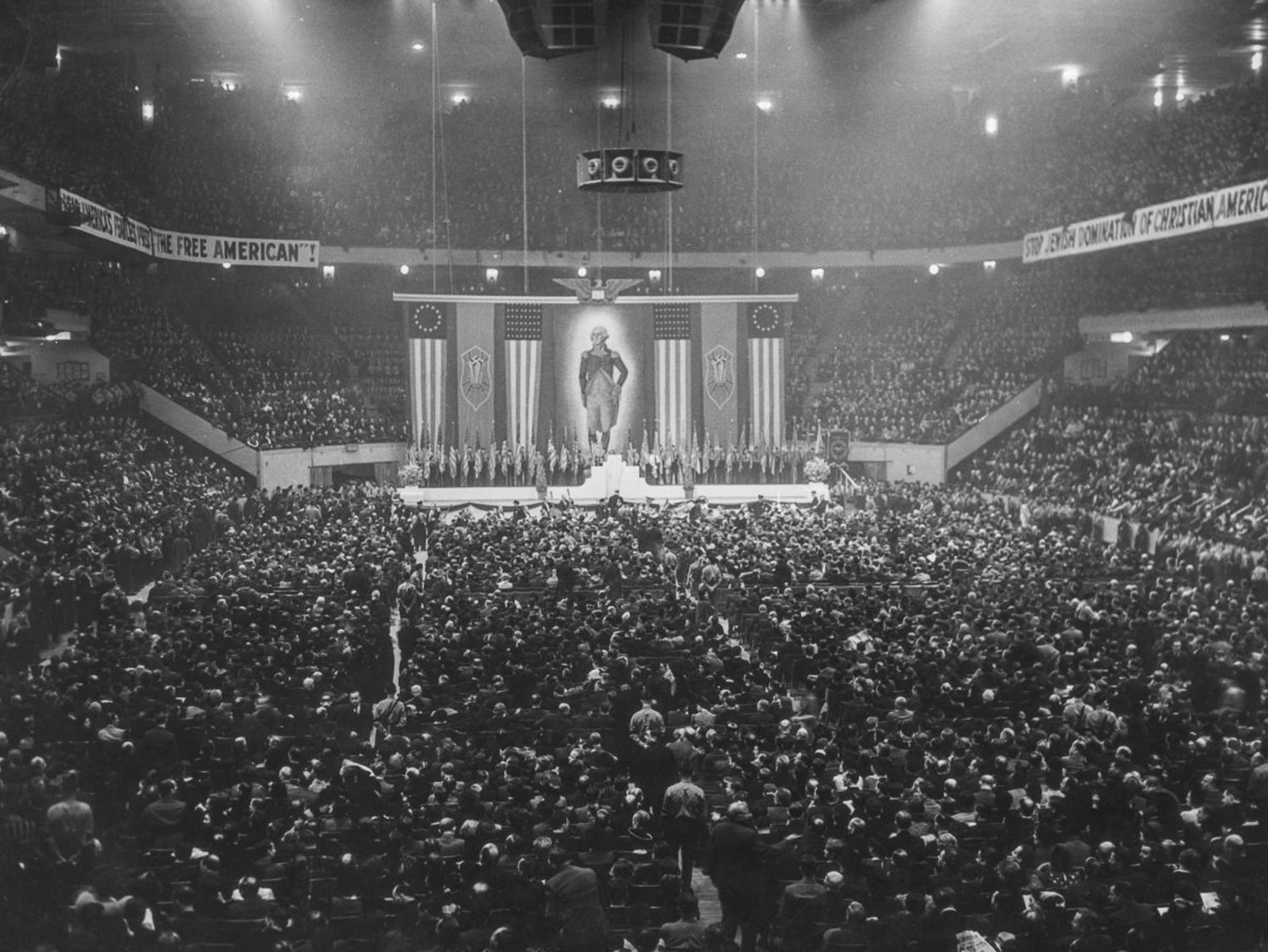
    Despite the lead photo in this article, I’m going to steer clear of politics. And, hopefully in 8 days’ time we can steer clear of 1939. For now, there is possibly one area where there is no debate. The 2024 US Presidential election is too close to call. That hasn’t stopped some big bets, and even bigger statements. But, they are just bets. For posterity, I took a screenshot of the latest betting probabilities yesterday. You might think “game over” with a 94.5% probability of a win for Donald Trump. I think not. Furthermore, the data doesn’t ‘think’, but instead provides robust guidance.


    First, not a single vote in the election has been counted yet. However, early voting has already started and is a mix of ballots mailed/returned in advance and early in-person voting at designated early voting stations in certain states. So, the data so far gives us an idea of WHO has voted. In turn, we can compare the profiles/mix of who has voted so far with the early voting patterns in the elections of 2016(Presidential), 2020(Presidential) and 2022(Mid-terms), and try to identify significant CHANGE. To add to the complexity of analysis this time are the unusual characteristics of earlier elections which make it difficult to make apples-to-apples type comparison. Here are the two most significant factors:

    Covid 19: Due to the ongoing pandemic health measures in 2020, early voting accounted for 101 million votes out of 158 million votes cast. Democrat voters overwhelmingly chose to avoid in-person voting and used postal ballot papers.

    GOP Election Strategy:The Republican share of that early voting was depressed by the party’s strong messaging on the potential for fraud, and encouragement to vote in-person on the day. That messaging has been reversed for the 2024 election.

    So, in the states where early voting registers record party affiliation we would expect to see reduced health fears lowering the share of Democrat early voting. At the same time, the share of Republicans voting early would be expected to increase. This is, in fact, what has happened. However, there are some interesting data points which might surprise when you look a bit closer. In the critical “swing states” where registration details are available there are ‘outlier’ representations (not votes) along ethnic, age generation, education, gender and party affiliation lines. Given we have 8 days and 8 articles to write, I don’t propose to go through each line today. However, given the 94% win probability flagged above, I’d start with a few ‘biggies’.

    The betting markets are not votes. However, one of the factors cited by the analysts is the very tight margins in the polls/surveys conducted with likely voters. As current polling sees it, the seven swing states (Wisconsin, Pennsylvania, Michigan, Georgia, Nevada, Arizona and North Carolina) are +/- a few percentage points for Kamala Harris or Donald Trump. In real terms these swing state pulse checks are “within the margin of error” which the experts think is 4-5%. Now, what gives the betting markets and various experts more fuel is the historic tendency of polls to miss the “hidden” Republican voters who turn out on election day. The consensus thinking is that the polls are probably not picking up this hidden Republican vote again. So, there’s a school of thought out there that thinks Trump is probably going to do 4-5% better than even the current polls are showing. Hmmm. That thinking presumes professional pollsters have decided to NOT model that factor again. That is unlikely given professional pollsters have had their credibility battered by big misses in 2016 and 2020. So, as a data person, I’m wondering if there’s now a possibility of  a 5% over-count of prospective Trump votes? Two factors are worth considering.

    Turnout:I said they’d be “biggies”. So, the biggest number of the lot is overall turnout. If it’s very high, or at record levels, then traditional analysis would suggest that favours a Democrat presidential win. Early voting levels at 50% of 2020 numbers at this point (41 million votes returned) indicates a strong turnout. But the next data ‘biggie’ is intriguing.

    Female Vote: The female vote has been bigger than the men vote in every US general election since 1964. In 2020 63% of eligible females voted vs 59.5% of men. Now, add the fuel of abortion/healthcare freedoms to female voting fire and consider the current female polling gap of 12% points in favour of Harris (55-43). In the other column, men break about 9% points for Trump (54-45). The maths of the female vote holding those levels is that a smaller male voting cohort won’t close the losing gap of 2020 even if Trump wins the men’s vote by 10%. Of course, the swing states will have their own cultural characteristics but arguably the ‘hidden vote’ this year could be female Republican voters switching to Harris. Recall current thinking is up to 10% of Republicans might switch (or stay home?). A further gender point is that Republican strategy is to get new male voters to vote. According to election strategists, that is notoriously difficult to deliver. Current early voting numbers are not showing any real male surge. On the contrary, the 248% increase in black female voters in Georgia is eye-catching. Also, in Michigan, the gender gap in the early voting is actually bigger than 2020 or 2022 (56.6% female, 43.4% male).

    For me, the female vote is the critical data point to watch. There have been millions of words written on shifts within the Hispanic vote, younger Gen Z voters and Black males but the big momma of this election is women. We will dig deeper in later articles. In particular, 2022 mid-term elections might be the more powerful guide to this one. It feels like not enough weight has been given to the massive 2022 swings seen in recent red states like Kansas, Ohio and Kentucky. As said, not a single vote counted yet, but here’s a bet which might be attractively priced right now…

    Just a bet but….. Kamal Harris to win the national vote by 5%, and wins 5 of 7 swing states easier than the polls show. Oh, and gets to within 1% of taking a huge red scalp in Texas or Florida. More tomorrow.

  • Raining Catfights And Dogs On The Trump Victory Trade

    Raining Catfights And Dogs On The Trump Victory Trade

    You could smell the global fear on Monday. By Friday, that fear mostly wafted around Donald Trump’s Mar-a-Lago compound. Forty five years ago Colonel Kilgore in Apocalypse Now first memorably stated, “I love the smell of napalm in the morning. It smells like victory”.  Arguably, the Republican party scribes will recount in time how the smell of ketchup-spattered walls in Florida this week marked the beginning of the end for a once-likely victory for Donald Trump. Tuesday’s Presidential debate watched by an audience of 67 million people was a disaster for Trump, and hailed as a triumph for “dumb as a rock” Kamala Harris. As eminent Bush Republican strategist, Karl Rove, cheekily asked, “What does that make Trump?”. A loser, but possibly there’s a bigger loser out there. It is interesting to note that Colonel Kilgore and Francis Ford Coppola’s Vietnam epic is today viewed as possibly the most powerful  “anti-lie” rather than “anti-war” movie of all time. Fast forward to today, and here are a few big lies under pressure in the real world, real money arena of financial markets….

    On the debate night, Trump flounced into the post-debate spin room declaring victory and quoting nonsensical Twitter and Fox viewer polls. However, as we always say… opinion is cheap, but investment decisions risk real money. So, it was striking to see the following morning that Trump’s publicly listed vehicle for his Truth Social platform, $DJT,  puked 16% of its value and now trades 80% lower than 6 short months ago. It should also be noted that the climate denial Don’s awful performance prompted heavy buying of clean/green energy stocks too; First Solar was up 14%, Enphase Energy up 5% and Sunrun up 10%…in one day. Let’s just say traders had a very different take on Trump’s bloviating spin-room review.

    We should also review some of the markets we highlighted in our article back in March “How To Trade A Trump Win”. In brief, we stated that there were three key ‘canaries’ which tracked the major Trump policies:

    Tariffs: Trump wants a 10% across -the-board tariff on all imported goods. Tariffs on imports are agreed by all credible economists as inflationary costs borne by the consumer. But…current inflation expectations in the market tracked by bonds, loans and money markets suggest those tariffs ain’t happening. Moreover, the current inflation rate of 2.5% is at a 3-year low. In fact, if one were to step out of the partisan bubble of US politics, one would know that the US is the global superstar in the post-Covid inflation battle.

    Oil: The Donald likes to tell voters he’s the fossil fuel industry’s best friend while promising consumers he will cut energy bills by 50%. This is almost as ridiculous as promising to protect cats, dogs and geese in Springfield Ohio, and becoming quite embarrassing for the Trump team on both fronts. Even Homer Simpson could tell you US oil and gas production is at all time highs of 14m barrels per day (vs Saudi Arabia 8m!). Meanwhile, oil costs measured by benchmark Brent Crude prices are back to the same levels seen before Russia’s full invasion of Ukraine in February 2022. Go figure!

    Ukraine: Finally, on the subject of foreign policy, and Ukraine in particular, the chances of a Trump victory also look flaky. We flagged the extreme risk of placating Russia – with ceasefire negotiations forced by Trump’s ending of Ukraine military support – and the threat this capitulation posed to eastern European countries like Poland. Well, check out Poland’s stock market; in the last 12 months it has roared upwards by 40% compared to the giddy S&P 500 ‘only’ rising 26%. Smell that Trump capitulation fear? No, me neither.

    The financial markets are struggling to believe Trump, and his chances of victory. With less than 60 days left before voting, expect an increasingly panicked Trump campaign team. The meltdown of Trump immigration/racist-in-chief, Stephen Miller, when being caught out on a Venezuela crime statistic lie is one for the ages. And, for pure popcorn moments, keep an eye on the social media spats between rabid Trump surrogate, Laura Loomer, and the more restrained Marjorie Taylor Greene(no really!) and Senator Lindsay Graham. You just couldn’t make it up. Well, Donald could.

  • Watch Out For Joyful Asset Shocks

    Watch Out For Joyful Asset Shocks

    Wow, what just happened! In the last 33 days we saw an incumbent US President forced out of his re-election campaign, financial markets take a battering, Japan’s Nikkei dropping 20% in just two days’ trading,  the Republican National Convention celebrate polls predicting the second-coming of their Cheesus, and a likely funds-deprived military capitulation of Ukraine to Agent Orange’s mate in the Kremlin. It was all rather scary and in the financial markets the ‘fear gauge’ measured by an options derivative, the VIX index, rocketed from its long-run median level of $17.6 to $60 on the 5th August. In fact, that was the largest single-day increase in the ‘fear index’ in history. Then, over the next 7 days it fell right back to its average $17 level. Incredible. But, not even the VIX could have foretold the emergence of the ‘joyful warrior’ Kamala Harris as the pollsters’ best current bet for the White House in the November election, nor the invasion of Russian territory for the first time since 1941 by Ukrainian soldiers (in German tanks!!). These are amazing geopolitical turnarounds but not necessarily the type of shocks to move financial markets. However, we’d like you to think about a few developments which really could shock….in a good way.


    Productivity: The scary headlines would suggest recent ‘revisions’ of US jobs data revealed a less healthy US employment picture. The revisions showed that the statisticians over-counted the number of jobs created in the year to March 2024 by 818,000. However, before we go all wobbly-kneed about job creation moving at a pace of  ‘only’ 175,000 new jobs per month (vs previous estimate of 245,000) we need to consider that US GDP growth numbers have not changed. This means that labour productivity which has stalled for decades is picking up serious speed. Hmmm. Anyone tempted to ask ChatGPT what’s going on? Well, our AI boom might be beginning to pay dividends but in a more subtle way. Probably the best read of the week is a guest contribution by Brian Albrecht, Chief Economist at the International Centre for Law & Economics, on Noah Smith’s always excellent blog. Two snippets really hit home with me. First, the subtle impact of AI:


    To be clear, the progress isn’t about chatbots. Instead, it’s about small improvements across every sector of the economy. It’s the human resources manager using AI to sift through resumes more efficiently, the logistics planner optimizing delivery routes in real-time, or the data analyst automating report generation. These minor advances, multiplied across millions of workers and thousands of businesses, are what will ultimately drive significant productivity gains.


    Second, massive change in productivity could be already under way but is hidden by upfront costs like training, reorganizing workflows and designing new processes:


    The computer revolution offers a helpful parallel. In 1987, Nobel laureate Robert Solow famously quipped, “You can see the computer age everywhere but in the productivity statistics.” This “productivity paradox” persisted for years. It’s almost comical now to think of 1987—when the original Macintosh was brand new, and C++ was just gaining traction—as an era when “the computer age was everywhere.” Even then, the transformative potential of computers was clear to many observers. Despite the invention of the personal computer in the 1970s, we didn’t see significant productivity gains until the late 1990s. Why? It took time for businesses to figure out how to use computers effectively, redesign workflows, and develop complementary innovations.


    My own sense of things is that we are obsessing over generative AI (chat bots) and missing the integration of AI applications which have been around far longer than ChatGPT or Gemini; think machine learning, automation, robotics, virtual assistants etc. Of course, with far more powerful digital assistance available this has a potentially huge impact on the formation of new companies.


    New Business Formation: The US Census Bureau shows that 5.5 million businesses were started in 2023. This is the highest total ever and is a 57% increase on the numbers prior to Covid in 2019. Recent data from Ryan Decker and John Haltiwanger at the US Federal Reserve showed a surge in new business formation, particularly in hi-tech industries. But, there’s a pick-up in business formation in sectors like construction and building services too. These trends point to fresh ideas, innovation and pressure on incumbents to keep pace. It also points to higher productivity ahead. Our reference to ‘old economy’ activities like construction is deliberate because there is another forgotten sector beginning to stir.


    Critical Materials: This week the price of a gold bar reached $1 million for the first time ever. I’m no gold bug and I really don’t want to get into a philosophical debate about stores of wealth and inflation protection. But, I do know one thing. Gold tends to lead when the mining sector is due a recovery. Mining has been in the naughty corner for almost 15 years but I’m beginning to wonder whether sovereign anxiety over the supply of critical materials will lead to not just regulatory action (see the EU Critical Raw Materials Act) but actual sovereign/state investment in mining assets? If AI is now considered by nearly all experts as a sovereign-level risk race then the sector critical to industrial supply chains and decarbonising the planet could be about to receive its own positive sovereign attention.


    Electric Vehicles: Finally, on the theme of global decarbonisation, we could be on the cusp of a serious acceleration in electric vehicle (EV) adoption. Consider the following three developments:


    *For the first time ever in July, more than half of all vehicles sold in China were electric.


    *BMW pulled ahead of Tesla as the lead EV brand in Europe last month for the first time. Note to Elon Musk, Silicon Valley “broligarchs” and a few tech heads closer to home; funding a felon can be brand destructive.


    *Electric vehicles are now cheaper than combustion models in China.


    So, the competitive landscape is broadening out with Chinese and European players catching up with Tesla. This also means production of EVs is ramping up as market penetration of the total auto market approaches 20%. This production volume surge also has cost implications. According to Wright’s Law, used by MIT and proven in the wind and solar markets, when production of an item doubles the cost of producing that item falls by 20%. Critical to the EV revolution is the cost of lithium-ion batteries, and the cost of those batteries has fallen by 90% since 2010. Indeed, as the headline above suggested, China has reached a critical market penetration inflection point. Given the cost of batteries in China have fallen by 51% in just the last year, one can understand why EVs are racing past combustion models. Get ready for the virtuous circle of more production, lower costs and accelerated consumer adoption globally.


    All four developments above are capable of delivering significant positive shocks to the global economy and could be perfectly timed for a joyful new US President. Whoodathunk!


  • D-Day Lesson For These Roaring ’20s?

    D-Day Lesson For These Roaring ’20s?

    The events of D-Day 80 years ago this week usually feature in the closing chapters of World War II history texts. My own current curiosity lies elsewhere, more focused on change and beginnings. Not the Reichstag fire, not Sudetenland, not Kristallnacht, not Lebensraum, not Poland. These were all events in the 1930s which historians agree shaped the outbreak of a global war. However, that decade of economic distress and social anger, whipped up by populism and propaganda, was probably inevitable. Indeed, it’s possible the seeds of war were sown much earlier. The previous decade known as the “Roaring Twenties” introduced huge economic, cultural and technology advances, but the 1929 crash and Great Depression which followed were the key catalysts for the global horror ahead. That lesson from history should not be forgotten. In fact, we should be on our guard. Welcome to the new Roaring ‘20s….

    It’s not just Reddit influencer, Keith “Roaring Kitty” Gill, reportedly banking hundred million dollar profits trading ‘meme-stocks’ like GameStop in recent days. There’s more than just a sense of giddiness about. Recall the 1920’s witnessed the arrival of mass-production and mass-consumerism as automobiles, electricity, cinema, radio and aviation made technology affordable to the middle class. And, then it wasn’t. Financial collapse and the implosion of banking leverage has been a feature of global economic cycles ever since 1929. It wasn’t a once-off in 1929. The global credit crisis in 2008-2009 proved that point, and then some. The critical factors in these financial earthquakes are excessive confidence and over-estimation of demand. First let’s illustrate confidence….


    • The S&P 500 benchmark index for global stock markets has not experienced a daily decline of 2% or more in 325 days (Source: Reuters).
    • The market capitalisation of a media company whose key ‘product’ and biggest shareholder is a convicted felon with presidential ambitions is currently over $8 billion (Source: Truth Social – just kidding!).
    • The private credit (lending) market has grown from $250 billion in 2010 to a whopping $1.7 trillion today (Source: Prequin).
    • This week AI chip maker, Nvidia, became the second most valuable private company in the world with a $3 trillion market capitalisation (Source: Bloomberg)


    Regular readers will know my views fall mainly on the optimistic side of AI. However, the odd sanity-check does no harm. Nvidia is a semiconductor manufacturer. In 2023 revenues generated by the entire semiconductor manufacturing sector globally reached $526 billion. So, for context, Nvidia’s market value is now six times the entire industry’s global revenue. I know analysts will talk about future AI spend, cash rich Big Tech customers and real demand, but there’s one other aspect to this growth story which is a little bit different with historical lessons.

    Legendary tech investor, Marc Andreessen, penned his “Why software is eating the world” essay in the Wall Street Journal in 2011 and there is no doubt software has embedded itself in every phone and corporation on the planet. The lovely thing about software is that it is embedded in an activity, generates recurring (frequent and relatively small) revenues and user stickiness/dependency is high. At a basic level software is code. It’s digital, not physical. Sure enough, coding platform giants Microsoft, Google, Amazon, Meta, Baidu, Alibaba etc. have dominated the league tables of most valuable companies in the world since the Andreessen prophecy. But, there has been a subtle recent shift in the value hierarchy.

    Consider that two of the three largest capitalised companies in the world are now HARDWARE manufacturers (Nvidia and Apple). Hardware is physical and brings an entirely different business model and a myriad of challenges including supply chain risks, materials, energy, sustainability, customer credit, consumer fashion, inventory management and capex investment. We don’t have a crystal ball in forecasting ultimate demand for AI but the semiconductor industry used to be known for its vicious cyclicality. With my risk history hat on, I’d venture there’s every chance this manufacturing sector will experience mismatches between supply and demand.  Of course, the automobiles and radios of the 1920’s might not resonate with today’s AI and technology enthusiasts. However, I’d highlight three other numbers which perhaps add to the “Roaring ‘20s” feel right now:

    Sport: The breakthrough of sports like boxing and athletics on a global scale was a feature of the 1920s but fans mostly followed events by radio. Now, it’s TV (or streaming). So, when basketball’s NBA is about to treble its broadcasting deal from $25 billion to $76 billion you do wonder about excess, and the projections of Amazon, NBC and ESPN? Maybe it’s the constant circling of private equity (PE) around US sport….? Latest data from Pitchbook research shows 63 US professional sports franchises have a PE ownership connection where PE involvement is allowed (NBA, MLS, NHL and MLB). Funnily enough, basketball (NBA) leads the way with two thirds of all teams in the league connected to PE.

    Securities: The 1920s saw the banks and their celebrity brokers on Wall Street begin to sell stock and bond securities to main street for the first time. Then came the ‘shoe shine’ moment in 1929.  Fast forward to today’s celebrities of the private equity universe and a recent FT report on that exclusive world. The headline-grabbing data point(and possibly harsh) suggests that, in the period 2010-2023, private equity funds raised $820 billion more than they actually returned to investors (Source: Prequin).

    Prohibition: Alcohol and gambling was the government target in the 1920s. So, remember when Bitcoin and its cryptocurrency ecosystem was dismissed by the ‘puritanical’ zeal of high street banks, regulators and law enforcement? Today, Bitcoin is trading above $71,000 and the total value of the crypto universe is $2.8 trillion. In fact, there are now billions of dollars invested in funds owning cryptocurrencies (ETFs) which trade daily on highly regulated public exchanges. Now, that’s a morality tale with a twist.

    Of course, the reference to Prohibition conjures up images of organised crime, judicial corruption, entire city governments ‘on the take’, high profile mob trials and flagrant violations of the rule of law. Couldn’t possibly happen again, could it?  Take that question with just a pinch of orange. On a more serious note, the erosion of the US rule of law is possibly a bigger threat in our immediate future than cyclical excess. Hopefully, the remembrance of D-Day sacrifice will remind those in power of their duty to call out faux (or Fox) ‘patriotism’. And, perhaps a read of the final speech in Charlie Chaplin’s The Great Dictator would help. Ironically, Chaplin’s own patriotism was questioned during a later shameful period (with my surname!) in US Congressional history. The Little Tramp’s words seem timely once again…

    Let us fight to free the world – to do away with national barriers – to do away with greed, with hate and intolerance. Let us fight for a world of reason, a world where science and progress will lead to all men’s happiness. Soldiers! in the name of democracy, let us all unite!    –  The Great Dictator (1940)

  • Another Heroic Age Begins…..

    Another Heroic Age Begins…..

    I’m nervous. My trip to the Park Hotel Kenmare this week isn’t quite in the league of those heroic voyages chronicled in ancient Greek mythology, but the dress code request on the invite pumped the pulse rate for a moment. Just a moment. The invitation to recreate the year of the hotel’s opening in 1897 in a gathering of mostly creative types (after momentary panic) seemed like an opportune way to ditch my far-from-hip personal wardrobe and embrace Victorian disguise. Party on, but still I’m nervous. I have this nagging feeling that the years 1897 and 2024 might have more in common than we’d like to imagine. Indeed, Mark Twain would say the years and risks are rhyming.

    The Thirty Days War of 1897 between Greece and the Ottoman Empire (Turkey) was hardly a century, or even decade, defining event whereas the current war in Ukraine is generationally significant for Europe. Furthermore, the first border-to-border direct attack by Iran on Israel in the past week could, left to escalate unchecked, threaten the planet with warfare of global dimensions. Neither of the current conflicts will necessarily snowball into multi-country warfare, but 1897 starkly demonstrated how military alliances fracturing under pressure in local skirmishes can lead to tragic global outcomes.

    Just before the Greco-Turkish War broke out on the mainland in 1897, there was an intervention made by The International Squadron, a naval flotilla formed by the ‘Great Powers’ of Europe (UK, France, Italy, Russia, Austro-Hungary, Germany) to address a rebellion by native Greeks on the island of Crete against rule by the Ottoman Empire. Apart from being a precursor to war on the mainland, the Cretan intervention ultimately led to strategic disagreement followed by Germany and the Austro-Hungarian Empire withdrawing from the International Squadron. Only seventeen years later the same Balkan region erupted, and those two nations formed the Central Powers alliance with Bulgaria and the Ottoman Empire to fight the Allied Powers in World War I. So, fast forward to today and it’s not difficult to spot the strains in geopolitical alliances as they confront the following crises:


    Ukraine-Russia: European members of NATO bordering Russia are terrified by Ukrainian funding (frozen) being used as a partisan political chess piece in an increasingly dysfunctional US Congress. How long before Poland asks for, or sources, its own nuclear deterrent against Russian aggression….?

    Israel-Iran: Clearly, hundreds of missiles launched directly against Israel by Iran is a worrying first-time development in the traumatic history of the Middle-East. However, the co-ordinated defence of Israeli and neighbouring airspace by a coalition of US, UK, Jordanian, UAE, Saudi and Israeli forces could be considered a relatively surprising show of unity between Allied and Arab nations. Less encouraging is the horror of Gaza, and European countries (and the UN) looking for the US to pressure Israel’s leadership into a more humane approach.

    China-Taiwan: The potential collapse of munitions-starved Ukraine is not just terrifying eastern European nations. The perception of ‘abandonment’ of Ukraine by the US has massive European and NATO implications, but will also reverberate through Asia-Pacific island nations watching China’s moves on Taiwan. It is no surprise to see high profile visits from the leaders of Japan and the Philippines to Washington in recent weeks. However, the fate of Ukraine will be the true indicator of the strength of this trilateral alliance. And, China will be watching closely.


    Arguably, the timing-fuse for the potential explosion of any of the above crises is going to be a lot shorter than 1897’s seventeen year WW I burn. So, do we panic or seek inspiration? Geopolitical leadership, frankly, is lacking courage or heroes right now. However, dig deeper into the history of 1897 and that year’s other claim to historical significance was its status as the beginning of the last “Heroic Age” and lasted until 1922. This 25-year period saw 17 pioneering Antarctic expeditions launched from 10 different countries, but the Antarctic was not the only study subject enhanced by these expeditions.

    The methods of expedition commanders like Robert Scott, Roald Amundsen and Ernest Shackleton have been the subject of many academic studies and have provided a uniquely pure window into different leadership approaches to life or death decisions under extreme conditions while cut off from the outside world. Geopolitical anxiety aside, I am increasingly optimistic that the stars are aligning for another Heroic Age. So, who are today’s heroes and where is the 2024 unexplored equivalent of the Antarctic? More importantly, can these exploits alter the geopolitical direction of travel?  I have three pioneering hopes.

    Space Exploration: The brilliant George Mason University economist, Tyler Cowen, asserted more than 10 years ago that the US economy had been in a long productivity stall since the early 1970s. He referred to it as The Great Stagnation and this appears to have coincided with the suspension of genuine space exploration in the form of manned lunar landings since 1972. Undoubtedly, the space race of the 1960s accelerated many technological developments so I’m wondering will the renewal of manned space voyages to the moon (Artemis II) and Mars trigger global progress in remote services and activities. Consultancy group, McKinsey, have estimated the space economy will be worth $1.8 trillion by 2035. So, that’s almost like finding another Brazil with lots of new investment capital driving innovation. Think tele-health, agriculture, communications etc. Space exploration also remains a beacon of hope for collaborative endeavour – see the International Space Station (ISS) as a continuing example of cooperation between Japan , USA, Russia, Canada and the European Space Agency.

    Artificial Intelligence (AI): We have written many times about the urgent need to defend The Truth in a digital world overwhelmed by misinformation and bad actors at a corporate and sovereign level. So, it might seem strange that Artificial Intelligence (AI) could be part of the solution. A quick glance at any media headlines would suggest AI will be in the vanguard of misinformation rather than authenticity. However, I am struck in my day-to-day investment role by the number of recent AI applications which focus on one area and also could be a very profound instrument in the discovery of truth. The latest AI focus is video. We know Gen AI tools like Chat GPT or Gemini can be used to deliver super-quick summaries of large volumes of text from market analyst research to autobiographies to business plans. But, now hours of video can be analysed and checked in minutes, even seconds. So, imagine a future screen broadcast which is actually two screens, and the second screen is not a betting or chat platform. The broadcast could be Liz Truss, Donald Trump or Vladimir Putin in full delusion mode and the second AI screen could fact check (or just show previous contradictory video footage of same speaker) and alert viewers to misinformation. My hope is that real time credibility checks could be incredibly powerful in exposing populist charlatans and assisting truth discovery.

    Healthcare: Every week we read about new therapeutic discoveries using gene editing (CRSPRS), cell therapies (CAR-T), mRNA vaccine platforms, neural implants(Neuralink) or even drug manufacturing in space using micro-gravity(Varda). Healthcare remains a challenge for all governments and the recent memory of the Covid-19 pandemic should be an inspiration for further research co-operation. Recent news headlines on WHO worries about H5N1 bird flu mutations will likely focus minds and provide a potent reminder that viruses don’t stop at disputed historical borders. Indeed, a government closer to home looks like it will lose power despite delivering best-on-planet economic performance. Why? Ireland’s government coalition didn’t do enough on the health (hospitals) and safety (homes) of its citizens. You would have thought focus groups and polling research might have picked up on that genetic human instinct……to live. Politics, eh.

    So, maybe nothing much has changed since those courageous expeditions trudged across an unforgiving continent all those years ago. As a species, we are probably still driven by the same three things: discovery of new worlds, the truth, and survival. Clearly, success in these pursuits can be shared and, in turn, bring humanity closer together. So, I’m not sure this vision of our future requires heroic optimism, but we could definitely do with some leadership. And…. I’m sure the ghost of Tom Crean would have some wise Kerry thoughts this weekend on where it can all go wrong.

    P.S. The dressing up worked out, the creative crew were fantastic company, and the hotel is wow….!


  • Buying Privately Begins To Work Out

    Buying Privately Begins To Work Out

    So, Adam Neumann wants to buy WeWork out of bankruptcy, and Don Poorleone is apparently a billionaire again. Yep, the Donald’s social media platform, Truth Social, has cracked a $7 billion valuation by moving from the private market to listing on a public market, the Nasdaq exchange in this instance. Amazingly, this valuation is based on annual revenues of barely $3 million and operating losses of almost $50 million. That doesn’t work for me but perhaps a Trump Bible (oh Lordy) is needed or a quick chat with Adam Neumann. Remember Adam tried to list WeWork publicly via IPO  in 2019 with a $47 billion valuation. After a nano-second of Wall Street scrutiny that valuation and IPO was pulled, Adam was removed and we eventually had to wait until 2021 for a $9 billion listing to happen. Today, WeWork is a zero. Such is life in the racy world of high-ego IPOs but there’s a positive aspect to these two shame-free deals. A healthy financing market needs buy-out and IPO activity to pick up. In particular, private markets where we focus our efforts need to see exits via buy-outs and IPOs. Happily, recent developments in both areas are encouraging and involve more credible leaders. Let’s see what’s really working.

    Sticking with IPOs as a signal of good funding health, Californian AI play, Astera Labs, rocketed up 72% on its Nasdaq debut on March 20th giving it a $9.5 billion valuation. Social media platform, Reddit, followed suit the next day with a 48% IPO bump up and a matching $9.5 billion market capitalisation. These significant post-IPO spikes in value will bolster the confidence of others considering IPOs, and boost exit valuations. As always, confidence is critical to funding activity and a giddy IPO ‘shop window’ always helps the mood. However, regular readers will know the ‘Big Daddy’ driver of financial markets is the cost of money (or investment capital). Here too, there is increasing giddiness and activity.

    Funding costs(or interest rates) reflect two things: central bank interest rates and then the extra bit (the ‘spread’ in financial jargon) added on to reflect the commercial and economic cycle risks. Well, you might be aware that central banks in most advanced economies have stopped hiking interest rates and have signalled potential rate cuts. However, the investment markets have already started to cut their add-on bit (spreads) which is a really big deal. Consider the following headlines:


    Junk Issuers Rush To Refinance With Spreads Lowest Since 2022 – Bloomberg


    Investors Pour Money Into US Corporate Bond Funds At Record Rate – Financial Times


    Junk Bond Sales In Sterling Surge At Fastest Pace Since 2021 – Bloomberg


    The term ‘junk’ refers to higher risk borrowers and is relevant to our risky world of start-ups and private equity. The headlines point to a stampede by investors to lend( through debt/bonds) to higher risk companies. In the US alone, corporate bond funds have attracted $22.8 billion of investment in the first quarter of 2024. So, this combination of greater debt availability and all-time-high equity markets attracting IPOs is the perfect environment for increased traditional private equity buy-out activity (using debt and equity). The year 2023 was one to forget for private equity deals but check out the following encouraging developments in recent weeks:


    Private equity firms Advent International and CVC Capital have joined forces to make a €2 billion bid for UK-based Partner in PetFood (PPF).


    US private equity firm Bright Path Sports Partners has bought a 40% stake in Ipswich Town football club for £105 million.


    Canadian private equity house, Brookfield, is looking to buy a $3 billion stake in Australia’s second largest telco, Optus.


    Grant Thornton US is going to sell a majority stake to private equity firm, New Mountain Capital.


    Switzerland-based Partners Group has launched a $12 billion private equity secondary strategy fund.


    Clearly, this mix of firms from different parts of the world are spotting opportunity. It is worth pointing out one more factor potentially in private equity thoughts. The headlines have been full of stories about technology sector domination of stock markets, AI euphoria and the concentration of investor expectations in a small group of US tech names, aka the “Maginificent 7”. However, with perfect timing, the Financial Times this week has highlighted “US small-cap stocks are suffering their worst run of performance relative to large companies in more than 20 years”. In fact, since 2020 small caps on average have risen by 24% compared to a 60% move by larger companies. That divergence in performance equates to a significant ‘discount’ valuation opportunity for anyone looking to buy smaller companies. So, what happens next?

    It is reasonable to expect more buy-out activity of smaller companies which, in turn, will raise expectations and valuations in early-stage companies. The trickle-down effect of buoyant public equity markets and greater access to cheaper debt will certainly attract institutional investment capital. And, the good news is that private investors can benefit too by building a diversified portfolio of early-stage companies. Even better, Spark’s Private Portfolio investors can invest in our first ever buy-out deal of an established profitable business in the coming weeks. Yep, profitable. Call it the difference between ‘working’ and WeWork. That really is the truth, and we’d even swear on a Trump bible to that.

  • How To Trade A Trump Win

    How To Trade A Trump Win

    The financial text books and academia will tell you that stock markets tend to reflect investor views 6 to 9 months ahead of events. In financial ‘jargon monoxide’ it is said that stock markets ‘discount’ future events or, in main street terms, it’s a bet. It should also be said that this is real investment money taking a view. Bluntly, opinions are cheap, even worthless. So, when I read the frequent headlines about poor polling numbers for President Biden and a likely November election win for ‘The Accused’, Donald J Trump, my instant reaction is to check the ‘money view’. Polling responses are ‘free’ and we are now entering into that critical stock market focus period of 6-9 months ahead of a significant macroeconomic event. Real money should be starting to show its teeth and the latest financial indicators might surprise.

    The Trump policy manifesto, aside from staying out of jail, is focused on four key messages for the GOP cult.

    1. The US is the largest importer in the world – the US Office of Trade Representative puts the annual import figure at $3.2 trillion (in 2022).  Trump has proposed a 10% across-the-board tariff on all imported goods which would have a seismic impact on all parts of the US economy and instantly add to inflation pressures.
    2. Immigration: Trump plans the detention and deportation of millions of undocumented immigrants while the economy is in full employment. This is another potential inflationary stimulus.
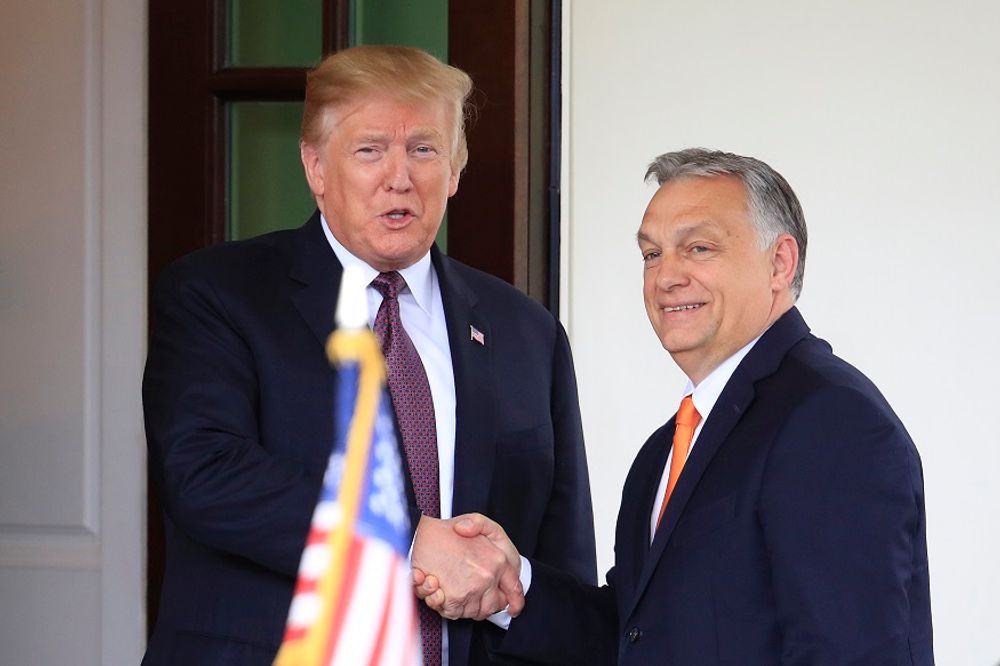
    3. As an undisguised (but curiously skirted around by US media) fan-boy of Orban and Putin, the Trump policy line is to cut off Ukrainian funding support and force a settlement with Russia. The implications for front line European nations like Poland, Finland and Estonia are enormous.
    4. Fossil fuels: Trump has made clear that the climate change crisis and sustainability initiatives of the Biden administration will be reversed, keeping the oil and gas industry happy….and paying into Trump-related coffers.


    That’s the plan. And, the polls say Trump will win. However, financial markets don’t seem to believe it, or follow that probability with the obvious trades. Allow me to illustrate the point with a few trading examples.

    Firstly, the import and immigration shockers in Trump’s policy golf bag should not just impact inflation but should also really spook the most important and intimidating market in the world – the bond market. And frankly, it’s not looking too fussed. The bond market and the Fed are still thinking – and trading – inflation (with the odd wobble like last week’s report) is on a glide path to 2-3% and will be accompanied by 3-6 interest rate cuts by the Fed going into 2025. For context, the global bond and debt markets are three times the size of the headline grabbing stock markets which dominate the first 29 pages (of 32) in the Financial Times. As we always say, the cost of money(rates) drives the prices of all financial assets. But, let’s humour the stock market followers…

    Agent Orange seems pretty keen to throw Ukraine and NATO under the bus. So, one would have thought Poland would be terrified of being abandoned by the US while it acts as temporary home to 3 million Ukrainian refugees. In fact, a macro commentator who I hold in high esteem has recently asked the question as to how long before Poland requests or sources its own nuclear weapons for location on its sovereign territory? Terrifying stuff, but again financial markets are more sanguine about the Trump threat. Poland’s stock market – tracked by the $EPOL exchange traded fund (ETF) – was the best performing major country-specific stock index in 2023 – up an almost tech-like 50.8%. Furthermore, Poland’s benchmark index is chugging along at chirpy 3% gain year-to-date in 2024. And, Warsaw is not the only place defying the US polling forecasts.

    Germany is not without its challenges but it has surpassed Japan as the world’s 3rd largest economy. This economic feat has been powered by the most formidable export engine ever seen and, again, would be hugely threatened by a Trump across-the-board 10% tariff on any company exporting to the US. Guess what? Germany’s stock market is hitting all-time-highs. Note, this is not even a country specific phenomenon. The US tech sector might be grabbing all the AI headlines but Europe’s own exporting superstars, nicknamed the “GRANOLAS” by Goldman Sachs, are absolutely flying and don’t seem to be catching any of this Trump (head)wind either. Clearly, investors are not betting on exporting chaos for these companies. In fact, we recently highlighted financial market excitement and the tech-like performance of these 11 companies in our new Private Portfolio Newsletter:

    More strikingly, the Granolas have matched the 63% gain achieved by the US-based Magnificent 7 since January 2021, and paid out much higher dividends. Whoodathunk!! For the curious, and those holding pharma and medtech startups, here are the 11 names: LVMH, ASML, SAP, Nestle, Novo Nordisk, L’Oreal, Sanofi,  GSK, Roche, Novartis and Astra Zeneca.

    Finally, climate and science denial might be very good news for the US oil and gas industry. However, even an almost-broke Trump knows that money talks. So, check out the US Oil & Gas sector represented by the exchange-traded-fund (ETF) known by the ticker “$XOP”. Stunningly, in a Ukraine crisis dominated energy market the US oil and gas sector has inched upwards by barely 4% since the beginning of 2023. For context, one could have earned a higher return by buying a risk-free US Treasury bond over the same period. In fact, US oil production levels are ironically rocketing toward 14 million barrel per day levels under Biden, or as “Honest Don” – no seriously he suggested this name – would say “like never before seen in history”. Go figure, or quiz the GOP!

    That’s real money, investing (or not) in real outcomes in 6 to 9 months’ time and offers certain investors the biggest trading opportunity of a lifetime. The financial instruments referenced above are clearly trading at the ‘wrong prices’ if Trump is set to win the 2024 US Presidency in November. The ‘MAGA Trump Trade’ involves buying inflation-protection bonds (TIPs), buying oil and gas stocks, selling German and Polish stocks and exiting any property funds sensitive to increased inflation and higher interest rates. However, there is one tiny catch. You have to believe the polls and Trump. And….. remember neither has any money.


  • Trends Check: Keep Calm and Worry On …….

    Trends Check: Keep Calm and Worry On …….

    I just read an article referring to today’s date as “December 42nd 2020”. Do you blame them? The early days of 2021 still see Dryrobes, George Lee, lockdowns, NPHET and Brexit regularly flying up the Twitter trending charts. Sadly, Covid-19 remains omnipresent but, thankfully, the Donald has been cancelled by Twitter and replaced with our very own Don, or Donie O’Sullivan. Democracy almost failed last week on Capitol Hill but Cahirsiveen’s gift to CNN was on the spot to bring some sanity to the chaos. Now, it’s our turn.

    It would be easy to pinpoint Covid as the source of most of this chaos but that would be almost Fake News. In reality, there are a number of markets and geopolitical trends which have been around for a few years now, even decades. However, one of the better descriptions of the pandemic’s impact was that it had hugely accelerated established trends. For illustration we thought it no harm to re-visit 10 trends we identified in December 2019 PP (pre-plague) and monitor the development or death of same.  The link to the full 2019 article is at the end of this piece but for explanatory convenience we will show those early views in bold text followed by our current thoughts and potential new trends gathering momentum. We will review in the same order as last year so here goes…..

    Debt: Global debt has just topped the $250 trillion mark according to the International Institute of Finance (IIF). It’s rather scary to think that in the ten years since the credit crisis of 2008-2009 the world has piled on another $70 trillion of debt. This debt mountain is incredibly sensitive to rising interest rates. Hence, central banks led by the Fed have had to abandon attempts in 2018 to return interest rates to more normal levels. Central banks are now stuck in a Japan-style debt trap with additional credit creation achieving less and less stimulatory impact on economies. Now, frustrated and worried central banks are pressuring politicians to introduce fiscal policies to break out of this stagnation spiral. Unfortunately, politics at a global level is increasingly polarised.

    The same IIF is now saying global debt reached $277 trillion in 2020. Another $27 trillion…. Hoo boy. Of course, trapped central banks didn’t see Covid coming but have played a critical role in supporting the global economy. However, the pressure is now on governments to deliver fiscal stimulus themselves. Let’s just say that debt number could be $300 trillion by the end of 2021. The pandemic was a definite accelerant.

    Democracy: Levels of income inequality not seen since the 1930s presents the potential danger of history repeating itself. Democracy is under pressure. The Freedom House think tank published a report in 2018 highlighting that year as the 13th in succession where democratic freedoms were in decline. A total of 68 countries witnessed a tightening of civil liberties and political rights whereas only 50 countries registered progress in these areas. As 2019 comes to a close the strong-arm tactics of Trump, Putin, Xi, Orban, Erdogan and Prince MBS do not provide reassurance that authoritarian trends will reverse any time soon.

    Democracy had a bad year where most bad actors named above got away with further repression. The only bright spot was the repudiation of the Trump regime at the ballot box but not without the deadly events on Capitol Hill. Arguably, the pandemic cost Trump the presidency and halted a dangerous erosion of US democratic institutions.

    ESG: There is grounds for optimism that businesses and investors see “doing good” as a prerequisite for wealth creation. It almost sounds like common sense but the ESG investment framework covering Environment, Social and Governance factors is gaining traction rapidly with $30 trillion worth of investments now employing ESG metrics in their investment processes. That $30 trillion number will grow and standardised metrics to measure and audit ESG will be the next challenge for business and investor alike.

    2020 was a huge year for ESG. The value of funds now employing ESG investment frameworks has exceeded $40 trillion during 2020 and will no doubt attract more follower funds in 2021. However, we would be wary of attributing all this enthusiasm as a pandemic appreciation of the need to save our planet. It was extremely helpful that technology stocks which score well in ESG frameworks had fantastic share price performances. Despite global economic chaos, the technology-heavy Nasdaq index delivered 43% returns to investors in 2020. Profits, or performance, always helps trends find new friends…..

    Trade: President Trump is now saying phase 1 of the China-US trade negotiations might not conclude until after the 2020 US elections. Who knows what will come out of Trump’s mouth next but expect 2020 to again be dominated by trade tensions in the EU with Brexit, and in Asia-Pacific with China. The rise of populist politics and trade protectionism are the two sides of a no-win economic confidence trick. Closer to home, Boris Johnson’s bombastic certainty of concluding trade deals with Europe by the end of 2020 will be particularly painful to watch unravelling.

    One of the few areas where there is bi-partisan agreement in US politics is trade with China. Ironically, despite the Orange Toddler’s tariff tantrums, China’s global trade surplus hit $460 billion in November. The surplus with the US alone was up 52% in November!! In this instance, China’s faster economic recovery from pandemic than the West has accelerated this sensitive surplus. Needless to say, trade tensions will continue into 2021, as will Brexit chaos but we will spare you the Johnson narrative.

    China: The most important macro story apart from debt in the world today is China. It’s arguably the engine of growth which services the planet’s debt. By the end of this year Chinese consumers will have purchased goods worth more than $5 trillion, exceeding that of the original consumption super power, the US. So, financial markets will now have to pay much closer attention to the role of Chinese consumer confidence in the global economy. Think of how many decades financial research and trading teams have agonised every first Friday of the month for the US Non-Farm Payrolls. Get ready for Sunday night China economic reports but before that keep an eye on bond default newsflow. There have been four or five relatively significant blow ups in recent weeks, even involving State Owned Enterprises (SOEs). Do not underestimate the potential impact on consumer confidence if the all powerful state can’t save its own.

    Our fears on debt defaults were unfounded so far. Debt defaults in the first 9 months of 2020 actually fell 20% to $13 billion according to Bloomberg data. The pandemic, in this case, may have stalled the trend rather than accelerated things .  China remains the biggest structural macro story in the world apart from global debt levels.

    Tech Tension: Technology has been a dominant driver of markets since the credit crisis. Some companies now have user bases which would be in the top 3 populations of the world if they were sovereign states. Think Facebook and Alipay with 2.5 billion and 1 billion users respectively. As Microsoft and Apple’s combined market value now exceeds that of Germany’s entire stock market at $2.25 trillion it is tempting to think this is a high water mark for tech valuations. Two developing stories/trends suggest the tech sector could meet some growth challenges. First, Facebook’s power and abdication of responsibility on publishing false information to huge numbers of people is moving towards a 1911 moment. That date is neither a typo nor hyperbolic. For the historians, that’s the year when the Standard Oil refinery monopoly was broken up. Second, the rise of ESG is ultimately not compatible with corporate deference and fear of China’s wrath. The recent China anger incidents involving the NBA, Apple and Google suggest corporates may have to decouple from Chinese internet and broadcasting platforms. Yes, the internet could splinter and anyone following the Huawei case with fears over 5G security might be forgiven for thinking a “net split” is not just a possibility but inevitable.

    Covid has possibly diverted attention away from the China tech/security threat but the 9/11 moment for democracy in America last week has possibly accelerated the 1911(Standard Oil monopoly) moment for Big Tech. Google and Facebook now face anti-trust litigation from the Federal government. But, these cases were announced months before the Senate run-off races in Georgia. If you are wondering why Google, Facebook, Amazon and Twitter have moved rapidly to neuter far-right conspiracy personalities and channels just think how many future Senate Committee heads(Democrats) were hiding under their desks in Washington last week. The role of social media disinformation in the awful pandemic death tolls in the US will also focus executive minds but it might be too late for Facebook.

    Content is King: Even with a potential internet split, original content continues to be the critical asset for every media platform on the planet. We mentioned monopolies earlier but has anyone noticed that Disney has quietly assembled a portfolio of content assets with enormous power? Even before Star Wars opens in cinemas, Disney has accounted for $1 in every $3 spent in cinemas in 2019! The battle for content has exploded to unsustainable levels with almost 500 originally scripted TV shows produced this year. In 2012 that number was less than 300. And the costs are rocketing. One statistic we read recently was that for each $1 of a Netflix subscription the user was receiving $1 billion of content. It’s not just entertainment content. Think about the $5 billion valuation of Manchester City implied by the recent private equity investment made by Silver Lake Partners from Silicon Valley. Live sport is hot but $5 billion for a franchise which can’t fill its home ground…?

    Production of content clearly suffered in 2020 but the uncertainty facing cinenas has accelerated the adoption of streaming services.  Remarkably, Warner Bros. have said they will debut ALL its movies in 2021 in cinemas and on its HBO Max streaming service on the same day! And check out Disney Plus. The ‘House of  Mouse’ only launched its streaming service, Disney Plus, just over a year ago but has reached subscriber numbers of 86 million already. For context, Disney planned to hit the 90 million subscriber mark by year FOUR in its initial communications.

    Energy: Climate change is for some top hedge funds now a critical factor in every investment selection. The climate crisis headlines multiply each week and this means continued pain for fossil fuel investors. Apple’s valuation is now bigger than the entire US Energy sector. Furthermore, for fossil fuel dependent economies like Saudi Arabia and Russia it is striking that their levels of sovereign interference have increased in recent years in the likes of Yemen, Syria and Ukraine. There is a suspicion that this projection of international power is an attempt to disguise significant structural weakness.

    Irrespective of pandemic hits to economic activity and energy consumption, the climate/ESG trends look set to continue to keep energy in the ‘unloved’ corner of the market. It is staggering to think that Tesla’s market value now exceeds the market cap of the entire US energy sector! However, it is worth bearing in mind how well “unloved” tobacco served its investors over the last three decades. Debt levels and long-term capital investment required do not make the tobacco and energy sectors comparable but there will be pockets of excitement along the way. Note LNG prices are rocketing in Asia to all time highs as unusually cold weather bites.

    AI: We have been inclined to highlight the risks/areas to avoid but Accenture tells us there is a $14 trillion opportunity in AI across 16 industries in the years out to 2035. Health, finance, logistics and agriculture all look particularly suited to AI innovation and it is striking to see an out-of-favour sector like finance now attracting the largest chunk of venture capital money via European fintech.

    We were told a pandemic vaccine was years away. It was delivered in 9 months. If ever the population of the planet was given a striking lesson on the power of AI this was it. The ability of AI to crunch huge numbers of varaiables and predict results in delivering a life or death solution for humanity will massively accelerate further AI investment in healthcare, education and finance.

    Inflating Value: And that leaves us finally with another potential positive albeit it is difficult to argue this trend is established just yet. However, we can include this in our list with a speculative health warning! For years, value investing has been clobbered in performance terms by growth and momentum investing strategies. Yes, it might be difficult for oil to make a come back but other commodities could bounce back sharply if inflation picks up. Whisper it very gently but there is data/evidence to support wage inflation picking up in Europe. Wages are growing at the fastest pace in a decade and Europe remains the largest trading bloc in the world. A stronger Europe would be a very positive development. No doubt, investors stuck in value strategies will be watching hopefully for an end to their performance misery. The rest of the world should hope for the same too.

    We are whispering again. However, for most of 2020, investing using value factors was a disaster. The FT was reporting at the end of October that value stocks were having their worst run in two centuries. Of course, economically sensitive stocks tend to sit at the value end of the investment spectrum so Covid allowed tech share prices to literally ‘Zoom’ while economies went into deep freeze and cheap stocks became even cheaper. Fast forward to today, and an earlier than expected vaccination, super low interest rates and fiscal spending from governments has thrown huge amounts of money into the system. There’s even chat of another ‘Roaring ‘20s”. Ireland borrowed €5 billion for 10 years last week at a negative interest rate, Tesla is racing towards a $1 trillion valuation and Bitcoin has just hit the $1 trillion mark too. Go back to that $27 trillion of new global debt in our first comments and then think about lots of capital chasing an unchanged number of opportuities and assets. We watch, we worry. But first, value investors could ride that inflation comeback extremely profitably.

    So, it would seem almost every trend has survived the pandemic, in many cases accelerated. However, did Covid kick start any new trends worth watching? We think three are worth keeping an eye on:

    1. The pandemic has shone a tragic light on income inequality and poor education. The death rates in the poorer sections of society are significantly higher than average. Governments will act. The next version of The Donald could be far more competent and dangerous.


    1. Hong Kong has attracted geopolitical attention for some time but there’s a far more critical flashpoint developing in the Sino-sphere: Taiwan. More critically for the global economy, Taiwan is the epicentre of global semiconductor production. These chips are the real “oil” of the global economy. Watch and worry as tensions rise over China’s inevitable plans to control Taiwan.


    1. Work-from-home is now accepted as the future. Expect more strategic decisions by companies to facilitate that shift. However, we might also expect to find in the coming years that early hopes of similar or superior worker productivity were unfounded. After all, we are only human, and the pandemic has surely shown us that we do crave social contact not just screen contact.


    Yes, we are human. We can’t forecast the future as there is always change around the corner. So, know the trends, keep calm and know some of your worst worries may never materialise.

    Our original December 2019 article is here: https://gravitas.sparkcrowdfunding.com/top-10-trends-to-watch-for-2020/
  • Ten 2021 Surprises To Trump A Crazy 2020?

    Ten 2021 Surprises To Trump A Crazy 2020?

    Well, how do you top 2020 for surprises? You probably don’t but the early days of 2021 can hardly be described as normal. Spiralling pandemic infection rates, new lockdowns and continuing White House madness are depressingly familiar developments. However, let’s dream a little positivity. Like last year, this exercise in listing potential surprises is not intended to be short-odds probabilities. The idea is to think about the possible and, for a brief few moments, not the pandemic. Our list last year managed to have a 4/10 hit rate but only if you accept that Kim Jong Un “died” for about a week!

    Anyway, 3 out of 10 probably justified the read a year ago but this year we are making it more difficult by only listing positive surprises. So, buckle up, relax the brain and be mindful of Willie Wonka’s advice that “a little nonsense now and then is relished by the wisest men.” A refresher of our 2020 list is in the link at the end of this article but for now let’s dream of 2021 possibilities…….

    1. North Korea and South Korea sign a peace agreement on Easter Sunday engineered by China’s President, Xi Jinping. Xi’s diplomatic efforts are rewarded with a Nobel Prize which prompts a legal challenge from Donald Trump’s crack(ed) legal team claiming their client was the true peacemaker.

    2. Boris Johnson resigns as Prime Minister on Good Friday. Crucified by the financial pressures of maintenance payments for six(or seven) children, Johnson is forced to re-enter the private sector to boost his income. In June, Johnson signs a 50 million pound deal with the newly launched Trump TV Network to host a weekly variety show from London.

    3. Climate change increases its economic influence. Financial assets following sustainable investing criteria(ESG) reach the $80 trillion valuation mark driven by new EU disclosure rules coming into law in March. UK assets score poorly under new frameworks due to “political risk” with many FTSE 100 shares trading at 30% discounts to EU peers.

    4. Covid-19 vaccination programs reach the 1 billion injection mark by June. Infection rates decline rapidly through the year and the virus mysteriously disappears by August.

    5. Donald Trump goes to prison on a money laundering conviction. Melania Trump sues for divorce and wins a $50,000 settlement with the agreement of banks and creditors conducting a fire sale of Trump assets.

    6. Commercial real estate and urban hospitality sector valuations soar as new surveys by big business reveal significant productivity declines where majority work-from-home options are available.

    7. Vladimir Putin is forced from office after a Russian oligarch revolt. The Biden administration’s plans to ban Russia from the Swift banking payments system as a sanction for the hacking of US government institutions is believed to have been the critical catalyst in Putin’s removal. Joe Biden goes on a triumphant diplomatic tour of Europe, including a week-long stay in Ireland, which pushes his Presidential approval ratings back home above 80%.

    8. Irish digital payments company, Stripe, attains a $200 billion valuation in its last private fund raising before a planned Q4 IPO. This valuation exceeds the combined market capitalisation of all the companies listed on the Irish Stock Exchange. Google is also rumoured to be considering acquiring Stripe before IPO.

    9. Ireland tops the GDP growth table in Europe once again with a 10% increase driven by migration of financial services operations from London to Dublin.

    10. Bitcoin trades above $50,000 in December. It turns out RTE’s intrepid science correspondent, George (g)Lee, has been a keen investor and owns a cryptocurrency portfolio valued at more than $1 billion. He retires from RTE to the relief of the nation.

    We did say dream but you never know! Last year’s list is here for the curious.

    https://gravitas.sparkcrowdfunding.com/2020-vision-or-10-more-surprises/

    Happy New Year!

  • 9/11 Lessons on the Cost of Fear

    9/11 Lessons on the Cost of Fear

    Mike DiAgostino was the calmest broker with whom I ever worked. Our derivatives trading desk in Hong Kong in the mid-‘90s often had its panic moments which lead to fearful paralysis or worse, expletive-filled finger pointing. Mike taught me early that angry blame-shifting was not just a waste of time but could be very costly if a market was moving fast. As we pass the 19th anniversary of the horrific events of 9/11 and face the challenges of a global pandemic are we in danger of repeating the fear-filled mistakes of the post 9/11 period?

    We must remind ourselves that the ‘War on Terror’ in the Afghan mountains of Tora Bora snowballed into an illegal war of error in Iraq, quagmire in Afghanistan and the implosion of Syria. The cost in lives was millions, the cost in capital was trillions. On a more positive note, the terrifying multiple hijacks of aircraft did not kill the tourism and air travel industries. We learned to live with the ongoing terror outrages perpetrated by Al-Quaeda and ISIS. Governments co-operated and committed to improved security at all airports. Confidence returned. But now it’s gone.

    Air travel passenger volumes remain severely depressed. Governments are flying solo with their own Covid-19 containment strategies and airline balance sheets are bleeding to death. Thankfully, there is confidence coming from financial markets as both IAG and Ryanair have announced plans to raise both debt and equity capital. Just like 2001, there is an urgent need for joined-up thinking at governmental level for a proportionate response to the health threat posed by Covid19. The Irish government response is currently an outlier, and not in a good way. However, in other areas the Irish pandemic scorecard is looking pretty good and crucially steering clear of the blame game. Not so elsewhere.

    The George W Bush administration gave birth to the Tea Party movement within Republican ranks and one shudders to think what new US “Taliban” will emerge post Trump. A toxic US political environment is now entirely fueled by cultural and societal fears. And, it’s not just domestic.

    China is the current geopolitical bogeyman. As the country of origin for the Covid-19 virus, it is an easy blame target but calm heads are required to avoid an uncontrolled economic and digital decoupling. Or war.

    Finally, we should be mindful of the dangers of a “K-shaped” economic recovery. Low interest rates and fiscal support cannot just benefit those with assets, or even jobs. Rocketing financial markets can provide euphoric headlines but have virtually no impact on the vast majority of developed economies’ populations. An acceleration in income inequality will ultimately lead to a damaging backlash, for everyone.

    Fear is understandable in uncertain times but leadership is required. Calm heads and clever use of technology can connect the world once again. Mike went back to New York and played his part in the early digital development of the financial derivatives market in the North Tower of the WTC. Cool guy, cool head. I am thinking of him today.