Tag: Wall Street

  • Themes Checklist For The Beach

    Themes Checklist For The Beach

    The weather forecast isn’t great.  I’d usually suggest some couch thinking time but that phrasing has now become a politically-charged innuendo in the US which tops off possibly the most bizarre presidential campaign month ever. Don’t ask about couches or dolphins, or JD Vance. And, he thought having no children was the problem…..! Anyway, given the amount of delusion in the air, I’m going to suggest a beach plan. That might be the wrong plan, but thematically we might be on the right track in the world of finance. So, for those enjoying some time off, one can review and reflect on the following:


    Old economy: Our suggestion “Investors Need The Old Economy Too” in May started subtle, then went full hammer. This move hasn’t just been a tech shift from software to more traditional hardware manufacturing. Say hello to the ‘great rotation’. The old economy stocks roared in July. The top performing sectors in the US were industrials, financials, utilities, basic materials and real estate. As an illustration of the scale of rotation, note technology stocks actually had a negative month (-2%) while US regional banks and housebuilders rocketed 19% and 17% respectively.


    Smaller companies: We have written “Betting On Small Can Really Win” but boy oh boy did it rock in July. Smaller companies tracked by the Russell 2000 index whipped the performance of the large company S&P 500 by 10 percentage points. That’s the largest monthly divergence between size cohorts ever recorded in history.


    Climate and cleantech: Another theme close to our hearts. VC Breakthrough Energy Ventures backed by Bill Gates has just raised the largest climate fund of the year with a funding round of $839m. In Europe, the momentum is good too. Private equity deal values in European cleantech are now on track for their best year ever(Source: Pitchbook).


    Fintech: Stripe and Revolut valuations in recent private share sale activity have jumped by 40-50% and London remains a fintech investment hotbed. Latest British Business Bank data tells an interesting City story –  the UK fintech sector is attracting 11% of global VC investment (and 48% of all investment in Europe), a share only exceeded by the US.


    UK Comeback: In March we wrote “Time For A UK Recovery” and waited for credibility and competence to return to Westminster. The scorecard at the moment looks pretty good: UK equities are seeing the strongest inflows of foreign institutional investment for years (Source: BOA), and on the currency front, the GBP (formerly known as the “Great British Peso”) has been the strongest major currency performer in the year so far (Source: Bloomberg).


    Digital infrastructure: We wrote “Get Ready For The Cloud Wars” back in November and this has morphed into a global foot race to acquire, invest, service and build the infrastructure of our digital/AI future. From data centres to state-of-the-art chip manufacturing plants the investment giants are moving fast to get involved. While Microsoft opens a data centre every three days, it feels like the likes of Blackrock, Apollo and Blackstone are competing for digital infrastructure headlines every few days too. In fact, Blackstone estimate digital infrastructure spend by top tech companies will exceed $1 trillion over the next 5 years.


    Wall Street veterans would say  ‘the trend is your friend’. So, we aren’t giving up on any of these themes just yet. However, we will return to two critical risk factors for many of these themes in a later article. Geopolitical risk from Taiwan to Iran to US electoral chaos looks like it is escalating rather than fading. US politics can make for electric watching (with the shock too) but the just announced prisoner swap deal between Russia and the US was significant. The allied multinational effort by the Biden White House shows the value of joined up thinking and shared values but the planet faces other bigger challenges. Arguably, our highly charged politics needs to address the fundamental challenge of climate and electricity too. For another day, but the race to decarbonise and electrify the global economy is definitely not on track…..

     

  • D-Day Lesson For These Roaring ’20s?

    D-Day Lesson For These Roaring ’20s?

    The events of D-Day 80 years ago this week usually feature in the closing chapters of World War II history texts. My own current curiosity lies elsewhere, more focused on change and beginnings. Not the Reichstag fire, not Sudetenland, not Kristallnacht, not Lebensraum, not Poland. These were all events in the 1930s which historians agree shaped the outbreak of a global war. However, that decade of economic distress and social anger, whipped up by populism and propaganda, was probably inevitable. Indeed, it’s possible the seeds of war were sown much earlier. The previous decade known as the “Roaring Twenties” introduced huge economic, cultural and technology advances, but the 1929 crash and Great Depression which followed were the key catalysts for the global horror ahead. That lesson from history should not be forgotten. In fact, we should be on our guard. Welcome to the new Roaring ‘20s….

    It’s not just Reddit influencer, Keith “Roaring Kitty” Gill, reportedly banking hundred million dollar profits trading ‘meme-stocks’ like GameStop in recent days. There’s more than just a sense of giddiness about. Recall the 1920’s witnessed the arrival of mass-production and mass-consumerism as automobiles, electricity, cinema, radio and aviation made technology affordable to the middle class. And, then it wasn’t. Financial collapse and the implosion of banking leverage has been a feature of global economic cycles ever since 1929. It wasn’t a once-off in 1929. The global credit crisis in 2008-2009 proved that point, and then some. The critical factors in these financial earthquakes are excessive confidence and over-estimation of demand. First let’s illustrate confidence….


    • The S&P 500 benchmark index for global stock markets has not experienced a daily decline of 2% or more in 325 days (Source: Reuters).
    • The market capitalisation of a media company whose key ‘product’ and biggest shareholder is a convicted felon with presidential ambitions is currently over $8 billion (Source: Truth Social – just kidding!).
    • The private credit (lending) market has grown from $250 billion in 2010 to a whopping $1.7 trillion today (Source: Prequin).
    • This week AI chip maker, Nvidia, became the second most valuable private company in the world with a $3 trillion market capitalisation (Source: Bloomberg)


    Regular readers will know my views fall mainly on the optimistic side of AI. However, the odd sanity-check does no harm. Nvidia is a semiconductor manufacturer. In 2023 revenues generated by the entire semiconductor manufacturing sector globally reached $526 billion. So, for context, Nvidia’s market value is now six times the entire industry’s global revenue. I know analysts will talk about future AI spend, cash rich Big Tech customers and real demand, but there’s one other aspect to this growth story which is a little bit different with historical lessons.

    Legendary tech investor, Marc Andreessen, penned his “Why software is eating the world” essay in the Wall Street Journal in 2011 and there is no doubt software has embedded itself in every phone and corporation on the planet. The lovely thing about software is that it is embedded in an activity, generates recurring (frequent and relatively small) revenues and user stickiness/dependency is high. At a basic level software is code. It’s digital, not physical. Sure enough, coding platform giants Microsoft, Google, Amazon, Meta, Baidu, Alibaba etc. have dominated the league tables of most valuable companies in the world since the Andreessen prophecy. But, there has been a subtle recent shift in the value hierarchy.

    Consider that two of the three largest capitalised companies in the world are now HARDWARE manufacturers (Nvidia and Apple). Hardware is physical and brings an entirely different business model and a myriad of challenges including supply chain risks, materials, energy, sustainability, customer credit, consumer fashion, inventory management and capex investment. We don’t have a crystal ball in forecasting ultimate demand for AI but the semiconductor industry used to be known for its vicious cyclicality. With my risk history hat on, I’d venture there’s every chance this manufacturing sector will experience mismatches between supply and demand.  Of course, the automobiles and radios of the 1920’s might not resonate with today’s AI and technology enthusiasts. However, I’d highlight three other numbers which perhaps add to the “Roaring ‘20s” feel right now:

    Sport: The breakthrough of sports like boxing and athletics on a global scale was a feature of the 1920s but fans mostly followed events by radio. Now, it’s TV (or streaming). So, when basketball’s NBA is about to treble its broadcasting deal from $25 billion to $76 billion you do wonder about excess, and the projections of Amazon, NBC and ESPN? Maybe it’s the constant circling of private equity (PE) around US sport….? Latest data from Pitchbook research shows 63 US professional sports franchises have a PE ownership connection where PE involvement is allowed (NBA, MLS, NHL and MLB). Funnily enough, basketball (NBA) leads the way with two thirds of all teams in the league connected to PE.

    Securities: The 1920s saw the banks and their celebrity brokers on Wall Street begin to sell stock and bond securities to main street for the first time. Then came the ‘shoe shine’ moment in 1929.  Fast forward to today’s celebrities of the private equity universe and a recent FT report on that exclusive world. The headline-grabbing data point(and possibly harsh) suggests that, in the period 2010-2023, private equity funds raised $820 billion more than they actually returned to investors (Source: Prequin).

    Prohibition: Alcohol and gambling was the government target in the 1920s. So, remember when Bitcoin and its cryptocurrency ecosystem was dismissed by the ‘puritanical’ zeal of high street banks, regulators and law enforcement? Today, Bitcoin is trading above $71,000 and the total value of the crypto universe is $2.8 trillion. In fact, there are now billions of dollars invested in funds owning cryptocurrencies (ETFs) which trade daily on highly regulated public exchanges. Now, that’s a morality tale with a twist.

    Of course, the reference to Prohibition conjures up images of organised crime, judicial corruption, entire city governments ‘on the take’, high profile mob trials and flagrant violations of the rule of law. Couldn’t possibly happen again, could it?  Take that question with just a pinch of orange. On a more serious note, the erosion of the US rule of law is possibly a bigger threat in our immediate future than cyclical excess. Hopefully, the remembrance of D-Day sacrifice will remind those in power of their duty to call out faux (or Fox) ‘patriotism’. And, perhaps a read of the final speech in Charlie Chaplin’s The Great Dictator would help. Ironically, Chaplin’s own patriotism was questioned during a later shameful period (with my surname!) in US Congressional history. The Little Tramp’s words seem timely once again…

    Let us fight to free the world – to do away with national barriers – to do away with greed, with hate and intolerance. Let us fight for a world of reason, a world where science and progress will lead to all men’s happiness. Soldiers! in the name of democracy, let us all unite!    –  The Great Dictator (1940)

  • Investors Need The Old Economy Too

    Investors Need The Old Economy Too

    Investors need to be aware of investment cycles as well as economic cycles. The investment stars of today can be the performance dogs of tomorrow. Just don’t tell South Dakota Governor, Kristi Noem, who has spectacularly blown up her vice-presidential ambitions in recent days. Kristi got her MAGA guns, God and babies messaging confused and thought it was a good idea to publish a book featuring a tale about her shooting a misbehaving puppy, Cricket. Not sure there’s even an emoji to cover that. Nor do investors really need to be told that shooting puppies is not a great vote winner. However, investors do need to know that star stocks can fade and badly performing ‘dogs’ do make comebacks.

    Financial market stars are often the ‘next shiny thing’ and the Covid-19 pandemic introduced lots of new companies which suddenly entered our daily lives and kept the global economy going. Consider online payments and Shopify. Its share price collapsed by 20% (and $20 billion!) in one evening this week and joined other pandemic superstars like Peloton, Zoom, RingCentral etc. in a combined $1.5 trillion loss of market value since the end of 2020 (Source: Financial Times). Meanwhile, the old economy which was kept alive by these companies is finally shaking off its ‘dog’ status as the tech-obsessed investment markets realise we need the old stuff too. In fact, three recent developments have caught our eye and signal potential opportunity.

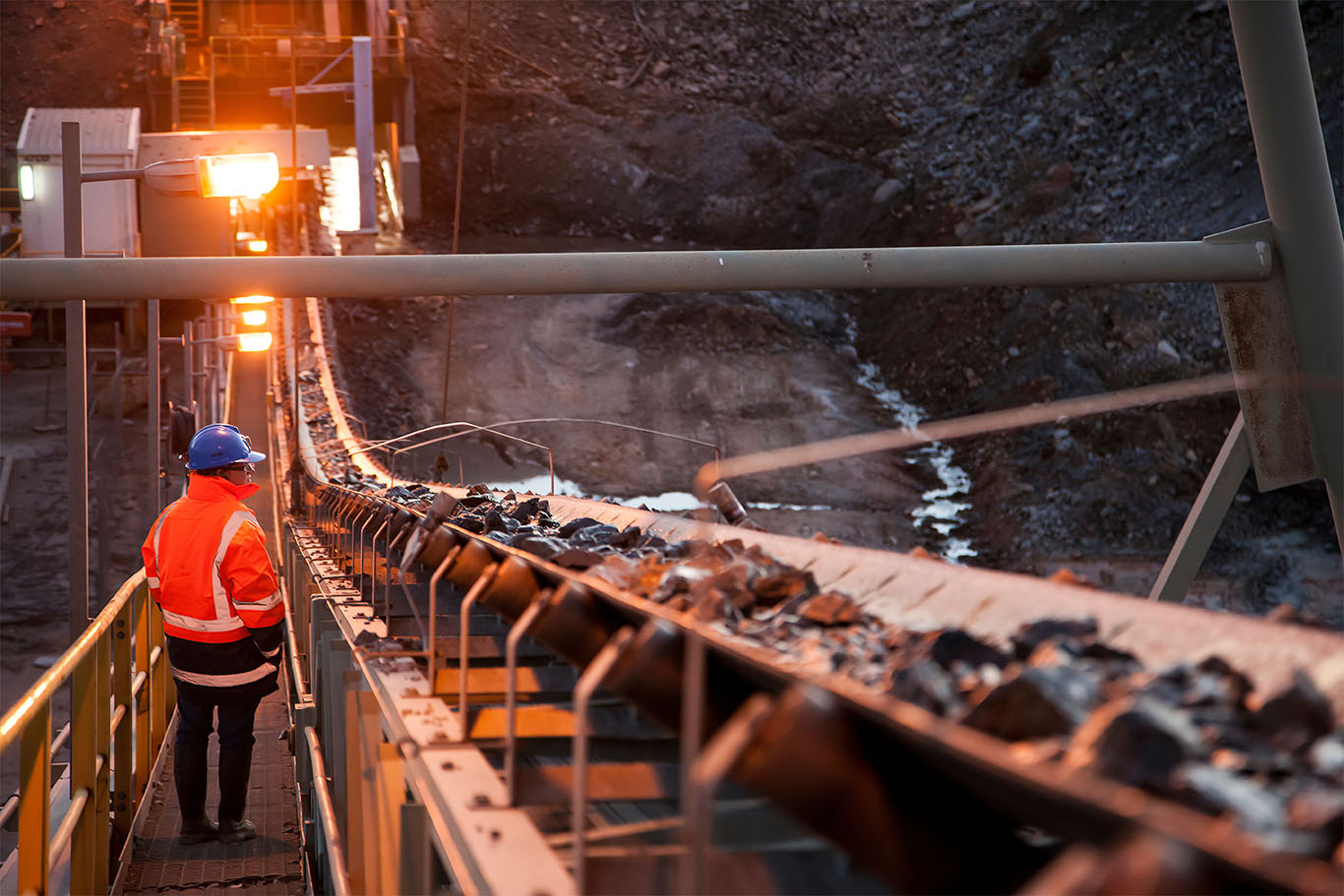
    First, we need to dig. Not literally, but the most basic activity underpinning economic activity since the Stone Age is probably the extraction of basic materials. So, when a potentially massive deal in the mining sector is reported we should pay attention. The $39 billion approach by BHP Billiton for De Beers owner, Anglo American, shines a light on a sector which has been largely shunned by investors on ESG, geopolitics, talent retention and energy cost worries. A pick up in M&A activity suggests a floor for executive expectations and potential upside opportunity for investors. Indeed, in our recent Private Portfolio Thoughts newsletter we wrote:


    “….the entire out-of-favour global mining sector is now worth approximately the same as just one technology company, Google ($2.2 trillion). However, when we see research showing China controlling almost 80% of the value chain in electric vehicle (EV) battery production we’d expect a few mining and mining technology ‘diamonds’ to be completely undervalued as the world races to EV adoption and net zero targets.”


    The mining sector, despite its sustainability (ESG) challenges, is a critical part of our decarbonised future. As an illustration, the race to electrify the global economy requires more copper in the next 25 years than has been produced in the sector’s entire history.  But a shortage of investment threatens that electric transition. For investors, capital shortage (vs ‘hot’ capital stampedes) means probable opportunity and…..on the capital front, there might be better news too.

    The critical cog in the global financial system is the banking sector. Of course, banking had its almost-perennial risk shock last year with the failure of Silicon Valley Bank(SVB) but, arguably, the lack of systemic knock-on impact should be taken as a positive. Furthermore, the stabilisation of interest rates (even if not falling) without major economic casualties to date is also encouraging. So, like the mining sector, we’d be looking for major deal activity from ‘insider’ executives to confirm there was potential sector upside ahead. Step forward Spanish banking.

    Bilbao-based BBVA has just launched a hostile $13 billion bid for its domestic competitor, Sabadell. Not just a bid, but a riskier hostile one too. Also, don’t forget recent bank deals in the UK  – Nationwide buying Virgin Money ($3.7 billion) and Barclays acquiring Tesco Bank (up to $1 billion). This feels significant and check out the performance of the financial sector in a “Magnificent 7” tech-dominated US market. Larger US financials are actually outperforming the top tech names in the Nasdaq 100 index year-to-date (+10% vs +7.6%). Also, it is interesting that the traditional barometer of the broader old economy, the Dow Jones Index, is on a 6-day winning tear. Perhaps, the dogs (but not Cricket) are back?

    Finally, the combination of the old economy Dow Jones rising, banks gaining deal confidence and shunned sectors doing M&A prompts a further thought. Public markets have been shrinking for years in terms of numbers of quoted companies listed on public exchanges. However, the role of private capital and private markets has grown in significance. Pitchbook’s latest research suggests private markets now control $14.7 trillion in assets, growing by an annualised 12.8% each year since 2012.

    Those private assets include private equity, real estate, infrastructure, venture capital and private debt/credit. The latest projections from the Pitchbook research team say these assets could stretch to $24 trillion by 2028 in a positive macro environment. This writer has also seen research showing family offices for the uber-rich now allocate 46% of their investment portfolios to private assets. So, let’s join the dots here. It seems entirely possible that ‘old economy’ companies could be purchased in private buy-out deals, backed by private capital and more confident banks. That’s a healthy development for investment markets but also provides opportunities for investors to diversify their portfolio into private assets. Now, start digging, or even mining those possibilities.

  • Risk Warning: Trust, But Verify…..

    Risk Warning: Trust, But Verify…..

    On the fifth check of my passport at Paris’s Orly airport I did wonder. Will trust die before our planet dies? Both are under severe threat and, yet, I’m hopeful. Let’s take a look at three particular examples of widely-held mistrust where recent developments might challenge the negativity. First, some history. Ronald Reagan’s signature phrase in nuclear disarmament talks with the Soviet Union was derived, ironically, from an old rhyming Russian proverb: Trust, but verify. Of course, it was tough to trust the Kremlin but technology, in the form of satellite imagery, was the critical verification tool. These days it’s technology which is not trusted but could also be the solution.

    We have previously written about global payments processing as possibly the biggest ‘network’ yet to platform and join social media and cloud computing in the multi-trillion dollar wealth creation club. However, the payments opportunity starts with technology mistrust. Bitcoin is flying high but the cryptocurrency ecosystem is still widely mistrusted by consumers, governments and regulatory authorities. Stripe famously ceased processing Bitcoin payments on its platform back in 2018. Now, it’s all change. Stripe is bringing back crypto payments, this time with a stablecoin. The USDC stablecoin to be accepted by the platform will be pegged to the US dollar ie it tracks the US dollar value. More critically, the technology which underpins the security and verification of these currency assets is blockchain. On so many levels this is a huge verification moment for digital currencies and the software blocks used to build them. Now, for some more building…..

    The 2022 CHIPS and Science Act was a Biden administration attempt to reinvigorate the US manufacturing base by attracting huge factory construction projects. Scepticism was rife, given the Trump toddler promised ‘infrastructure week’ every week but never delivered. Well, let’s verify. First, the US government has paid out more than half its ear-marked $39 billion of incentives to companies planning to invest in manufacturing facilities. The corporate follow-through has been extraordinary – microchip manufacturers and their suppliers have announced $327 billion of investments over the next 10 years. Micron alone is planning a $100 billion project in Syracuse, NY. That’s a nationwide 15x leap in construction spend on these type of facilities and will capture 20% of the global chip manufacturing market by 2030. Currently, that number is zero. But what about our planet and other targets with Zero (Net)?

    Let’s face it, the push back on global sustainability and ESG targets is worrying. We often write that money talks and the following headlines paint a picture of worrying reversal:


    Flows to European ESG exchange traded funds halve in first quarter –  Financial Times


    US Fund Managers With ESG Mandates Have Worst-Ever OutflowsBloomberg


    Clearly, this is not good news. However, we should be careful not to equate fund flows with commitment to climate change targets. For example, the banking sector in recent decades could be described as the ultimate counterparty requiring ‘trust, but verify’ checks on their behaviours and risk management. So, with the global financial crisis barely 15 years in the rear-view mirror, how did genuine ESG investors feel about this week’s staggering headline?


    Western banks in Russia paid $800m in taxes to Kremlin last year –  Financial Times


    Yep, that was the tax bit. The profits according to the FT were over $3 billion. Trust, but verify indeed……ESG investors can rightly ask how are those “S” and “G” policies going in these shame-free and profit-full banks? Answers on a post card to Kyiv please.  Before we all blow a complete gasket, let’s finish with some more wind but a bit more climate positivity. And, no, it’s not a Trump legal challenge. But it could ultimately rhyme by starting badly, and then ending with a positive reality check.

    First, the severity of the storms and tornados sweeping through the Midwest heartland of the US this week are truly frightening. However, there’s a bigger financial storm brewing further south. An excellent article in The Lever this week highlighted the plight of Louisiana homeowners struggling to insure their houses while 12 insurance companies have failed, and 12 others have left the state. Almost one in five Louisiana residents lost their homeowner insurance last year. The crisis is climate caused. Global insurance giant, Swiss Re, in a recent report stated that natural disasters now cost the United States $97 billion a year.

    In Florida, the climate denial Governor, Ron De Santis, might be kissing the Trump ring again but home insurance rates jumped 42% last year and coverage from big players, AAA and Farmers Insurance, has been pulled from the market before hurricane season. Unsurprisingly, Florida for-sale housing inventory has jumped 57% in 12 months. Leaders in denial-mode face a wave of voters, mortgage banks, pension funds and Wall Street analysts giving them the ultimate verification check on climate crisis. The critical shift is that investment capital has checked, and is already fleeing.

    Trust me, that seismic capital flight will force leadership change and action. Verification…..pending.

  • Welcome To Growing Sports Opportunity

    Welcome To Growing Sports Opportunity

    “Sports is now no longer a hobby for rich guys” was the introductory quote in this week’s Fortune magazine profile of ex-Goldman Sachs dealmaker Gerry Cardinale. The day before, it was the turn of an earlier Gravitas name-drop and breakfast ‘buddy’, Todd Boehly, to appear in Forbes magazine. One owns AC Milan, the other Chelsea FC – both former investment bankers. Two articles in two days….hmmm. Curiosity tweaked, I did a bit more reading and my sense is that sport as a business has evolved significantly and is staring down the barrel of a seismic technology shift. Let’s start with evolution.

    In a week when Taylor Swift becomes music’s first billionaire on personal performances and song-writing alone (Source: Forbes) we are reminded of the increasing value attributed to exclusive entertainment. Sport is a form of entertainment but the lines between showbiz and professional sport are beginning to blur. Swift’s attendance at her boyfriend’s Kansas City Chiefs games might have helped NFL TV viewing figures but that’s a superficial coincidence and misses the critical building blocks required to create wealth in sport these days. One could easily presume that the huge growth in value of sports franchises in recent years can be attributed to simply more (and wealthier) buyers than there are available suitable selling franchises. Yes, Saudi Arabia’s sovereign wealth fund(PGA golf, Newcastle Utd),  the UK’s richest man Jim Ratcliffe of INEOS(Man Utd) and Wall Street’s finest (Boehly, Cardinale etc) are buying assets but, to use a property analogy, they are developers not real estate landlords/traders. These purchases are not about spotting undervalued assets to trade, but are all about building franchise value across the entire operation.

    Gerry Cardinale’s RedBird has merged sport and entertainment in investments across football (AC Milan), media (LeBron James’s Spring Hill), Formula 1( Alpine Racing team with Ryan Reynolds) and stadium hospitality(Legends Hospitality) and he’s a believer in layering event expertise on top of sporting excellence:


    “Sports is a multibillion-dollar live event entertainment business, and you have to bring relationships and multidisciplinary skill sets across a range of activities to be able to get these things done”


    The formula for modern sports ownership needs deep pockets and is focused on three key areas:

    Brand:  The on-boarding of multi-year sponsors requires relationship and story-building skills.

    Infrastructure: Building world-class stadiums, training grounds and player rosters.

    Rights: Expertise and finance skills in the area of media rights are critical in modern sport.


    Clearly, investment in the product (arenas, players) builds the brand and leads to the showbiz discussions where audience and finance are the key leverage points. It is no accident that the owner (Boehly) of the LA Dodgers and Chelsea FC is also the owner of Hollywood’s Golden Globes awards event and Oscar-winning film production company A24. Boehly also was once a bond trader for Guggenheim which brings a world-class grasp of financing and risk. So, should we be surprised that it was he who structured the richest individual sports contract in history for the LA Dodgers’ signing of baseball star, Shohei Ohtani? The deal is worth $700 million but Ohtani has agreed to be paid only $20 million of the package until 2034, then the balance over the next 9 years to 2043. Meanwhile, the Dodgers press conference introducing the deal and their new star drew an audience of 70 million and sold more jerseys in 48 hours than Lionel Messi did when going to Miami’s soccer franchise.

    Phasing payments over decades is only one side (liabilities) of the balance sheet evolution of sport. On the assets side of the franchise balance sheet, the LA Dodgers back in 2014 signed a 25-year broadcasting rights deal with Time Warner Cable for…..$8.4 billion. Now consider that Boehly and his Eldridge investment vehicle bought the Dodgers two years earlier for $2 billion. Smart business, but there’s another smart thing in the Eldridge investment approach. The sports and media portfolio of Eldridge holds more than 100 companies and includes Bruce Springsteen’s song catalogue as well as betting site, DraftKings. Yes, for those using Spark’s EIIS Private Portfolio service, the risk-sensible ‘portfolio approach’ is music to our ears. Now, let’s hit the senses with five more data points before we tackle the technology revolution coming.

    • The average Gen Z consumer is spending $56 per month on streaming subscriptions (Spotify, Netflix etc)
    • Netflix has done a $5 billion deal over 10 years for the live broadcasting rights to wrestling franchises, WWE and UFC, owned by the TKO Group.
    • Investment firm, Sixth Street, is the first to launch a sports team from scratch – the 14th franchise, Bay FC, in the US national women’s soccer league.
    • NBC’s streaming service, Peacock, paid $110 million in January to broadcast a single NFL play-off game between the Miami Dolphins and the Kansas City Chiefs. That works out at $1.8 million per minute of game action.
    • Legal sports betting in the US reached $119 billion in 2023 (Source: American Gaming Association).


    That Peacock-NFL streaming experiment annoyed plenty of sports fans but did draw a world-record live sport streaming audience of 27.6 million (Source: Nielsen). And, there’s a simple reason why the NFL risked fan fury and tried out new broadcasting tech. Streaming (via internet) is set to pass out cable viewership at some point this decade. This is a monster media technology shift. It means that the existing sports broadcasting giants like Fox, Sky, ESPN, Time Warner etc will be battling the likes of Apple, Amazon, Peacock and Netflix for live sports media rights. Please remember not that long ago Netflix said they had no interest in live sports broadcasting rights. Well, they do now and shocked everyone with the WWE deal. So, more buyers…..and then you do wonder what happens next to the value of sports broadcasting rights, particularly as live sport betting in its infancy in the US goes stratospheric? However, be wary of ‘build it and they will come’ expectations and strategies despite Sixth Street success in little more than 12 months. Note the various skillsets employed by the new sports investment giants – brand building, player and facilities investment, finance/media expertise and use of AI powered datasets. Also, recall that Formula 1 has no facilities or stadia. In essence, it is a travelling event circus. The success of Netflix’s “Drive to Survive” fly-on-the-wall series was the audience and brand build.

    Interestingly, I am currently involved in two sports finance projects and, in both cases, the ‘story’ and the product/people will likely be the key value drivers. It is increasingly apparent that both these elements – brand and product build – require planning before any financing comes into play. Not every story can rely on Hollywood stars like Ryan Reynolds and Rob McElhenney in Disney’s “Welcome to Wrexham”. Watch carefully as sport and web streaming services grow commercially closer and you never know, opportunities might appear closer to home than even Wrexham. Oh, and this is not our first sporting call. We did suggest watching back in 2019….

    “No Netflix, no WAG nor streaming device can generate the social capital of watching sporting thrills and greatness in real time. So, for those with an entrepreneurial bent get thinking. There’s a strong possibility governments and private investors will sit up and take notice of the rich returns available in sport in a low returns world. Sport loves a crowd and one would be confident that equity crowdfunding will equally love a sports story. Tell it soon with the data and, as they say, if you’re not in you can’t win”


  • Get On The AI Bus Or Lose Business..

    Get On The AI Bus Or Lose Business..

    As somebody who has been watching, I’m still stunned. No, not that Rishi Sunak has his own GB News TV show and that the regulator, Ofcom, hides. Not even the fact that a former US President has thrown his NATO allies under the Vlad bus in plain sight of the forever fear-filled US media. Of course, I’m sure Poland and Estonia are terrified by Joe’s age or Hilary’s emails. Mind-boggling. However, on a brighter note there’s another bus which is enabling millions to work better. The AI bus is flying. Again, the mainstream media headlines run with AI fear but the flow of money and corporate action point to an extraordinary business revolution. The numbers are now simply too big for businesses and investors to ignore. Let’s do a brief tour of developments…

    This week kicked off with the staggering news that AI chip maker, Nvidia, has now achieved a $1.84 trillion market valuation which is higher than both Amazon and Google. To understand the expectations baked into that valuation, reflect on Amazon’s projected 2024 revenues of circa $600 billion. Then know that Nvidia is expected by Wall Street analysts do just one tenth of that revenue number. The 90% revenue catch-up is somewhere in the future but the future numbers look big, very big. The famous AI evangelist and rescued CEO of OpenAI, Sam Altman, is actively seeking funding for the development of AI chips like those of Nvidia. The word ‘funding’ doesn’t really do this exercise justice. It’s almost nation building. Sam reckons he will need $7 trillion, or the combined GDP of Japan and France. Sounds dreamy, but he’s not alone.

    Consulting firm, McKinsey, have published research suggesting the creator-focused application, Gen AI, deployed in 63 actual use cases could add $2.6 trillion to $4.4 trillion of economic benefits. Note these are actual business ‘use cases’. There’s more than dreaming going on here. In fact, Google has launched its Gemini workflow assistant to “supercharge your creativity and productivity”. Gemini is multi-modal which means it can create content using text, voice/audio, images and video. Its output can also be multi-modal. Think about a medical professional using an ‘assistant’ which can ingest a physician’s audio snippets/notes, X-ray images and MRI video scans. Also, we have moved past Chat GPT text prompts and free trials. Google is charging a $20 monthly subscription for its Bard successor, Gemini, to assist with email summaries, research, code-free data analytics and audio visual staff and customer education. Microsoft is also charging $20 a month for its Copilot AI Tool. Oh, and people and businesses really do pay for access to these AI tools.

    While OpenAI started out in life as a not-for-profit entity, it is amazing to see that the OpenAI business is already generating annualised revenues of $2 billion. The use cases might even surprise. For example, McKinsey analysis shows that 73% of fashion executives named generative AI as a priority for their companies in 2024, but only 28% have actually deployed AI so far. It’s not just business prioritising AI adoption. The investment world, particularly in our world of early stage funding is acutely aware of venture capital (VC) funds pulling in their bullish horns and nursing some of their existing investments out of sick bay. However, AI-related VC investment is bucking that trend. Check out these data points from CB Insights:


    • Broader venture funding fell 43% in 2023, but AI funding slipped by just 10%.
    • The US actually witnessed AI investment grow by 10% in 2023. Europe dropped by 29% and Asia saddled with a China confidence crisis cratered by 61%.
    • There were 22 AI unicorns (start-ups valued at $1 billion or more) created in 2023 which accounts for 31% of a global total of 71.
    • Generative AI unicorns, in particular, are hitting warp speed wealth creation mode. Gen AI unicorns reached the $1 billion valuation mark in a little over 3 years, or half the time taken by unicorns in other sectors.


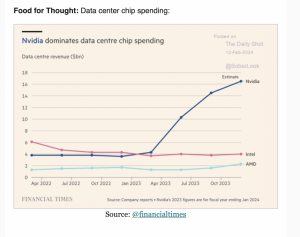
    However, investment doesn’t just happen at a company level, big or small.  If we consider Sam Altman’s funding estimate of $7 trillion, this investment capital will mainly be used to build facilities to manufacture those AI chips (fabs) and then house them (data centres).  I have written previously about the linkage between the explosive growth of AI and the race by Big Tech to build the data centres supporting their digital cloud businesses. As a proxy for this linkage, the Financial Times has highlighted Nvidia’s dominance in the area of data centre spending:


    Closer to home, the opportunity presented by data centres has attracted private equity giant, Blackstone, and prompted talks on a $900 billion acquisition of data centre construction leader, Winthrop Technologies. Clearly, the ramp up in investment activity on both a company and an infrastructure basis is signalling real AI revenues and real usage from businesses. And, it would be wrong to assume it’s part of the future. It’s now.


    • Forbes reckon 83% of companies deem AI to be a top priority in their business strategy.
    • MIT have said 9 in 10 organizations back AI to give them a competitive edge over rivals.
    • More than 50% of Americans use voice assistants for information purposes (Source: Edison)
    • Manufacturing businesses that utilize AI are performing 12% better than those using traditional methods only (Source: Microsoft)


    Remember this is AI in its infancy. That 12% ‘edge’ is only going to grow. For me, there is now an additional competition-critical question for every business to add to existing queries on the progress of their digital and sustainability transitions. Have you boarded the AI bus yet….?

  • And You Thought Only The Bots Did Comebacks…

    And You Thought Only The Bots Did Comebacks…

    As pantomime season approaches, it almost explains why most of the Conservative Party front bench are off the front pages. Unless, of course, you’re new Home Secretary, James Cleverly, and a wee bit envious of the coverage given to Nigel “I’m A C…….. Get Me Out Of Here”. Poor James, affectionately known in the corridors of Westminster as “Jimmy Dimly”, has been caught not once but twice using expletives in awkwardly public circumstances. However, if we are looking for real awkward stuff, consider the board of OpenAI. It has been quite the week. The board room coup and firing of CEO Sam Altman last weekend shocked the AI world and threatened to incinerate $90 billion of corporate value in OpenAI. However, a whirlwind four days later we were on to our fourth CEO, a potential 600 resignations out of 700 personnel, thousands of worried start-ups built on OpenAI’s flagship ChatGPT model and a potentially costless acquisition by Microsoft. Anyway, the fourth CEO happens to be Sam Altman who seems to have had the comeback of comebacks. So, all is back on track? Ehhh… not quite.

    The details as to what was the exact cause of the original board room bust up are not yet clear. But… the general gist of things is the tension between executives wanting to develop AI at break-neck speed and board members worried about the risks involved with super powerful models capable of Artificial General Intelligence(AGI). The advance hidden in the AGI acronym is the ability of a machine to reason and think, potentially in a superior way to a human being. Now, AGI(vs AI) was supposed to be some way off on development timelines, but reading between the lines something has spooked the members of the OpenAI board. The existential threat of out-of-human-control technology is a genuine fear but there are two key drivers as to why the “growth” champions want to keep moving, and fast:

    The Stakes: At a corporate and sovereign level, the risk of your competitors or geopolitical rivals gaining a lead in AI has huge market and political power implications. If someone gets a sufficiently big technological lead, you could be corporately or literally dead.

    The Incentives: We saw this week the incentive to be ahead in AI. The company nobody had ever heard of 6 months ago, Nvidia, released its Q3 results. Expectations were sky high evidenced by the market giving it a current market value of more than $1.2 trillion. And, yet it still beat expectations with its data centre chips (AI) revenues up 279% year-on-year and exceeding the sophisticated forecasting models of Wall Street’s finest by a whopping $2 billion.

    So, this tension between technology risk and technology development/growth is going to dominate AI discussion and regulation in the coming years. We have already seen the Biden administration put in place an Executive Order on AI safety and security, and Europe’s AI Act is imminent. However, these attempts to mitigate risk might lead to another comeback by a technology closely connected to another Sam.

    Unfortunately, Sam Bankman Fried faces Federal incarceration and won’t be restored any time soon to the helm of crypto platform FTX. Indeed, this week another platform founder in the space Changpeng Zhao or “CZ” of Binance was convicted of money laundering, fined $4 billion, stepped down from his executive role and narrowly avoided a prison sentence. Those are the bad headlines in the crypto world and could cause readers to miss the bigger picture. The reality is that one of the huge risks of AI is fraud, caused by deep fake imagery, false ID and misrepresentation. Now, crypto can help. Well, not crypto or cryptocurrencies because they are applications/digital assets. However, they are built on a really powerful technology, blockchain. And, blockchain technology is really good at ID verification, security and transparency/ traceability. Clearly, this could help with fears over AI and, like Nvidia, blockchain technologies could be a way to play or track the opportunity in AI. As always, we like to follow the money for evidence of our thinking. So, consider the following…..


    • Bitcoin is up 130% this year.
    • PayPal has launched a US dollar stablecoin ie a digital currency layered on to blockchain technology.
    • For those that giggled at NFT madness and wealth destruction, note Disney has launched its own NFT market platform in recent weeks.
    • And if you thought nobody wanted to read about their crypto wealth destruction, you might be surprised to hear that crypto exchange, Bullish, has just acquired industry publication, Coin Desk.
    • Blockchain.com just raised $110 million with a $7 billion valuation.
    • Blockchain payments firm, Fnality, in London just did a funding round for $95 million backed by Goldman Sachs.


    The funding rounds in particular indicate significant capital seeing a future for blockchain. Indeed, AI and its risks look like they are driving a faster blockchain comeback than investors expected. If the OpenAI rumours of a big AGI breakthrough are true, then the risk genie is truly out of the bottle and blockchain is on for a BIG comeback.


  • No Sign Of Wall Street Blues

    No Sign Of Wall Street Blues

    Happy Blue Monday but crikey! It’s tough enough these days without Father Time slapping you with a big number. Was it really 40 years ago this week when the TV crime series, Hill Street Blues, first hit our screens? Think back to Mike Post’s instrumental theme music, grimy urban scenes, innovative shaky hand-held cameras, multiple storylines and the steady din of background noise.

    The Hill Street precinct was breaking new ground in TV-land but who can remember Wall Street almost breaking the economy? More specifically, the cost of money for business was approaching nose-bleed levels of 20% interest rates. Grim days. Not so these days. Despite a global pandemic and ‘a real and present danger’ sitting in the Oval Office, financial markets are experiencing pockets of euphoria. Let’s take a look at three headlines over the last week.

    Affirm Stock Rockets More Than 90% After IPO – MarketWatch

    Bank share prices still wallow at historic low valuations but it seems that Affirm’s buy now/pay later financing facility is ground-breaking. Hmmm. Lots to think about here on top of the $24 billion valuation attributed to a financing option which has been around since 1157, according to the history of Venice.

    Signal Advance Has Soared 11,708% Since An Elon Musk Tweet – Business Insider

    A personal favourite this one. The world’s richest man, Elon Musk, tweeted “use Signal” to his 42 million followers last week. The background to this was a privacy revolt against Facebook’s WhatsApp messaging service. Sure enough, the Signal messaging app signed up millions of new users and the valuation of Signal Advance soared from a tiny $6 million to $300 million in just a few days. As Captain Blackadder might say, there was a tiny flaw in that investment strategy. Signal Advance has zero commercial connection to Signal, the encrypted messaging platform. Thousands of investors have bought the wrong stock.

    SPAC Mania Gives Early Investors Steady Returns With Little Risk – Wall Street Journal

    It is difficult to believe this is a WSJ headline. “Early” and “Mania” might be the operative words in this gem. As a brief explainer, a SPAC is a “blank cheque” investment vehicle which raises money via IPO on a promise to acquire companies in a specific(usually) sector or with an identifiable theme eg. Start-ups, hydrogen fuel, social media etc. In 2020 there were 248 SPAC IPOs. In the first 2 weeks of 2021 there have already been 40 listings on the public markets. SPACs are not new. They come into vogue when multiple “hot” sectors appear and investors look for swift access to these themes. Previous incarnations have included shipping, banking and energy exploration. The track record of these is mixed to put it mildly. Anyway, this is the early giddy expectation bit – enjoy the IPO excitement before the funds are spent and often wasted.

    Please do not take this as a blanket statement that financial markets are in a bubble. In fact, there are large parts of the market which are only just breaking out of multi-year slumps. Think smaller companies, European equities, banks and emerging markets which have all had a very tough decade. However, it would be remiss of us not to take on board the iconic daily cautionary words of Sergeant Esterhaus at the Hill Street precinct – “Let’s be careful out there”.

  • Back to Work – All is Very Good!

    Back to Work – All is Very Good!

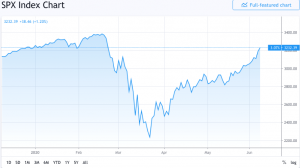
    Well, that was quick. As Main Street tip-toes back to work, Mr. Market has voted with a loud and large V. That’s the ‘V shaped” recovery of financial charts all over the world, particularly in the US. Check out the S&P 500 recovery and its move back into positive territory for 2020. Whooodathunk!

    That is a 40% move since the lows of March. The tech-heavy Nasdaq index has had an even stronger rocket ride; it hit all time highs yesterday and is actually up 10% in 2020. Wall Street is doing its market thing and looking through the current turmoil and “discounting” a better future. Even if a company is “dead”. Rental zombie, Hertz, filed for bankruptcy a few weeks ago but the share price (yes, the equity) gained 115% yesterday. Chesapeake Energy with its $8 billion of Q1 losses and debts in write-off mode went a bit better; just the 181% trip to the stars yesterday. The market is always right, right? Honestly, we just don’t know. Benjamin Graham puts it better – “In the short run, the market is a voting machine, but in the long run, it is a weighing machine.”

    Investors have voted and followed a wall of central bank emergency funding into risk assets. Back on Main Street business owners are weighing up the challenges presented by an ongoing global pandemic, lost revenues, new regulations, new behaviours and their costs. Oh, and Covid-19 is still here – WHO said it recorded its highest daily tally of new infections on Sunday (136,000). Interestingly, for those assuming all will return to pre-Covid exuberance, the National Bureau of Economic Research didn’t quite get the White House ‘Keep-America-Great’ memo. It turns out that the US officially went into recession in February. Yes, the US economy was already contracting before lock-down. Who cares, say investors clocking gains every day. Dare we say exuberance is back? Buckle up, we have a transport dream to sell you.

    Nikola Corp makes hydrogen and battery powered trucks. Not one truck has been produced yet, we don’t know who will make them and the company has zero revenues to date. The Nikola share price doubled on Monday and the value of the company now exceeds $33 billion. That is now $3 billion higher than the value of the 117 year old Ford Motor Company and its annual revenues of $150 billion. Punchy stuff. I think we can agree Wall Street has voted for a big V-shaped recovery. ‘Mission Accomplished” springs to mind.

    There is one tiny flaw in that prognosis. Main Street gets to vote too. Up until now, most business people with US commercial interests would tell you their local contacts/partners are emphatic President Trump will be re-elected. With the most recent CNN poll putting Biden 14 points ahead of Bunker Boy, one wonders is that confidence about to be tested? As Main Street returns to work and polls its pandemic pain through the hot summer months, what are the chances Mr Market reaches for the weighing-scales and reins in its exuberance. Then, we may appreciate “V’ is for volatility too.

  • 10 Reasons You Might Be A More Active Investor Than You Thought!

    10 Reasons You Might Be A More Active Investor Than You Thought!

    This week Bloomberg reported an epic shift in the world of US fund management. Investor assets invested in passive index-following funds have now surpassed those invested in the traditional active stock funds. And we thought the publishing of “One Up On Wall Street”  exactly thirty years ago by the first fund manager rock star, Peter Lynch, would bring active investing to main street!

    Cue an outbreak of hyperbolic commentary predicting the pending death of active management and the dangers of everybody ultimately being invested in the same things in the same amounts at the same time. The purpose of this article is not to debate the merits of investing in low-cost passive investment instruments but rather to highlight how savers can mistakenly believe they are not really actively managing their financial future.

    Here are 10 reasons you might be more active than you think.

    1. Positioning
    2. You will frequently hear people describing their financial planning as super-safe and therefore not actively investing in anything. Let’s be absolutely clear that keeping all your long term savings on deposit in cash at the bank or under the mattress is an extremely active bet. The bet, if one is trying to preserve your wealth, is that inflation will not erode the purchasing power of your capital over time. We would suggest with the benefit of history that this strategy is highly unlikely to deliver. Furthermore, any one-dimensional approach to investment is an extremely active bet – a 100% exposure to cash, equities, bonds, crypto, property, commodities, gold or any other asset class is an active bet.

    3. Timing
    4. There is a large portion of the investing population who invest in equity funds in bull markets and then step out when things get tricky. Unfortunately, that kind of active “activity” is more often than not wealth destructive. The fund giant, Fidelity, crunched the numbers for the period 1980 to 2018 and found that missing the best 5 days of market moves would cost you 35% of your overall returns. Miss the best 10 days and your returns are halved. Miss the best 50 days and you may have to work a lot longer than you hoped…

    5. Pensions
    6. It never ceases to amaze how passive people are about their pensions. Forget the actual investment strategy but just consider the impact of fees/costs over a very long period of time. We would strongly advise a very active discussion re fees incurred in your pension arrangements. Particularly in a low returns world. Think if you’d just invested in European stocks since 2015 you’d be actually underwater in a so-called bull market. But fees and in-fund hidden fees can seriously increase the pain over a long period of time.

    7. Plan
    8. In a previous article “10 Lessons in Wealth Management” we stressed the importance of a financial plan and then sticking to it. That is a sensible active undertaking. However, doing nothing but gathering assets/savings in a random manner over time is a very active but ill-advised route to wealth creation. The probabilities are more skewed towards wealth destruction without a plan.

    9. Retirement plans
    10. No, we are not repeating ourselves. Rather we are making the point that the targeted timing of your retirement(60,65, 67…) is an active bet and therefore necessitates more thought in the context of the range of instruments you will use to invest over the decades and the shift in risk appetite required as you approach the target retirement date.

    11. Life Policies
    12. These are active investments and again require advice which fits your overall financial plan.

    13. Insurance
    14. Not unlike fund managers who use different investment instruments to protect against downside risk – hedges in market-speak – your life will be peppered with a variety of hedging instruments related to your work/business, transport and property. An active approach to monitoring the fees and the actual cover provided by these insurance policies will avoid disappointment and real wealth destruction.

    15. Foreign Exchange
    16. You may over time have assets or income streams that are denominated in a foreign currency. Again be proactive in how that exposure is managed and avoid a mismatch between your domestic currency/returns requirements and the ultimate values of the foreign assets/cashflows. Doing nothing is, we repeat, a very active bet!

    17. Education
    18. No different from a business, there is an ongoing requirement to invest in yourself in a rapidly changing world. Education is a real investment that can deliver increased income and prolong your relevance in the commercial world. Be active includes maintaining an active brain.

    19. Death and Taxes
    20. We don’t need to spend too much time on the former but it is one of the two ‘certainties’ in life. So succession planning is a worthwhile proactive initiative. However, before then we’d like you to live a little and proper tax management/planning should be conducted in a very active manner. Whatever you might feel about investment fees the truly outsized costs or benefits of tax decisions render many active investment discussions moot. Attention to tax treatment of your investments can be considered an investment strategy in its own right. And it pays to be active.

    If you re-read the ten points again you will realise there actually is no such thing as a passive option. Doing nothing is simply being ‘active’ but probably resulting in wealth destruction. In fact, exactly the same point can be made with regards to the frenzied active versus passive debates consuming Wall Street right now. Time will ultimately show that passive strategies were more ‘active’ than originally intended, particularly if investors take fright along the investment journey. Remember those ten most important days(Fidelity) to stay in the market and keep our ten ‘active’ reasons in mind too. They do make a difference. You can too.


    Enjoyed this blog? Then why not check out our other great content by clicking here!